Slow Growth on Philodendron Melanochrysum: Causes, Checks &
Quick answer
Slow growth on Philodendron Melanochrysum is usually caused by insufficient humidity or light limiting photosynthesis and leaf expansion. First step: raise humidity to 60%+ and move the plant to brighter indirect light with a moss pole for climbing.
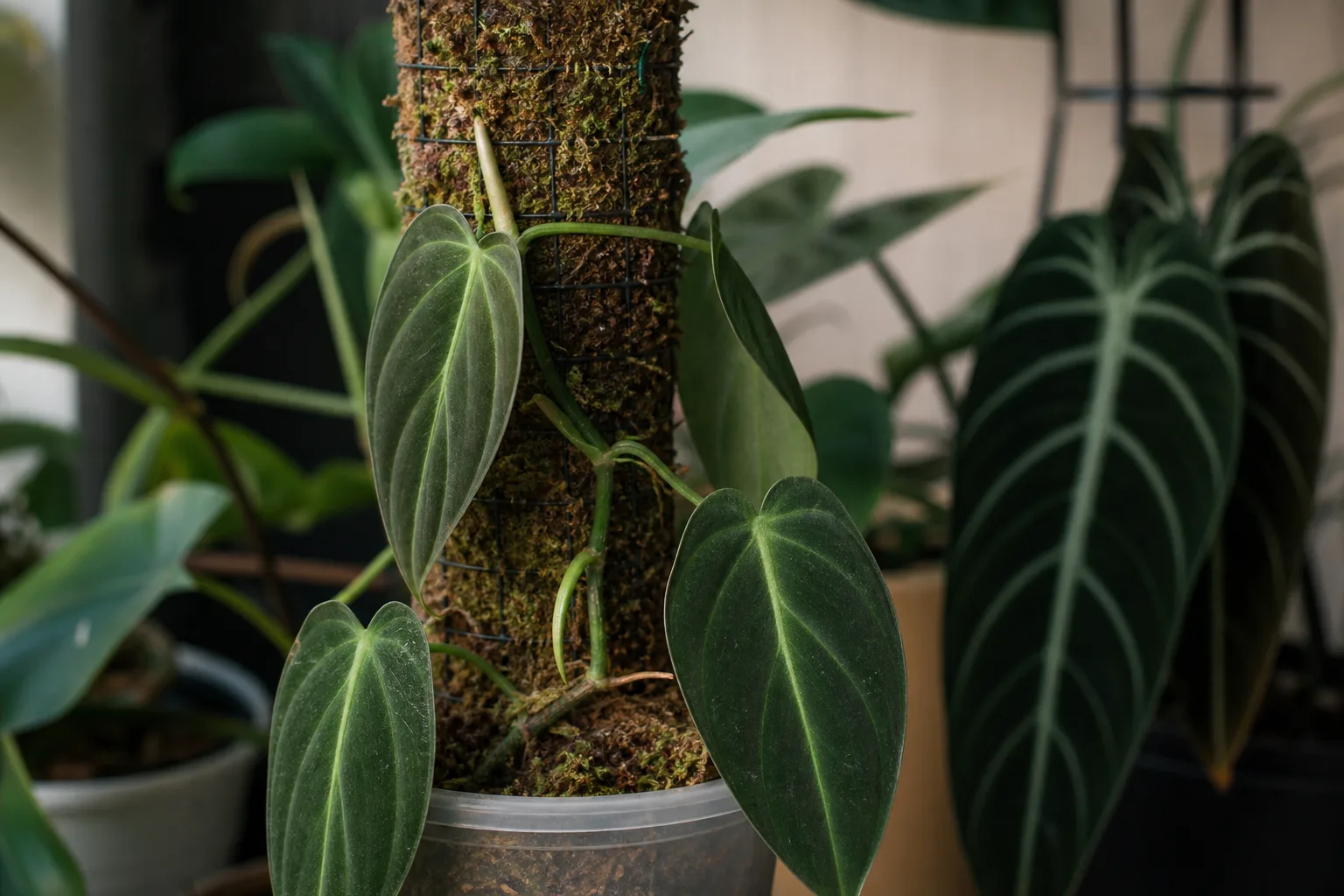
Slow Growth on Philodendron Melanochrysum: Causes, Checks & Fixes
This guide covers slow growth on Philodendron Melanochrysum. See also the general Slow Growth guide, watering, and light pages for this plant.
Slow Growth on Philodendron Melanochrysum: Causes, Checks & Fixes
Quick answer
Slow growth on Philodendron Melanochrysum is usually caused by insufficient humidity or light limiting photosynthesis and leaf expansion. First step: raise humidity to 60%+ and move the plant to brighter indirect light with a moss pole for climbing.
Philodendron melanochrysum is a climbing tropical aroid valued for long dark velvet leaves that size up when the plant climbs. Stagnation is rarely random-it usually means the environment is not delivering enough light energy, air moisture, or structural support for Philodendron Melanochrysum overview to express its mature form.
Why Philodendron Melanochrysum grows slowly
Insufficient light is the most common indoor bottleneck. Low light reduces photosynthesis and limits the carbohydrates needed for new tissue. Maryland Extension notes that excessively low light may cause spindly appearance and stalled growth on indoor plants. Melanochrysum in a dim corner may stay alive but produce small leaves on stretched internodes-a classic low-light pattern on climbing philodendrons that prefer partial shade or dappled sunlight, not deep shade.
Insufficient humidity suppresses active growth on velvet aroids. Philodendron erubescens prefers warm temperatures and high humidity in cultivation. Melanochrysum targets 60–70% humidity for best development; below about 50%, new cataphylls may stall, leaves unfurl small, or growth pauses while the plant conserves moisture. Maryland Extension states that most indoor environments lack sufficient humidity, especially during heating season-exactly when many collectors notice Melanochrysum “sitting still.”
Lack of climbing support changes leaf size, not just shape. Melanochrysum is a true climber-juvenile leaves on dangling vines stay smaller than leaves on a moss pole where aerial roots attach. Penn State Extension describes related aroids as tropical understory vines that climb trees using aerial roots; without a textured pole, Melanochrysum may look slow even when light and humidity are acceptable.
Cool temperatures and winter dormancy slow metabolism. Philodendrons prefer roughly 65 to 85 degrees Fahrenheit indoors. Growth pause from November through February can be normal if the plant resumes in spring-concern is stagnation through the entire active season.
Root stress from chronic overwatering, compacted mix, or severe root binding diverts energy to survival instead of new leaves. Penn State Extension links root problems to reduced vigor on houseplants. A Melanochrysum that dries too fast because it is rootbound may also stall if watering cannot keep up-check roots when growth stops despite good humidity and light.
What slow growth looks like on Philodendron Melanochrysum
Signs that distinguish true stagnation from a normal winter pause:
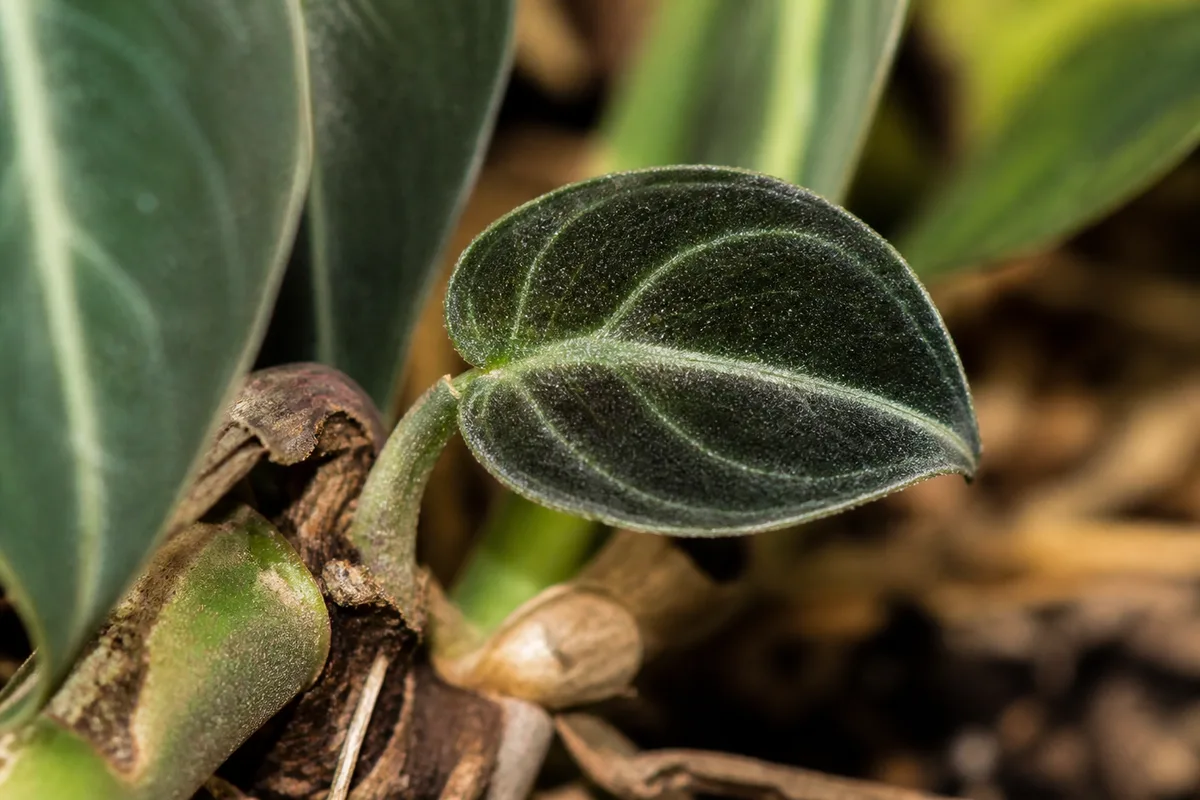
Slow Growth symptoms on Philodendron Melanochrysum - compare with healthy tissue on the same plant.
- No new cataphylls advancing for months during spring and summer
- New leaves noticeably smaller than older baseline foliage on the same vine
- Long bare internodes between leaves-stretching toward light
- Cataphylls stuck or tearing during unfurling in dry air
- Vine trailing without pole while leaf size stays juvenile
- Plant healthy green but visually static month after month
Melanochrysum should produce periodic new nodes during warm months when humidity, light, and support align. A single slow month after Philodendron Melanochrysum repotting guide is adjustment-not the same as a full season without progress.
How to confirm the cause
Run a system check rather than changing one variable at random:
- Humidity - Hygrometer near foliage. Below 55% implicates dry air; target 60–70% for this species.
- Light - Bright indirect for most of the day. Can you read comfortably near the plant without direct sun on leaves? Stretching implicates insufficient energy.
- Support - Is the vine tied to a moist moss pole or textured stake with aerial roots contacting it?
- Season - Compare growth in winter versus late spring; pause in cold months may be normal.
- Roots and mix - If humidity and light look good but growth stays flat, unpot to check for rot, compaction, or circling roots.
Low-level pest loads-spider mites love dry air on philodendrons-can sap vigor without dramatic damage. NC State Extension recommends monitoring philodendrons for spider mites and mealybugs; inspect velvet undersides with good light.
Lookalike patterns to rule out
Recent repotting or shipping can pause growth for two to four weeks while roots settle-normal adjustment. Seasonal winter dormancy resolves when light increases. Nutrient deficiency may pale new leaves but usually shows color patterns beyond simple slow growth-address light and humidity before heavy feeding.
First fix for Philodendron Melanochrysum
Raise humidity to 60% or higher and move the plant to brighter indirect light in the same week. Add or upgrade a moss pole so the vine climbs rather than trails. These three corrections target the species-specific causes-insufficient humidity or light-without overcomplicating the first response.
Practical steps:
- Run a humidifier consistently near the plant; verify with a hygrometer.
- Relocate to east window, shaded west window, or within a few feet of a quality grow light.
- Install a moss pole and loosely tie nodes so aerial roots face the support.
Do not jump to heavy fertilizer or a much larger pot on a stalled plant-those stress roots without fixing the primary bottlenecks.
Step-by-step recovery
- Set humidity to 60–70% and maintain it for at least two weeks.
- Increase light to bright indirect-avoid hot direct sun on velvet leaves.
- Mount a moss pole; mist the pole surface so climbing roots stay engaged.
- Stabilize watering when top 3–5 cm of chunky mix dries-roughly every 7–14 days for many homes.
- After four to six weeks in active season, compare new leaf size to the previous baseline.
- If growth remains flat with good humidity, light, and support, inspect roots and refresh compacted mix or repot one size up in spring.
Track monthly node count and leaf length rather than daily changes. Melanochrysum rewards patience once conditions align.
Recovery timeline
Humidity and light improvements often produce the first confident new cataphyll within three to six weeks during spring and summer. Leaf size may increase over two to three successive leaves as the vine establishes on a pole. Winter corrections may show little visible change until days lengthen.
Old small leaves will not enlarge retroactively. Success is larger new velvet blades and shorter internodes on fresh growth.
What not to do
- Do not overfertilize to “force” growth-salts stress roots on stalled plants.
- Do not move to direct sun to speed growth; velvet leaves scorch quickly.
- Do not repot into a huge pot hoping for faster growth; excess wet soil volume stresses roots.
- Do not ignore humidity while only increasing light-Melanochrysum needs both for active development.
- Do not leave a collector climber dangling without support if you want mature leaf size.
How to prevent slow growth next time
Treat Melanochrysum as a humidity-and-light plant from day one. Run a humidifier through heating season, keep Philodendron Melanochrysum light guide year-round, and install a moss pole while the vine is still manageable. Use chunky aroid mix and water when the top 3–5 cm dries so roots stay healthy between growth pushes.
Group tropical plants to raise local humidity per Maryland Extension guidance, avoid cold drafts below about 55 degrees Fahrenheit on philodendrons, and feed lightly monthly during active growth only after basics are stable. Quarantine new plants-pests on dark velvet foliage are easy to miss and can slow vigor quietly.
When to worry
Escalate beyond a simple humidity-and-light fix if:
- Growth stalls an entire spring and summer despite corrections
- New leaves emerge progressively smaller for three or more cycles
- Slow growth pairs with yellowing, wet sour soil, or limp vines
- Stippling, webbing, or sticky residue appears on leaf undersides
- Stalled growth follows repotting into dense wet mix months ago
Those patterns suggest root rot on Philodendron Melanochrysum, pest load, or chronic root binding-inspect roots and treat the underlying stressor before expecting normal climbing growth.
Conclusion
Slow growth on Philodendron Melanochrysum is usually an environment problem-insufficient humidity or light-and often a support problem on this climbing velvet species. Confirm with hygrometer readings, stretched internodes, and juvenile leaves on unsupported vines; fix by raising humidity to 60%+, improving bright indirect light, and adding a moss pole together. Prevent stagnation by keeping those three factors stable year-round. Judge success by larger new leaves on shorter internodes, not by old foliage resizing.
When to use this page vs other Philodendron Melanochrysum guides
- Philodendron Melanochrysum watering guide - Use for routine moisture checks before assuming slow growth is the main issue.
- Philodendron Melanochrysum problems hub - Browse all 10 common issues on this species.
- Yellow Leaves on Philodendron Melanochrysum - Different entry point when symptoms overlap with slow growth.
Related Philodendron Melanochrysum guides
- Philodendron Melanochrysum overview
- Philodendron Melanochrysum watering
- Philodendron Melanochrysum light
- Philodendron Melanochrysum soil
- Yellow Leaves on Philodendron Melanochrysum
- Philodendron Melanochrysum problems
- Ants on Plant on Philodendron Melanochrysum
- Brown Tips on Philodendron Melanochrysum