Brown Tips on Philodendron Melanochrysum: Causes, Checks &
Quick answer
Brown tips on Philodendron Melanochrysum are usually caused by low humidity below what this velvet aroid needs. First step: raise humidity to 60% or higher with a humidifier near the plant, not occasional misting alone.
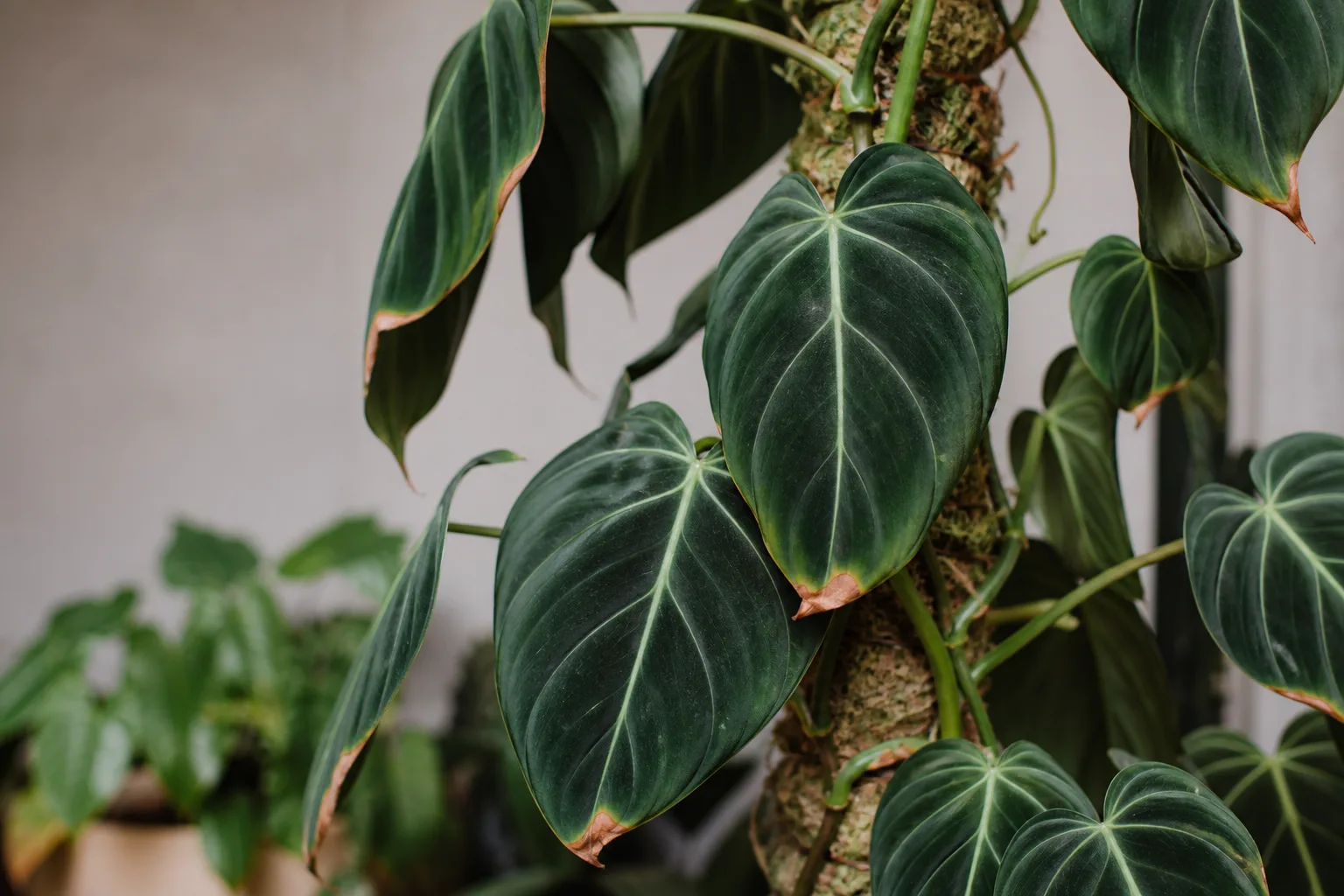
Brown Tips on Philodendron Melanochrysum: Causes, Checks & Fixes
This guide covers brown tips on Philodendron Melanochrysum. See also the general Brown Tips guide, watering, and light pages for this plant.
Brown Tips on Philodendron Melanochrysum: Causes, Checks & Fixes
Quick answer
Brown tips on Philodendron Melanochrysum are usually caused by low humidity below what this velvet aroid needs. First step: raise humidity to 60% or higher with a humidifier near the plant, not occasional misting alone.
Philodendron melanochrysum carries large, dark velvet leaves that lose water faster than smooth philodendron foliage when indoor air is dry. The leaf tip is the farthest point from the roots, so it dries first when humidity drops or roots cannot keep up. On Philodendron Melanochrysum overview, low humidity is critical-tip burn often appears before other obvious stress signs because the matte surface hides subtle wilting.
Why Philodendron Melanochrysum gets brown tips
Low humidity is the leading indoor cause. Philodendron erubescens-a close cultural analog-prefers warm temperatures and high humidity in its native rainforest habitat. Melanochrysum needs similar conditions: target 60–70% humidity for active growth. Maryland Extension notes that most indoor environments lack sufficient humidity, particularly in winter when heating runs, and that grouping plants or using a humidifier raises moisture more reliably than misting alone.
Velvet leaf structure makes Melanochrysum more sensitive than glossy philodendrons. The textured surface traps less ambient moisture against the blade and transpires heavily when air is dry. Hot direct sun on dark leaves accelerates edge drying even when roots are wet-Melanochrysum needs partial shade or dappled sunlight indoors, not a hot south window.
Inconsistent watering also produces tip burn indirectly. Large Melanochrysum leaves slow surface drying, so owners may underwater the center of the pot while the top looks dry, or overcorrect with heavy soaking. Maryland Extension explains that extended drought causes leaf scorch and browning when roots cannot supply moisture fast enough. Swings between very dry and very wet soil damage feeder roots, and damaged roots cannot hydrate leaf margins reliably.
Salt and fertilizer buildup in peat-heavy mix contributes to edge burn on many houseplants. Maryland Extension lists brown leaf tips as a symptom of soluble salt accumulation from excess or frequent fertilizing. Melanochrysum fed heavily in small pots without periodic flushing may brown tips even when humidity is acceptable.
Root stress from chronic overwatering can mimic dry-air tip burn. Penn State Extension notes that root rot causes wilting despite wet soil, and impaired roots deliver less water to leaf tips. Always check whether soil is waterlogged before assuming humidity is the only problem.
What brown tips look like on Philodendron Melanochrysum
On this species, tip damage has a recognizable pattern:
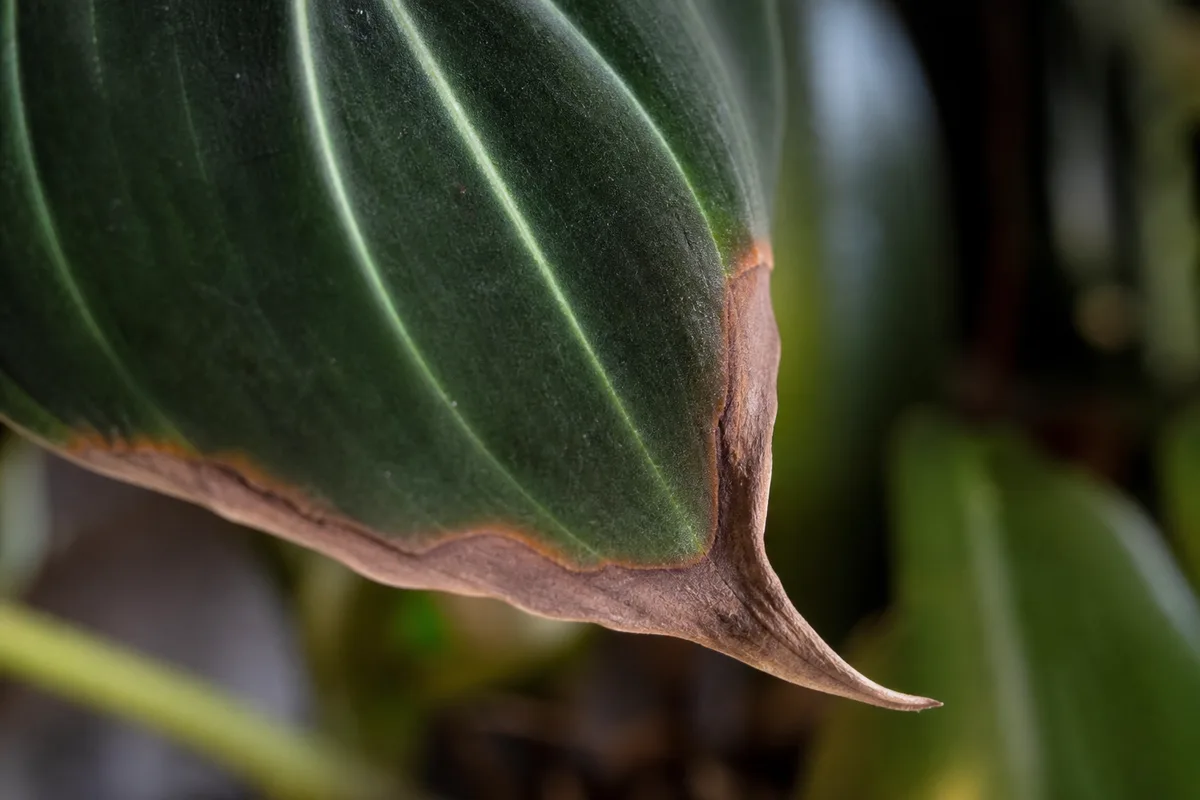
Brown Tips symptoms on Philodendron Melanochrysum - compare with healthy tissue on the same plant.
- Dry, tan-to-brown crispy tips on otherwise dark green velvet blades
- Damage starting at the apex and sometimes creeping along margins
- Newest leaves showing tip browning as they unfurl or tearing stuck in the cataphyll
- Older leaves on the lower vine browning first when humidity is chronically low
- No soft wet lesions-tip burn is dry and papery, not mushy
- White crust on soil surface when salts contribute to the problem
Velvet Melanochrysum leaves do not show tip burn as dramatically pale patches like variegated plants; the brown stands out against dark green tissue. If margins brown while the pot stays heavy and soil smells sour, suspect root stress instead of dry air alone.
How to confirm the cause
Work through checks in this order:
- Humidity reading - Place a hygrometer near the foliage, not across the room. Below 50% strongly supports low-humidity tip burn on Melanochrysum; 60%+ is the species target.
- Light and heat - Feel leaf surfaces near windows. Hot direct sun or heater drafts dry tips faster than ambient humidity suggests.
- Soil moisture at depth - Probe 3–5 cm down. Bone-dry mix with light pot weight points to underwatering stress; constantly damp mix suggests root impairment.
- New growth pattern - Tip burn on unfolding leaves confirms ongoing air moisture stress. Sudden tip burn on one old leaf may be mechanical damage or salt flush.
- Salt check - Look for white deposits on soil surface or pot rim.
If humidity is above 60%, soil is appropriately dry between waterings, and tips still brown on new growth, inspect roots for rot or flush salts before adding more humidity.
Lookalike symptoms to rule out
Fungal leaf spot produces soft brown patches with yellow halos, not dry tips alone-Penn State Extension lists bacterial and fungal leaf diseases on philodendrons with different patterns. Sun scorch creates irregular bleached or brown patches on sun-facing blades, not uniform tip necrosis. Normal aging yellows whole older leaves rather than crisping only tips. Pest stippling from spider mites shows speckling and webbing on undersides before clean tip burn appears.
First fix for Philodendron Melanochrysum
Raise humidity to 60% or higher with a humidifier placed near the plant-not misting alone. Maryland Extension states that misting is questionable for raising humidity and that humidifiers or grouped plant microclimates work better. Run the humidifier consistently, especially overnight when heating drops ambient moisture.
While humidity improves:
- Move the plant away from heating vents, air conditioners, and drafty doors.
- Keep Philodendron Melanochrysum light guide but shield from hot afternoon sun on velvet leaves.
- Maintain stable watering: water when the top 3–5 cm of chunky mix is dry, then soak until runoff drains freely.
Do not increase fertilizer to “heal” brown tips. Do not trim deep into green tissue-cosmetic snips following the leaf shape are fine once conditions stabilize.
Step-by-step recovery
- Install or relocate a humidifier so the Melanochrysum sits in a 60–70% zone; verify with a hygrometer for one week.
- Group tropical plants nearby to boost local moisture if a single humidifier is not enough.
- Stabilize Philodendron Melanochrysum watering guide based on pot dry-down, not calendar days-roughly every 7–14 days for many homes, less in winter.
- If white salt crust is visible, flush the pot with clear water until several pot volumes run through, then let drain completely.
- Watch the next two to three new leaves. Clean unfurling without crispy edges confirms the fix.
- Trim only fully dead tip tissue for appearance; leave a thin brown margin to avoid wounding healthy blade.
Recovery of existing tips is cosmetic only. Success is measured by new velvet leaves emerging with intact margins.
What not to do
- Do not rely on misting alone in dry heated rooms-it raises humidity briefly without changing the daily average.
- Do not move the plant to a hot sunny window to “dry out” brown tips; sun scorch worsens velvet damage.
- Do not overwater because tips look dry; wet soil with failing roots produces similar margin burn.
- Do not fertilize heavily on stressed plants; salts aggravate tip necrosis.
- Do not cut large sections of healthy green leaf trying to remove all brown-new growth matters more than perfect old leaves.
Causes to rule out
Before locking in a humidity-only fix, rule out:
- Overwatering and root rot - Wet heavy pot, sour smell, mushy roots
- Chronic underwatering - Light pot, dusty dry mix throughout, limp vines between waterings
- Salt buildup - White crust, tip burn after regular heavy feeding
- Direct sun scorch - Brown patches on sun-exposed side of blades
- Stuck cataphylls - Low humidity during unfurling tears new leaves mechanically
Melanochrysum often has more than one stressor. Fix humidity first because it is the species-specific priority, then reassess watering if tips persist on new growth.
How to prevent brown tips next time
Run a humidifier through heating season and monitor with a hygrometer. Target 60–70% for Melanochrysum, matching its rainforest climbing habit-Penn State Extension describes related aroids as tropical understory plants that need sheltered bright light and stable moisture, not dry indoor air.
Pair humidity with bright indirect light and chunky aroid mix so roots hydrate large leaves evenly. Water when the top 3–5 cm dries, flush salts monthly during active growth if you feed regularly, and repot before severe root crowding forces fast dry-wet swings. Install a moss pole early so vines climb in humid air rather than trailing into dry floor-level drafts.
When to worry
Escalate care if:
- Browning spreads from tips to entire margins on most new leaves
- New cataphylls fail to open and leaves tear or abort repeatedly
- Tip burn pairs with yellowing, limp vines, and wet sour soil
- Damage appears within days of a major care change without an obvious humidity drop
Single old leaves with minor tip crispness in otherwise healthy vines are lower urgency-focus on humidity trends, not one leaf.
Conclusion
Brown tips on Philodendron Melanochrysum are usually a humidity problem on velvet foliage, not a mysterious disease. Confirm with dry crispy tips, low hygrometer readings, and clean new growth after you raise moisture to 60%+. Pair humidity with stable watering in chunky mix and bright indirect light. Old brown tips will not green up-judge success by unfurling leaves with intact velvet margins.
When to use this page vs other Philodendron Melanochrysum guides
- Philodendron Melanochrysum watering guide - Use for routine moisture checks before assuming brown tips is the main issue.
- Philodendron Melanochrysum problems hub - Browse all 10 common issues on this species.
- Yellow Leaves on Philodendron Melanochrysum - Different entry point when symptoms overlap with brown tips.
Related Philodendron Melanochrysum guides
- Philodendron Melanochrysum overview
- Philodendron Melanochrysum watering
- Philodendron Melanochrysum light
- Philodendron Melanochrysum soil
- Yellow Leaves on Philodendron Melanochrysum
- Philodendron Melanochrysum problems
- Ants on Plant on Philodendron Melanochrysum
- Leaf Miners on Philodendron Melanochrysum