Slow Growth on Philodendron Gloriosum: Causes, Checks &
Quick answer
Slow growth on Philodendron Gloriosum is often normal-this species produces one leaf at a time-but stalled new leaves usually mean insufficient light or humidity below 60%. First step: move to bright indirect light and verify humidity with a hygrometer.
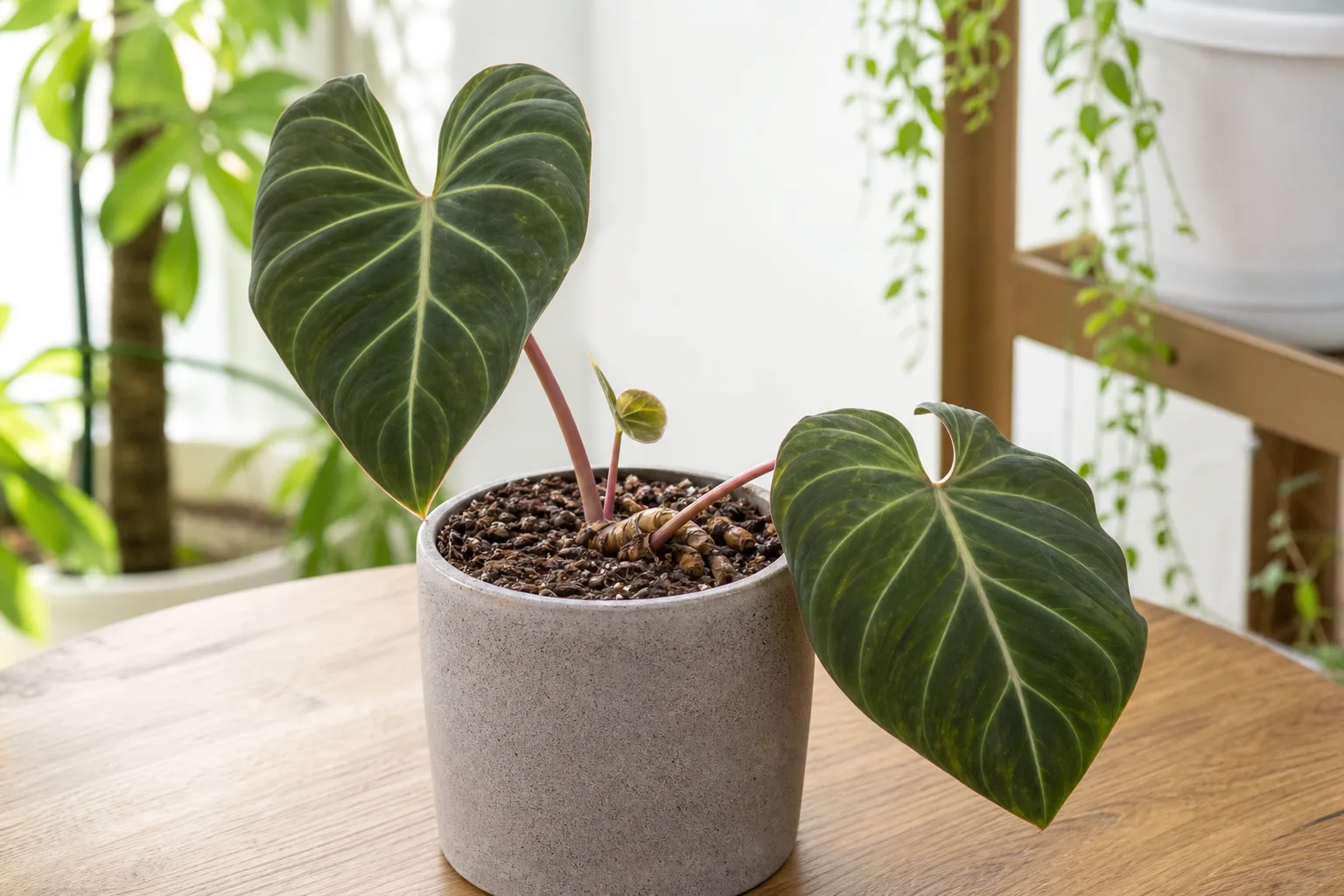
Slow Growth on Philodendron Gloriosum: Causes, Checks & Fixes
This guide covers slow growth on Philodendron Gloriosum. See also the general Slow Growth guide, watering, and light pages for this plant.
Slow Growth on Philodendron Gloriosum: Causes, Checks & Fixes
Quick answer
Slow growth on Philodendron Gloriosum is often normal-Philodendron Gloriosum overview produces one leaf at a time-but stalled new leaves usually mean insufficient light or humidity below 60%. First step: move to Philodendron Gloriosum light guide and verify humidity with a hygrometer.
Philodendron gloriosum is a creeping terrestrial philodendron native to tropical America. Unlike vining heartleaf types, it advances horizontally and unfurls large velvet leaves slowly from a single active tip. Expecting monthly leaves like a Philodendron hederaceum sets the wrong benchmark-Gloriosum is deliberately unhurried. True “slow growth problems” appear when the tip stops entirely or new leaves emerge stunted.
Why Philodendron Gloriosum grows slowly
Insufficient light is the main correctable limiter. Philodendrons can survive in relatively low indoor light, but Gloriosum needs bright indirect exposure to fuel large leaf production. In dim corners, the plant may hold one old leaf indefinitely without advancing the rhizome.
Low humidity below 60% restricts leaf size and slows unfurling. Velvet aroids lose moisture at the margins during expansion; dry air causes new leaves to stall, tear, or emerge smaller. Iowa State Extension links low humidity to poor leaf quality on sensitive houseplants.
Rhizome constraint slows progress physically. If the creeping stem hits the pot wall with no forward space in a wide shallow container, the growth tip may pause until Philodendron Gloriosum repotting guide or repositioning. Buried rhizomes in wet mix also stall leaves before rot becomes obvious.
Root stress from chronic over- or underwatering reduces energy for new tissue. Rot-damaged roots cannot support the metabolic cost of a large new leaf-root health underpins foliage production on houseplants.
Winter dormancy or slowdown is normal. Cooler temperatures and shorter days reduce growth rate even when care is otherwise correct-similar to seasonal slowdown in other tropical houseplants.
What slow growth looks like on Philodendron Gloriosum
Distinguish normal from problematic:
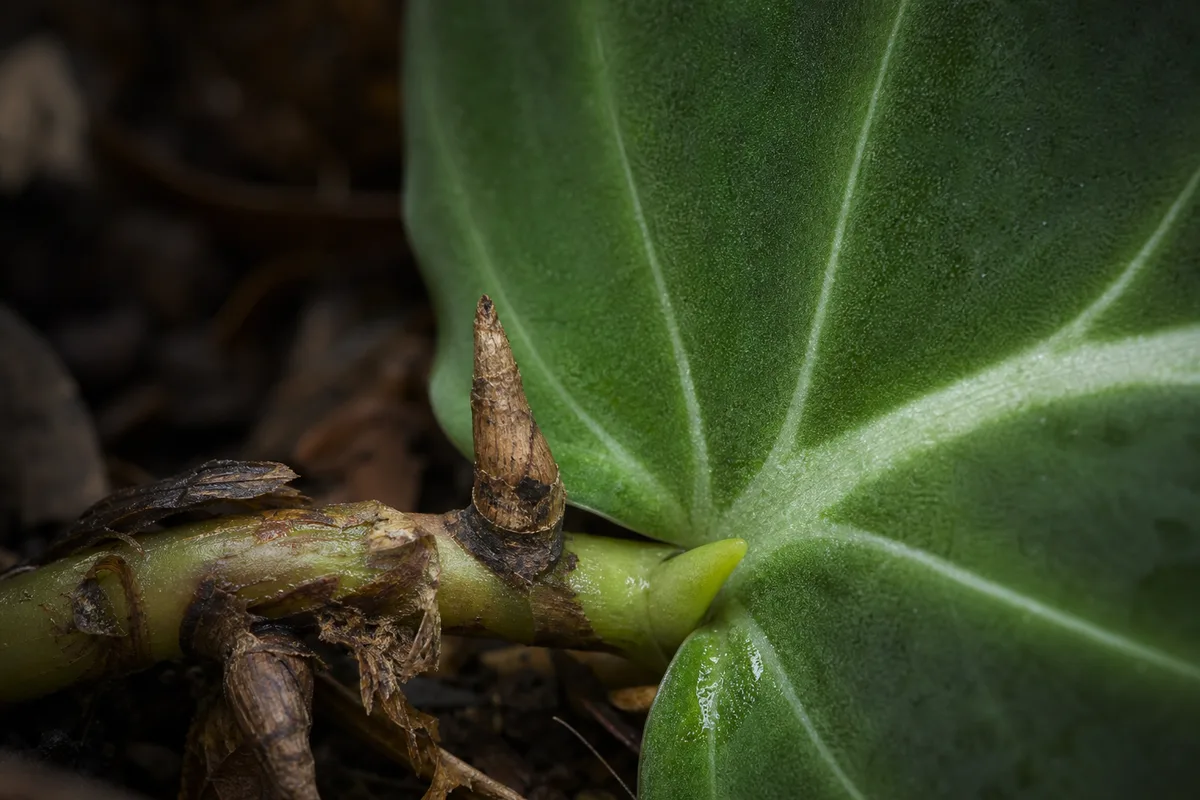
Slow Growth symptoms on Philodendron Gloriosum - compare with healthy tissue on the same plant.
- Normal: One leaf every one to three months in spring–summer; stable green existing leaf; firm rhizome tip
- Light-limited: Small new leaves, long thin petioles, pale green color, tip near dim window
- Humidity-limited: New leaf stuck in cataphyll, torn unfurling, crispy edges during expansion
- Space-limited: Rhizome pressed against pot edge with nowhere to crawl
- Root-limited: No new leaf for months plus yellowing, wet soil smell, or chronic dry collapse
A healthy Gloriosum may sit visually unchanged for weeks while the next leaf develops internally-check the cataphyll at the tip for swelling as a positive sign.
How to confirm the cause
- Light meter or shadow test - Soft shadow at midday suggests adequate bright indirect light; faint shadow means too dim.
- Hygrometer at leaf height - Below 50% explains humidity-limited unfurling.
- Rhizome path - Trace the crawler; note buried sections and distance to pot edge.
- Root check - Probe moisture; unpot if smell or multi-month stall with wet soil.
- Season - Confirm whether winter slowdown explains timing before major interventions.
First fix for Philodendron Gloriosum
Improve light and humidity together-the two most common growth limiters. Move to bright indirect light (east window or filtered south/west) and run a humidifier to hold 60–70% near the foliage. Do not simultaneously repot, fertilize, and relocate outdoors; change light and humidity first and watch one leaf cycle.
If the rhizome has no forward space, plan repot into a wider shallow container with the tip oriented toward open mix surface.
Step-by-step recovery
- Relocate to bright indirect light; avoid sudden direct sun without acclimation.
- Stabilize 60–70% humidity with humidifier, not occasional misting alone.
- Confirm top 3–5 cm dry Philodendron Gloriosum watering guide-stable moisture supports growth without rot.
- Repot in spring if rhizome is constrained or mix is exhausted; keep rhizome on surface.
- Apply diluted balanced liquid fertilizer monthly only during active leaf production in warm months.
- Allow six to twelve weeks to judge one full new leaf cycle.
What not to do
- Do not expect vining philodendron growth rates from a terrestrial crawler.
- Do not force growth with heavy fertilizer on stressed roots.
- Do not install a moss pole-Gloriosum crawls, it does not climb.
- Do not overwater to “push” growth; rot stalls the tip longer than slight drought.
- Do not repot repeatedly in one season; each disturbance pauses the slow tip.
How to prevent chronic slow growth
Maintain bright indirect light year-round, 60–70% humidity, and a wide pot refreshed every one to two years. Orient the rhizome toward empty space when repotting. Water when top 3–5 cm dries. Accept seasonal winter pause; resume monitoring in spring if no tip activity appears by early summer.
When to worry
Investigate roots if stall exceeds four months in warm season with good light and humidity, or if tip tissue softens. Tiny deformed leaves with wet soil suggest rot. Normal winter rest with firm tip and one healthy leaf is not an emergency.
Conclusion
Slow growth on Philodendron Gloriosum is often species-normal, not failure. Confirm whether the rhizome tip is actively developing; if not, prioritize bright indirect light and 60–70% humidity, then rhizome space and root health. Measure success by one healthy new velvet leaf-not by comparison to faster philodendrons.
When to use this page vs other Philodendron Gloriosum guides
- Philodendron Gloriosum watering guide - Use for routine moisture checks before assuming slow growth is the main issue.
- Philodendron Gloriosum problems hub - Browse all 22 common issues on this species.
- Yellow Leaves on Philodendron Gloriosum - Different entry point when symptoms overlap with slow growth.