Faded Flowers on Philodendron Gloriosum: Causes, Checks &
Quick answer
Faded flowers on Philodendron Gloriosum usually means a mature aroid inflorescence (spadix and spathe) is finishing its natural cycle-not a colorful petal fade. First step: confirm the structure is a bloom, not a new leaf, and leave the plant undisturbed if fading follows several weeks of healthy open inflorescence.
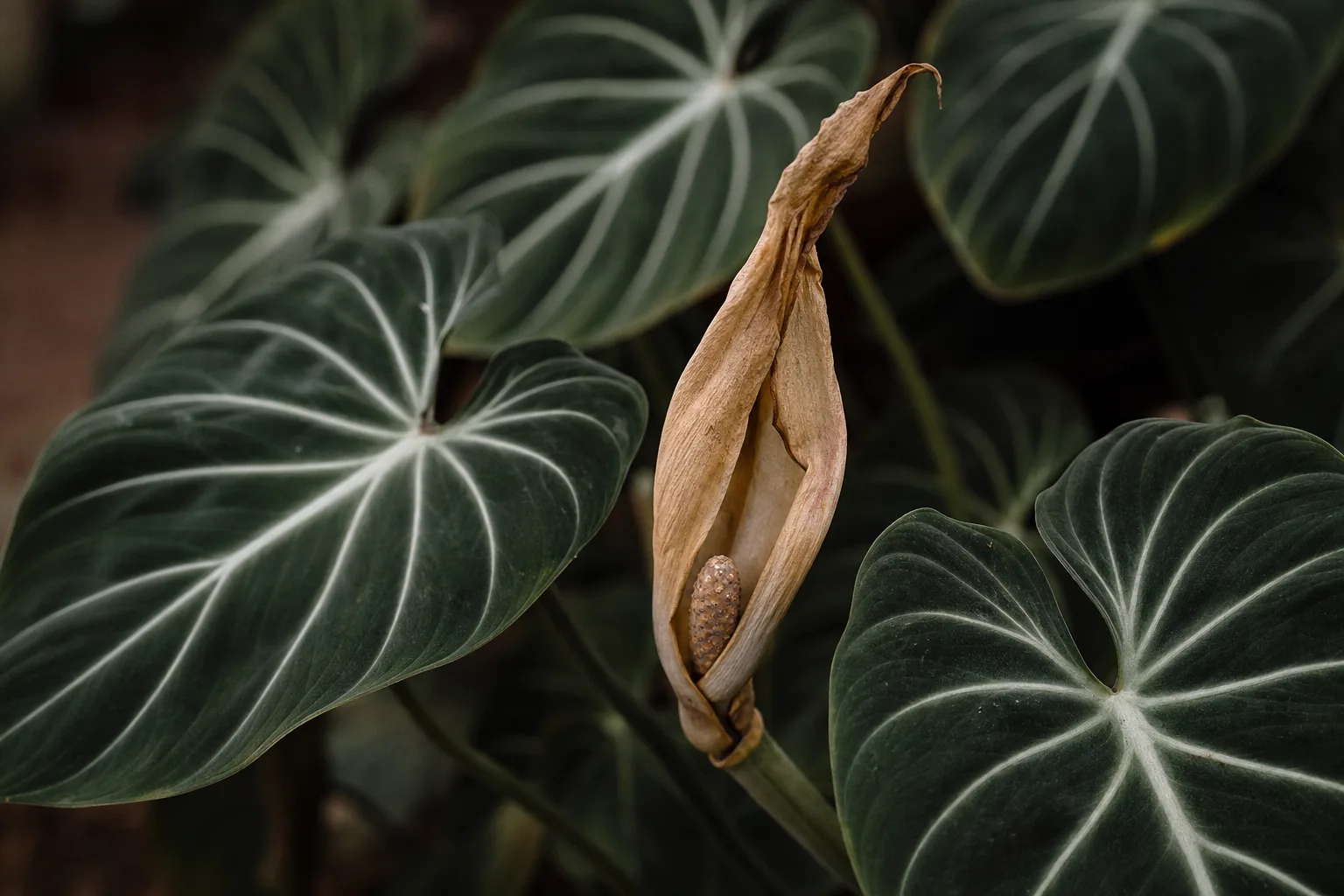
Faded Flowers on Philodendron Gloriosum: Causes, Checks & Fixes
This guide covers faded flowers on Philodendron Gloriosum. See also the general Faded Flowers guide, watering, and light pages for this plant.
Faded Flowers on Philodendron Gloriosum: Causes, Checks & Fixes
Quick answer
Faded flowers on Philodendron Gloriosum usually means a mature aroid inflorescence (spadix and spathe) is finishing its natural cycle-not a colorful petal fade. First step: confirm the structure is a bloom, not a new leaf, and leave the plant undisturbed if fading follows several weeks of healthy open inflorescence.
Philodendron Gloriosum is grown for velvet foliage, and houseplants in the genus usually do not flower indoors. When a mature plant does bloom, the show is an aroid inflorescence-a spadix surrounded by a spathe, often creamy white or pale green rather than bright petals. Most philodendron houseplants rarely flower indoors, so seeing any inflorescence at all usually signals a healthy, mature crawler. Fading after the spathe has been open for weeks is normal senescence, not a care failure.
What faded flowers look like on Philodendron Gloriosum
On Philodendron Gloriosum overview, “flowers” are not showy petals. You will see a modified bract (spathe)-often pale green or cream-wrapping a fleshy central spike (spadix) emerging from a node on the horizontal rhizome. Tiny true flowers line the spadix; the spathe is what most growers notice.
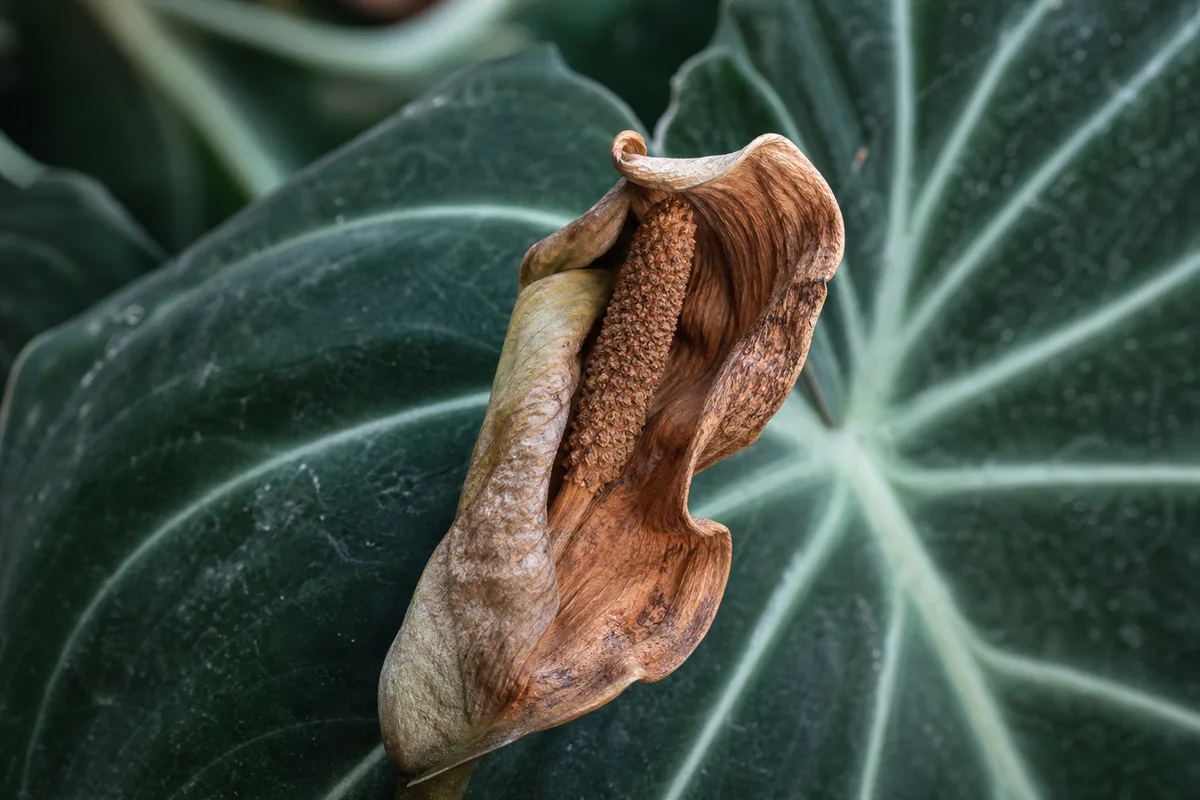
Faded Flowers symptoms on Philodendron Gloriosum - compare with healthy tissue on the same plant.
Fading typically shows as:
- Spathe color dulling from fresh cream or green to tan, brown, or papery
- Spadix shrinking, drying, or darkening at the tip
- Inflorescence leaning or collapsing while leaves stay firm
- No fragrance intensifying at night (if scent was present earlier)
Distinguish from a new leaf: leaf spikes unfurl into heart-shaped velvet blades with prominent pale veins. Inflorescences stay tubular longer and never develop the cordate leaf shape Gloriosum is known for.
Why Philodendron Gloriosum gets faded flowers
Normal bloom aging. Aroid inflorescences are short-lived displays. Once pollination window passes-or indoors, once the plant completes its bloom cycle-the spathe naturally browns and dries. This is expected, not a disease.
Environmental stress during bloom. Philodendrons prefer high humidity and stable warm conditions. Dry air from heat vents, air conditioning, or winter heating can desiccate an open spathe faster than usual on a humidity-loving velvet species. Drafts and sudden temperature drops have the same effect.
Recent disruption. Philodendron Gloriosum repotting guide, moving rooms, or shipping shock while a spathe is forming often aborts or prematurely fades the inflorescence-even when long-term placement would have been fine.
Insufficient maturity or energy. Juvenile Gloriosums with one or two leaves rarely bloom. Even mature plants bloom infrequently indoors because most flowering houseplants need brighter conditions and stability than foliage-only survival. A plant pushing large leaves may skip repeat blooms for a season.
Misidentified symptom. Searchers sometimes mean pale or scorched leaves-not blooms. Too much direct sun or low humidity fades leaf color on velvet philodendrons while no inflorescence is present. Check whether the issue is foliage on the rhizome tip instead.
How to confirm the cause
Work through these checks in order:
- Identify the structure - Spadix plus spathe on a rhizome node confirms inflorescence. Cordate unfurling means leaf, not flower problem.
- Timeline - Open spathe for three to six weeks then gradual browning suggests normal end of cycle. Collapse within days of a move or repot suggests stress.
- Environment snapshot - Note humidity (target 60–70% for Gloriosum), draft paths, and whether heat or AC ran near the plant during bloom.
- Watering pattern - Overwatering stresses philodendron roots; underwatering during bloom dries the spathe early. Feel the top 3–5 cm of mix-neither soggy nor bone dry for weeks.
- Rhizome health - Firm rhizome and stable older leaves support a cosmetic fade. Soft rhizome, sour soil, or yellowing new growth point to rot or broader stress-not a bloom-only issue.
First fix for Philodendron Gloriosum
If the inflorescence has been open and healthy for several weeks, do nothing beyond basic care-let the spathe senesce naturally. Snipping too early wastes energy the plant is reclaiming from the spent structure.
If fading happened suddenly after environmental shock, stabilize placement first: return the plant to its prior bright indirect spot if possible, raise humidity toward 60–70%, and keep watering even without soaking the rhizome. Do not repot, fertilize heavily, or relocate again until the inflorescence finishes and new leaf growth resumes.
Step-by-step recovery
- Leave the fading inflorescence attached until fully dry unless it traps moisture against the rhizome-then trim cleanly at the base with sterile shears.
- Maintain Philodendron Gloriosum light guide (east window or filtered south/west)-adequate light supports the next growth cycle without scorching velvet leaves.
- Water when the top 3–5 cm of chunky aroid mix dries-Gloriosum stores some moisture in the rhizome, so avoid wet feet.
- Run a humidifier or pebble tray if room air stays below 50%-philodendrons prefer high humidity, and Gloriosum performs best at 60–70% for velvet foliage.
- Wait one to two leaf cycles before expecting another inflorescence; repeat bloom is never guaranteed indoors.
Recovery timeline
Normal post-bloom fade completes in one to three weeks as the spathe dries. Environmental stress may stall the next leaf for four to eight weeks while the rhizome recovers-Gloriosum is slow even when healthy. Judge success by firm rhizome tissue and a new velvet leaf from the growth front, not by immediate rebloom.
Lookalike symptoms
| What you see | Likely cause | Not faded flowers |
|---|---|---|
| Pale, washed-out velvet leaf | Too much direct sun or low humidity | Leaf scorch, not bloom fade |
| Brown crispy leaf margins | Dry air or underwatering | Foliage stress |
| Yellow new leaf with wet mix | Overwatering / rhizome issue | Root problem, not inflorescence |
| Tubular spike opening to heart shape | New leaf unfurling | Normal growth, not a flower |
Mistakes to avoid
- Repotting when a spathe appears hoping to “boost” bloom energy
- Mistaking a leaf spike for a flower and changing care unnecessarily
- Cutting the inflorescence the moment color dulls during normal aging
- Fertilizing heavily on a stressed crawler after bloom collapse
- Expecting annual flowers-indoor Gloriosum bloom is a bonus, not a baseline
How to prevent premature fading next time
Keep humidity steady at 60–70%, provide bright indirect light year-round, and avoid moving or repotting while a spathe is visible. Stable environment during bud and bloom stages reduces drop and early fade on flowering houseplants. Let the plant mature-wide shallow pots that allow rhizome advance support the energy reserves mature aroids need before inflorescence formation.
When to worry
Normal brown, dry spathe on an otherwise firm plant is not an emergency. Worry when fading coincides with soft rhizome, sour-smelling mix, pest-coated new growth, or rapid yellowing of the newest leaf-those patterns need root, pest, or rot diagnosis, not bloom-focused fixes.
Conclusion
Faded flowers on Philodendron Gloriosum most often mean a rare indoor inflorescence is finishing its natural life-not that your crawler is failing. Confirm spadix and spathe structure, distinguish leaf unfurling, and treat sudden fade after shock with stable humidity and placement. Measure health by rhizome firmness and the next velvet leaf; rebloom may come seasons later, if at all-and that is normal for this foliage-first species.
When to use this page vs other Philodendron Gloriosum guides
- Philodendron Gloriosum watering guide - Use for routine moisture checks before assuming faded flowers is the main issue.
- Philodendron Gloriosum problems hub - Browse all 22 common issues on this species.