Exposed Roots on Philodendron Gloriosum: Causes, Checks &
Quick answer
On Philodendron Gloriosum, a visible creeping rhizome at the soil surface is often normal-not damage. First step: touch the tissue. Firm rhizome with pale roots below gets a light top-dress of dry chunky mix; mushy exposed roots with sour soil need unpotting and rot treatment.
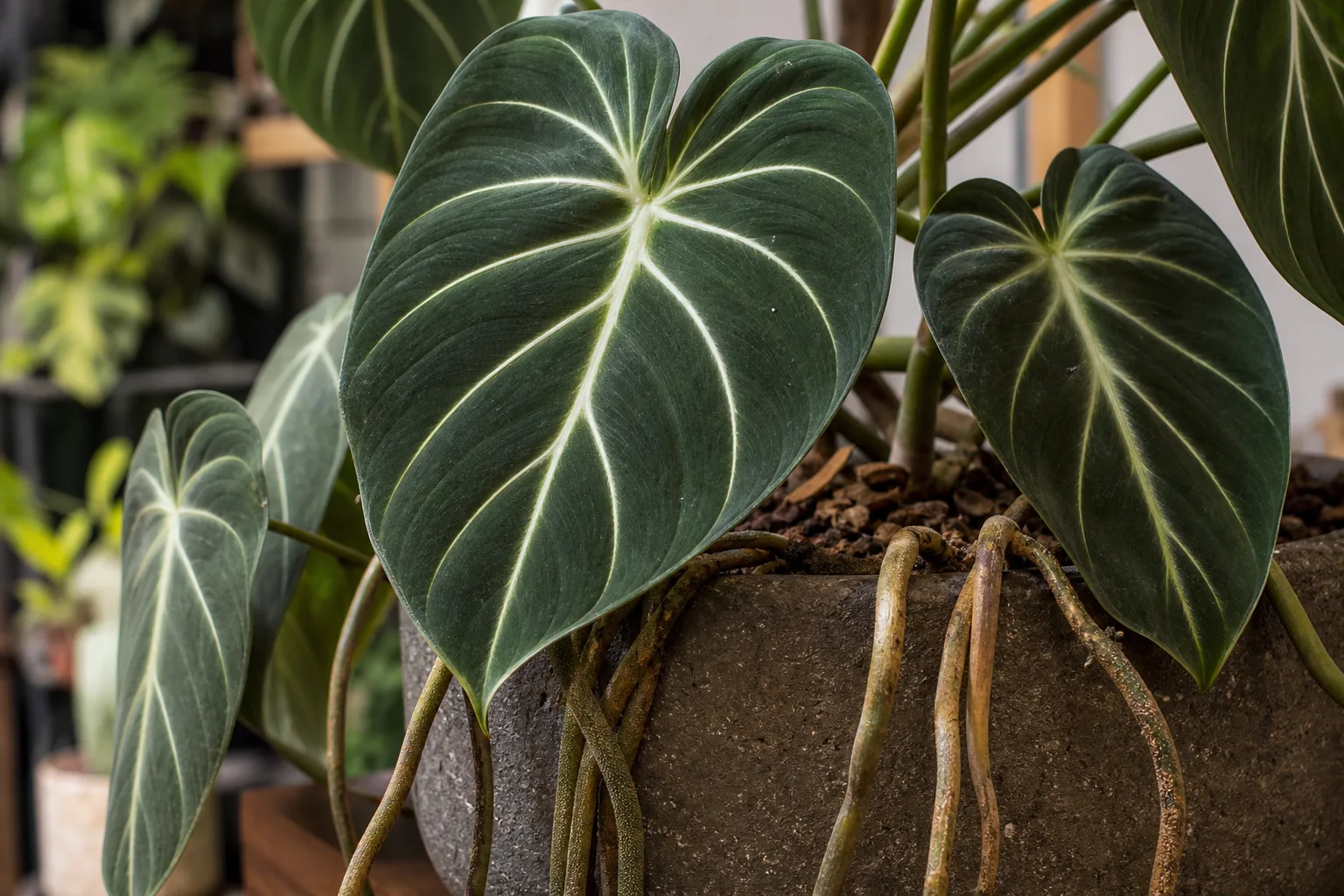
Exposed Roots on Philodendron Gloriosum: Causes, Checks & Fixes
This guide covers exposed roots on Philodendron Gloriosum. See also the general Exposed Roots guide, watering, and light pages for this plant.
Exposed Roots on Philodendron Gloriosum: Causes, Checks & Fixes
Quick answer
Exposed roots on Philodendron Gloriosum often alarm owners who expect roots to stay hidden like an upright houseplant. This species is a terrestrial crawler: a thick horizontal rhizome travels across the pot surface, new velvet leaves emerge from the advancing tip, and adventitious roots anchor along the stem. Seeing rhizome tissue above the mix is frequently normal anatomy, not a crisis.
The problem starts when feeder roots sit bare after mix erodes, roots circle and push soil upward, or wet anaerobic mix collapses and leaves mushy tissue exposed. First step: touch what you see. Firm rhizome with pale roots below gets a light top-dress of dry chunky aroid mix. Soft black roots with sour-smelling soil need unpotting-not more water.
What exposed roots look like on Philodendron Gloriosum
Two patterns look like “exposed roots” but mean different things.
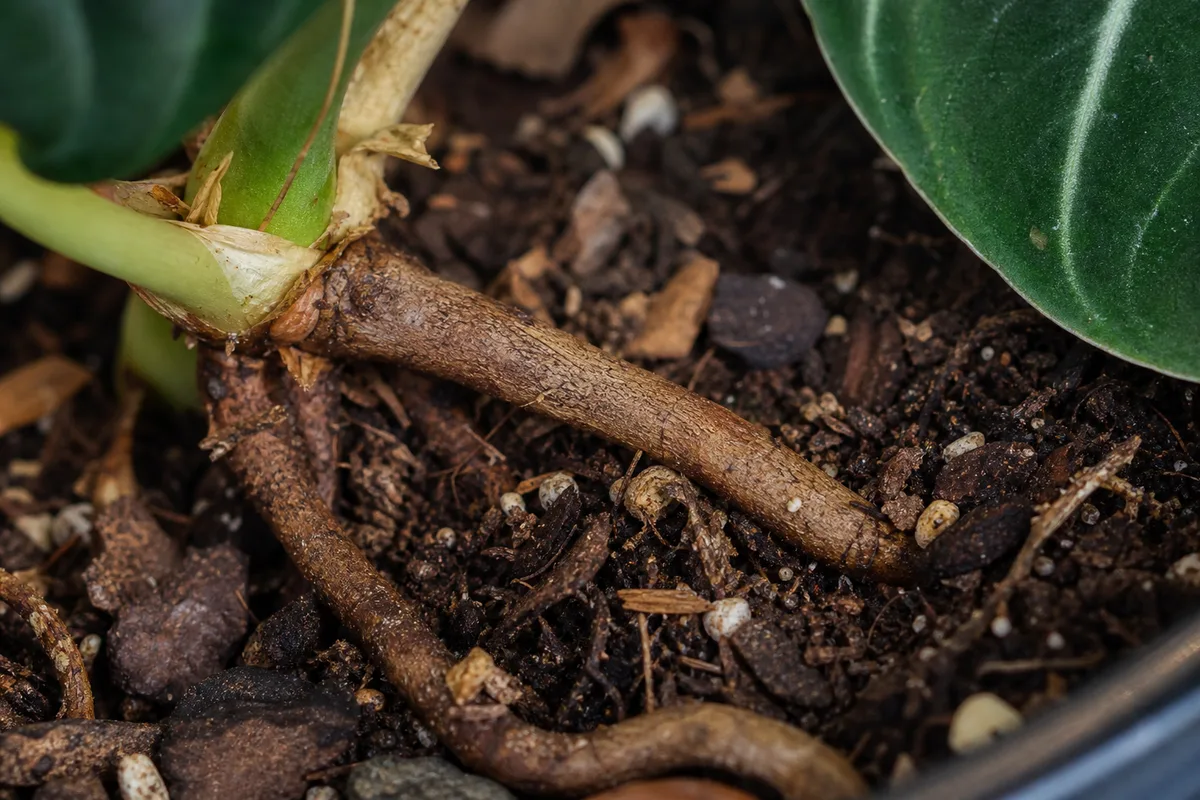
Exposed Roots symptoms on Philodendron Gloriosum - compare with healthy tissue on the same plant.
Normal rhizome at the soil surface. A thick green-brown stem runs horizontally across the pot with the active growth tip pointing forward. The upper portion of the rhizome sits at or above the mix while finer roots disappear into substrate beneath. Small pale root bumps along the creeping stem are anchoring roots, not rot. With its spreading habit, a pot wider than deep suits P. gloriosum-the rhizome needs room to advance, not a deep burying like a tree.
Bare feeder roots or eroded mix. Here the issue is substrate loss or root stress. Pale roots poke from drainage holes, circle at the pot wall, or sit in a hollow where mix washed away. After top watering, lightweight perlite and bark can shift toward drain holes and leave the rhizome edge dry. In tight pots, dense root mats push soil upward until only a thin layer covers the root zone.
Unhealthy exposed tissue turns brown, translucent, or mushy and may smell sour. Velvet leaves may droop even when surface mix feels damp, because damaged roots cannot take up water.
Why Philodendron Gloriosum roots become exposed
Philodendron gloriosum creeps along forest floors in Colombia, anchoring its rhizome to surface debris rather than climbing trunks. Indoors, that habit means the stem belongs on or above the mix, with only feeder roots buried-burying the rhizome deep is a common mistake that stalls growth and invites rot when mix stays wet against the stem.
Mix erosion and settling happen in wide shallow pots when you water from above, when fine perlite floats, or when peat breaks down over two to three seasons. Grit collects at drain holes faster than at the rhizome front, exposing lateral roots while the growth tip still looks fine.
Root binding displaces soil as the rhizome and root mass fill a pot that is too small or too narrow. The Spruce notes typical repot signs include leaning over the pot edge, slowing growth, and smaller new leaves-often overlapping with roots emerging from holes and visible at the soil line.
Chronic overwatering exposes roots indirectly. P. gloriosum is sensitive to overwatering, and root rot is common with wet feet. Wet anaerobic mix breaks down, fine roots rot, and repeated flushing washes away collapsed substrate until bare roots show at the crown.
Philodendron Gloriosum repotting guide errors leave the rhizome too high without replacing lost mix, or pack wet compost around a stem that should stay partly exposed. Disturbing the root ball without resetting mix depth quickly exposes anchoring roots to dry air-especially risky in low-humidity rooms where velvet leaves already struggle.
How to confirm the cause
Work through these checks before repotting or flooding the pot:
- Location - Thick horizontal rhizome with an active tip at the front is normal crawler growth. Bare pale roots at drain holes or an empty ring around the crown is a substrate problem.
- Texture - Firm green-brown rhizome vs. brown mush that slips off when touched.
- Rhizome depth - Upper half at or above the mix is correct; a rhizome buried deep in constantly wet soil often softens even when you water lightly.
- Soil history - Recent repot, years without top-dress, or mix washing out of a wide shallow pot?
- Pot weight and smell - Heavy wet pot with sour odor suggests rot; light pot with firm bare roots suggests erosion or binding.
- Wilting pattern - Limp velvet leaves on wet mix point to root damage; slight limpness on dry mix may be underwatering instead.
- Growth tip - Press gently near the active node. Firm is good; soft, wet, or collapsing tissue is not.
If the rhizome is firm, positioned at the surface, and underground roots stay mostly covered, you likely have normal anatomy or mild erosion-not an emergency.
First fix for Philodendron Gloriosum
For a firm rhizome with bare pale feeder roots at the soil edge: gently top-dress with fresh dry chunky aroid mix-potting soil amended with perlite and orchid bark-keeping the rhizome at the same depth, not buried deeper under wet compost.
Brush away algae or crust only if tissue stays firm. Trim only black mushy root sections with clean scissors. Add mix around exposed feeder roots and across bare zones, tapering so the rhizome upper half stays at or above the surface where this crawler expects it. Water once lightly to settle grit, then let the top 3–5 cm dry before the next drink.
For a normal rhizome already sitting correctly at the surface: leave it alone unless mix has eroded from beneath-then top-dress under and beside the stem without covering the growth tip. Do not mount Gloriosum on a moss pole or bury the creeping stem “for stability”; that traps moisture against tissue meant to breathe at the surface.
Make this one change first before stacking repot, fertilizer, or fungicide.
Step-by-step recovery
- Inspect at drainage holes and the soil edge before unpotting-note color, firmness, and smell.
- If only surface erosion on firm tissue: top-dress bare roots; skip full repot unless more than one-third of the root zone was exposed.
- If roots circle tightly, mix is exhausted, or the rhizome reaches the pot wall: repot in spring into a wide shallow container only one size larger.
- When repotting, position the rhizome on or slightly above the mix with the growth tip forward and unobstructed; bury only feeder roots.
- Trim mushy roots back to firm tissue; air-dry cut surfaces several hours before repotting if rot was present.
- Place in Philodendron Gloriosum light guide with 60–70% humidity so the plant uses water predictably after cover.
- Hold fertilizer until a new velvet leaf unfurls cleanly from the growth tip.
- If the main rhizome segment fails but a firm side section with roots remains, propagate that section rather than waiting on hollow stem tissue.
Recovery timeline
Firm roots covered before they desiccate often stabilize within a few days once mix is reset and watering follows a dry-down rhythm. Mild erosion fixed early may show a new leaf unfurling within two to four weeks in bright, humid conditions. Rot trimmed at the surface needs four to eight weeks before growth resumes confidently. Crispy dried feeder roots rarely regrow-judge success by firm rhizome tissue, neutral-smelling mix, and clean new unfurling leaves, not old velvet color alone.
Lookalike symptoms
- Normal creeping rhizome - Thick stem at the soil surface with an active forward tip; firm, green-brown, on otherwise healthy foliage. Expected terrestrial growth.
- Root rot from overwatering - Mushy texture, sour smell, yellow wilting on wet mix; may expose dead roots as soil collapses. Rotten roots are blackened and mushy rather than firm and pale.
- Underwatering - Light pot, dry mix throughout, crispy leaf margins that plump after one thorough drink-rhizome not rotting, roots not visibly bare from erosion.
- Repotting stress - Symptoms start days after transplant, not gradual erosion over weeks.
- Root-bound drying - Pot empties fast and roots circle inside, sometimes pushing mix up until feeder roots show-overlaps with exposure but needs repot into a wider shallow pot, not only top-dress.
Mistakes to avoid
Do not panic over a rhizome visible above the mix-that is how Gloriosum grows. Do not bury the creeping stem deep to hide “exposed roots”; that invites rot where the growth tip meets wet compost. Do not cover mushy rotted roots without trimming first. Do not keep watering because velvet leaves look limp when soil is already wet. Do not repot into a tall narrow or oversized pot-extra wet mix volume around a small root mass slows drying and repeats the cycle. Do not treat Gloriosum like a climbing philodendron; a moss pole will not fix a crawler that needs horizontal room.
How to prevent exposed roots on Philodendron Gloriosum
Water at the pot edge or use a gentle stream-not a hard flush on the crown that washes chunky mix away. Top-dress with fresh aroid blend each year rather than letting peat collapse in place. Repot into a wider shallow pot before the rhizome hits the container wall and roots displace nearly all soil volume. Allow the top 3–5 cm to dry between drinks so mix structure lasts longer. Keep the rhizome at or above the surface with only feeder roots buried, and maintain 60–70% humidity so surface tissue does not desiccate while the pot dries.
Philodendron Gloriosum care cross-check
Exposed roots often signal a substrate maintenance gap on a plant whose rhizome is designed to crawl at the surface-not confusion between normal stem anatomy and failing soil-line roots. If the pot stays heavy for days after top-dress, improve light and drainage before increasing water. Match pot shape to habit: wide and shallow, not deep and decorative.
When to worry
Same-day action if bare roots at the soil line are black and slimy with a soft growth tip, or if velvet leaves wilt sharply while mix stays wet. Stable winter exposure on a firm rhizome is lower urgency if you top-dress before warm growth resumes. A healthy creeping rhizome visible above the mix alone is not a worry call unless tissue is drying, cracking, or turning mushy.
Conclusion
Exposed roots on Philodendron Gloriosum usually means one of two things: a normal creeping rhizome at the soil surface, or displaced chunky mix around feeder roots-not instant plant death. Confirm location and texture, top-dress firm soil-line roots while keeping the rhizome exposed, repot into a wide shallow container if bound or rotted, and match watering to how your pot actually dries.
When to use this page vs other Philodendron Gloriosum guides
- Philodendron Gloriosum watering guide - Use for routine moisture checks before assuming exposed roots is the main issue.
- Philodendron Gloriosum problems hub - Browse all 22 common issues on this species.