Powdery Mildew on Philodendron Brasil: Causes, Checks &
Quick answer
Powdery mildew on Philodendron Brasil shows as white or gray dusty patches on glossy heart-shaped leaves and trailing stems-often after misting, crowded shelves, or weak light inside overlapping vines. First step: isolate the plant and snip off heavily coated leaves before improving airflow.
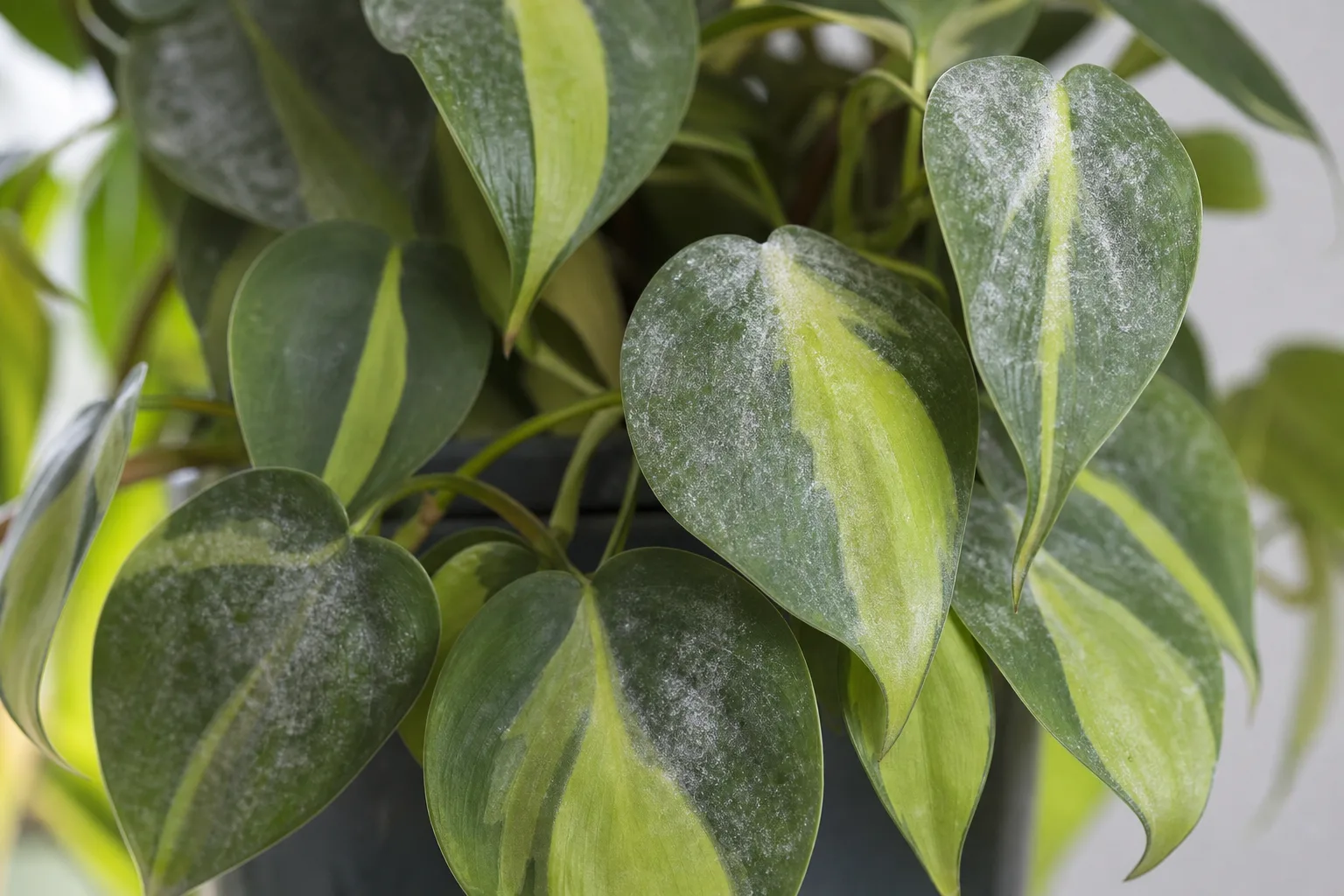
Powdery Mildew on Philodendron Brasil: Causes, Checks & Fixes
This guide covers powdery mildew on Philodendron Brasil. See also the general Powdery Mildew guide, watering, and light pages for this plant.
Powdery Mildew on Philodendron Brasil: Causes, Checks & Fixes
Quick answer
Powdery mildew on Philodendron Brasil (Philodendron hederaceum ‘Brasil’) shows as white or gray dusty patches on glossy heart-shaped leaves and slender green stems. It often appears after misting, crowded trailing vines, or a stretch of weak light that keeps inner foliage shaded and still.
First step: isolate the plant and snip off heavily coated leaves and stem sections before you change watering, repot, or spray anything. On this fast-growing trailing philodendron, removing infected tissue and separating the pot from neighbors stops spore spread faster than fungicide alone-and avoids soaking roots while you treat foliage.
What powdery mildew looks like on Philodendron Brasil
Powdery mildew is a surface fungal growth that forms white, powdery spots on leaves and shoots. On Brasil the signs are easy to miss until you lift overlapping vines:
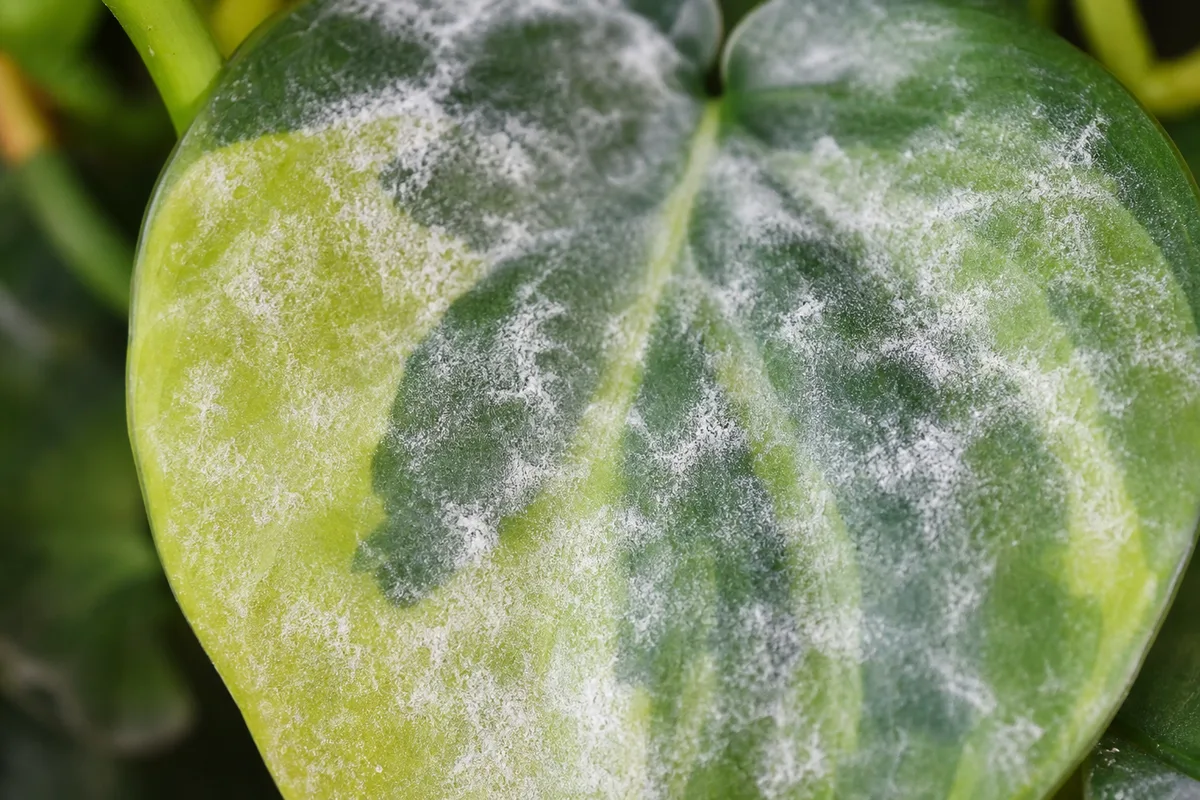
Powdery Mildew symptoms on Philodendron Brasil - compare with healthy tissue on the same plant.
- White or gray dust on the upper surface of heart-shaped leaves, sometimes extending onto petioles and the green stem between leaf nodes
- Circular patches that merge as infection spreads along a trailing section, often starting on one or two inner hearts before outer leaves show coating
- Rub-off powder on your finger when you touch a coated leaf-the underlying lime streak and dark green border may look dull or slightly yellow
- Twisted, cupped, or stunted new hearts at growing tips when mildew is established; infected leaves may yellow and drop early
- No sticky honeydew, webbing, or waxy cotton at nodes-those point to sap feeders, not mildew
Brasil leaves are typically 3–6 inches long with a variegated center stripe of yellow to light green and dark green borders that shift from leaf to leaf. White powder can sit on both the lime streak and the darker margins, which makes it stand out against the glossy surface. Because vines cascade from hangers or climb a support, the inner layer of overlapping foliage often shows powder first while sun-facing outer hearts stay clean. Lift and separate stems during inspection instead of only glancing at the top of the pot.
Compare vine tips with older sections. Mildew on lower, shaded hearts inside a dense tangle while outer growth stays powder-free strongly suggests trapped air and poor light rather than a whole-plant watering failure.
Why Philodendron Brasil gets powdery mildew
Powdery mildew is less commonly listed on philodendrons than on African violets, begonias, ivy, and kalanchoe indoors, but Brasil is not immune. The fungus germinates and infects without free water sitting on the leaf surface and thrives when moderate temperatures (about 60–80°F) combine with shade and stagnant air around foliage.
Brasil adds plant-specific risk:
- Trailing overlap. Long cascading stems cross on hangers and shelves, trapping humid air against heart-shaped leaves the way a dense shrub canopy would outdoors. Poor air circulation favors powdery mildew indoors.
- Misting and overhead watering. Wet foliage that dries slowly-especially on inner hearts-raises humidity at the leaf surface. Brasil prefers medium relative humidity but chronic leaf wetness from misting favors mildew even when roots are correctly dry on a 7–10 day summer schedule.
- Weak or distant light. Dim corners cause plain-green reversion and leggy vines; shade encourages powdery mildew development on many ornamentals, and inner shaded leaves inside the mat are first targets. Low light also favors indoor powdery mildew.
- Crowded plant shelves. Multiple philodendrons, pothos, or ivy touching or sharing a humid corner let windborne spores land on neighboring Brasil vines.
- Soft new growth from excess nitrogen. High nitrogen pushes succulent new tissue that stays coated longer-relevant if you feed heavily while the plant sits in moderate light.
Brasil grows rapidly compared with many collector philodendrons, so a small patch on one inner leaf can spread along a trailing stem within one to two weeks once spores establish in stagnant air.
How to confirm the cause
Work through these checks before buying fungicides or Philodendron Brasil repotting guide:
- Surface rub test - White dust wipes off cleanly with a finger; no waxy smear, insects, or honeydew underneath.
- Hand lens or bright phone light - Fine white spore chains on the leaf face support mildew; mealybugs show distinct cottony bodies with legs at stem joints.
- Location pattern - Coating on inner, shaded hearts and petiole crotches inside the trailing mass points to mildew; uniform crispy scorch on sun-facing outer leaves without powder suggests sunburn.
- Humidity context - Recent misting, bathroom placement, humid weather, or several crowded pots match mildew timing; bone-dry mix and firm roots without surface powder suggest another issue.
- Spread check - Matching white patches on plants sharing a shelf or pruned with the same unsanitized shears increases suspicion.
- Downy mildew cross-check - True downy mildew prefers cooler wet conditions and often shows different spore structures on lower leaf surfaces; Brasil in a warm room with dry soil rarely fits that profile.
If powder rubs off and inner leaves show spore-like dust while mealybug nodes stay clean, treat as powdery mildew even before lab confirmation.
First fix for Philodendron Brasil
Move the plant away from other houseplants, then cut off leaves and stem sections with heavy white coating using clean, sharp scissors. Bag trimmings and discard them in household trash-not indoor compost where spores can spread.
This is the right opening move because:
- Spores travel on air currents between overlapping pots; isolation limits new infections on neighbors.
- Removing coated tissue drops the spore load before you adjust culture or spray.
- Brasil roots easily from healthy cuttings later, but saving a heavily infected trailing section rarely beats starting from clean tissue once culture is fixed.
Sterilize scissors between cuts and between plants. Wear gloves if sap irritates skin-Brasil contains calcium oxalate crystals that can irritate hands and are toxic to pets if chewed.
Do not repot on day one, do not mist hoping humidity helps, and do not fertilize a mildew-stressed plant. Fix the fungus and airflow first.
Step-by-step recovery
After isolation and pruning:
- Improve airflow immediately - Space pots so air moves between them. A low fan on indirect setting helps trailing stems dry without blasting hot air directly on foliage. Increasing air circulation is a primary management step.
- Move to brighter indirect light - Brasil needs Philodendron Brasil light guide for vivid lime streaks anyway. Better light reduces the shaded inner canopy where mildew starts.
- Water at soil level only - Avoid wetting leaves when watering. Allow the top 3–5 cm of mix to dry between waterings on Brasil’s normal schedule; do not compensate for mildew with extra water.
- Apply fungicide only if coating persists - After culture changes, light neem oil or horticultural oil on remaining lightly coated leaves if patches return within a week. Coat upper and lower surfaces and petioles. Keep treated plants out of direct hot sun the same day-glossy philodendron leaves burn easily. Do not combine sulfur and oil within two weeks.
- Scout weekly - Check inner overlapping leaves along trailing sections. Brasil produces constant new heart leaves during active growth-the tissue mildew colonizes first.
- Hold fertilizer until new unstreaked growth appears for two weeks. Excess nitrogen fuels susceptible new shoots.
Repeat pruning if new white spots appear on the same vine section after two weeks of improved conditions-that stem may need cutting back to a clean node.
Recovery timeline
Cultural changes show results within one to two weeks when infection is caught early. Heavily coated heart leaves themselves rarely regain their original lime brightness-judge recovery by clean new growth at vine tips and nodes, not old dull foliage.
Expect one to two new unstreaked leaves per week on a healthy Brasil in bright indirect light during active growth. Winter slowdown is normal; keep airflow steady even if new leaves appear slowly.
Lookalike symptoms to rule out
Mealybugs form white cottony clusters at nodes and leaf axils with sticky honeydew-not a dry powder that rubs off evenly across the blade.
Dust or hard-water spots do not spread to new leaves over days and lack spore chains under magnification.
Normal variegation shift changes the width of lime streaks from leaf to leaf without white dust, curling, or yellowing of coated tissue.
Spider mites cause fine yellow stippling and silk webbing, not a white powdery mat.
Leaf spot diseases show dark bordered lesions or water-soaked patches-not a uniform white coating that wipes off.
Sunburn scorches sun-facing outer leaves with crisp brown patches; inner shaded leaves stay clean without powder.
Mistakes to avoid
Do not mist coated leaves hoping humidity helps-wet foliage overnight in stagnant air worsens fungal pressure.
Do not leave infected trimmings on soil surface or in open compost inside the home.
Do not spray only the upper leaf surfaces. Mildew can coat petioles and stem sections along trailing vines.
Do not place oily or sulfur-treated plants in direct hot window sun the same day.
Do not ignore nearby pothos, ivy, or other philodendrons that look clean. Scout the whole shelf before declaring victory.
Do not increase nitrogen feeding during an active infection-that fuels soft new tissue the fungus prefers.
Philodendron Brasil care cross-check
While treating mildew, keep Brasil’s baseline care steady rather than changing everything at once:
- Light: Bright indirect light supports recovery and keeps lime streaks vivid. Dim corners slow new growth and make it harder to judge whether treatment is working.
- Water: Allow the top 3–5 cm of mix to dry between waterings. overwatering on Philodendron Brasil does not cause powdery mildew but stresses roots while foliage is already weakened.
- Humidity: Target 40–60%. Moderate humidity suits Brasil; the problem is stagnant air inside overlapping vines, not humidity alone.
- Temperature: Keep within 18–27°C (65–80°F). Cooler temperatures near 70°F combined with poor ventilation favor indoor powdery mildew.
- Handling: Brasil is toxic to pets. Wash hands after pruning, and keep treated plants away from cats and dogs that might chew fallen leaves.
How to prevent powdery mildew next time
Scout inner overlapping leaves weekly, especially on trailing sections hanging against a wall or shelf back. Brasil produces constant new heart leaves during active growth-the tissue mildew colonizes first.
Quarantine new plants for two weeks before placing them beside existing Brasil. Mixed nursery baskets often carry spores before top leaves show coating.
Water at soil level and skip leaf misting entirely. If you use a humidifier for Brasil’s 40–60% target, pair it with airflow so trailing stems do not sit in a still humid pocket.
Leave space between pots on shelves and hangers. Overlapping philodendron vines look lush but create the shaded, stagnant microclimate mildew favors.
Keep plants in bright indirect light rather than dim corners. Better light supports Brasil’s variegation and reduces the shaded inner canopy where infections start.
Sterilize pruning tools between plants when trimming multiple philodendrons in one session.
When to worry
Treat as urgent when white coating spreads across multiple nodes on a trailing stem within a week, new heart leaves emerge distorted or fail to open, or matching patches appear on neighboring plants after shared shelf contact or unsanitized pruning.
Discard only when most of the plant is coated, yellowing, and dropping leaves after repeated pruning and culture changes-or when saving it risks spreading spores through a large collection. Bag the plant before moving it to the trash. It may be possible to start a new plant from a cutting of healthy tissue once you have isolated clean growth.
A few coated inner leaves on an otherwise vigorous trailing Brasil is worth treating early, not panicking. Escalate when coating spreads node to node or culture fixes fail after two weeks.
Conclusion
Powdery mildew dulls Brasil’s lime streaks and weakens fast-growing trailing vines when air stagnates inside overlapping foliage. Isolate, prune coated tissue before you spray, and fix light and airflow so new heart leaves emerge clean. That diagnostic path stops a shelf-wide outbreak and saves the vivid variegation that makes this cultivar worth keeping.
When to use this page vs other Philodendron Brasil guides
- Philodendron Brasil watering guide - Use for routine moisture checks before assuming powdery mildew is the main issue.
- Philodendron Brasil problems hub - Browse all 46 common issues on this species.
- Leaf Drop on Philodendron Brasil - Different entry point when symptoms overlap with powdery mildew.