Heat Stress on Philodendron Brasil: Causes, Checks & Fixes
Quick answer
Heat stress on Philodendron Brasil shows as limp trailing vines, inward-curling heart leaves, and crispy brown edges when air or soil temperature climbs above its comfort zone. First step: move the pot away from heat vents, hot glass, and radiators before you change watering.
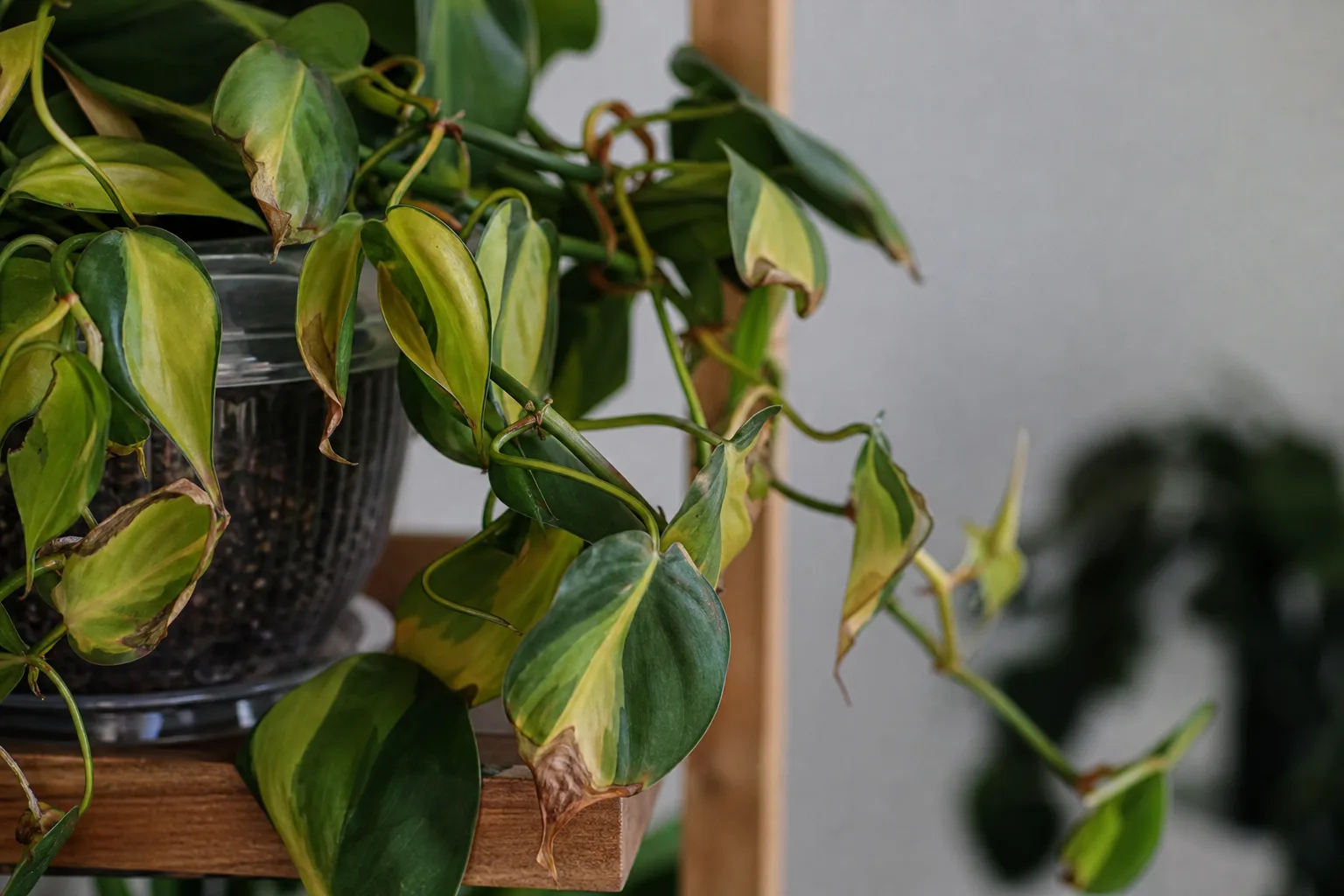
Heat Stress on Philodendron Brasil: Causes, Checks & Fixes
This guide covers heat stress on Philodendron Brasil. See also the general Heat Stress guide, watering, and light pages for this plant.
Heat Stress on Philodendron Brasil: Causes, Checks & Fixes
Quick answer
Heat stress on Philodendron Brasil (Philodendron hederaceum ‘Brasil’) is environmental damage-not a disease. This vining heartleaf cultivar prefers steady warmth around 18–27°C (65–80°F), but thin, heart-shaped leaves lose water fast when hot air, radiant window glass, or heating vents push temperatures beyond that comfort band. The classic picture is afternoon limpness: long trailing vines hang soft, lime variegation looks dull, and leaf edges may curl inward or crisp brown-even when you have not changed your watering routine.
First step: move the pot away from the obvious heat source before you water, fertilize, or repot. Check whether the plant sits beside a supply vent, on a radiator shelf, or within a few centimetres of hot south or west window glass. Heat stress and thirst look similar on limp vines, but the fix starts with cooling the environment-not automatically adding water.
What heat stress looks like on Philodendron Brasil
On this trailing cultivar, heat damage usually shows on the longest outer vines first because those leaves transpire the most and sit farthest from the cooler crown near the pot.
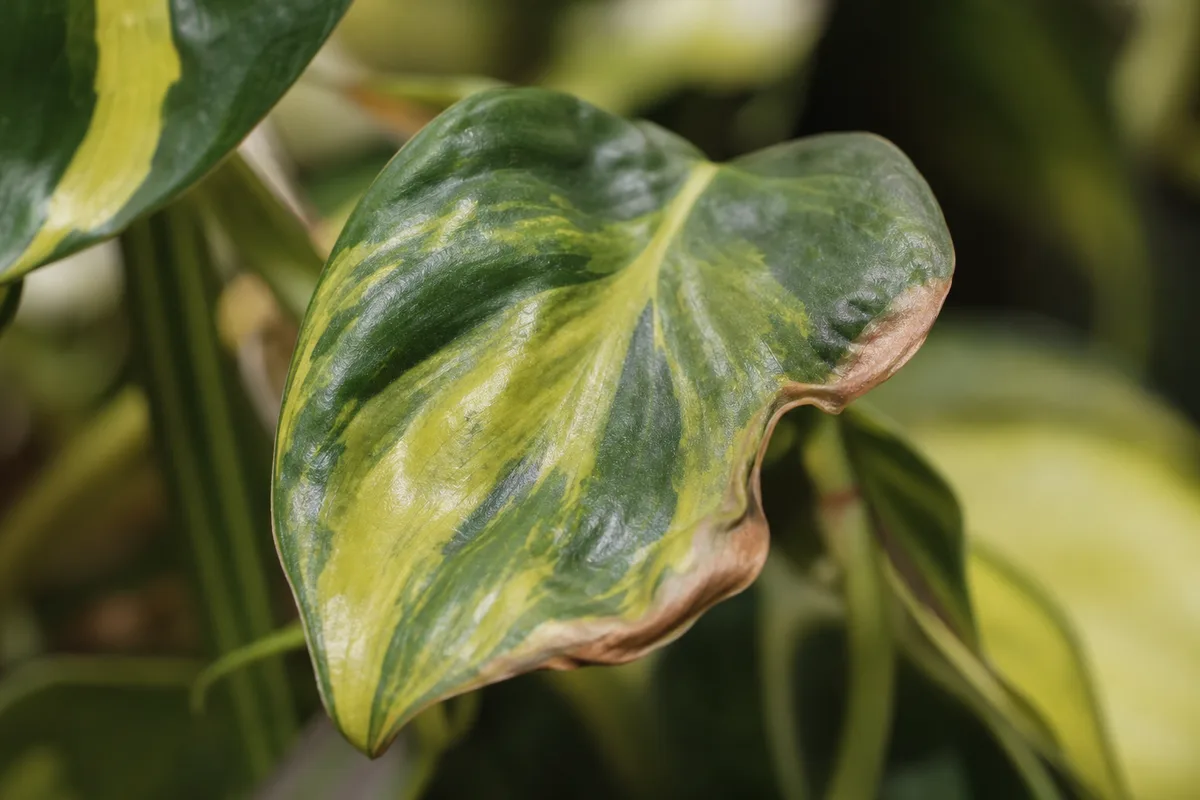
Heat Stress symptoms on Philodendron Brasil - compare with healthy tissue on the same plant.
Typical heat stress patterns:
- Afternoon limpness worst between late morning and evening, often improving overnight when room temperatures drop
- Inward-curling heart leaves with dull, faded lime-and-green variegation
- Crispy brown margins or tips on older leaves after repeated hot dry cycles
- New growth that stalls, stays small, or yellows at the tips during sustained heat
- Vines closest to a window, vent, or heat source drooping while inner stems near the pot still look firm
Temporary heat wilt on moist soil:
- Same limp trailing look, but the mix is moist 3–5 cm down and stems feel firm at the soil line
- Plant firms up by evening or early morning without extra water
- Common when sustained room temperatures climb above roughly 29–32°C (85–90°F) even on a well-watered Brasil
Heat compounded by placement:
- Hanging baskets swinging in the direct path of a ceiling heat vent
- Pots on metal shelves, dark window sills, or enclosed sunporches that store daytime heat
- Plants pushed against single-pane glass that radiates afternoon warmth into the foliage
- Grouped plants where outer leaves bake while the centre stays shaded
Not heat stress-rule these out first:
- All-day limp vines on soggy soil with soft stems at the base (overwatering on Philodendron Brasil or root rot on Philodendron Brasil)
- Bleached white or tan patches on leaves facing direct sun (sunburn, not heat alone)
- Uniform pale plain-green reversion across the whole plant in a dim corner (low light)
- Sticky residue, webbing, or stippling on leaf undersides (pests, not temperature)
Scorched leaf tissue will not heal green. Judge recovery by firm new growth, not by old crispy edges.
Why Philodendron Brasil gets heat stress
Thin leaves and fast summer growth
Brasil is a tropical heartleaf philodendron, not a succulent. Its relatively thin foliage has limited water storage compared with thick-leaved aroids. In Philodendron Brasil light guide during active summer growth, the plant transpires heavily. When air temperature climbs, leaves lose moisture faster than roots can resupply-especially if the pot is small, root-bound, or sitting in a hot microclimate.
Hot windows and radiant surfaces
South- and west-facing glass intensifies heat near the foliage. A Brasil that looked perfect on a spring shelf can wilt daily by midsummer when sun angle shifts and the sill becomes a heat panel. Enclosed sunrooms and conservatory glass can push air and leaf-surface temperatures well above the room reading on a thermostat mounted across the room.
Heating vents, radiators, and HVAC blow
Indoor plants are sensitive to drafts and heat from registers. A supply vent blowing dry warm air across trailing vines dries leaves and soil surface quickly. Winter radiators create the same localized heat-crispy brown edges on leaves that overhang a hot radiator are a classic pattern.
Dry air during heat waves
Brasil tolerates average home humidity around 40–60%, but hot dry air magnifies water loss. Air conditioning and heating both lower ambient humidity. Heat plus low humidity accelerates edge crisping on heart leaves even when soil moisture is adequate.
Watering mistakes during heat
Owners often see limp vines and water reflexively. If the mix was already moist, extra water does not fix heat wilt-it increases root-rot risk. Conversely, a plant in a hot window can go from moist to dry in a single afternoon, and heat stress plus genuine drought stack together.
How to confirm the cause
Work through these checks in order:
- Time pattern - Does limpness appear mainly in afternoon heat and improve overnight? That rhythm fits heat stress or temporary heat wilt.
- Heat-source scan - Within one metre of the pot, identify vents, radiators, hot glass, sunroom glazing, or heat-radiating appliances.
- Soil moisture at depth - Push your finger 3–5 cm into the mix. Moist soil with afternoon-only droop and firm stems points to heat wilt. Light dry pot with limp vines that stay limp until watered points to drought layered on heat-or simple underwatering on Philodendron Brasil.
- Stem firmness - Pinch the main stem at the soil line. Firm green tissue supports heat stress as the working diagnosis. Soft mushy stems on wet soil mean stop watering and inspect roots.
- Leaf pattern - Crispy edges on leaves closest to the heat source, with inner leaves less affected, supports localized heat. Uniform yellow lower leaves on wet soil suggests overwatering instead.
- Recent moves - Did the plant shift to a hotter window, sunroom, or new shelf above a vent in the last week? Timing matters.
If soil is wet, stems are firm, and droop tracks afternoon heat near a known hot spot, heat stress is confirmed. If soil is dry throughout and the pot is light, add deep watering after you move the plant to a cooler stable spot-both issues may be present.
First fix to try
Move the pot away from the heat trigger-vents, radiators, hot window glass, or sunroom glare-and let it stabilize for 24–48 hours before any other intervention.
Pull hanging baskets down from ceiling vents. Slide tabletop pots inward from window panes so no leaf touches glass. In winter, move Brasil off radiator covers and window sills that freeze at night and bake by day.
Do not repot, fertilize, or prune heavily on day one. Do not water automatically when leaves droop-check moisture first. If the top 3–5 cm is dry and the pot feels light after you have cooled the location, water thoroughly once and empty the saucer.
Step-by-step recovery
For heat wilt on moist soil
- Relocate to bright indirect light with stable temperatures in the 18–27°C (65–80°F) range.
- Keep watering on the normal Brasil rhythm-when the top 3–5 cm dries-not extra drinks because vines looked limp at 3 p.m.
- Run a humidifier or group plants if the room is hot and dry; pebble trays help slightly near the pot.
- Expect evening recovery within one to three days once heat exposure stops.
For heat stress plus dry soil
- Move to a cooler stable spot first.
- Water deeply once until water runs from drainage holes, then empty the saucer.
- Recheck in 4–6 hours. Most heartleaf philodendron vines perk when thirst was part of the problem.
- Adjust summer watering-hot rooms dry small pots faster than winter schedules assume.
For scorched or crispy leaf edges
- Stabilize temperature and light before trimming.
- Snip fully brown crispy leaves or edges with clean scissors once new growth looks firm.
- Leave partially green leaves in place-they still photosynthesize while the plant recovers.
For chronic heat exposure in sunrooms
- Relocate to indoor bright indirect light if daily wilting repeats.
- If the plant must stay in the sunroom, add sheer curtains, increase airflow, and monitor soil daily during heat waves.
- Accept that some summer afternoons may still show temporary wilt even with good care.
Recovery timeline
Temporary afternoon heat wilt on moist soil often improves within 24–72 hours after the plant is moved away from the heat source. Vines that were both heat-stressed and underwatered usually firm within 6–24 hours after one thorough watering in a cooler spot.
Crispy brown leaf margins are permanent on the tissue that scorched. Look for new lime-streaked leaves and firm stems at the base over the next one to three weeks as proof of recovery. If no new growth appears after conditions stabilize for a month, reassess roots and light-not just temperature.
Lookalike symptoms
Underwatering: Light dry pot, limp vines that do not recover until watered. Heat and drought often occur together near hot windows-fix placement and moisture.
Overwatering: Heavy wet pot, soft stems, yellow lower leaves. Limp vines on soggy soil are root failure, not heat-philodendrons prefer evenly moist but not soggy soil. More water worsens the problem.
Sunburn: Bleached, tan, or papery patches on the leaf face that faced direct sun. Heat stress can overlap when glass intensifies both light and temperature-move back from direct rays.
Low light: Leggy plain-green growth with firm stems and no afternoon wilt cycle. Heat stress usually has a clear hot microclimate trigger.
Draft stress: Cold AC blasts cause different damage-darkened or translucent patches-not the same crispy heat-edge pattern, though vents can deliver hot dry air in summer.
Mistakes to avoid
Do not water reflexively every time trailing vines droop in afternoon heat-check soil first.
Do not leave Brasil touching hot window glass or directly under a heating vent.
Do not mist once and assume humidity is fixed; ambient humidity matters more than leaf wetting.
Do not fertilize a heat-stressed plant; wait until new growth is firm and regular.
Do not repot during a heat wave unless roots are clearly failing-transplant shock stacks on heat stress.
Do not prune every limp leaf immediately; many perk up after the environment cools.
Philodendron Brasil care cross-check
Brasil performs best with bright to medium indirect light, well-draining potting mix amended with 20–25% perlite, and watering when the top 3–5 cm dries. Target 40–60% humidity and daytime temperatures around 18–27°C (65–80°F). Trailing pots in hanging baskets dry and heat faster than floor pots-weight-check the container during summer.
If afternoon wilt repeats weekly in the same spot, the placement is wrong for summer even if it worked in spring. Shift the plant inward from glass or swap to a cooler bright room rather than increasing water frequency alone.
How to prevent heat stress next time
Keep pots at least 30 cm from supply vents and radiators. Use sheer curtains on south and west windows during peak summer. Move sunroom plants indoors before sustained heat waves if wilting becomes daily.
Water based on pot weight and finger checks, not a fixed calendar-hot rooms accelerate dry-down. Group plants to buffer humidity, and use a humidifier in dry heated rooms during winter.
Scout trailing vine tips weekly in summer; outer leaves show heat stress before the crown does. Rotate hanging baskets occasionally so one side is not always exposed to the hottest afternoon sun.
When to worry
Treat as urgent when limp vines persist into the next morning on dry soil despite watering, when wet soil pairs with soft stems and sour smell, or when crispy damage climbs most of the plant during a heat wave you cannot relieve. Those patterns suggest advancing root failure or combined drought damage-not a one-day heat flop.
Mild afternoon droop on moist soil with firm stems and evening recovery is less urgent-cool the placement and monitor. Replace or heavily cut back a Brasil only when stems collapse at the base and most of the root mass is mushy; otherwise trimmed vines and stable temperatures usually produce new trailing growth within weeks.
Conclusion
Heat stress on Philodendron Brasil is a placement and environment problem before it is a watering mystery. Afternoon limp vines, curling heart leaves, and crispy edges near vents or hot glass point to temperatures and dry air outside this plant’s comfort band. Move the pot away from the heat source, confirm soil moisture at depth, and let firm new growth tell you recovery is underway.
When to use this page vs other Philodendron Brasil guides
- Philodendron Brasil watering guide - Use for routine moisture checks before assuming heat stress is the main issue.
- Philodendron Brasil problems hub - Browse all 46 common issues on this species.
- Brown Leaves on Philodendron Brasil - Different entry point when symptoms overlap with heat stress.