Draft Stress on Philodendron Brasil: Causes, Checks & Fixes
Quick answer
Draft stress on Philodendron Brasil hits when cold AC blasts, winter window glass, or hot radiator air chills or dries trailing vines-often the outer leaves nearest the source. First step: move the pot away from vents, doors, and glass into stable 65–80°F with bright indirect light; do not water on schedule while the mix stays damp in a cold microclimate.
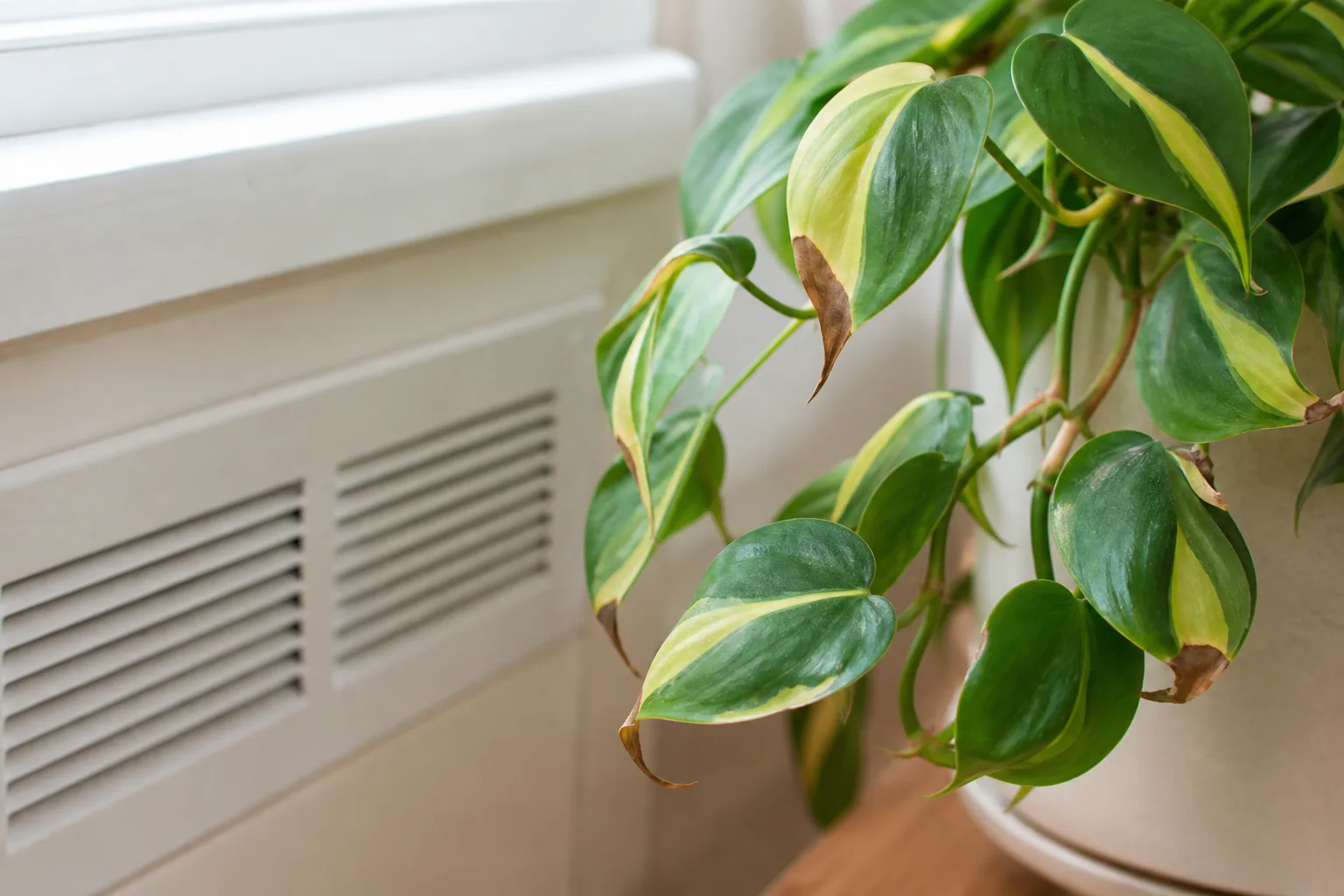
Draft Stress on Philodendron Brasil: Causes, Checks & Fixes
This guide covers draft stress on Philodendron Brasil. See also the general Draft Stress guide, watering, and light pages for this plant.
Draft Stress on Philodendron Brasil: Causes, Checks & Fixes
Quick answer
Draft stress on Philodendron Brasil (Philodendron hederaceum ‘Brasil’) happens when cold air from winter windows, AC vents, or frequently opened doors chills trailing vines-or when hot radiator and furnace blasts desiccate the outer leaves faster than roots can replace water. A room thermostat reading of 72°F means little if a hanger sits in a microclimate that swings every night.
First step: move the pot away from the draft source-cold glass, AC louvers, exterior doors, and heating registers-into a spot with stable room temperature and Philodendron Brasil light guide. Do not mist, repot, or water on schedule while the mix stays damp in a chilled microclimate. Philodendron Brasil tolerates normal dry winter air better than many tropicals, but the actionable problem is usually temperature swing plus wrong watering, not humidity percentage alone.
What draft stress looks like on Philodendron Brasil
Draft injury on this vining heartleaf cultivar often appears unevenly along the cascade:
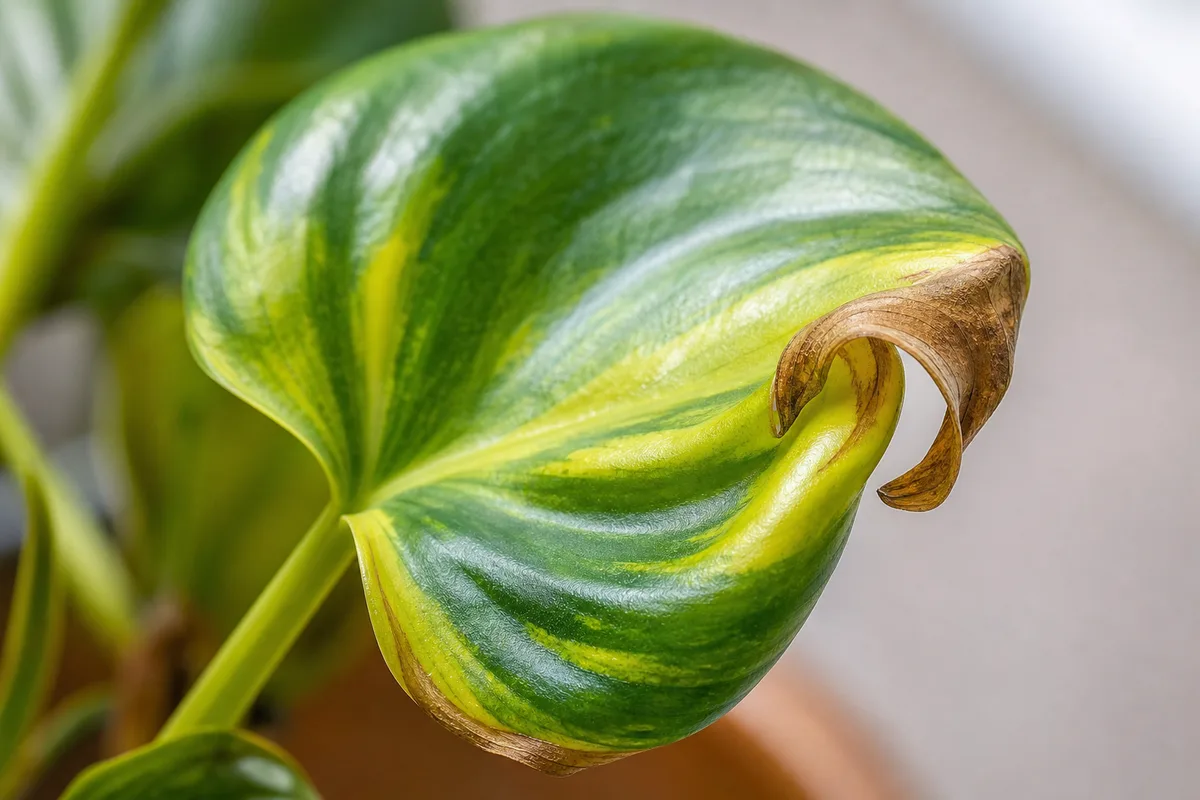
Draft Stress symptoms on Philodendron Brasil - compare with healthy tissue on the same plant.
Leaf drop on one side of the trail
- Hearts detach from strands nearest the window, vent, or door while vines on the sheltered side stay firm
- Drop may follow the first hard frost outside, AC season, or moving the basket to a new room
- Soil may still feel moist if cold roots are absorbing slowly-do not assume underwatering on Philodendron Brasil
Limp, dull, or curled leaves on outer vines
- Leaves touching cold window glass at night become limp or develop dark patches
- Vines closest to a heat register shrivel rapidly-hot dry air pulls moisture through thin heart-shaped tissue faster than roots can supply it
- Lime-and-green variegation may look washed out before edges brown
Crispy brown tips or margins on exposed leaves
- Winter heating plus cold glass creates a dry-cold strip that browns tips on the longest trailing stems first
- Heat-blast scorch often hits the lowest outer leaves on a hanging basket while the crown near the pot looks fine
Slowed or stalled new growth after a move
- Node spacing widens and new leaves emerge smaller or more solid green after a cold shock
- Existing foliage looks dull but stems remain firm at the soil line-classic relocation shock stacked on a new draft path
Unlike ferns or prayer plants, Philodendron Brasil does not dramatically curl from dry air alone. If your only symptom is crispy tips in a heated room with no asymmetric pattern, check watering and spider mites before blaming drafts.
Why Philodendron Brasil reacts to drafts
Tropical temperature expectations
Philodendron hederaceum is a tropical evergreen vine that prefers average indoor air temperatures and medium relative humidity. Clemson Extension recommends 65 to 75 °F at night and 75 to 85 °F during the day for heartleaf philodendrons. Your Brasil cultivar shares that range-roughly 18–27°C (65–80°F) in most homes.
When leaf tissue sits in air below about 60°F (15°C) for extended periods, growth slows. Prolonged exposure below 50°F (10°C) can cause leaf or shoot blackening that does not heal. University of Maryland Extension notes that indoor plants are sensitive to drafts or heat from registers and should be protected from sudden, brief temperature changes.
Trailing growth exposes outer vines first
Brasil grows as a cascading vine with thin petioles and glossy heart-shaped leaves. The longest trailing stems sit farthest from the warm soil mass and closest to window glass, door gaps, and vent paths. That geometry means draft damage shows on one face of the hanger before the whole pot declines-a pattern that helps separate draft stress from root rot on Philodendron Brasil, which usually yellows lower leaves around the crown evenly.
Variegation and thin leaf tissue
The lime streaks on Brasil leaves have less chlorophyll than the dark green margins. Stressed vines may revert toward solid green or produce smaller leaves after cold or heat shock. Thin leaf tissue loses moisture quickly when a heat register blows upward into a hanging basket.
Winter watering mismatch
In fall and winter, Brasil growth slows and the mix stays wet longer in dim corners. Cold roots in damp soil absorb water slowly while pathogens thrive in oxygen-poor, cool mix-exactly the setup for root rot and yellowing leaves. Clemson HGIC warns that wilting can occur when roots cannot take up water even though the soil is wet-often after root damage from overwatering on Philodendron Brasil, but cold-damaged roots behave similarly.
Draft stress becomes dangerous when combined with wet soil, not because Brasil needs a humidifier in every heated room.
How to confirm the cause
Work through these checks in order:
- Airflow mapping - Hold your hand at pot and trailing-vine level at night near suspected sources. Cold blasts from glass, AC supplies, and entry doors feel obvious once you test at plant height, not chest height.
- Asymmetric damage - Compare the side facing the draft source to sheltered vines. Draft scorch and drop favor one face; uniform limp leaves across the whole plant fit drought or overwatering instead.
- Glass contact - Note whether outer leaves rest against window panes. Moving the pot 6–12 inches inward often changes night temperature at leaf level during cold snaps.
- Soil moisture at depth - Insert a finger 3–5 cm into the mix. Bone-dry soil with firm stems may pair heat-draft desiccation with drought. Damp mix days after watering with softening stems points to root stress worsened by chill.
- Stem firmness and smell - Pinch the main stem at the soil line. Firm green tissue supports draft stress alone. Soft, mushy stems or sour odor mean inspect roots for rot triggered by cold wet conditions.
- Seasonal timing - Symptoms appearing after first frost, AC season, a heat-wave window move, or bringing the plant indoors strongly support draft stress over random decline.
If asymmetric damage, normal moisture, and firm stems align with a obvious vent or window, draft stress is the working diagnosis. If the pot is heavy, soggy, and stems are softening, stop watering and plan a root inspection-do not add humidity hoping leaves perk up.
First fix to try
Relocate the pot at least a few inches inward from cold glass and three feet or more from AC supplies, radiator blowers, and frequently opened exterior doors. Choose a spot with bright indirect light-Missouri Botanical Garden recommends bright indirect light and avoiding full sun-and stable room temperature in the 65–80°F range.
That single placement change is the first fix. Hold Philodendron Brasil repotting guide, fertilizer, and heavy pruning for two to three weeks while you watch for new damage on sheltered growth.
Step-by-step recovery
- Move off the draft lane - Shift the hanger or shelf pot away from the source. Rotate a quarter turn weekly so one side is not always exposed.
- Match watering to slowed growth - Let the top 3–5 cm dry before watering. NC State Extension advises keeping soil slightly moist but slowing watering in fall to late winter. Do not water on a summer schedule when the plant is chilled and barely growing.
- Hold fertilizer - Skip feed until new growth looks stable for several weeks. Fertilizing stressed roots in cold wet mix adds salt stress without helping recovery.
- Trim only fully dead tissue - Remove leaves that are fully brown or black after conditions stabilize. Partial tip browning can wait; the plant will shed it or you can trim later for appearance.
- Raise humidity only if tips keep browning in dry heat - Grouping plants or a pebble tray helps marginally. Maryland Extension notes that most indoor environments lack winter humidity, but misting alone rarely fixes draft chill-the placement fix comes first.
If soft stems, sour odor, or spreading yellow leaves appear after draft exposure, unpot and inspect roots-treat mushy tissue as rot damage, not draft scorch alone.
Recovery timeline
Cosmetic marginal browning from a brief heat draft often stabilizes within one to two weeks after relocation. Cold-limp leaves may take several weeks to brown and dry in place or drop cleanly. New heart-shaped leaves along vines may take three to six weeks to appear once warmth and light stabilize. If root rot developed during cold wet conditions, recovery follows root-repair timelines-six to ten weeks or longer, sometimes requiring stem cuttings from healthy nodes.
Judge success by firm stems, no new scorch on sheltered growth, and fresh leaves emerging along vines-not by old damaged edges re-greening.
Lookalike symptoms
Underwatering droops leaves evenly along many vines; the pot feels light and mix is dry throughout. Overwatering and root rot bring yellow mushy leaves, sour soil, and soft stems regardless of drafts. Low humidity alone rarely causes sudden one-sided leaf drop on Brasil-tip browning in dry heat is more common and usually symmetric on exposed leaves. Spider mites leave stippling and fine webbing on undersides in warm dry rooms. Not enough light produces leggy spacing and pale solid-green leaves over weeks, not overnight drop after a cold snap.
Mistakes to avoid
- Do not water heavily while the pot sits in a cold microclimate with damp mix-roots absorb slowly and rot risk rises.
- Do not repot or fertilize on day one hoping to “revive” a shocked vine.
- Do not place leaves against window glass in winter, even if the room feels warm.
- Do not bounce the plant between rooms nightly-temperature stability beats perfect aesthetics.
- Do not assume every crispy tip needs a humidifier before checking vent placement and Philodendron Brasil watering guide.
How to prevent draft stress next time
Keep Philodendron Brasil where bright indirect light is realistic all day-not only where the cascade looks best. Pull pots back from frost-prone glass, AC louvers, and entry doors year-round. In winter, reduce watering and feeding as growth slows, and maintain temperatures above the low end of the comfort range.
When moving plants outdoors for summer, acclimate gradually and bring them inside before nights drop below about 60°F. When shifting rooms indoors, change light exposure over a week rather than in one jump-sudden light and temperature changes stack stress on trailing vines.
When to worry
Contact rot protocol if stems soften at the base, soil smells sour, or yellow leaves spread within a week after cold exposure with wet mix. Trim and discard blackened tissue that followed frost or sub-50°F contact-it will not recover. If the entire root ball is mushy with no firm white roots, propagation from healthy stem cuttings above the damage may be the salvage path.
Those patterns indicate root rot or severe cold injury-not cosmetic draft scorch alone.
Conclusion
Draft stress on Philodendron Brasil is localized chilling or heat desiccation from windows, vents, and doors that drops hearts, limps outer vines, and slows growth-especially dangerous when soil stays wet in a cold microclimate. Confirm with asymmetric damage and airflow mapping; first fix by moving to stable warmth with bright indirect light and matching winter watering to slower growth. Prevent by keeping trailing pots clear of glass and registers, honoring seasonal dry-down, and treating placement before humidity gadgets. Success means firm stems, no new scorch on sheltered growth, and fresh leaves along vines-not perfect old variegated edges.
When to use this page vs other Philodendron Brasil guides
- Philodendron Brasil watering guide - Use for routine moisture checks before assuming draft stress is the main issue.
- Philodendron Brasil problems hub - Browse all 46 common issues on this species.