Water Stress on Philodendron Birkin: Causes, Checks & Fixes
Quick answer
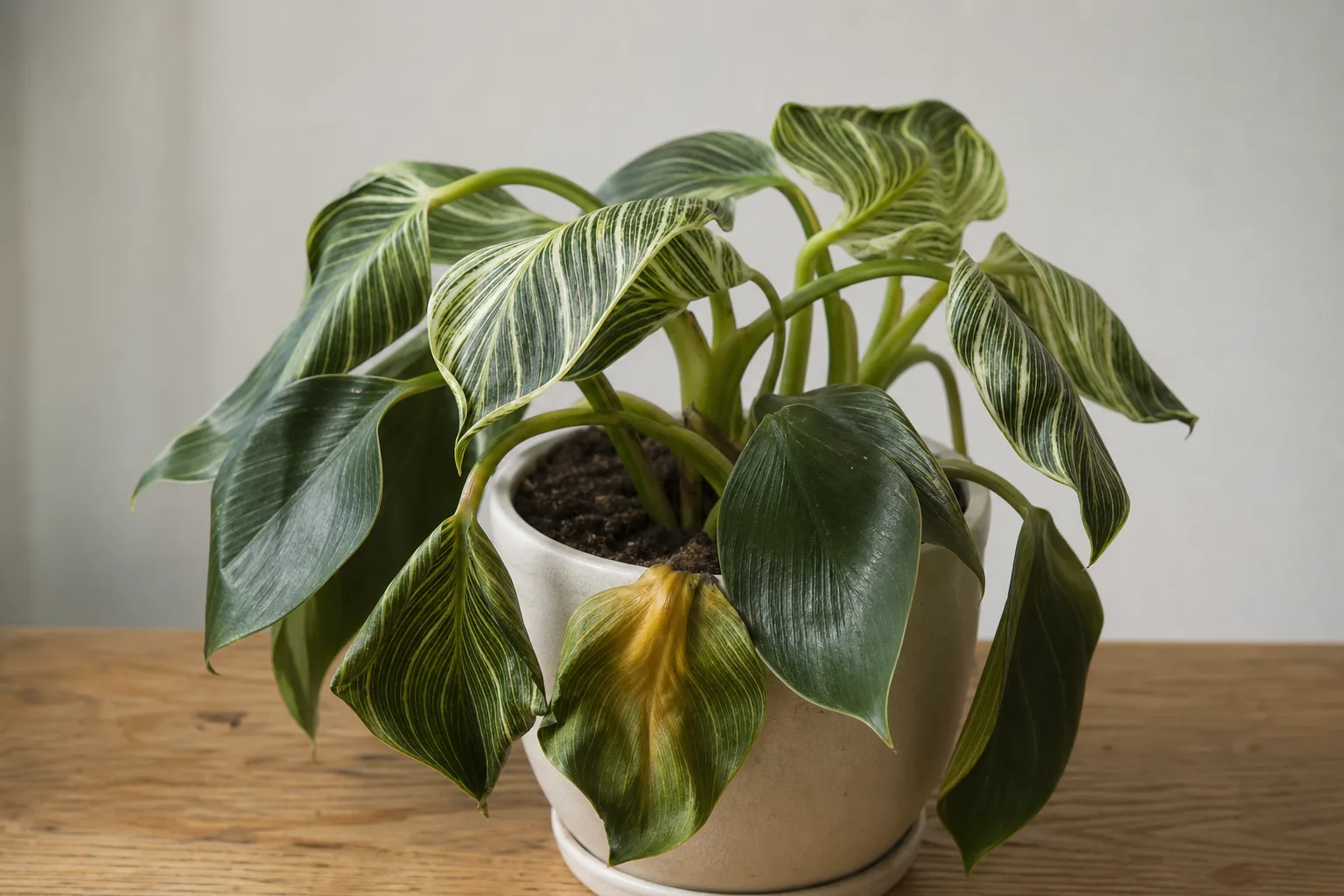
Water stress on Philodendron Birkin is the swing between too wet and too dry, showing as limp pinstriped leaves, yellow lower foliage, and crispy variegated edges on the same plant. First step: stick your finger 3–5 cm into the mix and lift the pot before you water or withhold again.
Water Stress on Philodendron Birkin: Causes, Checks & Fixes
This guide covers water stress on Philodendron Birkin. See also the general Water Stress guide, watering, and light pages for this plant.
Water Stress on Philodendron Birkin: Causes, Checks & Fixes
Quick answer
Water stress on Philodendron Birkin is rarely one bad watering-it is the swing between too wet and too dry that disrupts steady moisture in this compact self-heading aroid. You may see limp pinstriped leaves, yellow lower foliage, dull variegation, and crispy white stripe edges on the same plant because each extreme leaves different damage behind.
First step: stick your finger 3–5 cm into the mix and lift the pot before you water or withhold again. That single check tells you whether Birkin needs a drink, needs to dry out, or needs root inspection-not another calendar guess.
What water stress looks like on Philodendron Birkin
Birkin’s tight rosette of glossy pinstriped leaves reacts quickly when roots cannot maintain even hydration-but it also suffers when wet soil sits around a slow-growing root system. The signature is mixed symptoms from alternating extremes, not a clean drought or flood picture.
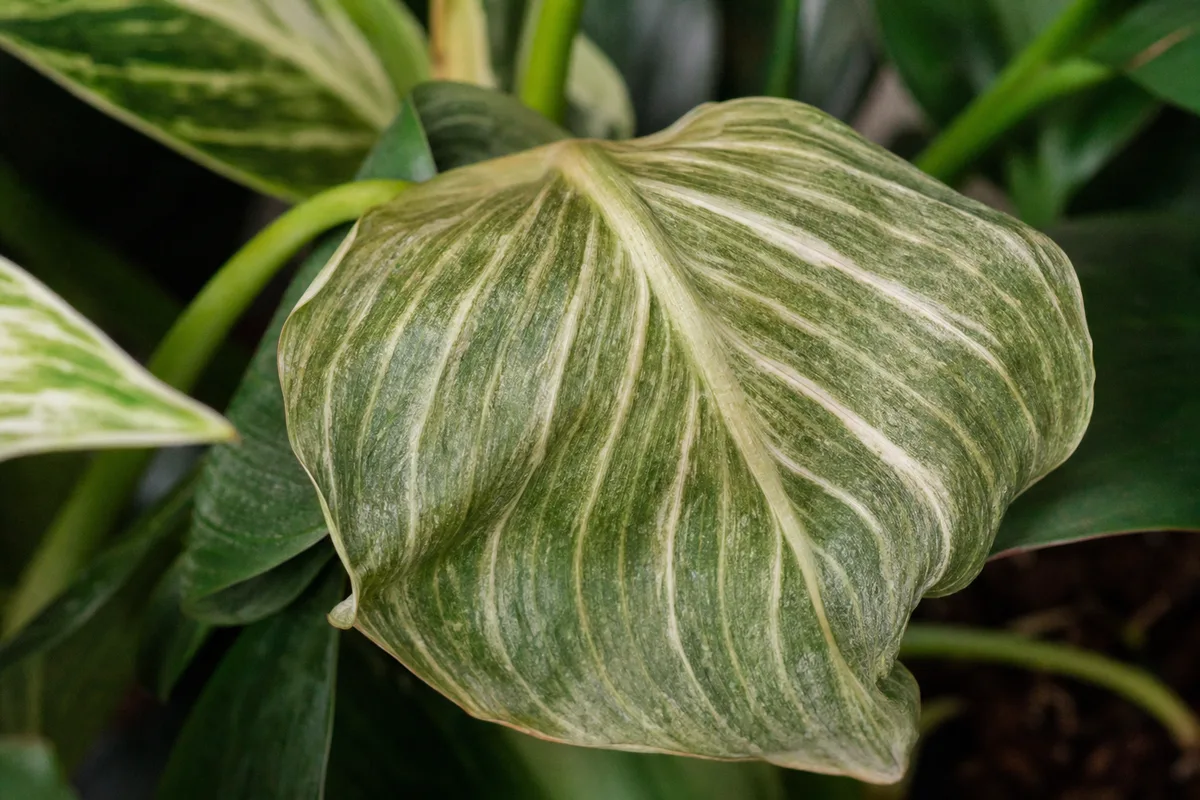
Water Stress symptoms on Philodendron Birkin - compare with healthy tissue on the same plant.
After a dry spell or skipped waterings, expect:
- Limp, drooping pinstriped leaves that feel thin or papery
- Crispy brown edges on white or cream stripes, especially on older leaves
- Leaf curling or inward cupping as the plant limits water loss
- A noticeably light pot when lifted
- Dusty dry mix 3–5 cm down; in severe cases, soil pulls away from the pot wall
After a wet spell or guilt-soaking, expect:
- Yellowing lower leaves, sometimes spreading upward when roots are damaged
- Soft, heavy-feeling foliage while soil is damp
- Dull or washed-out variegation on stressed leaves
- White mold, algae, or fungus gnats after soil stayed moist for days
- Sour or musty smell from the pot
The water-stress pattern is both sets together: one leaf with crispy stripe tips, another yellowing at the base, and the whole crown drooping-because you soaked after a drought, or let it dry hard after keeping it too wet. Pure underwatering on Philodendron Birkin rarely causes yellow lower leaves on damp soil; pure overwatering on Philodendron Birkin rarely causes a feather-light pot and papery edges without wet mix underneath.
Why Philodendron Birkin gets water stress
Birkin wants moist, well-drained, slightly acidic soils and bright, filtered sunlight-a narrow band that punishes calendar watering. It tolerates brief dryness better than constant wetness, but repeated swings confuse roots that need predictable dry-down cycles.
Calendar watering is the most common trigger. Watering every Sunday ignores that cooler rooms, shorter winter days, and dense peat keep pots wet longer while summer brightness in an east or near-south window dries airy mix in just a few days. University of Maryland Extension recommends watering when the plant needs it, not on a fixed schedule.
Guilt-soaking after neglect completes the cycle. Birkin’s pinstriped leaves droop dramatically when dry, which prompts a heavy soak-then the compact crown and root ball sit in wet mix while the owner waits another week. Overwatering can cause root rot and yellowing leaves even after the visible top layer dries.
Overcorrection after fear of root rot pushes the opposite swing. Owners who stopped watering entirely after one yellow leaf often let Birkin dry through completely, then panic-water when variegation looks dull and stems flop.
Seasonal light shifts change water use without changing habit. Birkin in bright filtered light transpires more in warm months; the same plant in a dim corner during winter barely uses water. Continuing summer frequency in low light keeps soil cold and wet-a wet phase that sets up the next dry crisis when you finally skip a week.
Compact crown near damp soil. Birkin grows as an erect rosette with thick upright stems and leaves clustered above the pot. There is little airflow through the crown, so the top layer stays wet longer than on a trailing philodendron whose stems hang away from the mix.
Airy mix in small pots dries fast in air conditioning season. That is correct for root health with perlite and bark, but it means a tabletop Birkin can swing from dry to soaked within one overcorrection if you are not checking depth.
Cache pots and blocked drainage extend the wet phase. Water pools at the bottom while the surface looks dry, so you withhold until the whole plant wilts-then soak again.
How to confirm the cause
Work through these checks in order before Philodendron Birkin repotting guide, pruning, or feeding:
- Soil moisture at 3–5 cm - Stick your finger into the mix at root depth. Dusty dry throughout the top layer with a light pot points to the dry side of stress. Damp or cold mix with a heavy pot points to excess moisture-even if the surface looks dry.
- Pot weight - Lift the container. A dramatic weight drop since last week confirms dry-down; persistent heaviness confirms wet mix.
- Symptom pattern - Crispy stripe edges plus light pot = dry side. Yellow lower leaves plus damp soil = wet side. Both sets together = alternating water stress.
- Recent history - Did you skip two weeks then soak heavily? Water on schedule through a dim winter? Repot into a much larger container? Each pattern fits Birkin water stress.
- Stem base firmness - Softening at soil line on wet mix suggests rot from the wet phase-do not water until you inspect roots.
- Light reality check - Note daily bright indirect hours. Birkin with leggy growth and wet soil is often overwatered for its light level; crisp edges on dry mix in a bright window often mean underwatering layered into the cycle.
- Drainage path - Saucer water sitting more than 30 minutes, sealed cache pots, or mix without perlite keeps the wet phase going.
If soil is wet and stems are softening, treat as possible root rot-not simple drought. If soil is dry, stems are firm, and the pot is light, a thorough watering is appropriate.
First fix for Philodendron Birkin
Stop calendar watering. Check moisture 3–5 cm deep and pot weight, then act on what you find-nothing else today.
- Dry mix, firm stems, light pot: Water thoroughly until excess runs from the drainage holes, then empty the saucer within 30 minutes. Do not mist, fertilize, or repot.
- Wet mix, firm stems: Withhold water until the top 3–5 cm is dry throughout. Improve airflow around the crown. Empty any saucer water.
- Wet mix, soft stem base: Do not water. Unpot and inspect roots before any soak-rot from the wet phase needs trimming and dry repotting, not another drink.
This one pause prevents the classic Birkin mistake: wilting pinstriped leaves trigger a soak when roots are already drowning, or dry soil triggers neglect when the plant only needs a single even watering.
Step-by-step recovery
Once you know which side of the cycle you are on, work in this order:
- Stabilize the rhythm - Water when the top 3–5 cm is dry, then water until a small amount drains out. In warm active growth that may be every 7–10 days; in cool dim winter it may be every 10–14 days-but let the soil tell you, not the calendar.
- Empty saucers every time - Never let Birkin sit in standing water; that extends the wet phase and invites fungus gnats in moist top layer.
- Water evenly across the soil surface - Avoid flooding the crown center where leaves cluster; direct moisture around the root zone at the pot rim.
- Match season to frequency - Reduce checks in late fall and winter when growth slows; increase monitoring-not volume-in bright warm months when room temperature should range from 65 to 85 degrees Fahrenheit.
- Address chronic wetness - If mix stays damp more than a week in moderate light, repot into fresh aroid mix with perlite and bark in a pot only slightly larger than the root ball-after the plant is stable and stems are firm.
- Rewet hydrophobic dry peat - If water runs through in seconds on a dry pot, use a slow soak from the bottom or the double-watering method so the center rewets without one massive flood.
- Trim only dead tissue - Remove fully yellow or collapsed leaves for hygiene. Keep blemished but firm pinstriped leaves; they still photosynthesize while new growth returns.
- Hold fertilizer - Skip feed until new leaves look firm for two weeks. Stressed roots cannot use nutrients reliably.
Recovery timeline
Mild water stress on Birkin often shows improvement within 24–72 hours after the correct single action-firm leaves after a needed soak, or stopped yellow spread after dry-down begins on wet soil.
New pinstriped leaves with crisp white striping usually appear within two to four weeks once rhythm stabilizes in warm bright conditions. Birkin is slow-growing, so do not expect a fast flush like a trailing Brasil vine.
Old damage-fully yellow leaves, crispy brown stripe edges, dull variegation on collapsed foliage-does not revert. Those leaves may drop while the plant replaces them.
If stems stay soft on wet soil after a full dry-down cycle, or no firm new growth appears within six weeks in good light, root damage from the wet phase may be too advanced for simple rhythm correction.
Lookalike symptoms
Several Birkin problems overlap with water stress. Separate them before treating:
Pure underwatering - Light pot, bone-dry mix throughout, limp leaves that perk within hours to a day after one deep watering. No yellow leaves on wet soil, no fungus gnats.
Pure overwatering - Heavy wet pot for days, spreading yellow on lower and sometimes upper leaves, sour smell, soft foliage on damp mix. Not alternating with extreme dryness unless you also skipped water afterward.
Low humidity - Brown leaf tips indicate a lack of humidity on Birkin, often on stripe edges without whole-plant wilt or yellow base leaves. Fix humidity toward 50 to 60% rather than only watering more.
Not enough light - Leggy stems, loss of crisp variegation, and wet soil that never dries because the plant barely transpires. More water makes this worse.
Root rot - Wet soil plus soft stem base, collapse despite dry surface, sour smell. Requires root inspection and repot-not another soak-or-dry guess.
Mistakes to avoid
- Soaking every time leaves droop without checking soil-droop on wet mix means damaged roots, not thirst.
- Withholding water for weeks after one yellow leaf-Birkin still needs regular dry-down cycles, not desert treatment.
- Repotting into a much larger pot to “fix” watering-extra wet soil volume prolongs the soggy phase.
- Misting leaves instead of fixing soil moisture-Birkin needs root-zone rhythm, not surface dampness.
- Fertilizing stressed plants to “push growth”-salt stress on compromised roots worsens edge burn.
- Changing water, light, and pot size all at once-you will not know which adjustment helped.
How to prevent water stress next time
Build a Birkin routine around predictable dry-down, not a fixed calendar:
- Check the top 3–5 cm before every watering with finger or moisture meter.
- Use well-draining aroid mix with perlite and bark; confirm drainage holes and empty saucers within 30 minutes.
- Place Birkin in bright filtered light so it uses water steadily-dim corners need less water, not the same weekly soak.
- Reduce frequency when growth slows in winter; increase monitoring in warm bright months.
- Keep pot size matched to the compact root ball-only slightly larger at repot time.
- After travel or a missed week, reintroduce water with one thorough soak when dry-not daily mini-drinks that keep the crown zone alternately flooded and starved.
Lift the pot weekly until you know how it feels at proper moisture. Firm pinstriped leaves, stable pot weight between waterings, and one new crisp leaf are the signs your Birkin has escaped the wet-dry swing.
When to worry
Escalate beyond rhythm correction when:
- Stems soften at the base while soil is wet or just dried on the surface
- Leaves collapse and stay limp after correct watering on dry mix
- Sour smell persists after withholding water for a full dry-down cycle
- Yellowing spreads to most of the crown within days
- No firm new growth appears after six weeks in adequate light
Birkin is rarely lost to one irregular month if stems stay firm. It may not be saveable if the stem base has collapsed, roots are entirely mushy, and no firm tissue remains for stem-cut propagation. Take a healthy cutting with a node before discarding if any firm section still exists.
Conclusion
Philodendron Birkin punishes watering swings more than occasional mistakes at either extreme. Its pinstriped rosette wilts dramatically when dry and yellows when wet-often on the same plant when care alternates between neglect and overcorrection. One check at 3–5 cm depth and pot weight breaks the cycle before repotting, misting, or feeding. Stabilize the rhythm, match water to light and season, and judge recovery by firm leaves and new crisp pinstripes-not by old damaged tissue turning green again.
When to use this page vs other Philodendron Birkin guides
- Philodendron Birkin watering guide - Use for routine moisture checks before assuming water stress is the main issue.
- Philodendron Birkin problems hub - Browse all 42 common issues on this species.