Thrips on Philodendron Birkin: Causes, Checks & Fixes
Quick answer
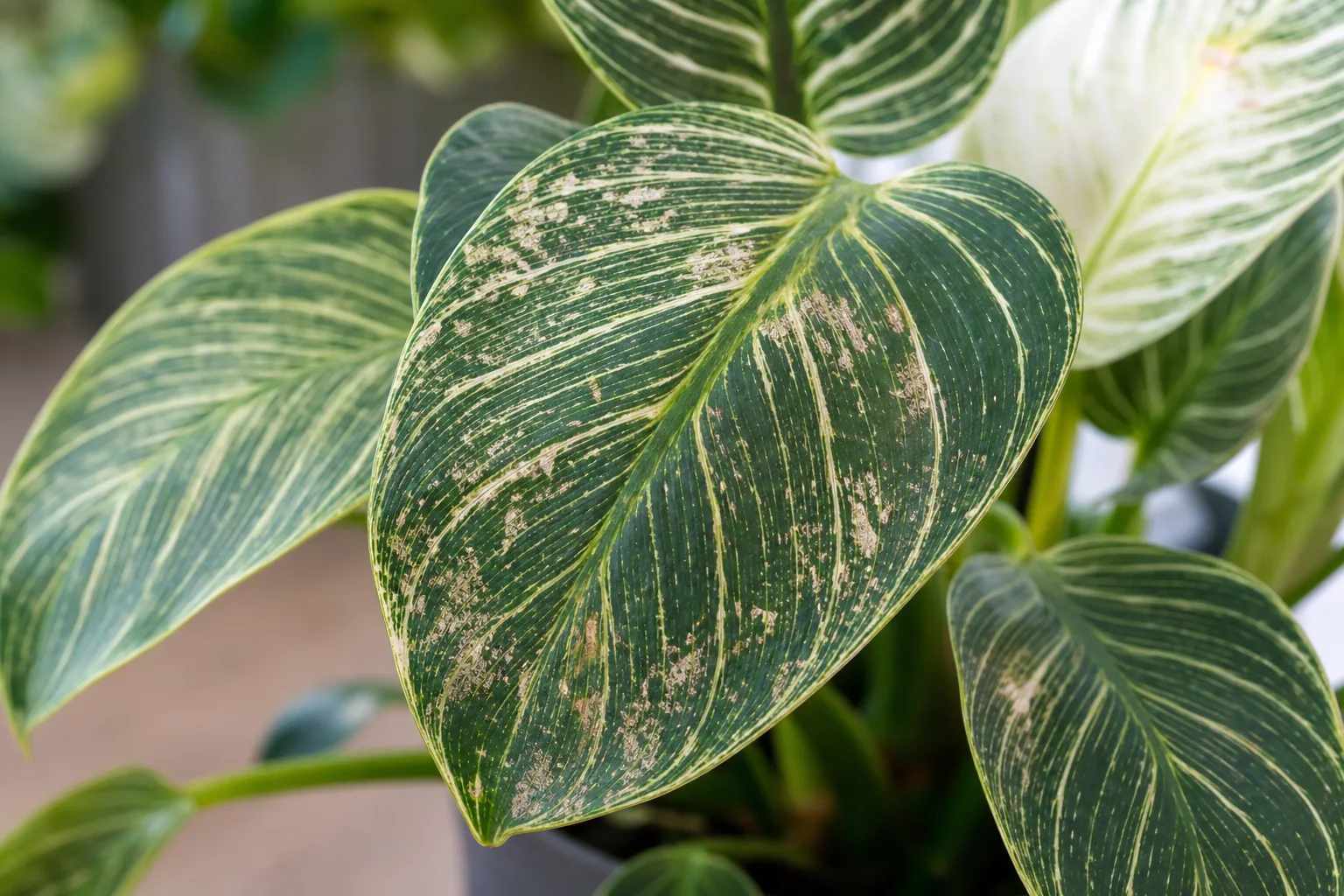
Thrips rasp Philodendron Birkin leaves and hide in the tight rosette crown, leaving silvery streaks and black specks on pinstriped foliage. First step: isolate the plant and tap a suspect leaf over white paper to confirm tiny moving insects before spraying.
Thrips on Philodendron Birkin: Causes, Checks & Fixes
This guide covers thrips on Philodendron Birkin. See also the general Thrips guide, watering, and light pages for this plant.
Thrips on Philodendron Birkin: Causes, Checks & Fixes
Quick answer
Thrips are extremely small insects-generally less than 1/8 inch long that rasp and scrape leaf surfaces, leaving silvery streaks and black fecal specks on foliage. On Philodendron Birkin, they often hide in the tight upright rosette where pinstriped leaves overlap, so damage shows up on new growth first-sometimes looking like a humidity or variegation problem at first glance.
First step: isolate the plant and tap a suspect leaf over white paper. If tiny slender insects fall out and move, you have thrips-not fluoride burn, spider mites, or normal Birkin striping. Confirm before you spray anything on variegated foliage that can react to harsh products.
What thrips look like on Philodendron Birkin
Early damage is easy to miss on variegated foliage. The creamy white or yellow pinstripes are normal; thrip feeding creates a separate pattern of silvery flecks and streaks scattered across the green leaf surface. As feeding continues, leaves lose their glossy sheen and take on a scraped, dull look. Severely affected pinstriped leaves may emerge smaller, puckered, or with broken stripe patterns.
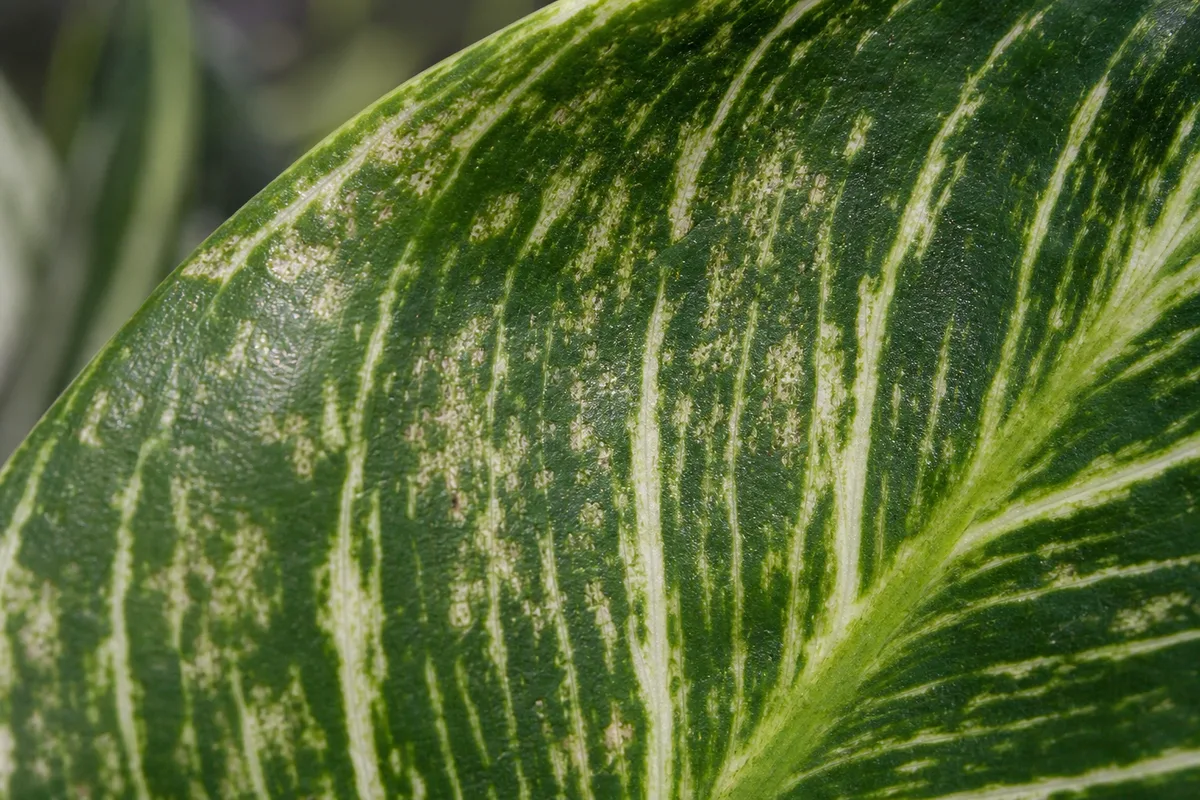
Thrips symptoms on Philodendron Birkin - compare with healthy tissue on the same plant.
Key signs specific to Philodendron Birkin overview’s growth habit:
- Silvery or bronze streaks on green sections of pinstriped leaves, often starting on inner or upper foliage in the rosette crown
- Tiny black varnish-like fecal specks scattered near the silver marks-unlike spider mite stippling alone
- Distorted new growth-emerging pinstriped leaves smaller, warped, or with crinkles already baked in as they unfurl
- Tiny moving slivers on leaf undersides-visible with a hand lens or after tapping foliage over white paper
- Dry scrape damage without sticky honeydew film-unlike aphids, scale, or mealybugs
- Stalled pinstripe clarity on new leaves that should open crisp and glossy
Birkin is slow-growing. A few silver-flecked lower leaves may sit on the plant for weeks before the infestation becomes obvious on newer pinstriped foliage. Do not confuse normal variegation-fixed white or cream stripes following leaf veins-with the random silvery scraping thrips cause.
Why Philodendron Birkin gets thrips
Philodendron species in the aroid family are among the houseplants commonly affected by thrips indoors. NC State Extension lists banded greenhouse thrips among common insect problems on Philodendron ‘Birkin’-this compact cultivar is not immune despite its tabletop size. The most common species on indoor ornamentals is western flower thrips (Frankliniella occidentalis)-a fast-moving pest that feeds on young leaves, buds, and fresh tissue where Birkin produces its slow stream of new pinstriped blades.
Several Birkin-specific factors raise risk:
Compact rosette architecture. Birkin grows as a dense, upright specimen-not a trailing vine. Overlapping pinstriped leaves create sheltered pockets where thrips establish colonies out of sight. The thick stem base and tight leaf axils are prime hiding spots, especially on leaves still unfurling from the crown.
New growth is high stakes. Birkin produces new leaves slowly. Each distorted pinstriped leaf represents weeks of lost visual appeal. Thrips that feed inside furled tissue permanently scar the blade as it expands-damage you cannot reverse by fixing humidity alone.
Warm indoor conditions. Birkin’s preferred room temperatures of 65 to 85 °F overlap the warm conditions where thrips reproduce year-round indoors. Unlike outdoor pests that cycle with seasons, indoor thrips can run overlapping generations on a windowsill collection.
Introduction from new plants. Skipping quarantine after a nursery purchase is the most common route thrips enter a Birkin display. Pests hitchhike on recently purchased philodendrons, cut flowers, or plants moved indoors from patios without inspection.
Stressed plants show damage faster. Birkin stressed by underwatering on Philodendron Birkin, cold drafts, or dim corners is less resilient. Thrips are not caused by poor care alone, but a weakened plant shows silver scarring sooner than a healthy one in the same room.
How to confirm the cause
Work through these checks in order before treating:
- Paper tap test - Hold a white sheet under a pinstriped leaf and tap the leaf sharply. Tiny moving specks 1–2 mm long confirm live thrips. Static dust or mineral spots do not move.
- New-leaf focus - Inspect the newest leaves at the rosette crown. Thrips cluster in sheltered tissue; older lower leaves may look fine while the crown is infested.
- Underside inspection - Lift individual leaves and check backs with a 10× hand lens. Look for nymphs feeding on undersurface tissue, black fecal specks, and slender adults.
- Pattern vs. variegation - Normal Birkin stripes follow veins in organized bands. Thrip silvering is random fine streaks and flecks across green tissue, often with black specks nearby.
- Spider mite rule-out - Mites cause fine yellow stippling and webbing at stem tips in hot dry air. No webbing and visible black frass points to thrips instead.
- Neighbor plants - Inspect other philodendrons, peperomias, and aroids on the same shelf. Thrips crawl short distances and spread through grouped collections.
- Environment check - Recent new plant purchase, open window season, or patio plants brought indoors without washing? These are common introduction routes.
If you find silver flecks but no insects yet, treat as a probable early infestation anyway-thrips reproduce quickly on young leaves and buds.
First fix for Philodendron Birkin
Isolate the plant and tap pinstriped leaves over white paper to confirm thrips.
Move Birkin away from other houseplants immediately. Hold white paper under a suspect leaf at the rosette crown and tap sharply three times. Moving slender insects confirm thrips-not neem oil, not Philodendron Birkin repotting guide, not fertilizer. Keep the pot separated for at least two weeks while treating.
This single step is your diagnostic and containment combined. Birkin’s caudex-like stem and compact crown mean thrips hide in inner leaves you will not reach with a casual glance. Confirm pests before applying any spray to variegated foliage that can spot or dull under unnecessary treatment.
Do not shower the entire plant with cold tap water on day one if you have not confirmed pests. Do not apply horticultural oil or insecticidal soap in the same session before a tap test-wash and treat on separate days once thrips are confirmed.
Step-by-step recovery
Once you have isolated and confirmed thrips, work in this order:
- Quarantine - Keep Birkin separated from the collection for at least three weeks after the last thrips sighting. Thrips crawl and spread to adjacent plants on shelves.
- Remove heavily distorted leaves - Cut pinstriped leaves that are more scar than green tissue to lower pest load and improve spray coverage. Sterilize scissors between cuts. Bag and discard pruned tissue-do not compost near other houseplants.
- Rinse knockdown - In the morning, use lukewarm water to wash leaf undersides and stem joints thoroughly. A strong jet of water can knock thrips off foliage, especially juveniles with softer bodies. Angle the spray upward from below to reach inner rosette leaves.
- Apply contact treatment - If rinsing alone is not reducing silver streak spread, use insecticidal soap labeled for thrips on houseplants. Coat both leaf surfaces, stem joints, and unfurling crown leaves thoroughly. Repeat every five to seven days for two to three cycles-soaps kill on contact, not eggs embedded in tissue.
- Monitor with sticky traps - Hang a blue or yellow sticky card near the plant at canopy height. Rising trap counts mean the population is still building; falling counts mean control is working.
- Treat the collection - If thrips appeared on Birkin, inspect and treat all susceptible houseplants in the same room at the same time. Isolated treatment on one pot often fails when neighbors still harbor thrips.
- Hold fertilizer - Skip feeding until new pinstriped growth emerges clean for two weeks. Salt and nutrient stress on thrip-damaged foliage slows recovery.
If two full soap cycles fail and trap counts stay high, consider spinosad labeled for ornamentals on a test leaf first-variegated Birkin foliage can be sensitive. Always patch-test one leaf before full application.
Recovery timeline
Birkin’s slow growth means visible recovery takes patience. Expect:
- Days 1–7: Silver streaking stops spreading after consistent rinsing; live thrips decrease on paper tap tests
- Weeks 2–3: No new distortion on unfurling leaves; soap cycles cover hatching nymphs
- Weeks 3–6: First new pinstriped leaf opens without silver flecks-your best recovery signal
- Months 2–3: Enough clean new foliage to offset older scarred leaves you chose to keep
Damaged pinstriped leaves do not heal. Silver-scraped tissue stays marked even after thrips are gone. Judge success by new growth quality and absence of fresh streaking, not by old leaves re-greening.
Lookalike symptoms
Normal variegation: Fixed white, cream, or yellow stripes along leaf veins from the moment a leaf opens. No black fecal specks, no progressive silver scraping, no distorted unfurling.
Spider mites: Fine yellow stippling and silk webbing at stem tips in hot dry air-not silvery streaks with black specks. Mites worsen near heating vents; thrips persist year-round indoors.
Mealybugs: White cottony masses in leaf axils and along the stem-not dry scrape damage. Often accompanied by sticky honeydew.
Low humidity alone: Brown crispy tips without silvery flecks or black specks mid-blade. Birkin shows tip burn in dry air, but that pattern lacks the scraped silver texture thrips create.
overwatering on Philodendron Birkin: Yellow limp leaves with wet heavy soil and possible fungus gnats-not dry scrape marks with moving insects on tap tests.
Mistakes to avoid
- Spraying only the tops of pinstriped leaves - Thrips cluster on undersides and in the rosette crown. Birkin’s overlapping leaves require you to lift foliage and treat from below.
- Stopping after one treatment - Eggs hatch inside tissue on staggered schedules. One soap application leaves the next generation untouched.
- Treating only Birkin when neighbors are infested - Thrips re-colonize from adjacent pots within days.
- Confusing stripes with silver scraping - Treating a healthy variegated plant wastes effort and stresses clean foliage.
- Repotting or fertilizing during active infestation - Extra stress on a pest-weakened Birkin slows recovery. Fix the thrips first.
- Using dish soap mixtures - Use labeled insecticidal soap products-detergents and additives can burn variegated Birkin leaves.
- Returning an isolated plant too soon - Thrips eggs protected inside tissue hatch over weeks; one application rarely clears an infestation.
Birkin care cross-check
While treating thrips, keep baseline care steady-do not stack multiple changes:
- Light: Bright filtered light. Too dim slows recovery; direct hot sun worsens leaf stress during treatment.
- Water: When the top 3–5 cm of mix is dry. Avoid soggy soil, which invites different problems.
- Humidity: Target 50–60%. A humidifier near the quarantine zone helps more than misting leaves daily.
- Temperature: Stable 18–26°C (65–79°F). Cold drafts and heat blasts both stress recovering foliage.
- Handling: Birkin contains calcium oxalate crystals toxic to pets. Wash hands after handling damaged leaves and keep the plant out of reach during treatment.
How to prevent thrips next time
Scout Birkin weekly during active growth months. Check the rosette crown and leaf undersides with a hand lens-five minutes catches colonies before silver streaks spread across pinstriped foliage.
Quarantine new plants for two weeks before placing them beside Birkin. Tap leaves over white paper on arrival-even healthy-looking nursery stock can carry low-level thrips.
Keep humidity in Birkin’s preferred range with a humidifier rather than relying on mist alone. Moderate humidity supports Birkin’s normal care without creating the fungal conditions that heavy misting on a tight rosette can encourage.
Avoid crowding plants on shelves. Leave space for airflow and easy underside inspection.
When moving patio plants indoors in fall, inspect and wash them before they join Birkin in the same room. Outdoor summer plants often carry thrips into warm winter interiors.
Inspect leaf undersides whenever you check soil moisture. Early silver flecks on one pinstriped leaf are easier to treat than a distorted crown on a slow-growing specimen.
When to worry
Treat thrips as urgent when:
- Silver streaking spreads to multiple pinstriped leaves within a week
- Every new leaf emerges distorted, stunted, or heavily scarred
- Paper tap tests still show thrips after two full treatment cycles
- Thrips appear on several plants in the same display
- Mosaic-like mottling or severe decline follows thrips scarring on multiple leaves-thrips can transmit viruses on ornamentals
Birkin may not be worth saving if most foliage is scarred and distorted, the stem is bare, and repeated treatments fail after six weeks. In shared collections, a heavily infested plant risks the rest of your philodendrons. Bag and discard rather than prolonging a reservoir of thrips.
Conclusion
Thrips on Philodendron Birkin hide in the compact pinstriped rosette and leave silvery scars that mimic care stress or variegation quirks. Catch them early with tap tests and underside checks, isolate immediately, and confirm pests before reaching for sprays. Recovery is measured in clean new pinstriped leaves-not repaired old ones. Keep humidity steady, scout weekly, and quarantine new arrivals so Birkin’s signature stripes stay crisp season after season.
When to use this page vs other Philodendron Birkin guides
- Philodendron Birkin watering guide - Use for routine moisture checks before assuming thrips is the main issue.
- Philodendron Birkin problems hub - Browse all 42 common issues on this species.
- Brown Tips on Philodendron Birkin - Different entry point when symptoms overlap with thrips.
- Yellow Leaves on Philodendron Birkin - Different entry point when symptoms overlap with thrips.