Low Humidity on Philodendron Birkin: Causes, Checks & Fixes
Quick answer
Low humidity browns the tips and edges of Philodendron Birkin's pinstriped leaves-especially the pale streaks-in heated winter rooms. First step: measure humidity near the pot and run a humidifier or pebble tray to reach 50–60%, not occasional misting.
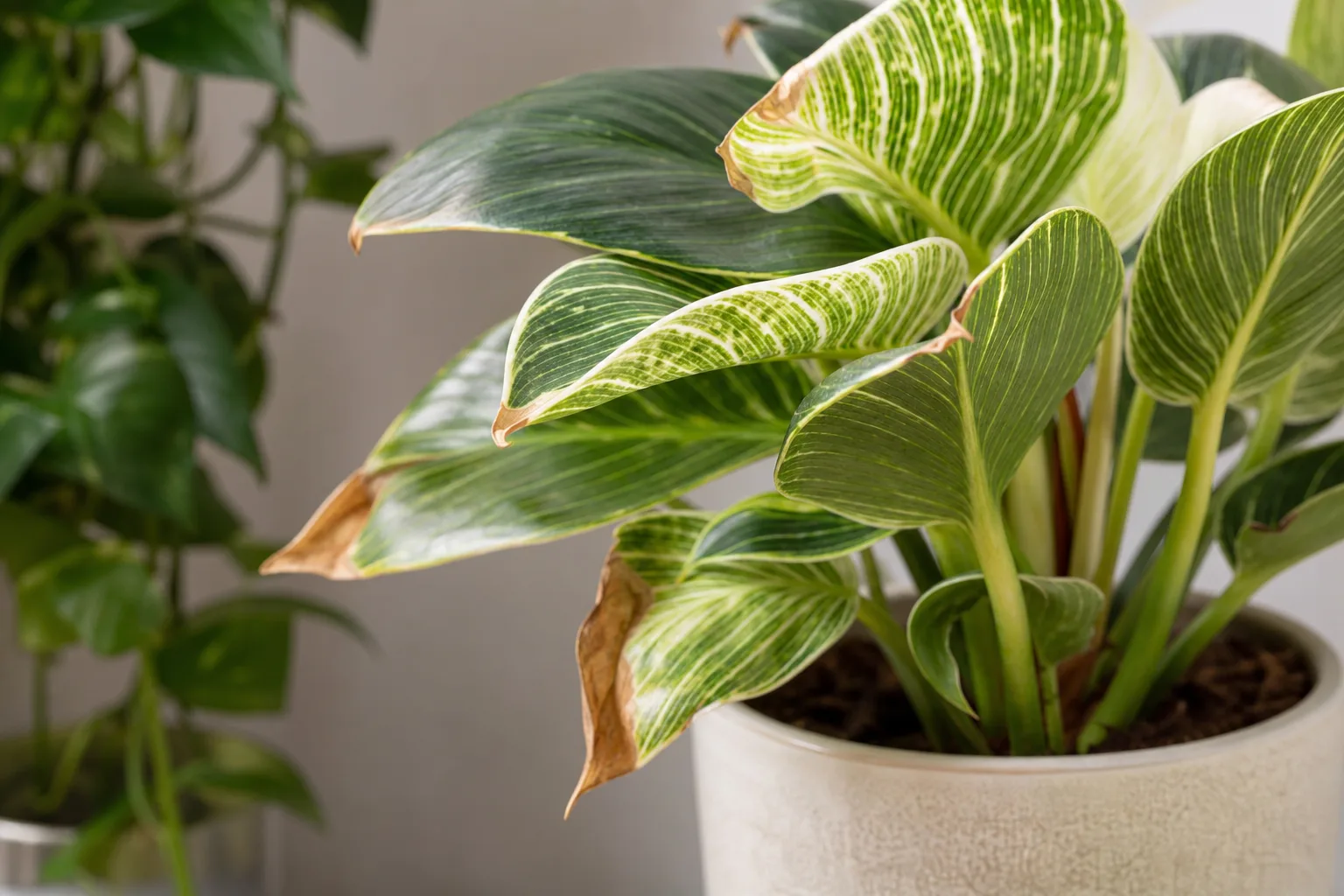
Low Humidity on Philodendron Birkin: Causes, Checks & Fixes
This guide covers low humidity on Philodendron Birkin. See also the general Low Humidity guide, watering, and light pages for this plant.
Low Humidity on Philodendron Birkin: Causes, Checks & Fixes
Quick answer
Philodendron Birkin is a compact, self-heading philodendron whose creamy white pinstripes lose moisture faster than solid green tissue when indoor air runs dry. NC State Extension links brown leaf tips on this cultivar directly to a lack of humidity and recommends 50 to 60% relative humidity with room temperatures from 65 to 85°F.
First step: check humidity near the pot with a hygrometer or estimate from winter heating patterns. Most homes drop to 10–20% humidity during winter, especially near radiators and forced-air vents. If readings sit below 40% and leaf margins are crisping, raise local moisture before Philodendron Birkin repotting guide, fertilizing, or trimming aggressively.
What low humidity looks like on Birkin
Low humidity on Birkin shows up as environmental desiccation-not disease, pests, or rot. The plant stays upright with firm stems while leaf margins dry out from the outside in.
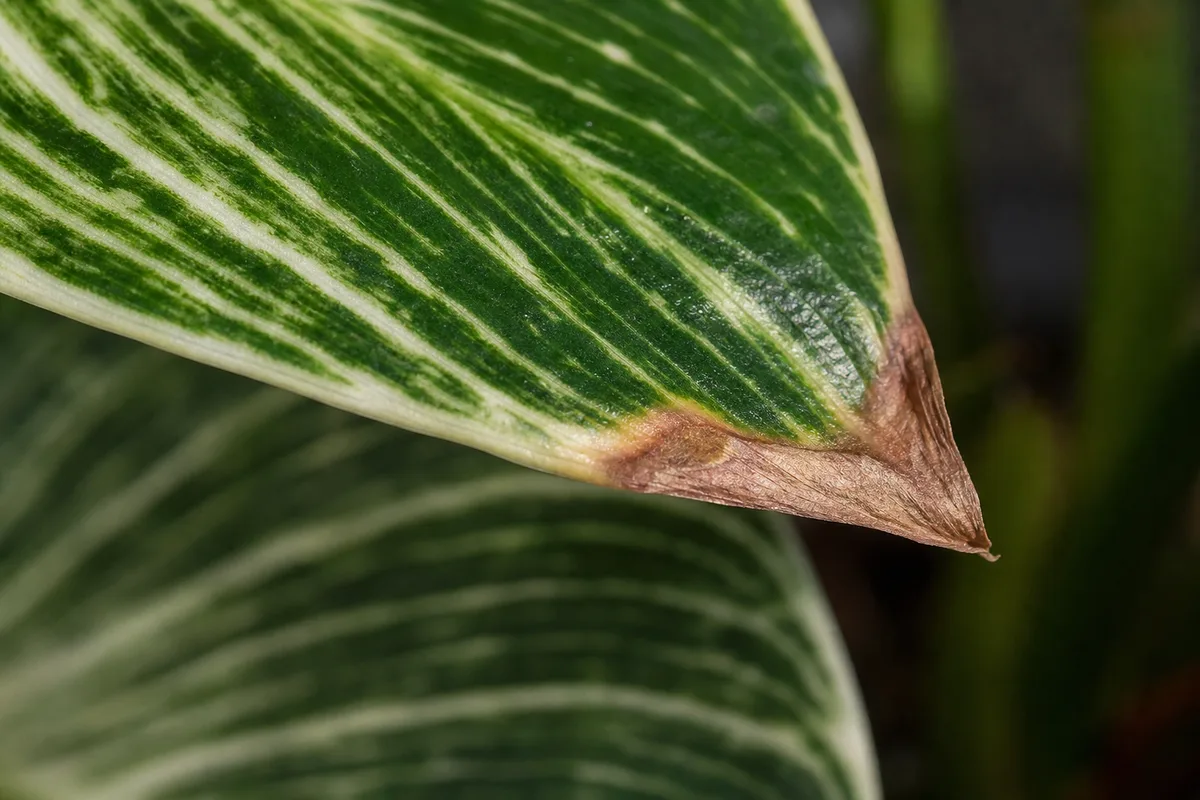
Low Humidity symptoms on Philodendron Birkin - compare with healthy tissue on the same plant.
Typical dry-air patterns on Birkin:
- Tan or brown crispy edges and tips, often worse along white or cream pinstripe bands
- New leaves unfurling wrinkled or with thin, papery margins that never fully smooth
- Older leaves holding green centers while only the farthest leaf edges desiccate
- Damage appearing or worsening after heating season starts, AC runs constantly, or the plant moves closer to a vent
- Multiple houseplants in the same dry room showing similar marginal crisping
What distinguishes Birkin from generic houseplant dryness:
Birkin’s variegated tissue contains less chlorophyll and less structural bulk than the green center, so pale streaks crisp before the rest of the leaf when transpiration outpaces moisture delivery. A solid green heartleaf philodendron in the same room may look fine while Birkin shows edge burn first.
What it is usually not:
- root rot on Philodendron Birkin pairs crisping with yellow lower leaves, wet soil that stays soggy for days, and soft stems-not dry tips alone on firm plants
- Spider mites leave fine stippling and webbing on undersides, not clean papery margins without insects
- Sun scorch concentrates on pale bands after a sudden move toward harsh afternoon glass, often with bleached patches rather than uniform winter edge crisping
- overwatering on Philodendron Birkin yellows whole leaves from the base; humidity stress typically spares the leaf center until air stays chronically dry
Why Birkin gets low humidity stress
Several indoor conditions strip moisture from Birkin foliage faster than this tropical cultivar can replace it through its roots.
Winter heating and HVAC
Forced-air furnaces, heat pumps, and radiators pull relative humidity down sharply. Iowa State Extension notes that many homes reach only 10 to 20% humidity in winter-well below the 40 to 50% range most tropical houseplants prefer. Birkin placed on a desk near a floor vent or above a radiator experiences localized air even drier than the rest of the room.
Birkin’s humidity preference versus average homes
NC State recommends 50 to 60% humidity for Philodendron Birkin in warm room conditions. Birkin tolerates average household humidity better than velvet-leaf philodendrons or calatheas, but prolonged exposure below 40%-especially when combined with active growth or direct airflow-shows on pinstripe edges within weeks.
Transpiration and leaf architecture
Leaf tips and margins are the farthest points from roots. When air is dry, Birkin loses water through transpiration faster than roots can supply it, and marginal tissue dies first. Slow-growing Birkins kept in the same bright corner for months may look fine until a dry winter pushes every new pinstriped leaf to emerge with crispy edges.
Drafts and microclimates
Cold drafts from windows and hot drafts from vents both increase effective dryness at the leaf surface. Birkin is not frost-tolerant and cold drafts should be avoided; a plant touching winter window glass or sitting in the path of a heating register loses moisture from both sides of the leaf.
Stacked stress from inconsistent watering
Low humidity alone causes marginal crisping, but allowing a plant to dry out too long between waterings also browns leaf edges and tips. Birkin wants the top 3–5 cm of mix to dry before the next drink-not bone-dry pots for days in already dry air. The two stresses stack easily in heated apartments.
How to confirm the cause
Work through these checks before changing multiple care variables at once:
- Humidity reading - Place a hygrometer within 30 cm of the pot at leaf height. Under 40% in winter with crisping margins strongly implicates dry air on Birkin. Above 50% with ongoing tip burn suggests watering, water quality, or light stress instead.
- Airflow and placement - Note heating vents, fireplaces, frequently opened exterior doors, and window glass the foliage touches. Draft paths explain localized damage on one side of the rosette.
- Seasonal timing - Did crisping start or worsen when heat kicked on? Dry-air damage often tracks HVAC cycles rather than appearing randomly mid-summer.
- Watering pattern - Stick a finger 3–5 cm into the mix. Light pots with curled leaves before crisping may indicate drought stacked on low humidity; heavy wet pots with yellow lower leaves point away from humidity as the sole cause.
- Light history - Recent moves toward south- or west-facing glass can scorch pale pinstripes independently of humidity. Check whether only white bands browned after a relocation.
- Root and stem check - Firm upright stems and white or tan healthy roots support an environmental diagnosis. Soft stems, sour soil smell, or mushy roots mean root stress is driving symptoms-humidity fixes alone will not solve that.
- Pest scan - Inspect leaf undersides for mites, mealybugs, or scale. Clean dry margins without webbing or sticky residue keep the focus on humidity.
If humidity reads low, the plant sits near a vent, and stems stay firm, you likely have your answer without repotting.
First fix for Birkin
Raise humidity around the plant to the 50–60% range using a cool-mist or evaporative humidifier-not misting alone.
Place the humidifier within a few feet of the pot so the Birkin sits in the elevated moisture zone. Alternatively, set the container on a pebble tray with water kept below the pot bottom so roots never sit submerged. Grouping plants together also raises local humidity as collective foliage traps evaporating moisture.
Move the Birkin off heating vent paths and away from cold window glass while humidity stabilizes. Misting is not an effective long-term humidity strategy because droplets evaporate within minutes and would need repeating many times daily to matter.
Do not repot, fertilize, or flush salts on day one unless you confirmed soggy roots or obvious mineral crust-fixing air moisture first tells you whether crisping was purely environmental.
Step-by-step recovery
After humidity is addressed, work through secondary steps based on what your checks revealed:
- Stabilize placement - Keep bright, filtered light without scorching pale pinstripes. Pull back from harsh afternoon sun if white bands bleached after a recent move.
- Even out watering - Water thoroughly when the top 3–5 cm is dry; empty the saucer after each drink. Avoid letting the mix go dust-dry for days in already dry air.
- Trim cosmetic damage - Snip fully dead tip tissue with clean scissors, following the natural leaf curve and leaving a thin brown margin to protect living cells. Trimming improves appearance but will not stop new browning until the underlying cause is fixed.
- Switch water if needed - If older leaves keep crisping after humidity improves, try filtered or rested tap water for four to six weeks in case minerals compound marginal burn.
- Hold fertilizer - Skip feeding until new leaves emerge with clean margins for two weeks. Salt stress on already-marginal tissue slows recovery.
- Monitor new growth - Judge success by the next unfurling pinstriped leaf, not by old damaged tissue re-greening.
Recovery timeline
Environmental humidity stress on Birkin resolves gradually-you measure progress by new leaves, not old ones.
- Week 1–2: No spread to newly opening leaves once humidity holds above 45% and drafts are removed; existing crisp edges stay crisp.
- Week 3–4: The next pinstriped leaf should show cleaner margins if dry air was the main trigger.
- Week 4–8: Wrinkled leaves from low humidity during unfurling may partially smooth but rarely flatten completely; focus on whether subsequent leaves open cleanly.
- Month 2+: If every new leaf still emerges with crispy edges despite 50%+ humidity, stable watering, and filtered light, inspect roots for hidden rot or reassess direct sun on pale tissue.
A firm upright stem and continuing slow leaf production mean the plant is recovering even when older margins look rough.
Lookalike symptoms
| What you see | Likely cause | What to do |
|---|---|---|
| Crispy margins, green leaf centers, winter near vents | Low humidity | Humidifier or pebble tray; move off draft paths |
| Brown only on white pinstripes after window move | Sun scorch | Filter light; rotate gradually |
| Crisp tips plus yellow lower leaves and wet mix | Root stress from overwatering | Stop watering; inspect roots before repotting |
| Fine speckling and webbing on undersides | Spider mites | Rinse and treat pests-not a humidity fix |
| Tips on oldest leaves; white soil crust | Salt or mineral buildup | Flush pot; reduce fertilizer; try filtered water |
Low humidity is the most common reason for brown leaf tips in homes, but brown leaf tips often result from more than one factor at once-dry air plus occasional drought is common in heated apartments. Address both if checks point that way.
Mistakes to avoid
- Misting on a schedule - Brief leaf wetting does not replace a humidifier and can invite fungal spots if foliage stays damp in dim corners.
- Ignoring vent placement - Running a humidifier in a large room while the Birkin sits in a direct heating draft leaves the plant in a dry microclimate.
- Overwatering to compensate - Soggy soil does not fix dry air and risks root rot on a slow-growing philodendron.
- More fertilizer to “green up” leaves - Feeding a stressed Birkin adds root-zone salts and can worsen marginal burn.
- Expecting old tissue to heal - Crisped margins are permanent; recovery shows on new pinstriped leaves only.
When trimming damaged leaves, remember philodendron contains calcium oxalate crystals toxic to pets; wash hands after handling cut tissue.
How to prevent low humidity problems
- Run a humidifier or pebble tray through heating season; Birkin performs best at 50 to 60% humidity for clean pinstripe variegation on new growth.
- Keep the pot away from heating vents, radiators, and cold window glass that creates draft microclimates.
- Group plants together on a shared tray to trap collective transpiration when a humidifier is not available.
- Water when the top 3–5 cm dries; reduce frequency in winter when growth slows but do not let pots go bone dry in dry air.
- Rotate the pot a quarter turn weekly for even light without scorching one face against glass.
- Check humidity with a hygrometer when heating season starts rather than waiting for visible crisping on pale pinstripes.
When to worry
Low humidity alone is cosmetic and slow. Treat it as urgent when:
- Crispy margins spread while soil stays wet and lower leaves yellow-possible root rot, not humidity alone
- Stems soften at the base or the pot smells sour
- New leaves emerge small, twisted, or heavily browned despite corrected humidity above 50%
- Webbing, sticky residue, or moving dots appear on undersides-switch to a pest diagnosis
A compact Birkin with firm stems, steady if slow new pinstriped leaves, and only older marginal damage is on track once humidity and placement match what this cultivar expects indoors.
When to use this page vs other Philodendron Birkin guides
- Philodendron Birkin watering guide - Use for routine moisture checks before assuming low humidity is the main issue.
- Philodendron Birkin problems hub - Browse all 42 common issues on this species.
- Brown Tips on Philodendron Birkin - Different entry point when symptoms overlap with low humidity.
- Leaf Drop on Philodendron Birkin - Different entry point when symptoms overlap with low humidity.