Downy Mildew on Philodendron Birkin: Causes, Checks & Fixes
Quick answer
Downy mildew on Philodendron Birkin shows yellow or pale patches on pinstriped leaves with gray or tan fuzz underneath in humid, poorly ventilated spots. First step: isolate the plant, remove affected leaves, and stop wetting foliage while you improve airflow.
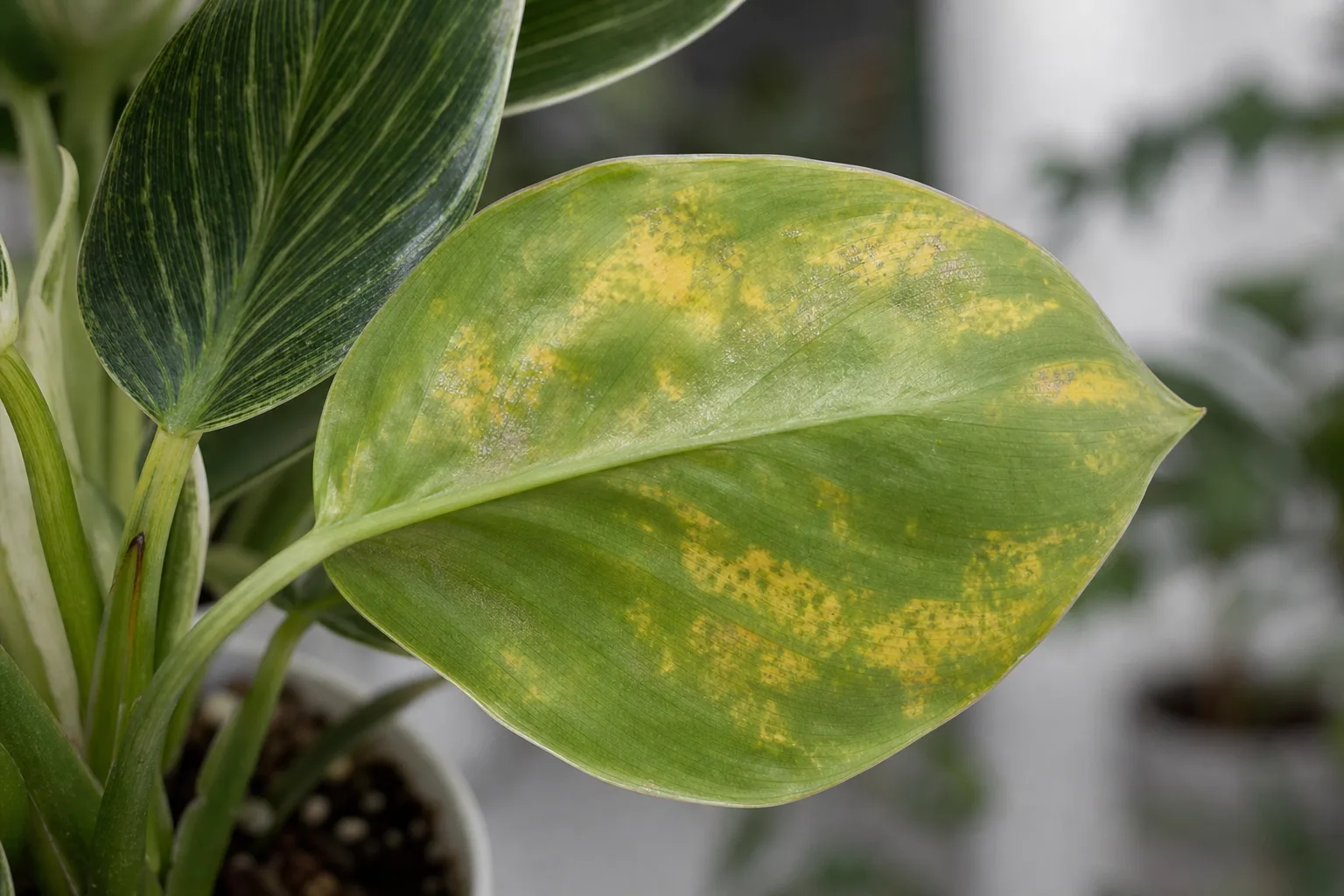
Downy Mildew on Philodendron Birkin: Causes, Checks & Fixes
This guide covers downy mildew on Philodendron Birkin. See also the general Downy Mildew guide, watering, and light pages for this plant.
Downy Mildew on Philodendron Birkin: Causes, Checks & Fixes
Quick answer
Downy mildew on Philodendron Birkin shows yellow or pale patches on glossy pinstriped leaves with gray or tan fuzzy growth underneath when humidity stays high and foliage stays wet too long. This compact self-heading aroid wants moist, well-drained soil and 50–60% humidity-but stagnant humid air plus wet leaves is a different problem than healthy ambient moisture.
First step: move the plant away from others, cut off affected leaves with clean scissors, and stop misting or overhead watering. Spread the leaf crown so air can pass between overlapping pinstriped foliage before you consider any spray. On Birkin, drying the rosette beats reaching for fungicide first.
What downy mildew looks like on Philodendron Birkin
Downy mildew is caused by water-mold pathogens that need humid conditions and wet leaf surfaces to spread-not the same organism as powdery mildew. On Birkin, symptoms show up on the thick, glossy, heart-shaped leaves with creamy white or yellow pinstripes:
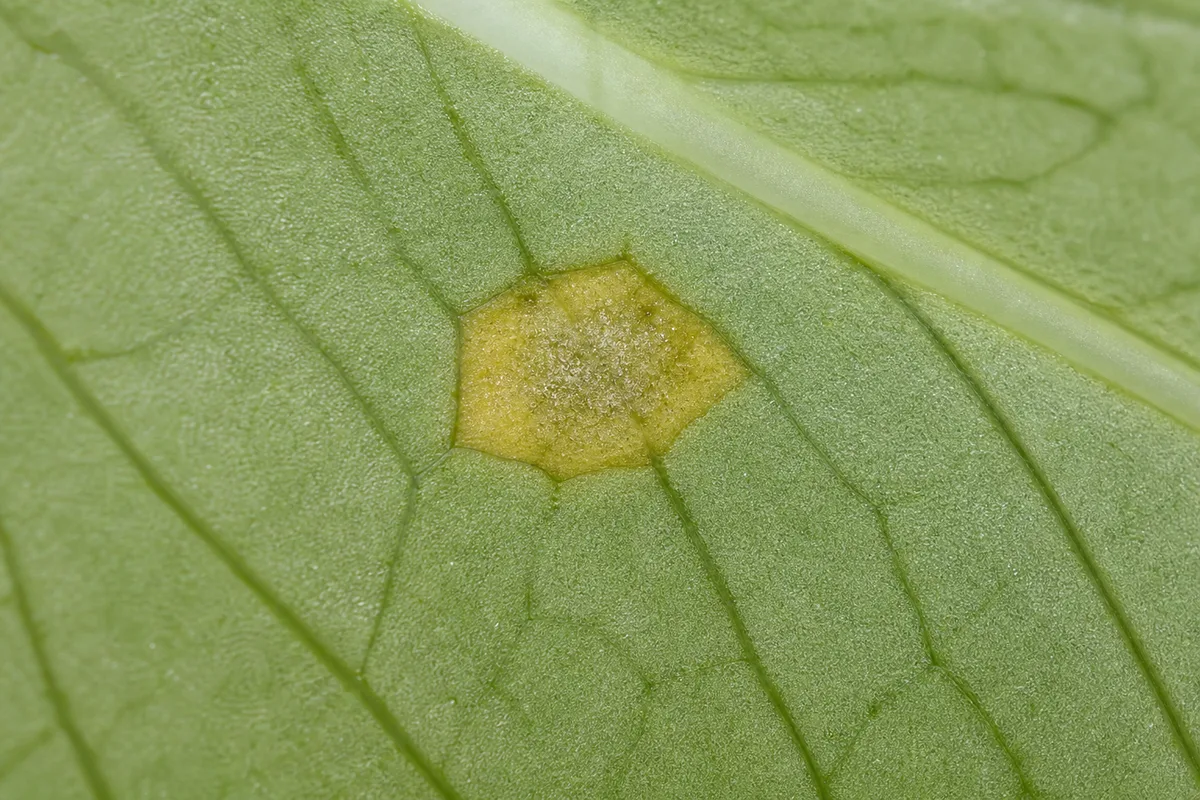
Downy Mildew symptoms on Philodendron Birkin - compare with healthy tissue on the same plant.
- Yellow or pale green patches on the upper leaf surface, often angular and bounded by veins
- Velvety gray, tan, or purplish fuzz on the underside when humidity is high-the classic downy growth
- Softening or browning of affected pinstriped leaves that do not recover even after you adjust watering
- Leaf drop on lower inner leaves where the compact crown overlaps and dries last
Birkin’s tight erect rosette makes inspection harder than on a trailing philodendron. Leaves sit close together above the pot, and the natural cream or yellow pinstripes can camouflage early yellowing until spots spread beyond the variegation pattern. Lift leaves one by one rather than judging from the outer crown alone.
Unlike powdery mildew, the growth sits primarily under the leaf, not as a dry white powder on top. Unlike natural variegation loss from low light, downy patches are irregular, vein-bound, and paired with underside fuzz-not a uniform fade of white striping across the whole plant.
True downy mildew is uncommon on philodendrons compared with bedding plants, but yellow lesions delimited by leaf veins with downy sporulation underneath match the disease pattern when indoor conditions trap moisture on foliage.
Why Philodendron Birkin gets downy mildew
Birkin evolved for warm, humid tropical understory-but it still needs airflow and dry leaf surfaces between waterings. Downy mildew pathogens thrive when high humidity, cool stagnant air, and leaf wetness persist overnight.
Plant-specific triggers on Birkin include:
- Compact crown overlap. Birkin grows as an erect rosette with thick upright stems and leaves clustered above the pot. Inner leaves stay wet longer after misting, splashing, or bathroom humidity.
- Misting and pebble trays. Extra moisture on foliage invites leaf diseases. NC State notes that leaf spots can occur if Birkin leaves get wet during watering-the same wet-leaf conditions downy mildews exploit.
- Overhead watering. Water running over the crown wets every pinstriped leaf-especially risky when the pot sits in a dim corner that dries slowly.
- Crowded shelves. Birkin tabletops pressed against walls, glass, or neighboring pots block airflow exactly where pathogens spread fastest on wet foliage.
- Cool humid rooms. Bathroom windows and north-facing shelves combine low light with lingering leaf wetness-a common indoor pattern for downy mildew on ornamentals.
overwatering on Philodendron Birkin the pot does not cause downy mildew directly, but soggy mix stresses roots while humid wet leaves feed the pathogen. Birkin is more vulnerable to root rot on Philodendron Birkin from chronic wetness than to drought, so fix both moisture problems, not just one.
How to confirm the cause
Work through these checks before you treat:
- Underside inspection - In morning light or after a humid night, look at the leaf reverse. Fuzzy growth confirms downy mildew over simple aging or light stress.
- Vein-bound yellowing - Angular yellow patches limited by leaf veins on the upper surface support downy mildew rather than uniform variegation fade.
- Powdery mildew rule-out - White dry coating on the top of leaves without underside fuzz suggests powdery mildew instead; drying and removal help both, but diagnosis guides expectations.
- Bacterial leaf spot rule-out - On philodendrons, translucent spots on margins that become reddish-brown with yellow halos fit bacterial leaf spot better than classic downy underside fuzz.
- Pest rule-out - No webbing, honeydew, or moving insects. Downy spots do not wipe off like mealybug wax or scale bumps.
- Watering context - If leaves yellow while mix is bone dry and stems are firm, suspect underwatering on Philodendron Birkin or cold draft stress before pathogen spread.
- Neighbor scan - Many downy mildews spread via splashing water and contact between nearby plants in the same humid zone.
If yellow tops plus underside fuzz appear on multiple pinstriped leaves after a humid spell, treat as confirmed downy mildew.
First fix for Philodendron Birkin
Isolate the plant and remove every leaf showing yellow patches or underside fuzz. Bag discarded tissue in the trash-not indoor compost-and sterilize scissors between cuts.
This is the right opening move because:
- It removes active spore sources from the dense crown sprays miss.
- It lets you separate remaining leaves without wetting the whole rosette.
- Birkin recovers from leaf loss better than from repeated fungicide on stressed aroid tissue.
After removal, space leaves with gentle room airflow if safe. Hold fertilizer until new growth looks clean. Do not mist “to help recovery.” Wear gloves when handling cut tissue-Birkin sap contains calcium oxalate crystals irritating to skin.
Step-by-step recovery
- Quarantine the Birkin away from other plants until two weeks pass with no new spots.
- Prune affected leaves back to firm stem; wipe tools with alcohol between plants.
- Dry the canopy - Water at the soil line only; never pour water over the pinstriped crown.
- Improve placement - Move to bright filtered light so remaining leaves dry the same day. Birkin needs enough light to push clean new growth without scorching variegation.
- Space the rosette - Pull the pot away from walls and neighbors so air circulates around all sides of the leaf cluster.
- Monitor new leaves at the stem tip for two weeks-clean new pinstripes mean your cultural fix is working.
- Salvage if needed - Take a stem cutting with a node from firm tissue if the main crown keeps losing leaves despite dry care.
Home gardeners should lean on cultural controls first; fungicides work best preventively and give limited curative control on many ornamental hosts. If you use a labeled product, test one leaf first-aroid foliage can burn from copper or oil in hot sun.
Recovery timeline
Removed yellow pinstriped leaves do not re-green. Judge success by new firm leaves with crisp variegation and by stopped spread across the rosette.
- Days 3–7: No new yellow patches after foliage stays dry; remaining leaves feel firm, not soft.
- Weeks 2–4: Clean new pinstriped leaves emerge at the crown if light and airflow improved.
- Weeks 5–8: The rosette may look thinner until new foliage fills gaps-Birkin is slow-growing and will not replace a full crown overnight.
Recurrence within the same humid corner means placement-not pruning alone-needs a permanent change.
Lookalike symptoms
| What you see | Likely cause | How to tell apart |
|---|---|---|
| White powder on leaf tops | Powdery mildew | Dry coating above; little underside fuzz |
| Reddish-brown spots with yellow halos | Bacterial leaf spot | Translucent margins on philodendrons; no classic downy mat |
| Even pale striping, dry mix | Low light variegation loss | No fuzzy undersides; leggy stems may appear |
| Brown crispy edges | Sunburn or salt stress | Margins dry; no vein-bound yellow patches |
| Black spots with halos | Leaf spot fungi or bacteria | May lack classic downy underside growth |
| Sticky shine with insects | Mealybugs or scale | Pests visible; no angular yellow patches |
Getting the diagnosis right matters because misting and extra humidity-the wrong move for an infected Birkin-make downy mildew worse while doing nothing for sunburn or bacterial spot.
Mistakes to avoid
- Misting infected leaves. Wet foliage feeds the pathogen on a plant that already tolerates ordinary indoor humidity.
- Overhead watering over the crown to “rinse” the disease-splashing spreads spores to neighbors.
- Keeping Birkin in a steamy bathroom while leaves are still infected.
- Fertilizing stressed plants before new clean growth appears.
- Composting cut leaves indoors where spores survive and reinfect other pots.
- Assuming all yellow pinstripes mean overwatering and soaking the pot-wet roots plus wet leaves compound the damage.
- Spraying fungicide without drying first-control fails when humidity and leaf wetness stay high.
Philodendron Birkin care cross-check
While you treat downy mildew, keep baseline care aligned with what Philodendron Birkin overview needs:
- Light: Bright filtered light supports replacement growth and helps leaves dry; too much direct sun scorches pinstripes.
- Water: Allow the top 3–5 cm of mix to dry between waterings; reduce further in winter when growth slows.
- Soil: Aroid mix with perlite and bark-never let the pot sit in a water-filled saucer.
- Humidity: Target 50–60% with airflow, not stagnant steam around wet leaves.
Philodendron Birkin is toxic to cats and dogs if ingested. Keep the plant and bagged prunings out of reach during treatment.
How to prevent downy mildew next time
- Water at the soil line and avoid wetting the pinstriped crown.
- Place with airflow on all sides-space plants so leaves dry quickly after irrigation.
- Skip misting unless you can guarantee leaves dry within hours.
- Quarantine new plants two weeks before mixing them into a crowded plant shelf.
- Inspect undersides monthly by lifting inner leaves during routine watering checks.
- Move pots out of steamy bathrooms if yellow spots appeared there before.
Prevention on Birkin is mostly about keeping the compact crown dry and open-especially important because this tabletop specimen often sits in tight, decorative groupings.
When to worry
Escalate when:
- Yellow spots spread to most leaves within a week despite removal and dry care
- Lower leaves drop rapidly while fuzz keeps appearing on new pinstriped growth
- Neighboring plants in the same humid zone show matching symptoms
- Stem base softens at soil line while foliage fails-may indicate combined rot and foliar disease
At that point, propagate from a firm stem cutting with a clean node rather than fighting a fully collapsed rosette in the same humid spot.
Conclusion
Downy mildew on Philodendron Birkin is a humidity and wet-foliage problem on a plant that wants moisture at the roots-not on its leaves. Confirm fuzzy undersides on yellow pinstriped foliage, isolate, remove infected leaves, and dry the crown with light and airflow. Recovery shows up as clean new pinstriped leaves at the stem tip-not as old yellow leaves turning green again.
When to use this page vs other Philodendron Birkin guides
- Philodendron Birkin watering guide - Use for routine moisture checks before assuming downy mildew is the main issue.
- Philodendron Birkin problems hub - Browse all 42 common issues on this species.