Damaged Roots on Philodendron Birkin: Causes, Checks & Fixes
Quick answer
Damaged roots on Philodendron Birkin show up as wilting, yellow pinstriped leaves, or stalled growth when roots are broken during repotting, rotted from wet mix, or strangled in a tight root ball. First step: stop watering and unpot to inspect roots before changing anything else.
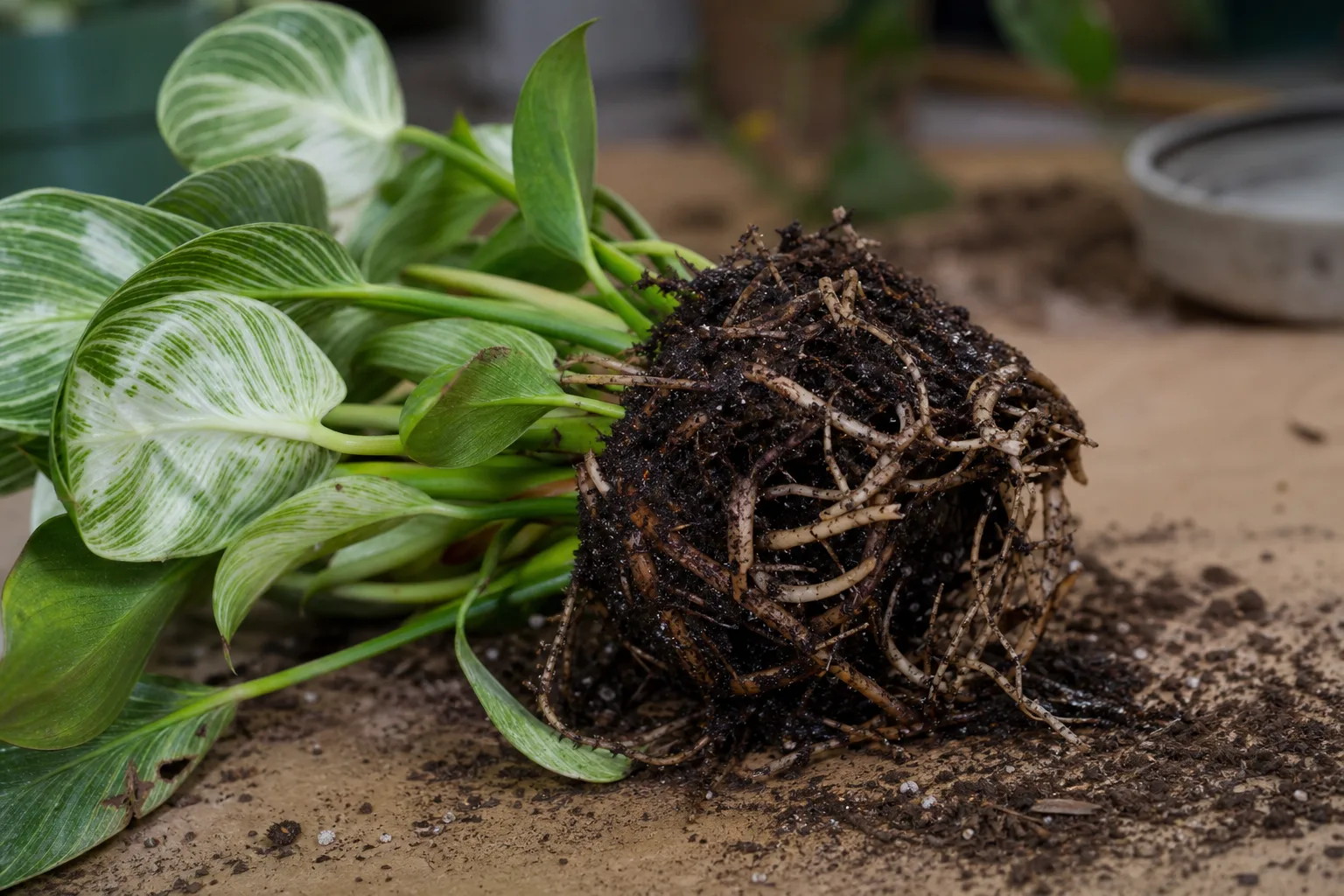
Damaged Roots on Philodendron Birkin: Causes, Checks & Fixes
This guide covers damaged roots on Philodendron Birkin. See also the general Damaged Roots guide, watering, and light pages for this plant.
Damaged Roots on Philodendron Birkin: Causes, Checks & Fixes
Quick answer
Damaged roots on Philodendron Birkin mean the root system can no longer anchor the plant or move water normally-and the problem is often hidden until pinstriped leaves wilt or yellow. Roots fail from chronic wet mix, physical injury during Philodendron Birkin repotting guide, severe root binding, or salt/fertilizer stress on a compact self-heading aroid that grows slowly and forgives drought more easily than soggy soil.
The confusing part: limp, yellow foliage can look like underwatering on Philodendron Birkin even when the mix is damp, because roots that cannot function fail to take up water-the same wilt pattern root rot on Philodendron Birkin creates, but mechanical damage and transplant shock trigger it too.
First step: stop watering and unpot the plant. You need to see whether roots are firm, torn, mushy, or circling before repotting again, soaking the mix, or feeding. On Birkin, guessing from leaf color alone wastes weeks because Philodendron Birkin overview holds a tight rosette above soil where symptoms lag behind root injury.
What damaged roots look like on Philodendron Birkin
Above soil, root damage usually appears as sudden wilting, yellow pinstriped leaves (often starting lower but spreading if uptake fails), stalled new growth, or decline within days of repotting. The glossy white-striped foliage loses its crisp upright habit. A sour or swampy smell from the drainage hole points to decay, not just broken roots.
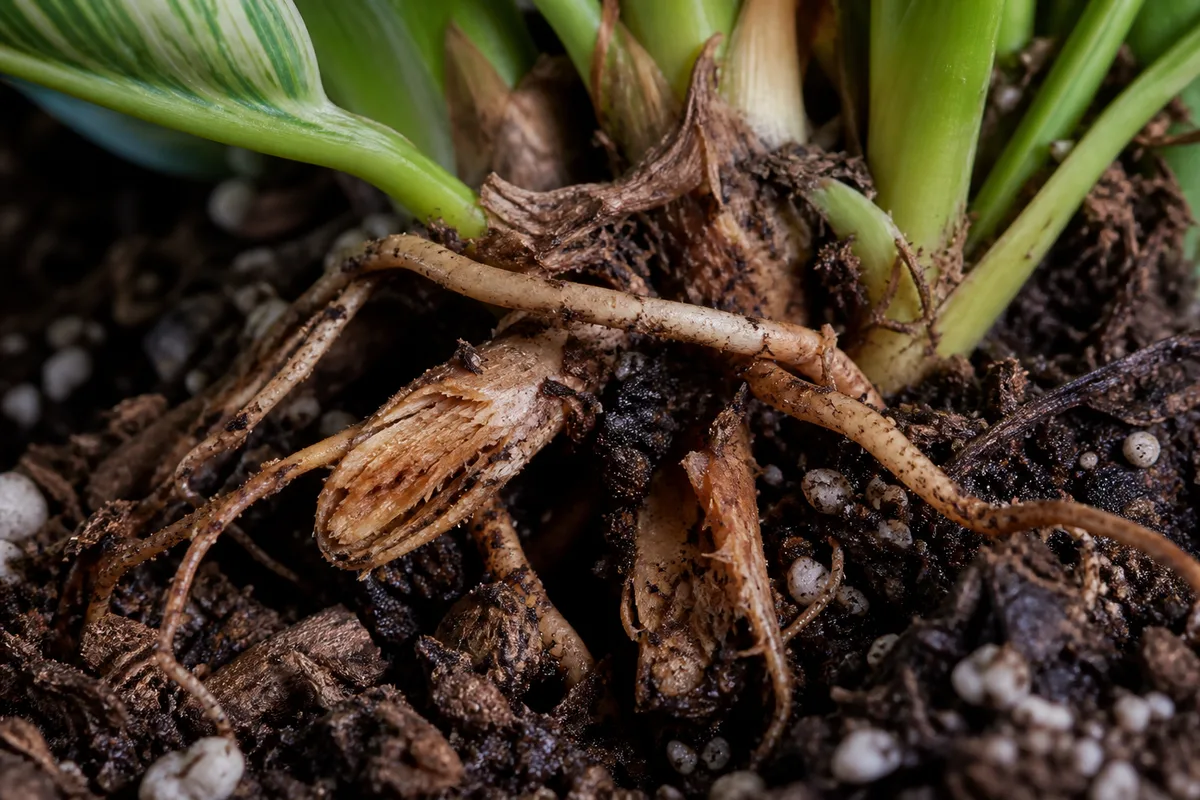
Damaged Roots symptoms on Philodendron Birkin - compare with healthy tissue on the same plant.
The Birkin’s thick upright stem should feel solid. Advanced damage shows as:
- Soft or dented tissue at the soil line
- Leaves collapsing while mix stays wet 3–5 cm down
- New leaves emerging small, pale, or without clean pinstripes
- The pot staying heavy long after watering when roots no longer drink effectively
Below soil, healthy houseplant roots are firm and white or light tan. Damaged roots may be:
- Brown, black, or mushy - decay from oxygen-poor wet mix
- Snapped or stripped - torn during rough repotting or teasing apart a tight ball
- Dry and brittle - drought damage after root loss reduced the plant’s water reserve
- Dense circling mats - root-bound plants with little soil left to hold moisture evenly
Normal lookalikes: One older bottom leaf yellowing on a firm stem with appropriately dry soil is often natural shedding. Root damage is the combination of failed uptake + limp foliage + abnormal roots on inspection, not a single cosmetic blemish.
Why Philodendron Birkin gets damaged roots
Birkin is a compact self-heading hybrid with a relatively small root mass for its showy foliage. It wants moist, well-drained soil and bright filtered light-not constantly saturated peat in a dim corner. Several Birkin-specific patterns lead to root injury:
overwatering on Philodendron Birkin and poor drainage remain the most common cause. When mix stays wet, fine roots die first; Penn State Extension notes root rot of houseplants often follows overwatering and poor drainage. Birkin’s slow growth in low light means the same weekly watering that worked in summer keeps roots oxygen-starved in winter.
Rough repotting or transplant shock hits Birkin hard because it is slow-growing. Pulling a dry root ball apart aggressively, leaving torn roots in old soggy mix, or jumping to a much larger pot creates a wet zone the remaining roots cannot use. Missouri Botanical Garden links root problems to oversized pots and inadequate drainage.
Severe root binding compresses the root ball until water runs through too fast or not at all-outer roots dry while the core stays wet, or the plant wilts despite frequent watering because functional root surface is limited.
Physical breaks during inspection - probing drainage holes with a stick, forcing a tight plant out of a rigid nursery pot, or pruning roots without sterilized tools can all set back a Birkin that already grows slowly.
Fertilizer or salt buildup on damaged roots adds chemical stress. Skip feeding a plant in recovery; salts burn tender regrowth on an aroid that needs only light feed during active growth.
How to confirm the cause
Work through these checks in order:
- Timing - Did symptoms start within a week of repotting? That favors transplant shock or hidden rot exposed during the move.
- Pot weight - Heavy days after watering with limp leaves suggests waterlogged or failing roots, not drought.
- Soil moisture at depth - Wet 3–5 cm down with yellowing confirms trouble. Bone-dry mix with a firm stem may be underwatering instead.
- Smell and drainage - Sour odor, blocked holes, or standing water in a cache pot point to saturated, decaying roots.
- Stem firmness - Press the base above soil. Hard tissue supports recovery; soft tissue means advanced decay climbing the stem.
- Root inspection - Unpot if the base is soft, smell is sour, or the plant declined after repotting. Rinse mix away gently. Note firm white tissue versus mush, snaps, or tight circling.
If the pot is light, mix is dry throughout, and the stem is firm but leaves droop slightly, underwatering may explain wilt better than root damage-confirm moisture before soaking.
First fix for Philodendron Birkin
Stop all watering and unpot the plant.
Lay the Birkin on newspaper, knock away wet or compacted mix, and identify where roots turn from firm to mushy, torn, or circling. That single inspection separates rot, repotting injury, root binding, and drought-everything else depends on what you find.
Do not fertilize, mist heavily, or repot into fresh mix until you have assessed and trimmed injury. Stacking fixes the same day stresses an already failing root system on a slow-growing self-header.
Step-by-step recovery
Once damage is confirmed, work in this order:
- Trim all dead or mushy tissue - With clean, sharp scissors, cut brown or soft roots back to firm white or tan tissue. Sterilize blades with rubbing alcohol between cuts. Trim snapped ends cleanly rather than leaving frayed breaks.
- Tease or score bound roots gently - If roots circle tightly, loosen outer mats with fingers or make a few vertical scores on the ball so new roots can grow outward-avoid ripping half the system away on a slow Birkin.
- Let cut roots air-dry - Leave the trimmed root ball on dry paper for several hours in Philodendron Birkin light guide with airflow so cut surfaces are not dripping wet before repotting.
- Discard old mix if rot or sour smell was present - Reusing soggy soil reintroduces pathogens. Scrub the container or use a fresh one with drainage holes.
- Repot into airy aroid mix - Use standard potting mix with 20–25% perlite and 10% orchid bark. Choose a pot only slightly larger than the remaining root mass-not a big upgrade that holds extra wet soil.
- Water once lightly, then pause - Settle the mix with one thorough drink, let the pot drain fully, and empty any saucer. Wait until the top 3–5 cm dries before the next watering-often seven to ten days or longer while roots heal.
- Improve light - Move to bright, filtered sunlight so the plant uses moisture and produces compact new growth with crisp pinstripes.
- Hold fertilizer - Skip feed for three to four weeks. Recovery depends on new root tips, not salt stimulation.
If the upper stem is still firm but most roots are gone, take a stem cutting with at least one node as backup-Birkin propagates from stem sections rooted in water or moist sphagnum once callused.
Recovery timeline
Stabilization often takes two to four weeks after trim and repot-the stem should stay firm and the pot should dry on a normal schedule during that window.
New pinstriped leaves are the best sign of success; expect them in four to eight weeks during warm active growth, sometimes longer if recovery started in late winter. Old yellow leaves will not green up again-remove them for hygiene once the plant is stable.
Full root mass rebuild takes several months on a slow-growing Birkin. A plant that lost half its roots may stay smaller until the next growing season.
Worsening signs: stem softens further after dry repotting, black streaks climb the upright stem, or no new growth appears by mid-spring-those point toward tissue that cannot be salvaged.
Lookalike symptoms
- Root rot - Overlaps heavily; mushy brown roots and sour smell in wet mix. Treat as decay: trim aggressively and repot into fresh airy mix.
- Underwatering - Light pot, dry mix throughout, firm stem, leaves slightly limp or curled; deep soak once, then resume dry-down checks.
- Repotting stress alone - Firm roots, no mush, slight wilt for a few days after a gentle move; keep light stable and avoid overwatering while roots settle.
- Low light stress - Leggy stems, fading variegation, small new leaves, but firm base and drying soil; brighten placement before assuming root failure.
- Normal leaf drop - One or two older bottom leaves yellow on an otherwise firm plant with appropriate moisture; no root surgery needed.
What not to do
Do not water more because pinstriped leaves look wilted while soil is already wet-that kills remaining healthy roots. Avoid repotting again within weeks unless rot is active; repeated disturbance slows Birkin recovery.
Skip fertilizer immediately after root pruning. Do not leave mushy roots in the pot hoping they recover-they will spread decay. Do not repot into a much larger pot; extra wet soil volume slows drying around a compact root ball.
When trimming roots or stems, wear gloves and keep cuttings away from pets-Philodendron contains calcium oxalate crystals toxic to cats and dogs. Wash tools and hands after handling sap.
How to prevent damaged roots next time
Match watering to how fast your pot dries: water when the top 3–5 cm is dry, not on a fixed calendar. Iowa State Extension recommends watering philodendrons when the top of the soil is dry and never letting plants sit in soggy soil or saucers of water.
Repot in spring or early active growth with damp-not soggy-mix, minimal root tearing, and only one pot size up. Use aroid mix with perlite and bark, pots with open drainage, and empty saucers after every drink. Place Birkin where bright filtered light is realistic most of the day so the plant uses moisture between waterings.
Lift the pot weekly during the growing season-early heaviness with limp leaves is easier to fix than a collapsed rosette after roots have failed.
When to worry
Escalate immediately if the stem dents under light pressure, blackening spreads upward from the soil line, or inspection shows mostly mushy roots after trimming. Slow cosmetic yellowing on a firm stem in autumn can wait for a watering tweak.
If more than half the root system is mushy and the stem base is softening, survival odds drop sharply-propagate a firm upper cutting with a node while tissue is still healthy.
Conclusion
Damaged roots on Philodendron Birkin are a hidden problem that shows up in wilted pinstriped leaves long after the injury started. Confirm it by unpotting, checking for firm white roots versus mush, snaps, or tight circling, then trim decay, repot into airy mix in a right-sized container, and hold water and fertilizer while new roots form. Prevent it by respecting this slow self-header’s need for bright filtered light, dry-down watering, gentle repotting, and pots that actually drain-Birkin forgives brief drought far more willingly than it forgives a soggy root ball on a dark shelf.
When to use this page vs other Philodendron Birkin guides
- Philodendron Birkin watering guide - Use for routine moisture checks before assuming damaged roots is the main issue.
- Philodendron Birkin problems hub - Browse all 42 common issues on this species.