How to Prune Pearls and Jade Pothos: When, Where & What
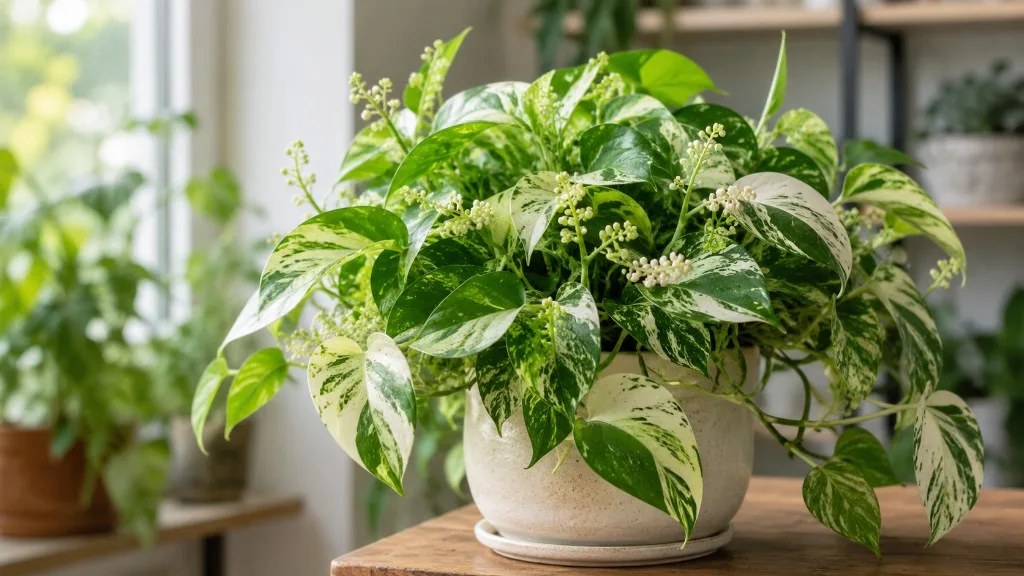
How to Prune Pearls and Jade Pothos: When, Where & What to Cut
How to Prune Pearls and Jade Pothos: When, Where & What to Cut
First, remove only dead, damaged, or clearly rotting stems with clean sharp scissors - cut back into firm green tissue just above a healthy node. Pearls and Jade Pothos (Epipremnum aureum ‘Pearls and Jade’) is a slow-to-moderate trailing vine with chimeral variegation - cream, gray, white, and green sectors sharing one growing point. Every cut is a wound on a cultivar that recovers more slowly than Golden pothos, so a quick sanitation pass shows you what is actually alive before you shorten anything for shape or chase reversion.
Quick Answer
Prune Pearls and Jade Pothos for shape and density in late spring through early summer, when active growth helps new shoots emerge from cut nodes within two to five weeks. Make cuts 6–10 mm (about ¼ inch) above a visible node - the slightly swollen point where a leaf attaches. Limit routine shaping to no more than one-third of total foliage per session. Remove all-green reverted stems as soon as you spot them, tracing each shoot back to the last node that still shows clear variegation. Emergency removal of mushy, pest-damaged, or fully dead tissue can happen any time.
What Pruning Does for Pearls and Jade Pothos
Without pruning, Pearls and Jade follows standard pothos trailing logic, but variegation adds a second variable. The apical bud at each vine tip produces auxin, a hormone that suppresses lateral buds lower on the stem. The tip keeps extending, leaves space farther apart on long internodes, and the lower vine goes bare as older leaves age out. On this cultivar, the tip is also where reversion often starts - solid green leaves appearing in sequence while variegated sections remain elsewhere.
Pruning shortens or removes that dominant tip, which drops auxin along the stem and lets dormant buds at nodes wake up. Each node is a potential branching point: cut above it cleanly, and the plant often sends one or two new shoots from buds flanking that node within two to four weeks during active growth. On Pearls and Jade, those new shoots are more likely to retain variegation when the parent node and surrounding stem still show mixed color - node selection matters more here than on Golden pothos.
Regular trimming also removes yellowing foliage and all-green reverted stems before they shade out variegated sections. A Pearls and Jade in bright, indirect light with healthy roots will branch after a cut - though more slowly than Golden pothos. The same cut on a stressed or underlit plant may produce weak or all-green shoots. Pruning is not a substitute for adequate light; fix placement first if the plant is reverting or stretching.
How This Cultivar Responds at the Node
A node is the slightly swollen point on the stem where a leaf attaches - often with a tiny brown aerial root stub beside it. The leaf connects via a petiole, but the node beneath it holds the meristematic tissue that produces new shoots. When you cut above a node, you leave that tissue intact and give it resources previously monopolized by the tip.
On Pearls and Jade, the chimeral composition at a given node influences what new leaves look like. A node on a stem that has produced solid green leaves for several internodes is likely to keep producing green growth. A node on a stem with visible cream, gray, or white mottling may produce variegated new growth when light is adequate - chimeral variegation does not guarantee a patterned leaf from every bud, but node selection is the strongest lever you have.
Cutting in the middle of an internode - the smooth section between two nodes - removes the tip but leaves no activated tissue at the cut end. The stub above the nearest node often dies back brown and produces no new growth. This is the most common reason pruning “did not work.” Always identify the node first, then cut approximately 6–10 mm above it at a slight angle. Pearls and Jade heals quickly from clean cuts and does not need wound sealant.
When to Prune Pearls and Jade Pothos
Timing matters less for survival - Pearls and Jade tolerates light trimming year-round - but it matters for speed, fullness, and variegation recovery. This cultivar grows more slowly than Golden pothos, so a cut Golden pothos answers in two weeks may take Pearls and Jade three to five. Pruning during the active growth window means new branches emerge faster and internodes stay shorter. Pruning during slow-growth periods still works, but recovery can stretch from three weeks to two months.
Separate shaping cuts from cleanup cuts and from reversion removal. Shaping cuts change architecture - shortening long vines, encouraging branching, reducing length. Cleanup cuts remove dead, yellowing, or damaged leaves without altering structure much. Reversion removal is urgent maintenance: an all-green stem should come out as soon as you identify it, traced back to the last node that still shows clear variegation.
Best Season for Shaping Cuts
Late spring through early summer is the ideal window for structural pruning. By then, root activity has picked up and new shoots develop with reasonably short internodes. University of Minnesota Extension treats early spring as the right moment for light pruning on leggy pothos-type vines, with new shoots often appearing within weeks. Avoid heavy shaping cuts in late autumn and winter - recovery on this slower cultivar can stretch from weeks to months. Light tip pinching during the off-season is fine. Reverted all-green stems are the exception: remove them whenever you find them, regardless of season.
Cuts That Cannot Wait
Some trimming should not wait for spring:
- Blackened, mushy, or rotting stems - cut back into firm tissue above a healthy node; sterilize blades between cuts on diseased material
- Stems with heavy active pest infestation - remove the worst sections once you have a treatment plan for the rest
- Fully brown, dry leaves - snip at the petiole base any time; they no longer photosynthesize
- All-green reverted shoots - trace back to the last variegated node and remove immediately; green tissue grows faster and can dominate the pot
Cosmetic shaping can wait for active growth. Health, sanitation, and reversion cuts happen immediately.
What to Check Before You Cut
Walk the whole plant in good light before touching shears:
- Nodes and internodes - locate swollen points where leaves attach; Pearls and Jade branches from nodes, not bare stem tissue
- Variegation pattern - compare newest leaves to older ones on each stem; progressive solid green is reversion, not normal aging
- Leaf quality - yellow climbing a stem, brown tips, pest residue on undersides
- Base density - bare crown versus lush trailing tips
- Root stress signals - persistent wilting with wet soil, sour smell, or recent repot shock
If the plant is wilting and the mix has stayed wet for days, fix watering and drainage first. Pruning a suffocating root system adds stress without solving the cause. Postpone heavy shaping until the plant stabilizes for four to six weeks after Pearls and Jade Pothos repotting guide or root rot on Pearls and Jade Pothos recovery.
Wear gloves if you have sensitive skin. Pothos sap contains calcium oxalate crystals that can irritate skin. The ASPCA lists Epipremnum aureum as toxic to cats and dogs; bag trimmings promptly and keep propagation jars away from pets.
Leggy Vines and Long Internodes
Leggy Pearls and Jade is almost always a light problem compounded by uninterrupted tip growth. The plant extends toward the brightest available area, producing leaves spaced widely along the stem. Variegation often fades on stretched sections because green tissue is the fastest path to more photosynthesis. Moving to brighter light without pruning may improve tip growth, but the bare lower stem stays bare. Pruning shortens the vine to a node closer to the pot and forces new shoots from that point.
Measure internode length on the newest section of vine. On a well-lit Pearls and Jade, the distance between nodes is often 3–6 cm (1–2.5 inches) - shorter than Golden pothos because mature leaves average 7–8 cm long compared to larger parent cultivars. On a stretched plant, internodes can exceed 8–10 cm (3–4 inches). If internodes are long, plan both a light improvement and a pruning session. Move the plant gradually over one to two weeks to avoid scorch on pale variegated sectors, then cut the longest vines back to nodes two-thirds of the way toward the soil.
Spotting Reverted All-Green Stems
Reversion on Pearls and Jade is not the same as a leaf with a green center and cream margins - that pattern is normal on this cultivar, especially on younger leaves. True reversion is progressive and persistent: an entire stem produces solid green leaves in sequence, the stem itself may turn fully green, and variegation does not return on subsequent leaves even after a light improvement. Compare the newest three to four leaves on a suspect stem. If they are all dark green with no cream, gray, or white splashing - and older leaves on that same stem were variegated - you are watching reversion in real time.
Low light is the most reliable trigger for variegated pothos reversion. Pruning alone does not restore variegation on existing leaves - improvement shows on new growth from correctly selected nodes after light correction and reverted stem removal. Do not propagate from reverted stems; all-green nodes produce all-green plants.
The First Cut to Make
After your sanitation pass on dead or damaged tissue, the next priority is the worst all-green reverted stem - not the longest healthy variegated vine. Follow the solid green shoot back toward the pot until you reach a node whose attached leaf still shows clear cream, gray, or white patterning. Make one clean cut 6–10 mm above that node, wipe your blade with alcohol, and step back.
If no reverted stems exist, shorten the longest bare-legged vine to a variegated node roughly two-thirds of the way back toward the soil. One deliberate cut beats three rushed ones. Pearls and Jade responds well to measured cuts and poorly to hacking multiple vines before you assess the first result.
Step-by-Step Pearls and Jade Pruning
Work slowly. Set the plant where you can see all sides, rotate the pot, and identify targets before blades touch tissue.
- Inspect first. Check for pests, yellowing, bare stems, reverted green shoots, and overall vigor. Postpone heavy pruning if the plant is wilting, recently repotted, or showing root rot symptoms.
- Sterilize your blades. Wipe with rubbing alcohol and let dry briefly.
- Remove dead and damaged tissue. Snip yellow or brown leaves at the petiole base. Cut mushy stems back into firm tissue above a healthy node.
- Remove reverted stems. Trace each all-green shoot to the last node with clear variegation. Cut 6–10 mm above that node. Discard the green section.
- Shape for bushiness. On remaining leggy vines, cut 6–10 mm above a variegated node at roughly one-third of the vine’s length from the tip - or where internodes are shortest and variegation is strongest. Step back between cuts.
- Sort your cuttings. Set aside variegated sections with at least one node for propagation. Discard damaged or fully green material.
- Adjust care. Return the plant to bright, indirect light. Water when the top 3–4 cm of soil is dry. Hold fertilizer for two to three weeks.
That sequence - sanitation first, reversion second, shaping third - keeps energy directed toward the tissue you want to keep.
Where to Cut Above the Node
The cut placement rule is simple: always cut 6–10 mm above a node, never through it, never in the middle of an internode. Identify the node by the small bump where the leaf meets the stem. On Pearls and Jade, favor nodes where the attached leaf or stem surface shows cream, gray, or white mottling - not just green.
Hold the stem gently and angle the blade slightly so water runs off the cut surface. Remove the leaf below the cut if it blocks your view, but do not damage the node itself. Within two to five weeks during active growth, you should see one or two new buds swelling beside the node. If nothing appears after six weeks in spring or summer, recheck light intensity and root health before assuming the node is dead.
How Much to Remove at Once
Follow the one-third rule: do not remove more than one-third of total healthy foliage in a single session. Pearls and Jade depends on its leaves - especially green sectors - to photosynthesize and fund new growth. Cutting more than one-third at once can shock a slow-growing cultivar and extend recovery from weeks to months. If the plant is severely leggy or mostly reverted, work in stages across two or three sessions spaced three to four weeks apart during the active season.
The one-third rule applies to healthy variegated tissue. Reverted all-green stems do not count toward your foliage budget the same way - removing them is corrective, not destructive. If half the plant has reverted, cut back hard to variegated nodes in stages, accepting that the pot will look sparse temporarily. Improved light and patience matter more than leaving green growth “for volume.”
Pruning Reverted Stems Back to Variegation
When a stem has gone fully green, the fix is a hard cut back to the last node that still shows variegation - not a light trim at the tip. Trace the stem from the all-green growing point toward the base. Examine each node and its attached leaf. Stop at the first node where the leaf shows clear cream, gray, or white patterning on margins or splashes across the surface. Cut 6–10 mm above that node.
New growth from that node may produce variegated leaves again, depending on chimeral composition at that growing point. Pruning and light correction together give the best odds - increase Pearls and Jade Pothos light guide within a week and rotate the pot every few days for two weeks. If new growth still emerges green, move further down to an older variegated node or accept that lineage may be lost on that stem. Multi-stem pots are forgiving if other variegated stems remain.
Strategies for a Bushier Plant
Pruning alone activates nodes, but how you prune and what you do with cuttings determines whether the pot looks genuinely full or merely shorter. Three strategies work well on Pearls and Jade, and you can combine them in one session.
Tip pinching interrupts apical dominance on actively growing shoots without removing much tissue. Pinch or snip the top 2–3 cm above the topmost node on vines that are extending too fast. This is ideal for maintenance every four to six weeks during the growing season - low stress, quick response, keeps internodes short on new growth.
Stem cutbacks shorten long bare vines to nodes closer to the soil. Use this when internodes are already long and the lower stem is naked. Cut one-third of total vine length per session, choosing variegated nodes as cut points.
Same-pot replanting fills empty soil surface with rooted cuttings from your trim session. This is the fastest visual fix for sparse pots and is especially effective on Pearls and Jade because the smaller leaf scale makes multiple stems look lush sooner than on Golden pothos.
Tip Pinching vs Stem Cutbacks
Tip pinching is preventive maintenance; stem cutbacks are corrective surgery. If your Pearls and Jade is generally full but one vine is racing ahead, pinch the tip above the top node. If the plant has six inches of bare stem before the first leaf cluster, a cutback to a lower node is the only way to relocate foliage downward. Do not pinch a vine that is already bare along its length - pinching the tip does nothing for empty internodes below.
On variegated cultivars, favor pinching on stems that still show mixed color and cutbacks on stems where the upper section has lost variegation but lower nodes remain patterned. Combine both in one session: cut back the worst offenders, pinch moderate extenders, leave stable mid-length vines alone.
Propagating and Replanting Cuttings
Every variegated trimming session is a propagation opportunity. Select cuttings with at least one node and one healthy leaf showing clear variegation on the margins - not solid green. Each cutting should be 10–15 cm (4–6 inches) long. Remove the lowest leaf so the node can contact water or soil without submerging foliage.
Water propagation is the most visible method: place the node in a clear jar of room-temperature water, keep the leaf above the waterline, and change the water weekly. Roots typically appear in 10–18 days at warm room temperatures. Direct soil planting works for same-pot bushiness: let the cut end callous for an hour, press the node into moist potting mix beside the parent plant, and keep the medium lightly moist until the cutting resists a gentle tug. Roots form in two to four weeks without transplant shock.
When replanting multiple cuttings for fullness, cluster three to five around the parent stem base, angle them slightly, and firm the soil gently. Avoid burying nodes too deep - contact with moist medium is enough. Do not propagate reverted green cuttings expecting variegation to return.
After Pruning: Light, Water, and Recovery
Pruning redirects energy, so post-cut care matters more than usual. Place Pearls and Jade in bright, indirect light - an east-facing window, a few feet back from a south or west window, or under supplemental lighting. Variegated sectors need more light than green tissue to maintain their pattern, but direct sun burns pale cream sections to brown. If you moved the plant for light improvement, do it gradually over one to two weeks.
Water when the top 3–4 cm of soil is dry, the same rhythm as before pruning. Do not overwater a plant with fewer leaves - reduced transpiration means slower drying. Hold fertilizer for two to three weeks after a moderate prune and four weeks after a hard cutback. When new growth is visibly extending, resume a balanced liquid fertilizer at half strength monthly during spring and summer. High-nitrogen feeds can push green growth on chimeral cultivars.
Expect first bud swell within two to four weeks during active growth, visible new leaves within three to five weeks, and a noticeably fuller silhouette within six to ten weeks. Winter pruning may double those intervals. Discard clippings promptly if pets share your space.
Common Pruning Mistakes
The most frequent errors on Pearls and Jade are wrong cut placement, too much removed at once, dull tools - plus two cultivar-specific failures: propagating from green nodes and pruning without improving light.
Cutting in the internode leaves a dead stub and no new growth. Removing more than one-third of healthy foliage shocks a slow cultivar into a long pause. Pruning in deep winter without supplemental light produces weak or green-only regrowth. Keeping reverted stems “for fullness” trades short-term volume for long-term variegation loss. Propagating all-green cuttings produces plants that will never match the parent cultivar’s pattern.
Stressed plants - recent repot, root rot recovery, severe underwatering - should not receive hard pruning until new growth resumes. Light cleanup only until the plant stabilizes.
Cutting From the Wrong Node
On Pearls and Jade, the wrong node is not just an internode cut - it is a cut above a node that has already lost its chimeral balance. If the last four leaves on a stem were solid green, cutting above the fifth node back will likely produce another green shoot. The correct node is the last one where the attached leaf shows meaningful variegation on margins or splashes across the blade.
Hold each candidate stem to the light and inspect the leaf at every node. If no variegated node exists on a fully reverted stem, remove it at the base if other variegated stems remain. Another subtle error: cutting below the node instead of above it - the node tissue must stay intact on the parent or cutting.
Conclusion
Pearls and Jade pothos pruning is how you keep a chimeral cultivar compact, variegated, and visually balanced indoors. Match structural cuts to late spring and early summer when you can, remove reverted all-green stems as soon as you spot them, and always cut 6–10 mm above a node that still shows the cream-and-gray pattern Pearls and Jade Pothos overview is named for. Combine stem cutbacks with tip pinching for ongoing shape, and replant variegated cuttings into the same pot when you want density faster than a single stem can provide.
Pruning cannot replace light. If new leaves are green and internodes are stretching, improve brightness first or simultaneously - otherwise every cut produces the lineage you are trying to remove. Work within the one-third rule across sessions, sterilize your blades, and give the plant two to three weeks without fertilizer after a moderate trim. Done consistently, the routine turns a leggy, half-reverted trailer into a bushy, patterned specimen - and gives you enough variegated cuttings to share without propagating a plain green impostor.
When to use this page vs other Pearls and Jade Pothos guides
- Pearls and Jade Pothos overview - Start here for whole-plant context before deep-diving this topic.
- Pearls and Jade Pothos problems hub - Jump to symptom-specific fix guides when this care topic does not resolve the issue.
- Leggy Growth on Pearls and Jade Pothos - Escalate here when pruning adjustments are not enough.
- Brown Tips on Pearls and Jade Pothos - Escalate here when pruning adjustments are not enough.