Leggy Growth on Norfolk Island Pine: Causes, Checks & Fixes
Quick answer
Leggy growth on Norfolk Island pine means whorl tiers stretch apart and branches elongate toward weak light-not a fertilizer problem. First step: move the pot within 12–24 inches of your brightest east or filtered south/west window and rotate a quarter turn weekly. Do not shear live whorls to fix shape.
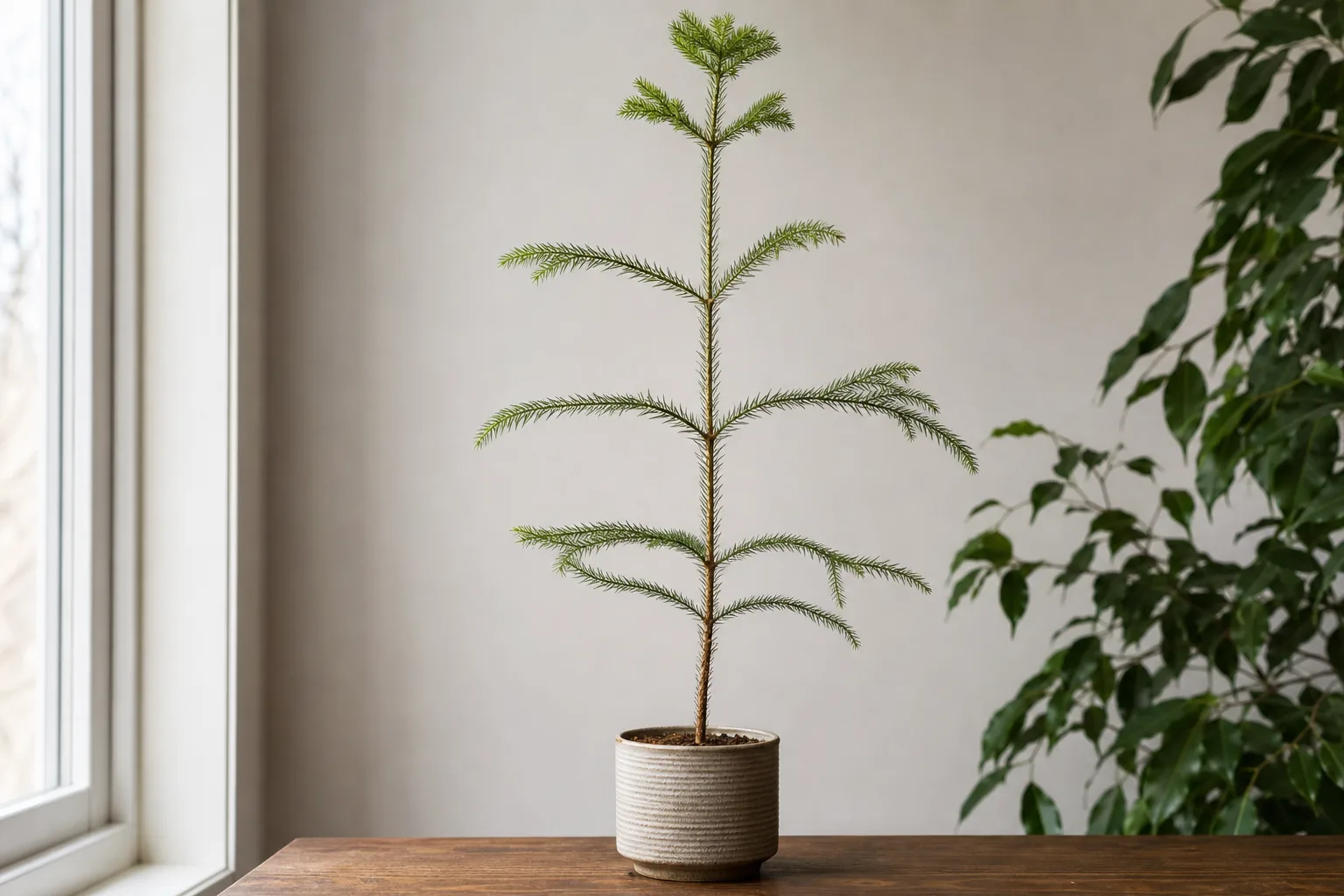
Leggy Growth on Norfolk Island Pine: Causes, Checks & Fixes
This guide covers leggy growth on Norfolk Island Pine. See also the general Leggy Growth guide, watering, and light pages for this plant.
Leggy Growth on Norfolk Island Pine: Causes, Checks & Fixes
Quick answer
Leggy growth on Norfolk Island pine (Araucaria heterophylla) is etiolation-the tree stretching toward photons when daily light intensity or duration falls short. Unlike a fast-growing pothos that simply produces longer vines, this whorled conifer shows stretch as wider gaps between branch tiers, elongated horizontal branches, and a crown that leans hard toward the brightest wall or window.
First step: move the pot within 12 to 24 inches of your brightest suitable window-typically an east exposure or filtered south/west pane-and rotate one quarter turn weekly. Do not fertilize, repot, or shear live green whorls the same week. Brighter placement is the single change that stops further stretch.
Old tiers that already elongated will not tighten back up. Recovery means compact new whorls at the top, not reshaping stretched branches. For pale needles, drooping tips, and permanent lower-branch loss, see not enough light on Norfolk Island pine-that sibling page covers branch-tier failure; this page focuses on stretch morphology and shape recovery limits.
What leggy growth looks like on Norfolk Island pine
Etiolation on Araucaria heterophylla shows up in whorl architecture, not angiosperm-style long petioles. Watch tier spacing and branch length, not individual needle color alone.
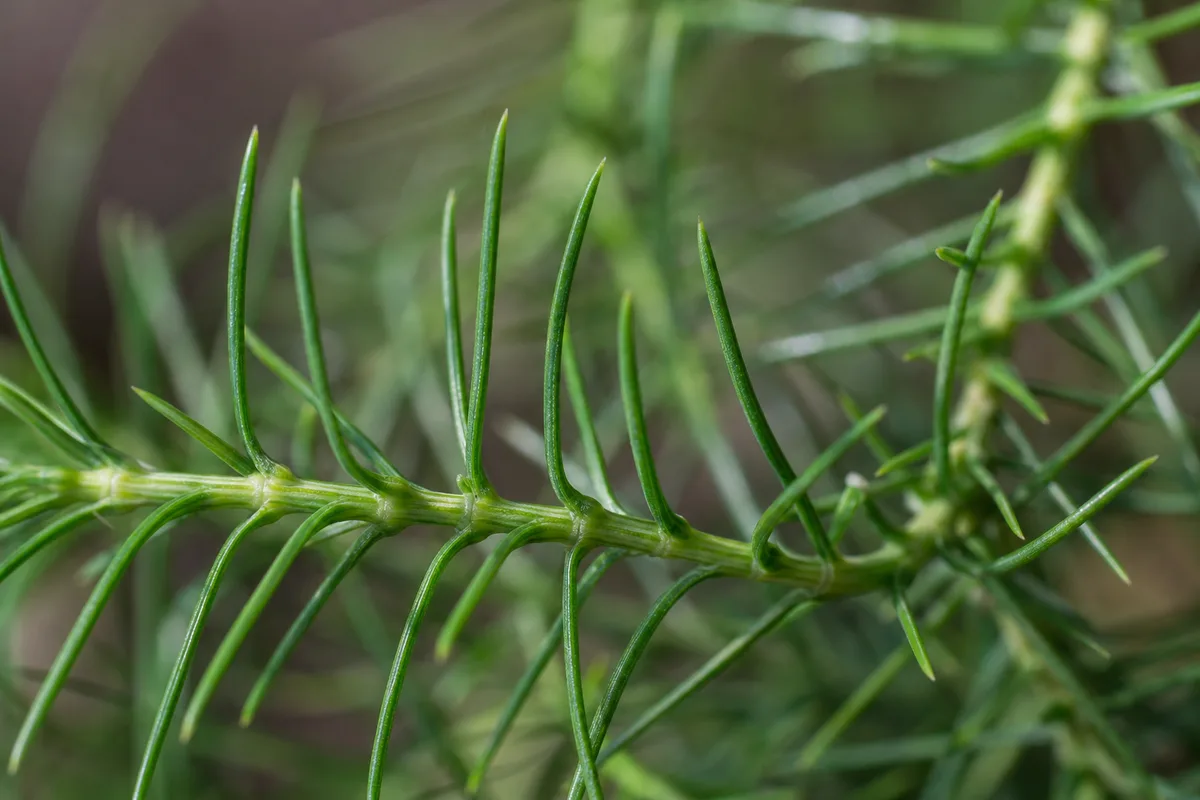
Leggy Growth symptoms on Norfolk Island Pine - compare with healthy tissue on the same plant.
Typical leggy signs:
- Wide gaps between whorl tiers on new growth-healthy indoor specimens hold tiers relatively close; Illinois Extension notes that in low light branches become long and droopy while overall growth slows
- Fewer than five to six branches per whorl on fresh nodes-Missouri IPM expects about five to six horizontal branches at each tier when light is adequate
- Short, broad, asymmetrical silhouette when terminal growth slows but lateral branches keep stretching toward the brightest vector-Missouri IPM describes this as terminal growth ceasing while branches continue, producing a squat wide form
- Hard crown lean toward one window; the trunk may look straight but upper tiers angle sharply off-center
- Long droopy lateral branches with weakened tips that sag even when soil moisture is fine-distinct from wilt droop on lower branches in dry soil
- Sparse upper canopy with visible trunk between tiers that used to read as a dense Christmas-tree profile
What compact growth looks like for comparison:
- Evenly spaced whorls with roughly five to six firm horizontal branches per node
- Steady but slow vertical advance from the terminal leader-typically three to six inches per year indoors
- Symmetrical pyramid outline when rotated regularly
- Full sun normally produces the most compact, symmetrical indoor growth when acclimated-stretch is the opposite pattern
Judge newest tiers at the top, not old whorls from brighter months. Stretched tiers from last season keep their spacing even after light improves.
Why Norfolk Island pine gets leggy
Norfolk Island pine evolved on bright South Pacific coastlines with open sky. Indoors it is classified as a high-light interior plant preferring strong daily brightness-roughly 500 to 1,000 foot-candles at the canopy. When photon supply drops, the tree reallocates growth toward the brightest available direction rather than maintaining tight whorl spacing.
Several situations produce leggy stretch without immediate branch drop:
Marginal window placement. A spot across the room may look bright to human eyes while canopy height receives too little flux for compact whorl development. Stretch precedes the pale needles and lower-tier loss covered on the not-enough-light page.
One-sided exposure. A tree parked beside-but not close to-a single window elongates laterals on the bright side while the shaded face stays thin. Rotation distributes future growth but cannot undo tiers that already stretched asymmetrically.
Post-holiday dim corners. Trees displayed as centerpieces far from glass survive on reserves through December, then etiolate in January when light stays poor. Re-window before stretch turns into permanent lower whorl loss.
Winter daylight contraction. Shorter days and lower sun angle reduce total daily photons even when the pot never moved. Summer-compact trees can etiolate by February without any change in watering.
Rotation without intensity. Spinning a tree in a north hallway produces symmetrically sparse growth-leggy on all sides. Fix foot-candles first; rotation only balances light that already exists.
Leggy stretch often precedes irreversible lower-branch drop. Treat wide tier gaps as an early warning, not a cosmetic quirk you can prune away.
How leggy growth differs from drooping leaves and slow growth
| What you see | Likely problem | First check |
|---|---|---|
| Wide whorl gaps, long branches, crown lean | Leggy etiolation (this page) | Tier spacing + lean direction |
| Tip droop, pale needles, sparse whorls, lower tier yellowing | Insufficient light (broader) | Not-enough-light guide |
| Limp tiers, soft needles, pot weight change | Water imbalance | Drooping leaves-soil moisture first |
| Minimal height gain but firm compact whorls in a bright window | Normal slow species pace | Slow growth when light checks pass |
Drooping is loss of turgor-branches hang because cells lack water pressure. Leggy is structural stretch-branches may still feel firm while spacing widens. Both can coexist when chronic low light weakens tips until they sag.
Slow growth in adequate light is normal for a conifer that adds only a few inches yearly indoors. Leggy growth means the tree is actively reallocating form toward photons-shape change, not just patience.
How to confirm leggy etiolation
Work through these checks before pruning, Norfolk Island Pine repotting guide, or fertilizing:
-
Tier-gap test - Measure vertical distance between the two newest whorls. Gaps noticeably wider than earlier tiers on the same trunk confirm stretch. Compare to a photo from when the tree looked compact, if you have one.
-
Branch-count test - Count horizontal branches on the newest node. Fewer than five strongly suggests the canopy still needs more intensity-not a pruning opportunity.
-
Lean direction - Consistent tilt toward one window means active phototropism. Leggy trees often lean more dramatically than simply under-lit trees that have not yet elongated.
-
Terminal vs lateral growth - Slow or stalled vertical leader growth paired with long lateral branches matches Missouri IPM’s low-light morphology of a short, broad plant.
-
Hand-shadow at canopy height - Hold your open hand at the top whorl at midday. A soft but visible shadow means the spot may support compact regrowth. No shadow at canopy level confirms intensity is still too low-see the Norfolk Island pine light guide for window and grow-light targets.
-
Rule out thirst - Long branches that droop only on lower tiers with dry, lightweight soil point to underwatering, not etiolation. Moist soil with tip droop on elongated branches fits light stretch.
-
Two-week relocation test - Move to the brightest suitable window without other changes. If the next whorl emerges with tighter spacing and more branches, light was the limiter.
First fix for Norfolk Island pine
Move the pot within 12 to 24 inches of the brightest suitable window-and leave everything else alone for two weeks.
An east-facing window is the most reliable default: one to three hours of gentle morning sun, then strong indirect light the rest of the day. If east is unavailable, use a filtered south or west window with the canopy close to glass.
If the tree lived on a holiday buffet or nursery dim shelf:
- Acclimate over 7 to 14 days rather than jumping to harsh afternoon sun
- Days 1–4: bright indirect close to the target window, outside direct beam path
- Days 5–14: add early direct sun gradually, watching for bleach or crisp tips
After moving:
- Rotate one quarter turn at each watering so future tiers develop evenly
- Do not fertilize until new whorl spacing looks tighter
- Do not repot unless mix is clearly failing
- Do not shear live green branches to “reset” shape-see pruning limits below
If no window spot passes the hand-shadow test at canopy height, add a full-spectrum LED grow light 12 to 24 inches above the top whorl for 12 to 14 hours daily on a timer. Full placement specs live on the light guide.
What not to do
-
Do not shear live green whorls to fix legginess. Norfolk Island pine does not sprout replacement branches on bare trunk cuts-live pruning leaves permanent gaps. See the pruning guide for deadwood-only cleanup.
-
Do not top the central leader hoping for bushier regrowth. Topping destroys the natural pyramid form and stops upward growth from that point.
-
Do not over-fertilize to compensate for low light. Extra nutrients cannot replace photons on a stressed conifer.
-
Do not jump from a dim hallway to unfiltered south afternoon sun in one day - needles bleach and crisp. Acclimate over 7 to 14 days.
-
Do not assume rotation alone fixes stretch - spinning in a dim room produces evenly sparse tiers. Brighten first.
-
Do not wait for stretched tiers to tighten - they will not. Act before lower whorls weaken enough to drop permanently.
Recovery timeline and realistic expectations
| Stage | What to expect |
|---|---|
| 1–2 weeks | Lean may slow if rotation starts; stretch on existing tiers unchanged |
| 2–4 weeks | New whorl begins with firmer branches and tighter spacing if light is adequate |
| 1–3 months | Branch count per tier approaches five to six when placement works |
| 3–6 months | Upper symmetry stabilizes with regular rotation; old stretched tiers still visible |
| 6–12 months | Structural assessment-multiple bare lower sections will not refill |
Recoverable: Compact new whorls at the top; firmer branch attachments on fresh growth; reduced lean on new tiers when rotated consistently.
Not recoverable: Elongated spacing on whorls that already formed; bare trunk from dropped lower branches. Illinois Extension confirms broken or lost branches do not grow back on bare sections.
Judge success by new tier spacing and branch count, not by reshaping old stretched branches.
How to prevent leggy growth next time
- Default placement: Brightest east window, or filtered south/west within 12 to 24 inches of glass
- Post-holiday rule: Return to a real window within seven days of display teardown
- Rotate weekly at watering so tiers stay symmetrical-NC State notes indoor specimens may tolerate very low light two to three years before showing decline, but stretch can begin much sooner
- Seasonal check: Retest hand-shadow at canopy height each November before winter etiolation sets in
- North rooms: Plan for supplemental LED from day one
- Track tier gaps on each new whorl-widening spacing means brighten immediately
For proactive foot-candle targets, window-by-window placement, and grow-light specs, use the Norfolk Island pine light guide. For pale needles and progressive lower whorl loss, use not enough light. Full species hub: Norfolk Island pine overview.
When to worry
Leggy stretch alone is rarely fatal overnight. Worry when:
- Multiple lower whorls have already dropped - structural damage is permanent; focus on saving upper symmetry
- Wide tier gaps coincide with soil wet two weeks or more in a dim room-pair light correction with watering review; see root rot
- No new whorl in six months despite your brightest window-verify intensity with a meter or add supplemental LED
- You already sheared live whorls trying to fix shape-gaps are permanent; improve light to preserve remaining tiers only
A tree with firm roots, remaining upper whorls, and only early stretch is recoverable. Move it to better light, rotate consistently, and accept that old elongated tiers stay elongated-knowing that full sun normally produces the most compact symmetrical form when you give the tree a real chance going forward.
When to use this page vs other Norfolk Island Pine guides
- Norfolk Island Pine watering guide - Use for routine moisture checks before assuming leggy growth is the main issue.
- Norfolk Island Pine problems hub - Browse all 4 common issues on this species.
- Yellow Leaves on Norfolk Island Pine - Different entry point when symptoms overlap with leggy growth.