Norfolk Island Pine Propagation: Seeds & Tips
Norfolk Island Pine Propagation: Seeds & Tips
Norfolk Island Pine Propagation: Seeds & Tips
Norfolk Island pine (Araucaria heterophylla) is one of the most recognizable indoor trees in commerce - tall, symmetrical, and sold by the millions each holiday season as a living alternative to a cut Christmas tree. That popularity creates a predictable question: can you propagate it at home the way you would a pothos, a spider plant, or a coleus? The honest answer is more complicated than most houseplant guides admit. Norfolk Island pine propagation is technically possible through fresh seeds or terminal cuttings from the central leader, but both methods carry serious limitations that make them poor fits for most casual indoor growers. Side-branch cuttings - the kind most people instinctively take - may root, yet they will not produce an upright tree. Removing the top of your parent plant to take a terminal cutting permanently disfigures it. And seeds, while the method professional nurseries prefer, require fresh viable material and months of patient care before you have anything resembling the symmetrical specimen you could buy for a fraction of the effort.
This guide explains what actually works, what fails quietly, and why the vast majority of Norfolk Island pines living in homes arrived there through a purchase rather than a propagation project. If you want a realistic path forward - whether that means attempting seeds, understanding the terminal-cutting trade-off, or simply buying a healthy nursery plant - the sections below walk through the biology, the methods, the timelines, and the decision framework that most propagation articles skip entirely.
Why Most Indoor Norfolk Island Pines Are Bought, Not Propagated
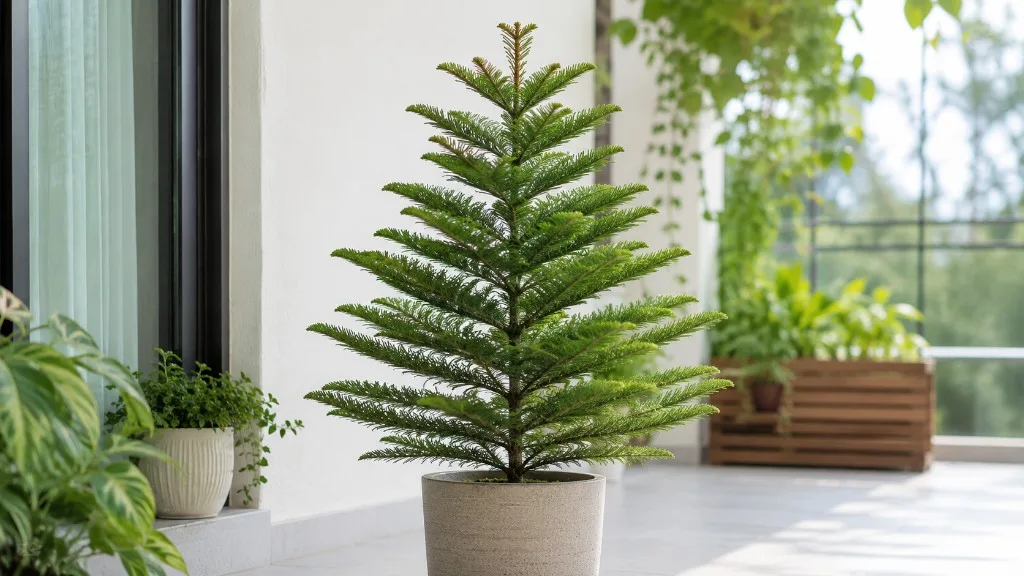
Walk into any garden center between November and January and you will find Norfolk Island pines in pots ranging from six inches to four feet, already shaped into the narrow pyramidal form that makes them desirable as architectural indoor trees. Those plants did not get there through windowsill cuttings in someone’s kitchen. Commercial production relies on seed propagation in controlled nursery environments, sometimes supplemented by terminal shoot-tip cuttings taken from stock plants grown specifically for that purpose. The economics are straightforward: nurseries propagate thousands of seedlings at scale, cull the weak ones, pot the survivors, and ship them to retailers at prices that undercut the time and equipment a home grower would need to replicate the same result.
For the typical houseplant owner, propagation is simply not part of the Norfolk Island pine lifecycle. You buy a young plant, keep it alive for years in a bright room, maybe repot it once or twice, and eventually accept that it will outgrow the ceiling or slowly decline if conditions are wrong. That is a normal and reasonable relationship with Norfolk Island Pine overview. Treating propagation as a default option - the way it is for succulents, tradescantia, or philodendron - leads to frustration because the plant’s biology resists the casual approach. There is no shame in buying your Norfolk Island pine. In most cases, it is the smarter choice.
The impulse to propagate usually comes from one of three places: you want a second tree without paying for one, your plant has grown too tall and you wonder if the top can become a new plant, or a lower branch broke off and you hope to root it. The first scenario has a narrow legitimate path through seeds or a terminal cutting. The second involves a real trade-off that permanently changes the parent. The third - rooting a side branch - produces a plant that will grow horizontally and never resemble a tree. Understanding which scenario you are in saves months of misplaced effort.
What Makes Norfolk Island Pine Different from Easy Houseplant Propagation
Most popular houseplants propagate easily because their stems carry adventitious buds at nodes - latent growth points that can activate into roots and shoots when a cutting is severed and placed in water or moist soil. Pothos, tradescantia, peperomia, and coleus all root from ordinary stem segments within weeks, and the new plant grows in the same upright or trailing habit as the parent. Norfolk Island pine does not follow that script. It is a member of Araucariaceae - an ancient conifer family whose species evolved as single-trunked trees with strong apical dominance, the hormonal system that keeps one central leader growing upward while side branches remain subordinate and lateral.
That growth architecture has direct propagation consequences. A cutting taken from the side of the plant carries the hormonal memory of lateral growth. Even if it forms roots, it will continue growing as a branch - spreading outward, not upward. Only tissue from the apical meristem at the very top of the central leader carries the programming for vertical, symmetrical tree growth. And that meristem is exactly what you cannot spare on a small indoor specimen without permanently altering its shape. The University of Florida IFAS Extension states plainly that propagation is “by seeds or cuttings of erect shoot tips only” - a single sentence that eliminates most of what home growers attempt.
Norfolk Island pine is also slow. A rooted cutting or germinated seedling may take two to three years to reach the size of a small nursery plant you could purchase today. Indoors, without greenhouse humidity and supplemental light, that timeline stretches further. The plant is not difficult to keep alive once established, but building a new specimen from scratch demands patience that easy-propagating houseplants never require. Factor in the space a developing tree needs, the humidity and temperature stability rooting demands, and the low success rate for casual indoor attempts, and the case for buying rather than propagating becomes very strong for most readers.
The Two Real Methods: Seeds and Terminal Cuttings
Every legitimate approach to Norfolk Island pine propagation falls into one of two categories. Seed propagation is the method professional growers use to produce the symmetrical, tiered trees sold in stores. Seeds carry the full genetic program for upright growth, and a seedling started correctly will develop the narrow pyramidal habit buyers expect. The catch is that Norfolk Island pine seeds lose viability quickly once removed from their cones, germination requires controlled warmth and moisture, and the resulting seedlings grow slowly - making this an advanced project, not a weekend experiment.
Terminal cutting propagation uses the growing tip of the central leader - the single upright stem at the top of the plant. This tissue retains the apical dominance needed for vertical growth, so a rooted terminal cutting can theoretically become a small tree. The catch is equally significant: removing the central leader permanently stops upward growth on the parent plant. The original tree will bush out from lateral buds, losing the symmetrical pyramid that made it attractive. You are not taking a trimming; you are amputating the plant’s architectural future. For a small indoor Norfolk Island pine, that is usually an unacceptable sacrifice.
What does not belong in this list: side-branch cuttings, water propagation of random stem segments, leaf cuttings, division, air layering of lower branches, or any method borrowed from tropical foliage plants. Those techniques may produce rooted plantlets, but they will not produce the tree you are imagining.
Why Side-Branch Cuttings Will Not Grow Upright
This is the single most important warning in any Norfolk Island pine propagation guide, and it is the fact most generic articles omit. When you cut a segment from a horizontal branch - even a healthy, green, apparently vigorous one - and root it successfully, the resulting plant does not “learn” to grow upward. It continues the growth pattern of the tissue it came from. The phenomenon is called topophysis: the tendency of plant tissue to retain the growth orientation of its original position on the parent plant, regardless of how you pot or stake the cutting afterward.
A rooted side-branch cutting typically sprawls, curves, or grows at an angle. It may look like a strange shrub rather than a miniature tree. Some growers report limited success training such plants with staking and pruning, but you will never achieve the natural symmetrical tiers of a seed-grown or terminal-grown specimen without fighting the plant’s hormonal programming for years. The Missouri Botanical Garden notes that seed-grown trees may have slightly wider leaf spacing than cutting-grown stock, but both upright methods produce recognizable trees - something no lateral cutting can promise. If a branch broke off your plant and you rooted it out of curiosity, treat the result as an experiment, not a replacement for a proper tree.
Understanding Topophysis and Apical Dominance
Apical dominance is the hormonal mechanism - primarily regulated by auxin produced at the shoot tip - that suppresses lateral bud growth and keeps a tree growing taller through its central leader. When the apical meristem is intact, side branches stay relatively short and the tree maintains a dominant vertical axis. When you remove the leader, auxin production shifts, lateral buds activate, and the plant develops multiple competing shoots. The tree loses its single-spire silhouette permanently.
Topophysis operates alongside apical dominance but addresses a different question: not whether the plant grows up or out, but whether a specific piece of tissue “remembers” its original orientation. In Norfolk Island pine and other Araucariaceae species, this memory is strong. Tissue from vertical shoot tips can produce vertical growth. Tissue from horizontal branches produces horizontal growth, even when the cutting is planted vertically in soil and staked straight. This is not a cultural failure - wrong soil, insufficient light, or missing rooting hormone will not fix it. It is a developmental constraint encoded in the cutting itself.
For indoor growers, the practical implication is simple. Before you take any cutting, ask: where on the parent plant did this tissue grow? If the answer is anywhere other than the very top of the central leader, you are not propagating a tree. You are propagating a branch that happens to be alive in a pot. That can be interesting. It is not a Norfolk Island pine in the form you see at the garden center.
Seed Propagation for Advanced Growers
If you want to propagate a properly shaped Norfolk Island pine and you are willing to invest months of careful attention, seeds are the method that professional nurseries trust. Seed propagation preserves the full genetic growth program, produces the symmetrical tiered branching buyers expect, and does not require sacrificing any part of an existing plant. It does require access to fresh, viable seeds - a barrier that stops most home growers before they begin.
Norfolk Island pine produces large, spiny seed cones in its native habitat and in outdoor plantings within USDA hardiness zones 10–11. Mature outdoor trees in subtropical climates may develop cones, but the small potted specimens sold as houseplants almost never do. Indoor trees lack the size, age, light intensity, and environmental triggers cone production demands. For most readers, seeds must be sourced from a specialty seed supplier, a botanical garden, or a fellow grower with access to a fruiting outdoor tree - not collected from the holiday plant on the windowsill.
Seed propagation is genuinely advanced because it combines horticultural technique with material scarcity. You need to assess seed freshness, manage soil temperature and moisture through a weeks-long germination window, and then sustain seedlings through a slow juvenile phase in conditions most homes only approximate with supplemental equipment. It is rewarding for experienced growers who enjoy the process. It is not a shortcut to a free holiday tree.
Seed Freshness, Viability, and Where to Get Seeds
Norfolk Island pine seeds lose viability rapidly after they dry. This is the most common cause of germination failure, and it is why seed packets of unknown age from generic suppliers often produce nothing. Fresh seeds feel firm and heavy for their size. Hollow, lightweight, or shriveled seeds should be discarded. A simple float test after soaking helps: viable seeds typically sink; floaters are often empty or dead.
Seeds should be used as soon as possible after collection from a ripe cone. If you are purchasing seeds, buy from a reputable source that provides a harvest date and stores seeds refrigerated. Ask whether the seeds were cleaned and kept moist before shipping. Old, dry Araucaria seeds are among the least reliable germination bets in ornamental horticulture.
If you have access to a cone from an outdoor tree, harvest when the cone begins to break apart naturally and the seeds are fully formed but not weathered. Extract seeds by hand, discard damaged ones, and sow within days rather than weeks. Do not assume that seeds sitting in a dried cone on the ground are still viable - they are often not.
Step-by-Step Seed Sowing at Home
Once you have fresh seeds, the sowing process is methodical rather than complicated. Soak seeds in room-temperature water for 12 to 24 hours before planting. This softens the seed coat and activates the enzymes that trigger germination. Discard any seeds that float after soaking if they also felt light and hollow before immersion.
Prepare a shallow tray or small pots with a light, sandy, well-draining mix - a blend of peat or coco coir with perlite or coarse sand works well. Norfolk Island pine seeds should be sown horizontally, pressed halfway into the surface rather than buried deep. The seed needs light exposure and consistent surface moisture to germinate. Cover the tray with a clear dome or plastic wrap to maintain humidity, but vent daily to prevent fungal growth.
Place the tray in Norfolk Island Pine light guide with a soil temperature around 70–75°F (21–24°C). A heat mat set to low helps enormously and is one of the pieces of equipment that separates successful seed propagation from failed attempts in cool homes. Keep the surface consistently moist but never waterlogged - a spray bottle gives better control than a heavy pour at this stage.
Germination typically begins within two to six weeks under ideal conditions, though some seeds may take up to eight weeks if temperatures dip or moisture fluctuates. When seedlings emerge, remove the humidity cover gradually over several days to harden them off. Do not transplant until each seedling has a sturdy stem and several sets of juvenile needle-like leaves - usually several weeks after emergence. Move seedlings into individual small pots with the same slightly acidic, well-draining mix you would use for a mature Norfolk Island pine, and treat them as vulnerable young plants: bright light, stable temperatures between 60–75°F (16–24°C), and careful watering that never leaves the mix soggy.
Terminal Cutting Propagation: Why It Is Difficult
Terminal cuttings are the only cutting type with any legitimate claim to producing an upright Norfolk Island pine. Even then, “legitimate” does not mean “easy.” The method is difficult for three overlapping reasons: you must sacrifice the parent plant’s central leader, the cutting itself is slow to root compared to ordinary houseplant cuttings, and the indoor environment rarely provides the warmth, humidity, and stability that Araucaria tissue demands during rooting.
Unlike a pothos cutting that roots in water on a kitchen counter, a Norfolk Island pine terminal cutting needs a prepared peat-perlite rooting medium, rooting hormone, a humidity enclosure, and weeks of undisturbed patience. Success rates for casual indoor attempts are modest even when technique is correct, because the cutting is essentially a small tree branch with limited stored energy and no adventitious root primordia waiting to activate the way tropical stem cuttings have. You are asking woody juvenile tissue to reverse-engineer a root system from scratch.
The method also makes sense only in specific circumstances. If you have a large, healthy plant with multiple leaders or a specimen you are willing to reshape, a terminal cutting might be a reasonable experiment. If you have a single-stem holiday plant in a ten-inch pot - the most common indoor scenario - taking the top is almost always the wrong call.
What You Sacrifice When You Remove the Central Leader
Before you cut, understand what happens to the parent plant. The central leader is the sole source of vertical height and symmetrical tier formation. When you remove it, the tree cannot continue growing taller in its original form. One or more lateral buds below the cut will eventually break dormancy and grow outward, creating a bushier, multi-headed profile that looks nothing like the narrow pyramid Norfolk Island pines are sold for.
Some growers attempt to manage this by selecting one new shoot as a replacement leader and removing competing laterals, but the restored symmetry is never as clean as an unaltered apical meristem would have produced. For a small indoor plant, the visual result is usually a permanent downgrade. If your motivation for propagating is that the tree has grown too tall for the room, taking a terminal cutting solves the height problem by ending the tree’s upward career - but it does not give you a graceful outcome on either the parent or the cutting for many months. Topping is not a gentle prune. It is a structural intervention with permanent consequences on a species valued specifically for its structure.
When and How to Take a Terminal Cutting
If you have weighed the trade-off and decided to proceed, timing and technique matter. Take terminal cuttings during active growth - typically late spring through summer - when the current season’s tip growth has begun to firm but is not yet woody. In most indoor environments, this means the warmest, brightest months when the plant is visibly pushing new whorls of foliage at the top.
Select the central leader tip - the single upright growing point at the very top of the plant, not a side branch that happens to point upward. Using clean, sharp pruning shears sterilized with rubbing alcohol, sever the cutting 6 to 8 inches (15 to 20 cm) below the tip. Strip the foliage from the lower third of the stem to reduce moisture loss and burying risk. Dust the cut end with rooting hormone powder (IBA-based talc at standard strength) and tap off the excess.
Prepare a 6-inch (15 cm) pot with a 50/50 mix of milled peat moss and perlite or vermiculite, moistened before planting. Insert the cutting deep enough that the defoliated section is buried and the remaining foliage sits above the medium. Firm the mix around the stem gently. Enclose the pot in a clear plastic bag supported by stakes so the plastic does not touch the foliage, creating a humidity tent that reduces transpiration while roots form. Place the setup in bright indirect light - never direct sun, which will cook the cutting inside the bag.
Do not disturb the cutting for at least four to six weeks. Checking daily by tugging or unpotting is the fastest way to kill a slow-rooting Araucaria cutting. Stability, humidity, and patience are the entire strategy.
Rooting Setup, Light, and Temperature for Cuttings
The rooting environment for Norfolk Island pine cuttings should mimic a mild subtropical understory: warm, humid, bright but not harsh, and stable. Temperature between 65–75°F (18–24°C) supports callus and root formation. Cooler rooms below 60°F (16°C) slow rooting dramatically and increase the risk that the cutting desiccates before roots emerge. A heat mat under the pot - set to the low end and used with a thermostat - helps maintain soil warmth without overheating the humidity tent.
Light should be bright and indirect. An east-facing window behind sheer curtains, or a few feet back from a south-facing window, provides adequate energy for photosynthesis without scorching the enclosed foliage. If light is too dim, the cutting cannot photosynthesize enough to sustain itself through the rooting period and will yellow or drop needles. If light is too intense, temperatures inside the plastic bag spike and the cutting cooks.
Humidity inside the tent should stay high - roughly 70–80% relative humidity - for the first several weeks. Open the bag briefly every few days to exchange stale air and prevent mold, then reseal. Once you see signs of new growth at the tip or resistance when you give the stem a very gentle tug, begin hardening off by opening the bag progressively over one to two weeks until the cutting acclimates to normal room humidity.
Watering during rooting means keeping the peat-perlite mix consistently moist but never saturated. Water when the top of the mix lightens in color, using room-temperature water applied gently so the stem is not disturbed. Soggy mix is the primary cause of cutting rot in this species.
How Long Cuttings and Seeds Take to Root or Germinate
Realistic timelines prevent the premature disposal of cuttings that are still working. Terminal cuttings typically begin forming roots in six to twelve weeks under good indoor conditions, with some taking longer in cool or low-light rooms. You will not see water roots in a glass jar within ten days the way you might with a tradescantia. The process is invisible and slow, and the cutting may look unchanged for weeks while callus tissue forms below the surface.
Seed germination is faster in visible terms - sprouts often appear within two to six weeks - but the seedling phase that follows is long. A germinated seed with its first juvenile needles is not a display-ready tree. Expect two to three years of growth before a seed-started plant approaches the size and density of a small nursery specimen, and longer if indoor light is marginal. Norfolk Island pine grows at a slow rate indoors - often only three to six inches per year - and is restrained further by pot size, light, and humidity.
Comparing these timelines to a garden center purchase makes the economics clear. A healthy two-foot Norfolk Island pine costs far less than the cumulative months of attention, equipment, and floor space required to produce an equivalent from seed or cutting at home. Timelines are not arguments against propagation for everyone - hobbyists who enjoy the process accept slow returns - but they are decisive for growers who want a tree, not a project.
Signs Your Propagation Attempt Is Succeeding
For terminal cuttings, the earliest positive sign is often subtle: the foliage remains green and firm rather than yellowing or browning, and the cutting does not wilt when the humidity tent is briefly opened. Needle drop in the first week is not always fatal, but progressive browning from the tip downward usually means the cutting is losing its moisture balance and will not recover. After several weeks, very gentle resistance when you tug the stem - not a yank, just a light test - suggests roots are anchoring. The more reliable signal is new growth at the tip: a fresh whorl of juvenile needles emerging from the apical bud means the cutting has established enough root function to support active growth.
For seed propagation, success is visible at germination: the seed coat splits and a small stem with needle-like juvenile leaves emerges. Post-germination success means seedlings remain upright, green, and progressively add whorls without damping off at the soil line. Seedlings that topple, blacken at the base, or stall with a single set of needles for months are struggling with moisture, temperature, or light - usually excess wetness combined with insufficient air movement.
In both methods, new growth is the only sign that truly matters. Roots you cannot see are helpful, but active photosynthetic tissue pushing upward confirms the plant has a functioning system. Until that point, treat the propagation as fragile and resist Norfolk Island Pine repotting guide, fertilizing, or moving it to a new location.
Aftercare for Newly Propagated Norfolk Island Pines
Whether your new plant came from seed or a terminal cutting, the first year demands steadier conditions than an established nursery specimen. Do not fertilize until the plant has been growing actively for at least two to three months - roots need time to develop before nitrogen pushes foliage the root system cannot support. When you do begin feeding, use a diluted balanced fertilizer at one-quarter to one-half the label rate during the warm growing season, and stop in fall and winter when growth slows.
Repotting should wait until the plant is clearly outgrowing its container - typically not in the first six months for cuttings, and not until the seedling has a root mass that holds the mix together when you lift the pot. When you repot, move up only one pot size and use a slightly acidic, well-draining mix with roughly 20% perlite, consistent with what mature Norfolk Island pines prefer. Avoid heavy peat blends that stay wet for days.
Light for young plants should be bright and indirect, with optional morning direct sun once the plant is established. Watering follows the same discipline as mature plants: let the top 2–3 cm of mix dry between waterings, then water thoroughly and empty the saucer. Young plants are more vulnerable to both drought and overwatering, so check moisture with your finger rather than a calendar.
Humidity around 50–60% supports healthy needle retention indoors. If your home is very dry, a pebble tray or nearby humidifier helps, though Norfolk Island pine is more forgiving of moderate humidity than tropical foliage plants once established. Keep temperatures between 60–75°F (16–24°C) and protect the plant from cold drafts near doors and air conditioning vents.
Common Propagation Mistakes and How to Avoid Them
The most common mistake is taking a side-branch cutting and expecting a tree. No amount of rooting hormone, staking, or fertilizer overrides topophysis. If you want upright form, start with seeds or a terminal cutting - or buy a plant.
The second most common mistake is topping a small indoor plant without accepting the permanent change in its shape. If you remove the leader from a single-stem holiday pine, you are not creating two trees. You are creating one damaged parent and one slow-rooting cutting that may or may not survive.
Overwatering kills more Norfolk Island pine propagation attempts than any other cultural error. Peat-based rooting mixes hold moisture tightly, and enclosed humidity tents slow evaporation. A mix that feels merely “damp” on the surface can be soggy around the buried stem. Water less than you think, and ensure the pot drains freely.
Insufficient light is the silent killer of terminal cuttings. A cutting in a dim corner inside a humidity tent cannot photosynthesize enough to fuel root development. Bright indirect light is not optional.
Using old or unviable seeds wastes an advanced grower’s time before the project even begins. Test seed quality, buy from reputable sources, and sow fresh.
Disturbing cuttings too early - unpotting to check for roots, tugging hard on the stem, or removing the humidity tent before the cutting hardens off - breaks fragile new root hairs and resets the timeline. Patience is a technical requirement, not a personality trait.
Propagating a stressed parent - a tree with Brown Tips on Norfolk Island Pine, dropping needles, or recent repotting trauma - produces weak cuttings and weak seeds. Start from a healthy, actively growing specimen.
Troubleshooting Failed Cuttings and Germination
If a terminal cutting turns brown from the tip down, the moisture balance has failed. The cutting is losing water faster than it can replace it, either because humidity was too low, light was too intense, or the stem rotted at the base from wet mix. Remove the cutting, inspect the base for mushiness, and if rot is present, discard it and start fresh with a new cutting from a healthy parent - adjusting the mix drainage and humidity tent setup.
If the cutting stays green for months but never develops resistance or new tip growth, temperatures may be too cool, light may be too dim, or rooting hormone was insufficient. Move the setup to a warmer, brighter location and wait another four weeks before deciding the attempt has failed. Araucaria cuttings can root slowly without obvious above-ground changes.
If seeds never germinate, viability is the first suspect. Review your seed source, harvest date, and storage conditions. Second, check soil temperature - seeds in a cool room often sit dormant indefinitely. A heat mat resolves this for most failures. Third, assess moisture: seeds that dry out after imbibition die quietly; seeds in waterlogged mix rot before emerging.
If seedlings damp off - collapse at the soil line with dark, water-soaked tissue - reduce watering, increase air circulation, and consider a light dusting of cinnamon on the soil surface as a mild antifungal measure. Damping off is almost always an excess-moisture problem in the seedling stage.
If a rooted side-branch cutting is growing horizontally despite staking, that is not a problem to troubleshoot. It is the expected outcome. You can enjoy the plant as a curiosity or discard it and pursue seeds, a terminal cutting, or a nursery purchase instead.
Buying vs. Propagating: A Practical Decision Framework
Use this framework to decide which path fits your situation. Buy a nursery plant if you want a symmetrical indoor tree quickly, if you have a single small specimen you are not willing to disfigure, if you lack fresh seed access, or if you are new to houseplants and propagation would add unnecessary complexity to learning basic Norfolk Island pine care. There is no horticultural virtue in propagating what you can buy affordably and grow successfully.
Attempt seed propagation if you have access to fresh viable seeds, enjoy long-term projects, can provide consistent warmth and humidity for germination and seedling care, and want the satisfaction of growing a tree from the beginning with correct upright form. This is an advanced grower’s path, not a beginner’s shortcut.
Attempt a terminal cutting only if you have a healthy parent plant you are willing to permanently reshape, you understand the six-to-twelve-week rooting timeline, you can maintain a humidity tent in bright indirect light, and you have a specific reason propagation serves that buying does not - such as preserving a sentimental specimen’s genetics or experimenting with Araucaria rooting technique.
Do not attempt propagation from side branches, leaf segments, or water jars on a kitchen counter. The biology does not support the outcome you want.
For the vast majority of indoor growers, the right answer is straightforward: buy a healthy Norfolk Island pine from a reputable source, bring it home to bright indirect light, water it correctly, and enjoy the tree. Propagation is a footnote in this species’ indoor life, not the main chapter.
Conclusion
Norfolk Island pine propagation is real but narrowly constrained. Seeds produce the symmetrical upright trees nurseries sell, yet they demand fresh viable material, controlled warmth, and months of seedling care that most indoor growers cannot easily replicate. Terminal cuttings from the central leader are the only cutting type with a legitimate path to upright growth, but the method is slow, technically demanding, and permanently disfigures the parent plant by removing its apical meristem. Side-branch cuttings may root yet will never become a tree because of topophysis - a biological constraint no staking or fertilizer overcomes.
The honest summary most propagation guides avoid: the Norfolk Island pine in your living room was almost certainly purchased, and for good reason. Buying is faster, cheaper, and produces a better-formed plant than the typical home propagation attempt. If you are an advanced grower with fresh seeds and the patience for a multi-year project, seed propagation is a rewarding challenge. If you are considering topping your holiday plant to make a second tree, weigh the permanent cost to the parent before you cut. And if a side branch broke off and you rooted it out of curiosity, enjoy the experiment - but do not expect a pyramid. For everyone else, the best propagation strategy is choosing a healthy nursery specimen and keeping it alive for years. That is not a compromise. It is how this species is meant to live indoors.
When to use this page vs other Norfolk Island Pine guides
- Norfolk Island Pine overview - Start here for whole-plant context before deep-diving this topic.
- Norfolk Island Pine problems hub - Jump to symptom-specific fix guides when this care topic does not resolve the issue.