Thin Stems on Maranta Leuconeura: Causes, Checks & Fixes
Quick answer
Maranta leuconeura naturally has short rhizomatous stems, but weak, floppy, or stretched stems with wide gaps between leaves signal a care problem-usually low light or wet crowns. First step: feel the crown for firmness and move the pot to bright indirect light within one to three feet of an east window unless stems are mushy in soggy soil.
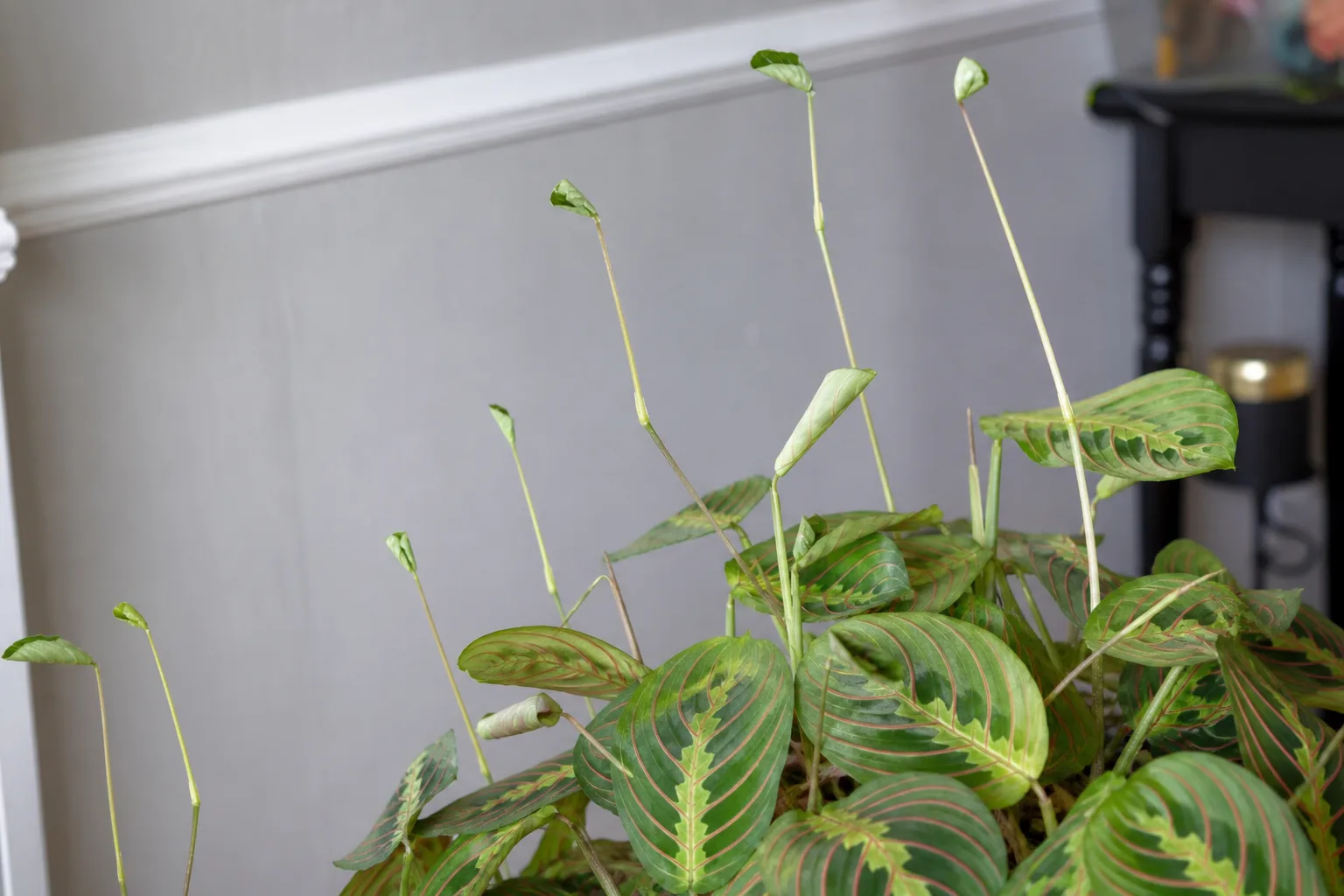
Thin Stems on Maranta Leuconeura: Causes, Checks & Fixes
This guide covers thin stems on Maranta Leuconeura. See also the general Thin Stems guide, watering, and light pages for this plant.
Thin Stems on Maranta Leuconeura: Causes, Checks & Fixes
Quick answer
Maranta leuconeura-the prayer plant-is a low, spreading tropical with naturally short rhizomatous stems that hug the soil. Slender stems alone are not a crisis. Problem thin stems are weak, floppy, or stretched: they bend under leaf weight, show long bare gaps between nodes, or soften at the crown while the clump loses its compact habit.
The two most common indoor causes are too little light-stems stretch and stay thin as the plant reaches for brightness-and wet crowns or soggy soil, which weakens tissue from the base up. Prayer plants are especially vulnerable at the crown; standing water there invites rot.
First step: feel the crown stems with a clean finger. If they are firm but elongated toward a window, move the pot to Maranta Leuconeura light guide within one to three feet of an east-facing window. If they are mushy and the mix smells sour, stop watering until the top two centimeters dry and inspect roots before any other fix.
What thin stems look like on Maranta Leuconeura
Before diagnosing, separate normal anatomy from unhealthy weakness.
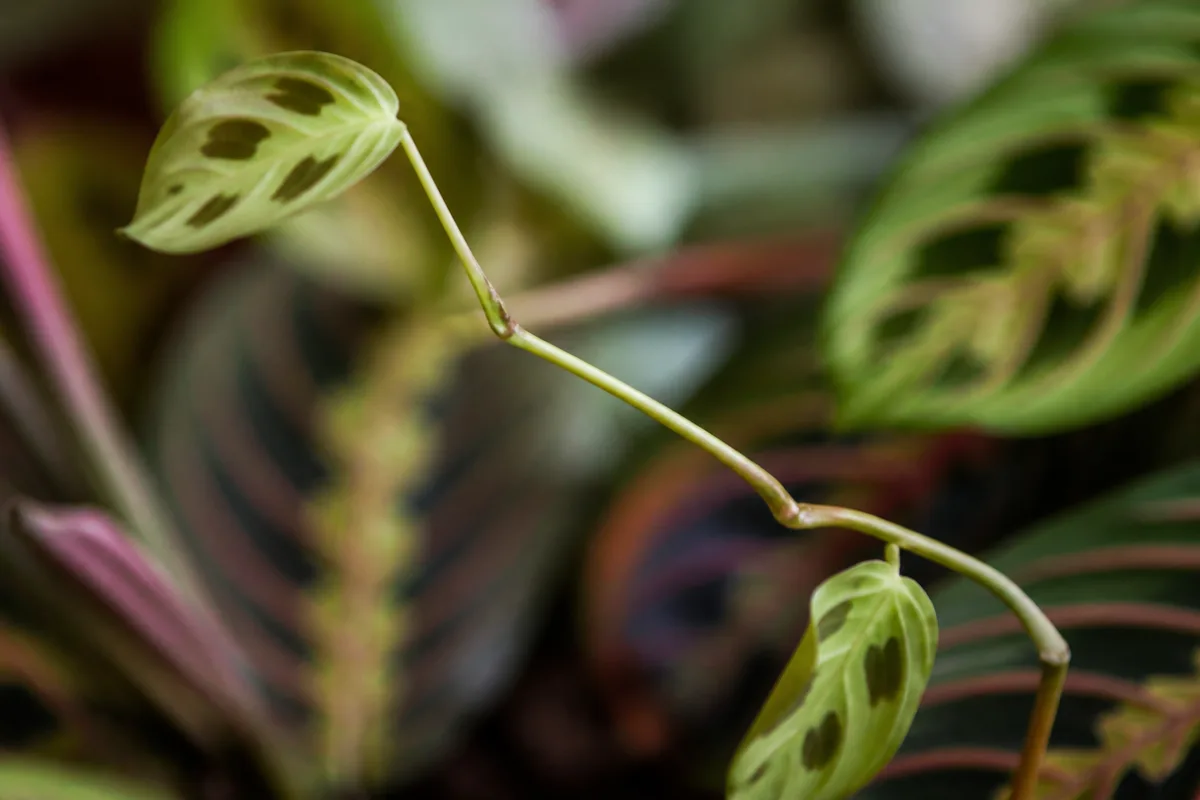
Thin Stems symptoms on Maranta Leuconeura - compare with healthy tissue on the same plant.
Normal for Maranta Leuconeura overview
Prayer plant is a clumping, horizontally spreading perennial. NC State Extension describes its stems as short and rhizomatous, and Missouri Botanical Garden notes a typical mature footprint of roughly 12–15 inches tall and wide. Stems stay close to the pot surface, often partly hidden by sheathing petioles and older leaves. A healthy clump can look delicate compared with upright houseplants-that is expected.
Signs the stems are actually struggling
- Long bare sections between leaf nodes as stems reach toward the brightest spot
- Stems that flop or kink when you lift the pot, unable to hold leaves parallel to the soil by day
- Smaller, paler new leaves on the thinnest shoots, with faded herringbone red veins
- Soft, darkening tissue at the crown or stem base while soil stays wet for two weeks or more
- Sudden collapse of one or more shoots while neighboring stems still look green
- Sticky residue or fine webbing on thin stem joints, pointing to sap-sucking pests draining vigor
Night folding may continue on older leaves even when new stems stay weak-reduced prayer movement alone is not enough to diagnose thin stems. Pattern fade on new growth plus internode stretch is the reliable combination for light-related weakness.
Why Maranta Leuconeura develops thin, weak stems
Insufficient light (most common indoors)
Prayer plants evolved on the Brazilian rainforest floor under filtered canopy light. Indoors that means bright indirect light at the leaf surface, not a dim hallway shelf. When light falls below what the plant needs, it stretches internodes and produces thin stems in a spindly reach toward windows-classic etiolation. The upper and undersides of leaves lose color in low light, so new foliage on thin shoots often looks washed out before stems fail entirely.
Wet crowns and overwatering on Maranta Leuconeura
Illinois Extension warns plainly: do not allow water to stand on the crowns; the stems rot easily. Maranta leuconeura likes evenly moist soil during active growth, but chronically soggy mix-especially in dim corners where the plant transpires slowly-keeps roots anaerobic. Weak roots cannot support firm stems. Crown rot shows as mushy, thin, collapsing shoots at the soil line while older leaves may still look acceptable for a time.
Sap-sucking pests
Missouri Botanical Garden lists spider mites, mealybugs, and thrips as pests to watch on marantas. These insects drain sap from tender stem joints and leaf undersides, leaving weakened, sometimes distorted growth. Mealybugs often cluster in cottony patches where petioles meet stems; spider mites leave stippling and fine webbing on thin new shoots.
Root-bound stress and crowding
A severely root-bound pot limits the resources available for sturdy new stems. Crowded rhizomes competing in exhausted soil produce thin, slow shoots even when light and water look adequate. This is less common than light or moisture problems but worth ruling out if the plant has not been repotted in several years and roots circle the drainage holes.
Seasonal slow growth (not the same as chronic thin stems)
Prayer plants naturally slow in short, cool months. Missouri Botanical Garden recommends reducing soil moisture and fertilizer substantially from autumn to late winter. Winter stems may look less vigorous without being diseased. Worry when thin, floppy growth persists through a warm spring and summer with adequate humidity.
How to confirm the cause
Work through these checks in order before Maranta Leuconeura repotting guide, fertilizing, or spraying:
- Crown firmness - Gently press the base of the thinnest stems. Firm green tissue suggests light or pest stress. Mushy brown tissue with sour soil smell points to rot.
- Light placement - Measure distance from the nearest window. More than three feet from east or north glass, or more than five feet from filtered south or west glass, commonly produces stretched thin stems. At midday, a faint soft shadow at canopy height means adequate brightness; almost no shadow means too dim.
- Internode spacing - Compare spacing on newest stems to older compact growth near the rhizome. Widening gaps confirm stretching.
- Soil dry-down - Press a finger into the top two centimeters. Soil wet ten days after watering in a dim spot suggests slow metabolism and possible root stress, not necessarily a heavy hand with the watering can.
- Pest scan - Inspect stem joints and leaf undersides with a magnifier. Stippling, webbing, white cottony clusters, or silver streaks change the first fix from light correction to isolation and pest treatment.
- Pot and roots - If light and moisture look correct but growth stays wiry, slide the plant partly out of the pot. White firm roots support recovery; brown mushy roots explain weak stems even after light improves.
If stems are firm, elongated toward one window, and soil dries at a reasonable pace, low light is the leading diagnosis. If stems are soft at the crown and soil stays wet, treat moisture and roots first.
The first fix to try
For firm but thin, stretched stems: move the pot to bright, indirect light at the leaves-within one to three feet of an east-facing window, or add a full-spectrum grow light if natural brightness is insufficient. Rotate the pot weekly for even growth. Do not jump to direct sun; too much sun bleaches the attractive leaf patterns.
For mushy crowns in wet soil: hold watering until the top two centimeters are dry. Keep humidity up with a pebble tray or humidifier, but do not mist water onto the crown. If several stems have collapsed or the soil smells sour, unpot and trim black roots before repotting into fresh, well-draining mix-only after you have stopped the wet cycle.
Do not fertilize weak or rotting stems. Prayer plants need monthly feeding only during active growth on healthy roots-not as a rescue for thin, stressed shoots.
Step-by-step recovery
Once the primary cause is addressed, support recovery in this order:
- Stabilize the environment - Target 18–27 °C and 60%+ humidity. Avoid cold drafts on thin crowns.
- Wait for new growth - Judge success by the next one or two leaves from the crown: shorter spacing, firmer petioles, sharper herringbone veins.
- Prune after improvement - When compact new shoots appear, trim long bare stems just above a node with clean shears. Root the cuttings in water or moist sphagnum to fill out the pot.
- Treat pests if confirmed - Isolate affected plants, rinse leaf undersides, and use insecticidal soap or horticultural oil on mites or mealybugs per label directions. Re-check weekly.
- Repot if root-bound - In late winter or early spring, move into a container only one size larger with a moisture-retaining but well-drained mix. Do not repot a plant still fighting crown rot.
Recovery timeline
- Light correction: new firm leaves may appear in three to six weeks during active growth.
- Crown rot recovery: several weeks to months depending on how much root tissue was lost; some shoots may not return.
- Post-pruning fill-in: branching from nodes often shows within four to eight weeks in bright indirect light.
- Pest recovery: two to three weekly treatment cycles before stem thickness and leaf size normalize.
Existing thin stem sections do not thicken retroactively-recovery is always forward through new growth.
Lookalike symptoms
| What you see | Likely cause | How it differs from thin stems |
|---|---|---|
| Long stems, wide internodes, pale new leaves | Low light / leggy growth | Same root cause; thin stems emphasizes weak girth and flop, not just height |
| Yellow leaves, sour wet soil, crown collapse | Root or crown rot | Mushy tissue and smell; not firm stretching |
| Brown crisp leaf tips, compact stems | Low humidity or fluoride in tap water | Stems stay short and firm; edges crisp first |
| Small distorted new leaves, sticky residue | Mealybugs or aphids | Pests visible at stem joints |
| No new growth, firm stems, cool room | Winter dormancy | Normal pause; stems not floppy |
Mistakes to avoid
- Fertilizing thin stems in a dim corner - forces weak stretch, not strength.
- Misting the crown - increases rot risk on already vulnerable tissue.
- Moving straight into direct sun - scorches patterned leaves without fixing etiolation safely.
- Repotting into a much larger pot - extra wet soil around damaged roots worsens collapse.
- Assuming all thin stems need pruning day one - fix light or moisture first; prune once new growth proves conditions are right.
Maranta Leuconeura care cross-check
Thin stems rarely exist in isolation on prayer plant. Cross-check these baseline needs:
- Light: bright indirect at the canopy, not just a bright room across the floor
- Water: moist but not soggy; top two centimeters dry before the next thorough watering
- Humidity: 60%+ preferred; dry winter air weakens new tissue at stem tips
- Soil: well-draining, moisture-retaining mix; never let the pot sit in drained water
- Temperature: above 18 °C; cold windowsills stall recovery on thin shoots
How to prevent thin stems next time
Place new prayer plants where bright indirect light actually reaches the leaves from day one. Water from the side of the pot or bottom-water to keep crowns dry. Wipe dust from patterned leaves monthly so light reaches tissue. Pinch or propagate long stems in spring before they become a tangled, top-heavy clump. Inspect undersides weekly during dry heating season when mites surge.
When to worry
Escalate quickly if multiple stems collapse at once, crown tissue turns brown and watery, or yellowing spreads while soil stays constantly wet. A plant that produces no firm new growth through an entire warm season may have chronic root damage-propagate healthy tip cuttings as backup while you correct conditions on the parent.
Conclusion
Thin stems on Maranta leuconeura are a signal, not a sentence. Short rhizomatous stems are normal; floppy, stretched, or mushy stems are not. Feel the crown, fix light or moisture based on what you find, then let compact new prayer-plant leaves tell you recovery has started.
When to use this page vs other Maranta Leuconeura guides
- Maranta Leuconeura watering guide - Use for routine moisture checks before assuming thin stems is the main issue.
- Maranta Leuconeura problems hub - Browse all 40 common issues on this species.