Rust Disease on Maranta Leuconeura: Causes, Checks & Fixes
Quick answer
Rust on prayer plant shows as orange, yellow, or brown powdery pustules on leaf undersides when foliage stays wet too long. First step: isolate the plant and cut off every leaf with active pustules, disposing of them in the trash-not compost.
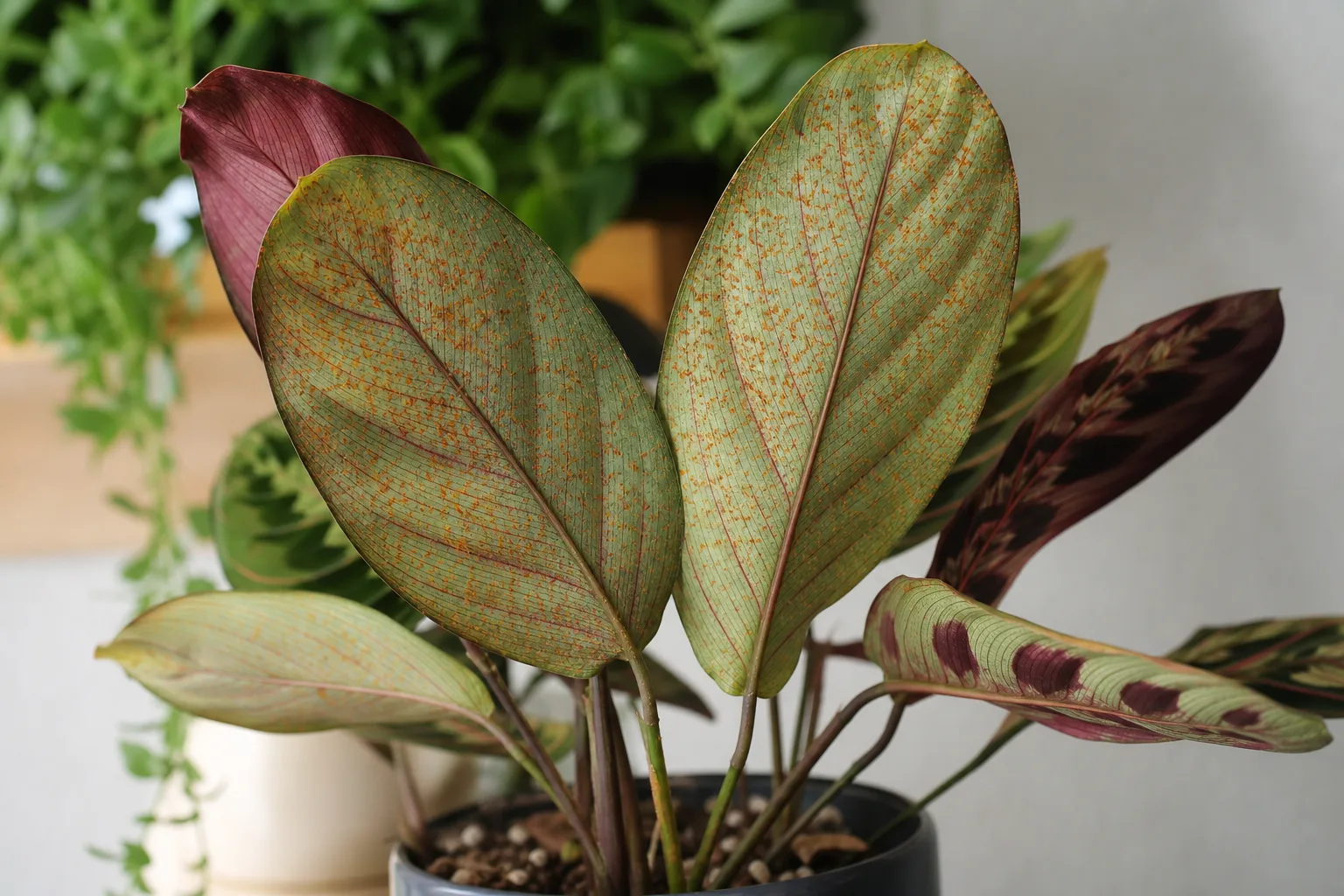
Rust Disease on Maranta Leuconeura: Causes, Checks & Fixes
This guide covers rust disease on Maranta Leuconeura. See also the general Rust Disease guide, watering, and light pages for this plant.
Rust Disease on Maranta Leuconeura: Causes, Checks & Fixes
Quick answer
Use this page when orange or rusty powder rubs off prayer plant leaf undersides. For tan water-soaked halos without powder, see leaf spot disease instead.
Rust disease on Maranta leuconeura (prayer plant) is a fungal infection that produces powdery orange, yellow, or brown pustules on leaf undersides. It spreads when maranta foliage stays wet for hours-exactly the conditions created by evening misting, overhead watering, or crowded humid shelves where leaves overlap and trap moisture.
On prayer plants, the first sign is often rust-colored dust along veins on the grayish-green leaf underside, not on the showy patterned surface you notice from across the room. Left alone, pustules multiply, leaves yellow and drop, and spores travel to neighboring calatheas and stromanthes on the same tray.
First step: isolate the plant and remove every leaf showing active pustules. Bag the trimmings and throw them away. Do not compost infected maranta leaves indoors, where spores can survive and reinfect.
Rust vs. Helminthosporium leaf spot on Maranta
Many prayer plant owners label any orange-brown spotting “rust.” Penn State Extension documents Helminthosporium leaf spot from Drechslera setariae as a primary foliar disease on marantas-but does not list true rust in the same table. Indoor prayer plants may show rust-like symptoms from several fungi; the rub test matters more than the label.
| Signal | Rust (this page) | Helminthosporium leaf spot |
|---|---|---|
| Underside appearance | Raised orange/yellow pustules | Tan water-soaked patches with yellow halos |
| Rub test | Orange powdery streak on tissue | No powder; lesion stays sunken |
| Top surface | Yellowing above pustules | Tan spots visible on patterned tops earlier |
| Best guide | This page | Leaf spot disease |
Cultural fixes overlap-dry leaves, isolate, remove infected tissue-but fungicide escalation differs. Confirm with the rub test before choosing a treatment path.
What rust disease looks on Maranta Leuconeura
Prayer plant leaves are thin, patterned, and held horizontally much of the day. Rust fungi colonize the underside first, where humidity lingers between overlapping leaves and along the rhizome.
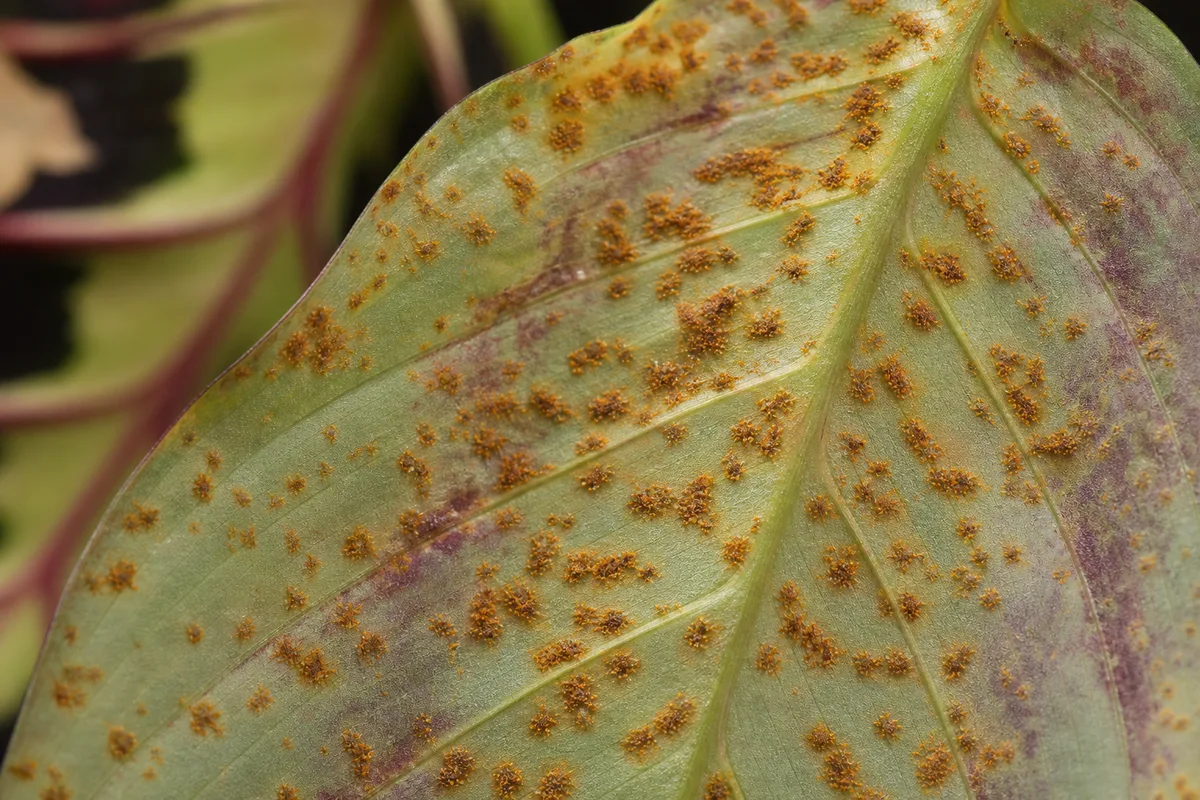
Rust Disease symptoms on Maranta Leuconeura - compare with healthy tissue on the same plant.
Early signs:
- Small raised bumps or pale spots on the grayish-green leaf underside, often following veins
- Orange, yellow, or rusty-brown powder that wipes onto your finger or a tissue
- One or two patterned leaves looking dull or slightly yellow while neighbors seem fine
Established infection:
- Dozens of pustules on a single underside, sometimes visible as orange dust when you tilt the pot
- Yellowing above infected areas on the patterned leaf surface
- Premature leaf drop starting with older outer leaves
- Pustules occasionally on petioles or young stems near the crown
- Stalled new growth-rolled prayer plant leaves opening with spots already present
The tissue-rub test: Gently wipe a pustule with a damp white tissue. Rust spores leave a distinct orange or rusty streak-powdery spores rub off easily onto tissue or paper towel. If the mark is watery brown without powder, or the spot does not rub off, you may be dealing with bacterial leaf spot or Helminthosporium leaf spot instead.
Damaged leaf tissue does not regain its original pattern. Judge recovery by clean new leaves, not by old spots fading.
Why Maranta Leuconeura gets rust disease
Prayer plants evolved in humid Brazilian understories where air moves even when the forest floor stays moist. Indoors, owners often recreate humidity by misting leaves or grouping marantas tightly on pebble trays-both raise moisture on foliage without always improving airflow.
Rust fungi need prolonged leaf wetness to germinate. University of Minnesota Extension notes that rust spores can travel on wind and splashing water and require long wet periods to start infection. On marantas, common triggers include:
- Evening misting or overhead watering - leaves stay wet overnight in cool rooms, especially where prayer plant crowns fold and hold water
- Shower-spray placement - bathroom shelves look humid but trap wet foliage against tile
- Crowded Marantaceae shelves - calathea, maranta, and stromanthe leaves touch and block drying
- High humidity without circulation - terrarium placement with stagnant air
- Splashing during watering - spores move from fallen infected leaves on soil surface back onto undersides
- Stressed plants - recent repotting, root rot recovery, or cold drafts weaken foliage defenses
Missouri Botanical Garden lists leaf spot among common prayer plant problems. True rust pustules are less frequently named in maranta-specific pathology tables than Helminthosporium leaf spot, but the same wet-foliage habits drive both.
How to confirm the cause
Work through these checks before spraying fungicide:
- Pustule location - Rust pustules concentrate on undersides and petioles. Top-only brown tips without powder point to low humidity or fluoride instead.
- Rub test - Powdery orange streak on tissue confirms rust spores. Water-soaked tan lesions with yellow halos suggest Helminthosporium-see leaf spot guide.
- Smell and texture - Soft, mushy, foul-smelling patches indicate bacterial rot, not rust. Rust leaves feel normal until they yellow and drop.
- Recent watering habits - Did you mist last night? Water over the leaves? Run a humidifier right against foliage?
- Neighbor plants - Matching undersides on other prayer plants support fungal spread, not a one-off care mistake.
- Pest check - Spider mites cause stippling, not powder pustules. Mealybugs leave white wax, not rusty dust.
- Crown condition - Press gently at the rhizome. Soft crown with wet soil suggests root rot layered on top of leaf disease-a different urgency.
If pustules are absent and you see only crisp brown margins, revisit low humidity or brown tips before treating for rust.
First fix for Maranta Leuconeura
Isolate the plant and remove all leaves with active rust pustules.
Move the maranta away from healthy plants immediately. Rust spores spread on hands, tools, breeze, and splashing water. Using clean scissors, cut each infected leaf at the base of its petiole. Bag leaves and dispose in household trash-do not compost on a balcony or indoor bin where spores persist.
Maranta-specific cautions during removal:
- Sterilize scissors between cuts with rubbing alcohol when pustules are widespread
- Do not wet remaining foliage while trimming-dry cuts heal faster on thin prayer plant leaves
- Keep water off the crown - Illinois Extension warns that prayer plant stems rot easily when water pools where leaves meet the rhizome
- Leave mildly spotted leaves only if pustules are truly absent - when in doubt, remove
Do not apply fungicide, repot, or fertilize on day one. Do not increase misting to “comfort” a stressed plant-that worsens rust.
After removal, place the plant in a bright, airy spot away from the collection and inspect undersides again in 48 hours.
Step-by-step recovery
Once isolation and leaf removal are done, follow this sequence by severity:
- Improve airflow without drying the plant out - Space marantas so you can flip leaves. A fan on low across the room helps; do not blast heat directly on foliage.
- Switch to soil-level watering - Water the mix directly per our watering guide; keep crowns dry, and empty saucers promptly. Prayer plants want moist soil, not wet leaves overnight.
- Use a humidifier or pebble tray for humidity - Target 60%+ ambient humidity without repeatedly wetting leaf surfaces per low humidity guidance. This supports maranta health while reducing rust-friendly leaf wetness.
- Apply a labeled houseplant fungicide only if pustules return on new leaves after cultural changes. Clemson HGIC lists copper soap and other options for fungal leaf spots on indoor plants-follow label directions, ventilate during application, and treat outdoors if the product requires it.
- Inspect all Marantaceae within three feet - Early pustules on calathea or stromanthe leaves warrant the same isolate-and-remove approach.
- Hold fertilizer until two weeks of clean new growth. Feeding stressed prayer plants pushes soft tissue that fungi colonize easily.
- Repot or top-dress only if soil surface holds many fallen infected leaves you cannot remove - scrape debris and replace the top 2 cm of mix if spores persist on the surface.
For plants where most leaves show pustules and new growth stops entirely, discarding may protect the rest of a tropical collection. If the rhizome is firm, stem cuttings from clean tips above the crown can salvage genetics.
Recovery timeline
Removing pustule-bearing leaves should stop visible spread within a few days if remaining foliage stays dry. Expect clean new prayer plant leaves within three to five weeks during active spring or summer growth; winter recovery is slower.
Old leaves with removed pustule scars stay cosmetically marked. The nightly folding response on new leaves is a good sign the crown is still healthy.
Escalate if fresh pustules appear on newly unfurled leaves after one week of dry-leaf care, or if yellowing climbs the stem.
Lookalike symptoms
| What you see | Likely cause | How to tell apart |
|---|---|---|
| Orange powder on undersides that rubs off | Rust disease | Tissue-rub test shows rusty streak; pustules raised |
| Tan patches with yellow halos, water-soaked start | Helminthosporium leaf spot | Documented on maranta; lesions not powdery when rubbed |
| Brown tips only, no undersides spots | Low humidity or fluoride | Margin damage even; no pustules on inspection |
| White powder on leaf tops | Powdery mildew | Upper-surface coating, not orange pustules underneath |
| Stippling with fine webbing | Spider mites | Paper-tap test shows moving specks |
| Soft brown mushy patches, foul smell | Bacterial leaf spot | Tissue collapses; not dry powder |
Fungal leaf spot on prayer plant appears in University of Maryland Extension guidance as tan to reddish-brown lesions that may merge-similar enough to confuse with early rust before pustules mature.
Mistakes to avoid
- Misting rust-affected leaves - adds leaf wetness rust fungi need; use humidifier instead
- Composting infected leaves indoors - spores survive and can blow back onto marantas
- Overhead showering the whole plant daily - rinsing spreads spores to crowns and neighbors
- Applying fungicide before removing pustule leaves - spray on heavily infected foliage wastes product
- Ignoring neighboring pots - rust on one prayer plant usually means underside checks on the whole shelf
- Repotting and pruning heavily the same week - stacks stress without addressing spores on remaining leaves
- Fertilizing to “boost immunity” - no substitute for dry foliage and infected-leaf removal
How to prevent rust disease next time
- Water at soil level in the morning so any splashed leaves dry the same day
- Skip routine misting if you already run a humidifier
- Avoid shower-spray placement that keeps undersides wet for hours
- Space marantas and calatheas so undersides are visible when you walk by
- Quarantine new plants for two weeks before mixing collections
- Sterilize scissors between plants when trimming any Marantaceae
- Remove fallen leaves from soil surface promptly; top-dress if spore debris persists after a heavy trim
- Inspect undersides monthly-patterned tops hide rust until pustules are advanced
Maranta care cross-check
While managing rust, keep baseline care steady-wild swings make weak new growth.
- Light: Bright indirect per light guide; avoid strong direct sun that stresses thin leaves
- Water: Consistently moist soil at 2 cm depth; never leave crowns standing in water
- Humidity: 60%+ via humidifier or pebble tray-not foliar misting during active infection
- Temperature: 18–27°C (65–80°F); avoid cold drafts below 15°C
Rust is a disease problem tied to how water meets maranta leaves. Fixing wet-foliage habits helps both prevention and the plant’s overall tolerance.
When to worry / salvage checklist
Treat as urgent when:
- Pustules appear on new leaves within days of your first cleanup
- More than a third of foliage is infected or dropping
- Stems soften at the soil line or crown smells sour
- Multiple plants in the same room show matching rust pustules
Likely saveable if: rhizome is firm, at least one clean growth point remains, and new leaves open without pustules for two consecutive weeks.
Consider discard or cuttings-only salvage if: crown is soft, pustules cover every leaf including new growth, or the plant sits in a dense prayer plant collection where spore spread risks every calathea on the shelf. Take propagation cuttings from the highest clean node before discarding.
Related Maranta guides
- Watering - soil-level technique, crown-dry habits
- Low humidity - humidity without wetting leaves
- Leaf spot disease - Helminthosporium vs. rust
- Brown tips - margin damage lookalike
- Propagation - salvage after crown failure