Spider Mites on Maranta leuconeura: Causes, Checks & Fixes
Quick answer
Spider mites on Maranta leuconeura cause pale stippling across patterned leaves and fine webbing in dry indoor air. First step: isolate the plant and rinse every leaf underside with lukewarm water before starting repeat contact treatment.
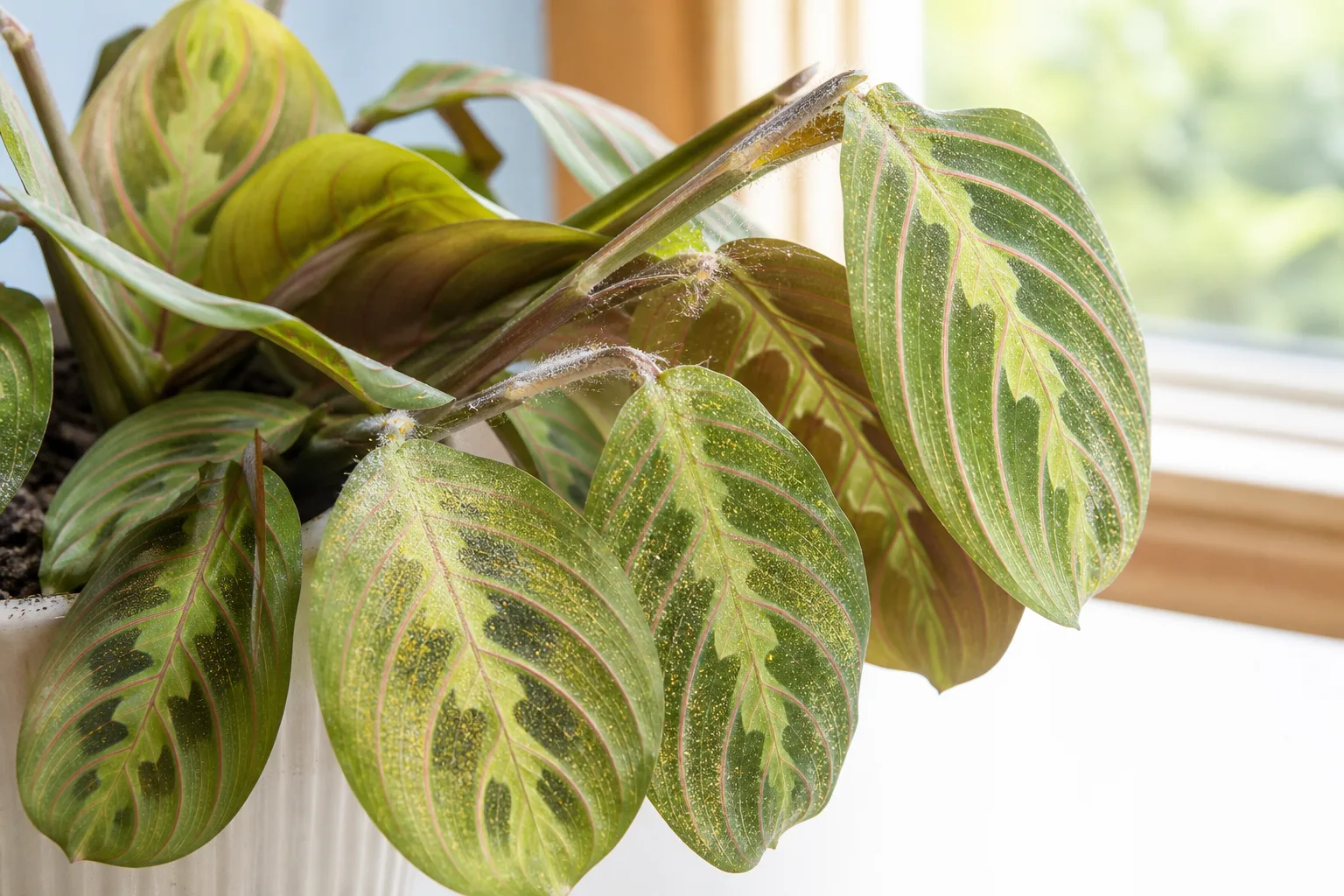
Spider Mites on Maranta leuconeura: Causes, Checks & Fixes
This guide covers spider mites on Maranta Leuconeura. See also the general Spider Mites guide, watering, and light pages for this plant.
Spider Mites on Maranta leuconeura: Causes, Checks & Fixes
Quick answer
Spider mites on Maranta leuconeura almost always show up when the air is too dry for the plant and ideal for the pest. The first visible sign is usually pale stippling that breaks up the herringbone pattern, followed by fine webbing on undersides and around petiole joints.
First step: isolate the plant and rinse every leaf underside with lukewarm water. University of Minnesota Extension recommends washing and physical removal as a first step for indoor plant pests. On prayer plants, keep the crown dry while you do it.
What spider mites look like on Maranta leuconeura
Typical signs include:
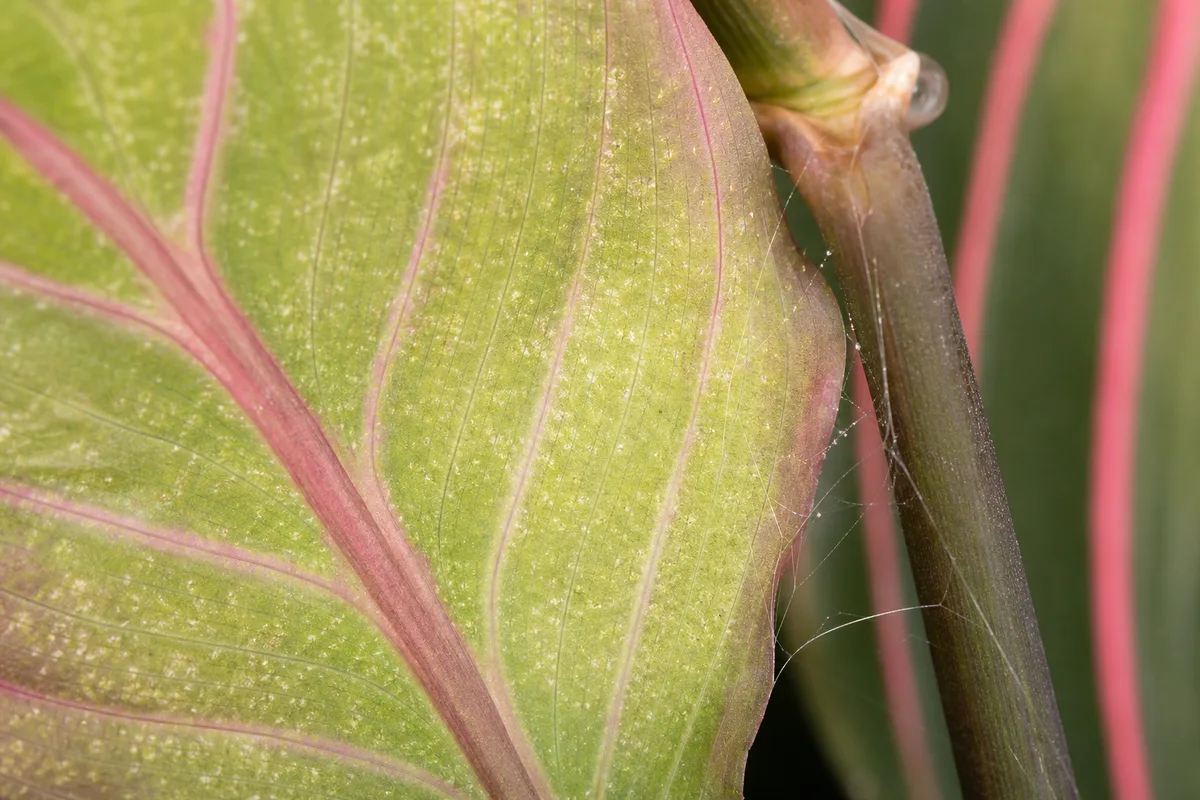
Spider Mites symptoms on Maranta Leuconeura — compare with healthy tissue on the same plant.
- tiny pale or yellow feeding dots across the leaf pattern
- dull, bronzed, or dusty-looking foliage
- fine silk webbing on undersides or at petiole joints
- leaves that look tired even when the soil is moist
- new growth opening already speckled in heavier infestations
Mites are hard to see until numbers build. Webbing is often easier to spot than the pest itself.
Why this plant gets them
Prayer plants want warm, humid air. Spider mites prefer the opposite. When winter heating or dry airflow lowers humidity, the plant is stressed and mites reproduce faster.
The usual triggers are:
- heating vents or radiators
- low indoor humidity
- drought stress layered on top of dry air
- crowded tropical shelves where mites can spread
- new plants brought in without quarantine
Dry conditions explain why spider mites often show up at the same time growers start noticing crisp edges.
How to confirm the diagnosis
Before treating:
- Flip leaves over and inspect undersides closely.
- Look for fine webbing, especially where leaves join petioles.
- Tap a leaf over white paper and check for moving specks.
- Separate mites from aphids and mealybugs on prayer plant.
- Compare with low humidity if you have crisp edges but no stippling or webbing.
If the pattern damage is silver streaking without webbing, thrips are a better match than mites.
First fix: isolate and rinse
For early infestations:
- Move the plant away from the rest of the collection.
- Rinse the undersides of every leaf with lukewarm water.
- Wipe away visible webbing.
- Let the foliage dry in bright indirect light.
- Repeat in two or three days.
Do not flood the center of the plant while rinsing. University of Illinois Extension warns against water standing on the crown.
What to do if mites remain
If webbing or stippling continues:
- Repeat rinsing on a short cycle.
- Apply a labeled insecticidal soap or horticultural oil.
- Repeat treatment every five to seven days for several cycles.
- Raise humidity around the plant so the environment stops favoring mites.
- Inspect neighboring Marantaceae immediately.
Raising humidity helps prevention, but it does not replace direct knockdown once a colony is active.
Recovery timeline
Visible webbing should drop after the first few rinses. Full control often takes two to three weeks because eggs hatch after the initial treatment.
Recovery looks like:
- no new webbing
- less stippling spread
- cleaner new leaves
- normal nightly folding on fresh growth
Old stippled areas usually remain as cosmetic damage.
Lookalikes to rule out
Spider mites are often confused with:
- Low humidity - brown crisp edges without fine feeding dots
- Aphids - sticky honeydew and visible pear-shaped insects
- Mealybugs on prayer plant - cottony wax in joints
- Overwatering - yellowing with wet soil and no webbing
If you do not see webbing, underside feeding dots, or moving specks, do not assume spider mites automatically.
What not to do
Do not:
- mist once and assume the infestation is solved
- return the plant to the shelf too early
- treat only the top of the leaves
- ignore nearby calatheas, ctenanthes, or stromanthes
- combine aggressive pruning, repotting, and pest treatment on the same day
Prayer plants need steady recovery conditions after the pest pressure is reduced.
Conclusion
Spider mites on Maranta leuconeura are usually a dry-air problem first and a pest-control problem second. Confirm the webbing and stippling, isolate fast, rinse the undersides thoroughly, and repeat treatment until clean new growth takes over. If the air stays dry, the mites usually come back.