Mealybugs on Maranta leuconeura: Causes, Checks & Fixes
Quick answer
Mealybugs on Maranta leuconeura show up as white cottony clusters in leaf axils, folded new growth, and around the rhizome crown. First step: isolate the plant and dab every visible cluster with 70% isopropyl alcohol on a cotton swab before starting repeat contact treatment.
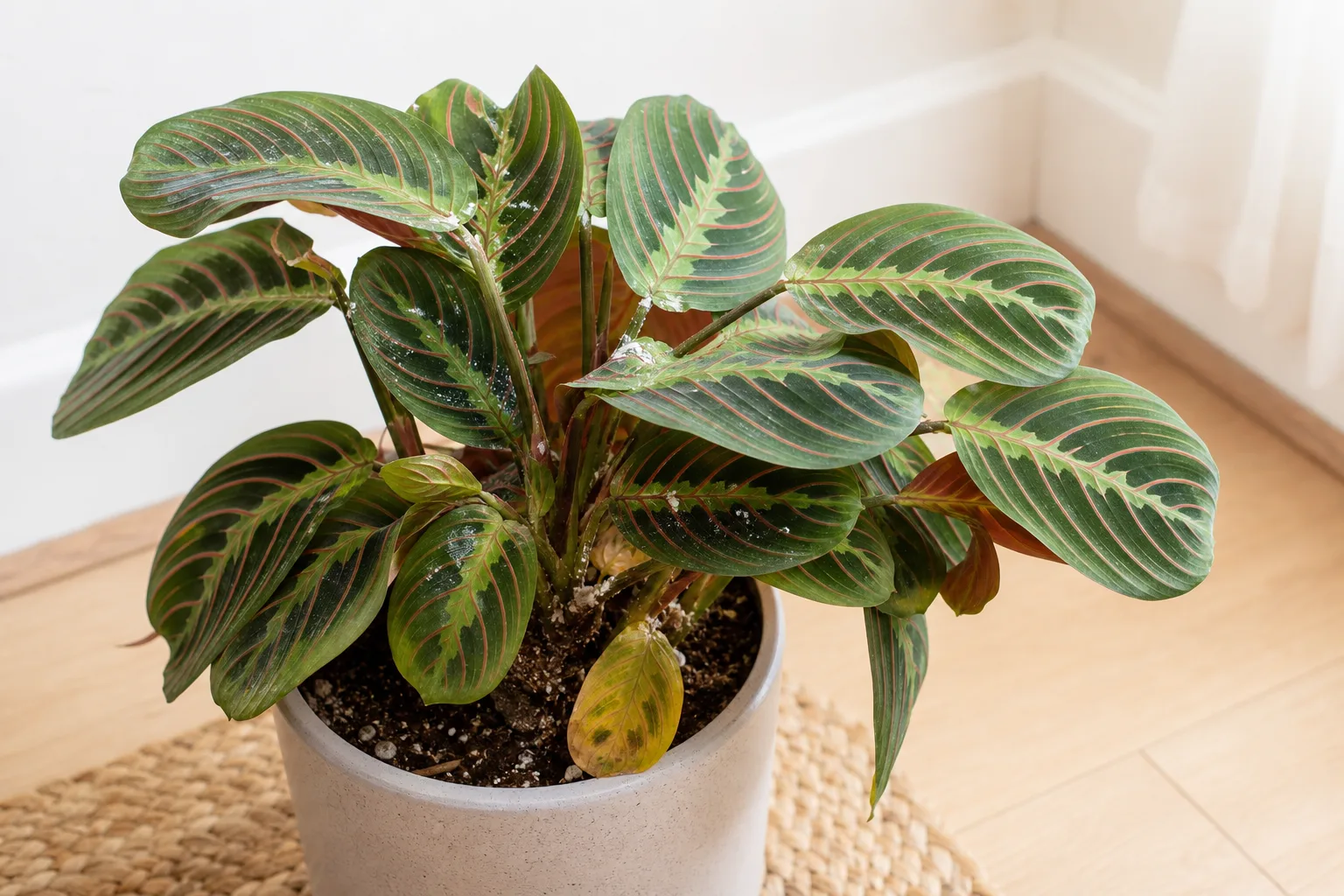
Mealybugs on Maranta leuconeura: Causes, Checks & Fixes
This guide covers mealybugs on Maranta Leuconeura. See also the general Mealybugs guide, watering, and light pages for this plant.
Mealybugs on Maranta leuconeura: Causes, Checks & Fixes
Quick answer
Mealybugs on Maranta leuconeura hide in the exact places growers do not check often enough: leaf axils, folded new growth, and the rhizome crown near the soil surface. They feed on sap, leave sticky honeydew, and can quickly turn a tidy prayer plant into a dull, distorted, yellowing clump.
For general mealybug biology, see our mealybugs guide. On prayer plant, the rhizome crown and folded new leaves are the highest-risk hiding zones.
First step: isolate the plant and dab visible clusters with 70% isopropyl alcohol on a cotton swab. UC IPM notes alcohol dabbing can help with small mealybug infestations. On prayer plants, keep the alcohol targeted and avoid soaking the crown.
What mealybugs look on Maranta leuconeura
Mealybugs appear as:
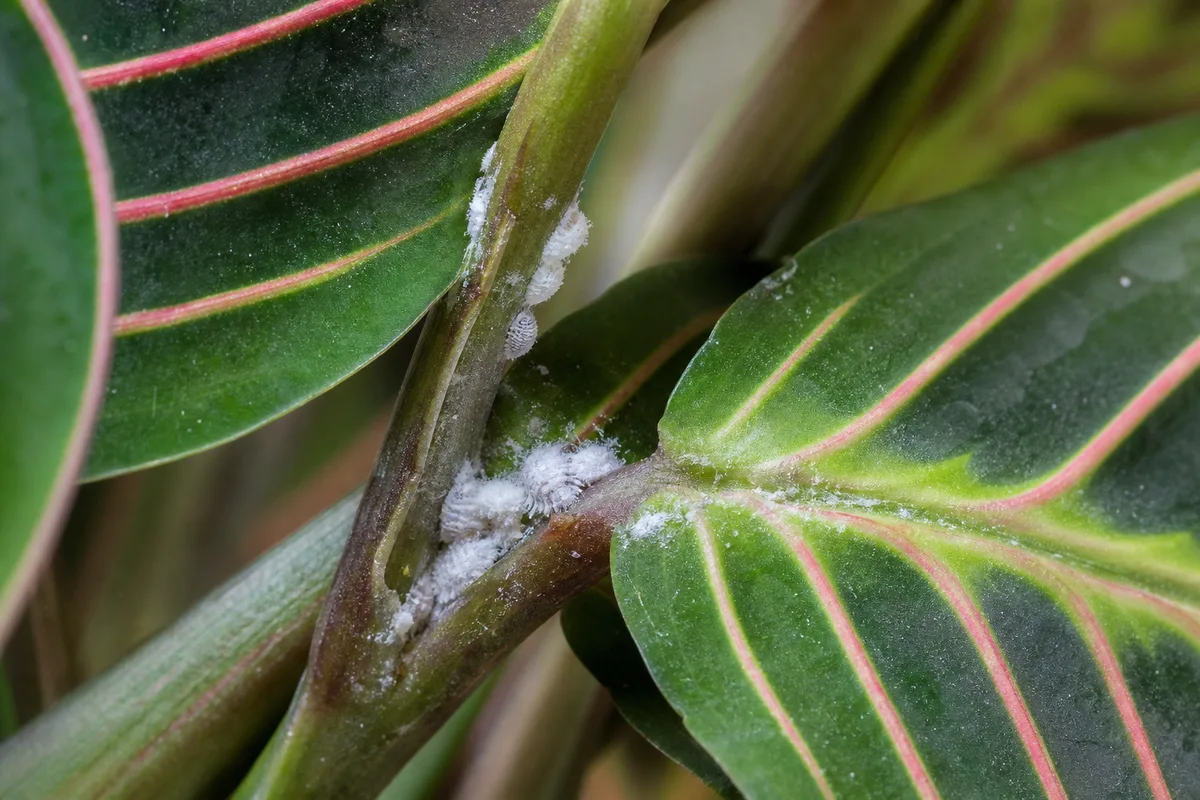
Mealybug symptoms on Maranta leuconeura—compare cottony wax clusters with healthy leaf axil tissue.
- White cottony tufts in leaf joints along the herringbone pattern
- Waxy clusters tucked into folded new leaves before they fully open
- Sticky residue on leaves below the feeding site
- Sooty mold developing on old honeydew
- Yellow or stalled new leaves on heavily infested stems
- Ant trails on pot rims or cachepots farming honeydew
Unlike powdery residue or mineral crust, the pest sits in protected crevices and often smears when disturbed with a cotton swab.
Why this plant is vulnerable
Prayer plants are low, rhizomatous Marantaceae full of sheltered joints. That growth habit gives mealybugs places to settle where a casual top-down inspection misses them. Grouped tropical shelves also help them spread from one Marantaceae plant to another.
Common entry routes are:
- New nursery plants with hidden crown colonies
- Nearby infested tropicals on shared watering days
- Summer-outdoor plants returning indoors without inspection
- Decorative cachepots that hide early crown colonies for weeks
- Ants on plant that farm honeydew and protect mealybug colonies
The issue is usually visibility and spread, not that the plant is inherently weak.
Rhizome crown inspection: prayer plant only
Maranta leuconeura grows from a rhizome crown at the soil surface—not a single woody trunk. Mealybugs colonize the crown folds where new leaves emerge before they spread to outer axils. This inspection does not apply to upright ficus or vining pothos.
- Remove cachepots and lift outer leaves to expose the crown.
- Inspect every petiole base where it meets the rhizome with bright light.
- Gently open newest folded growth and look inside for waxy tufts.
- Check pot rim and saucer for ants or honeydew trails.
- Handle infested plants last when grooming multiple Marantaceae on one shelf.
Missing the crown is how infestations come straight back after a single alcohol pass on visible outer leaves.
How to confirm the diagnosis
Before treating:
- Inspect the crown and soil line first.
- Check every leaf axil with bright light.
- Open the newest folded growth gently and look inside.
- Distinguish mealybugs from aphids and spider mites.
- Look for sticky honeydew or ants, which often appear with larger colonies.
If you see flat white residue with no insect body and no stickiness, you may be dealing with mineral deposits instead.
First fix: isolate and spot-treat
Start with direct removal:
- Move the plant away from neighbors.
- Dab each visible colony with 70% isopropyl alcohol on a swab.
- Wipe away dead residue so you can spot new activity.
- Follow with a labeled insecticidal soap if the infestation is beyond a few isolated clumps.
Avoid letting water or alcohol pool in the center of the plant. University of Illinois Extension warns that standing water at the crown can trigger rot.
What to do if they keep coming back
Mealybugs usually require repeat work:
- Reinspect the plant every five to seven days.
- Re-dab new visible clusters at crown and axils.
- Reapply insecticidal soap per label directions.
- Check the pot rim, cachepot, and crown for hidden survivors.
- Inspect nearby tropicals, not just the maranta.
If the crown is packed with wax and the plant is declining fast, you may need to unpot it and inspect the rhizome base directly before repotting into fresh mix.
Recovery timeline
Light infestations can improve within two to three weeks if you are thorough. Heavier infestations often take longer because hidden colonies survive the first pass.
Recovery means:
- No fresh cottony patches at crown or axils
- Cleaner new leaves with vivid herringbone pattern
- Less stickiness on lower foliage
- Resumed normal nightly leaf folding on new growth
Old yellowed or scarred leaves usually stay cosmetically damaged.
Lookalikes to rule out
| Sign | Likely cause |
|---|---|
| Cottony wax in axils + honeydew | Mealybugs (this page) |
| Pear-shaped insects on new growth | Aphids |
| Stippling + fine webbing | Spider mites |
| Crisp edges without wax | Low humidity |
| Yellowing with wet soil, no wax | Overwatering |
What not to do
Do not spray blindly without checking the crown. Do not move the plant back after one treatment. Do not fertilize during active infestation. Do not ignore adjacent calatheas, ctenanthes, or stromanthes. Do not let cachepots hide what is happening at the base.
Do not combine aggressive pruning, repotting, and pest treatment on the same day.
How to prevent mealybugs on prayer plant
Quarantine new plants two to three weeks. Inspect crown and axils during every watering check. Remove cachepots during weekly scouting. After outdoor summering, inspect before bringing the plant back inside.
Missouri Botanical Garden recommends isolating newly acquired plants to limit introducing pests indoors.
When to worry
Treat quickly when cottony patches spread across several leaf axils, the crown becomes sticky, ants appear, or new growth stalls. Crown-level colonies become harder to reach once they spread into the base of the rhizome clump.
Conclusion
Mealybugs on Maranta leuconeura are a crown-and-axil pest first and a foliage-quality problem second. Isolate early, inspect the hidden joints carefully, and repeat contact treatment until new growth is clean. On this plant, missing the crown is how the infestation comes straight back.
Related Maranta Leuconeura guides
- Maranta Leuconeura overview
- Aphids on Maranta Leuconeura
- Spider Mites on Maranta Leuconeura
- Low Humidity on Maranta Leuconeura
- Overwatering on Maranta Leuconeura
- Yellow Leaves on Maranta Leuconeura
- Maranta problems hub
Related tool
Use the Pest Identifier Tool to narrow causes for mealybugs on this plant before changing multiple variables at once.