Flowers Turning Brown on Maranta Leuconeura: Causes, Checks
Quick answer
Open prayer plant flowers that brown evenly over two to four days are usually normal aging on a rare indoor bloom-not a sign the plant is dying. When buds brown before opening or petals crisp overnight, fix dry air and drafts first. Measure humidity at spike height and move the pot away from vents before repotting or fertilizing.
Flowers Turning Brown on Maranta Leuconeura: Causes, Checks & Fixes
This guide covers flowers turning brown on Maranta Leuconeura. See also the general Flowers Turning Brown guide, watering, and light pages for this plant.
Flowers Turning Brown on Maranta Leuconeura: Causes, Checks & Fixes
Quick answer
Your prayer plant finally bloomed-and the small white or purple flowers turned brown within days. If petals opened fully first and browned evenly at the edges over two to four days, that is usually normal aging on a rare indoor bloom, not a reason to repot or fertilize. Prayer plants rarely flower indoors; protecting a spike matters more than chasing showy flowers.
Use this page when open petals brown after blooming. If closed buds shrivel or fall before opening, see bud drop instead. If leaf edges crisp but flowers look fine, start with low humidity.
First step: hold a hygrometer at spike height, aim for 55–60% RH, and move the pot away from vents, AC, and cold window glass before changing fertilizer or repotting.
Brown flowers vs. bud drop vs. low humidity - which guide to use
Prayer plant reproductive symptoms overlap across several Maranta problem pages. Route yourself before changing care:
| What you notice | Most likely cause | Key differentiator | Read next |
|---|---|---|---|
| Petals opened, then browned at edges over 2–4 days; stalk stays firm | Normal bloom aging (this page) | Flowers reached open stage; plant otherwise healthy | Stay here |
| Closed buds yellow, shrivel, or fall before opening | Bud drop | Buds never fully open; often follows move, repot, or dry spell | Bud drop |
| Brown leaf tips or margins; flowers may be fine or absent | Low humidity | Foliage damage first; RH below 45% at leaf height | Low humidity |
| One-sided limp leaves after vent or window exposure | Draft stress | Lost or weak night folding; timing matches AC or cold glass | Draft stress |
| Mushy stalk base, sour soil, yellow wilting leaves | Overwatering / root rot | Crown or roots soft; wet mix | Root rot |
What prayer plant flowers look like before they brown
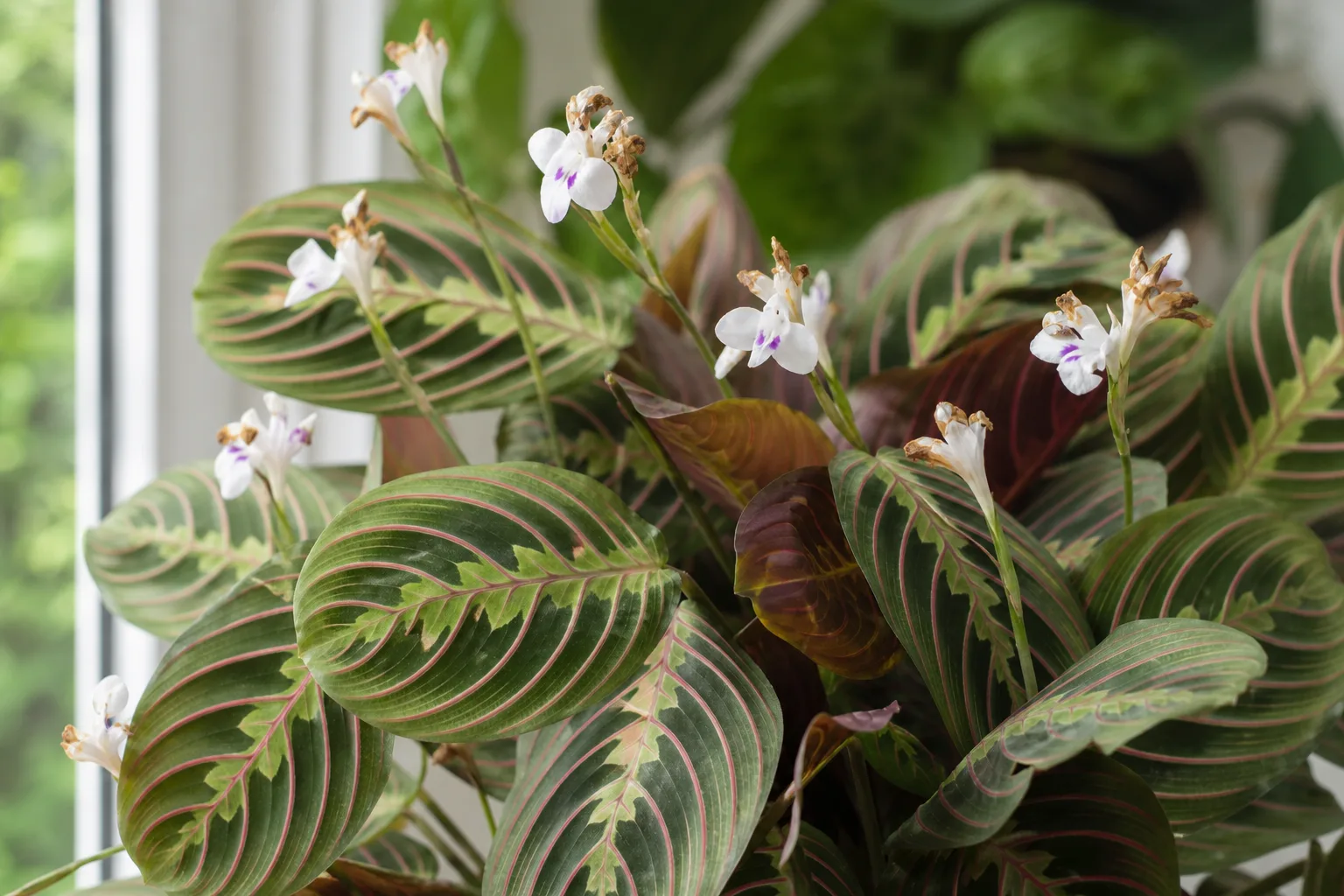
Maranta leuconeura flowers are easy to overlook until you know the pattern. Buds emerge as small pale cones from leaf axils-where leaf stems meet the short rhizomatous crown-not at leaf tips. Over several days a slender stalk elongates and buds swell into two-lipped white or purple blooms less than one inch across.
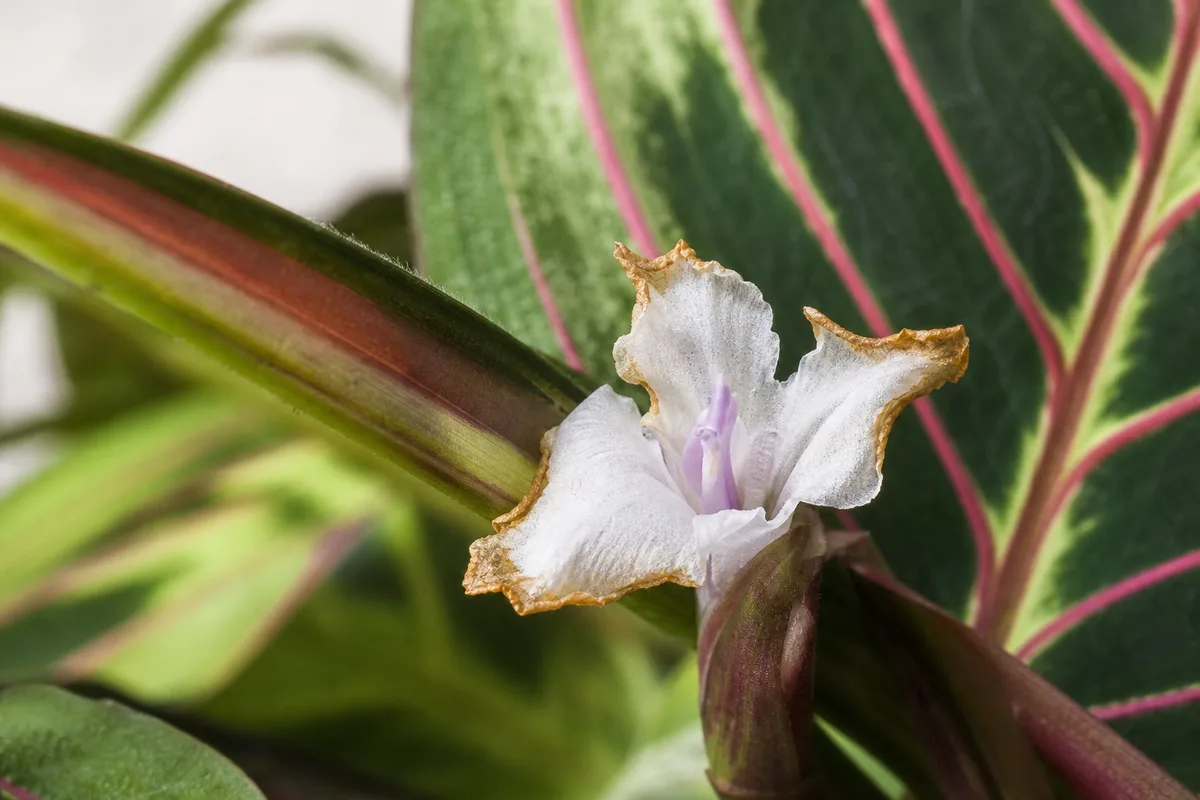
Flowers Turning Brown symptoms on Maranta Leuconeura - compare with healthy tissue on the same plant.
Bloom stages to expect indoors:
- Green bud - Tiny cone at an axil; stalk still short.
- Swollen bud - Stalk lengthens; white or lavender petals visible inside.
- Open flower - Two-lipped bloom fully spread, often white with purple spots; lasts only a few days.
- Edge browning - Petal margins tan or brown while the center is still pale-normal senescence if the flower opened first.
- Spent spike - Entire stalk dries tan-brown; safe to snip at the base.
Because blooms are ornamentally insignificant compared with patterned foliage, many owners never notice the cycle until petals brown and wonder if the plant is failing.
What brown flowers look like on Maranta Leuconeura
Normal aging starts at petal edges after the flower fully opens. Color shifts from white or pale purple to tan-brown over two to four days while the stalk stays firm and leaves keep folding at night.
Stress browning looks different:
- Buds brown or crisp before they open
- Open petals turn papery overnight instead of fading gradually
- The stalk base softens and smells off while leaves yellow
- Brown flowers appear alongside widespread brown leaf tips from dry air or tap-water salts
If only petals brown on an otherwise vigorous plant, treat it as bloom fade first-not a foliage crisis.
Why prayer plant flowers turn brown
Normal senescence on short-lived indoor blooms
Maranta is a rainforest-floor plant from Brazil where unpollinated flowers fade quickly after opening. Indoors, each two-lipped bloom may last only a few days before petals brown and dry. That is expected-not a sign the plant is dying.
Many growers remove flower spikes after bloom to redirect energy to leaves, which is what most people grow Maranta for.
Dry air, drafts, and watering swings during bud set
Prayer plants need high humidity and warm, stable temperatures. Indoor heating and air conditioning pull moisture from delicate petal tissue faster than from thick Marantaceae leaves-so blooms brown first while foliage still looks fine.
The species is intolerant of low temperatures and cold drafts. A spike on a chilly windowsill or in the path of a furnace vent can abort buds or crisp open petals within hours.
Letting soil swing from bone-dry to soggy during bud set stresses shallow roots. Keep soil evenly moist in the growth season per our watering guide but allow more dry-down in winter. Overwatering can rot the base of a flower stalk, turning it brown and mushy while the rest of the plant yellows.
Typical first-time bloomer scenario: A mature prayer plant sends a spike in late spring. The owner celebrates, places the pot on a sunny windowsill for “better light,” and winter heat or AC drafts pull RH below 40% at spike height. Buds brown before opening or open flowers crisp overnight-that is environmental stress, not disease.
Mushy stalk rot vs. bloom aging
Firm brown petals on an open flower with a rigid stalk point to normal fade. A soft, brown stalk base with sour-smelling soil and yellowing leaves points to crown or root trouble-see root rot, not bloom aging alone.
How to confirm the cause
Work through these checks in order:
- Timing - Did petals open first, then brown over 2–4 days? Likely normal senescence.
- Hygrometer at spike height - Read RH beside the bloom, not just at pot level. Below 45% during bud set strongly favors dry-air browning.
- Draft scan - Heat registers, AC vents, radiators, or frequently opened doors within 1 m (3 ft)?
- Soil feel - Top 2 cm very dry, or pot heavy and sour-smelling? Compare with our watering rhythm.
- Recent change - Repot, room move, or fertilizer spike in the last two weeks?
- Stalk firmness - Soft brown base suggests rot; firm brown petals on an open flower suggest aging.
- Leaf pattern - Tips only? Check brown tips and water quality. Widespread crisping? See low humidity.
First fix for Maranta Leuconeura
Raise local humidity at spike height and eliminate drafts before anything else.
Place a cool-mist or ultrasonic humidifier within 1–2 m of the pot and hold 55–60% RH at the bloom-not just at leaf level. Group plants or use a pebble tray so evaporation surrounds the spike. Do not mist flowers directly in low light; wet petals spot easily.
Move the pot away from cold window glass and HVAC outlets while buds are present. If the spike sits on a radiator-side sill in a heated living room at 35% RH, even a healthy plant will brown blooms before leaf tips show damage.
If humidity is already 55–60% and air is still, check watering rhythm next. Water when the top layer reaches appropriate dryness for your home-moist but not waterlogged-and empty the saucer after each drink.
Step-by-step recovery
Once humidity and placement are stable:
- Snip spent brown flowers at the base of each stalk with clean scissors. Do not pull spikes, which can tear rhizomes.
- Leave green stalks if buds are still forming-the plant reabsorbs nutrients as stalks senesce naturally, matching guidance on our bud drop page.
- Review light if buds keep aborting after two weeks of stable care. Blooming needs bright indirect light per our light guide; too much direct sun scorches petals, while dim corners produce weak spikes that fail early.
- Hold fertilizer until new leaves look firm. A stressed prayer plant does not need bloom booster mid-crisis.
- Scout pests - Sticky residue or stippling on leaves suggests aphids or mealybugs; treat before blaming humidity alone.
Recovery timeline and what improvement looks like
- 2–4 days - Normal post-bloom browning finishes per flower on an open bloom.
- 1–2 weeks - Humidity correction shows in the next buds opening cleanly without overnight crisping.
- Next late spring - Mature plants in stable care may send new stalks-the typical bloom window for this species.
Brown petals do not re-green. Judge success by firm new leaves, restored night folding, and the next buds opening without aborting. If every spike fails for a full season after fixes, the plant may need more maturity or brighter indirect light-not emergency repotting.
Signs the problem is worsening:
- Crown or stalk base softening while soil stays wet
- Sour smell from the pot; widespread yellowing leaves
- Buds blacken and slimy instead of drying brown
Those patterns mean escalate beyond bloom troubleshooting-inspect roots per root rot guidance.
Lookalike symptoms to rule out
| What you see | More likely cause | Quick differentiator | Read next |
|---|---|---|---|
| Brown petal edges after full open | Normal bloom aging | 2–4 day fade; firm stalk; healthy leaves | This page |
| Closed buds fall or shrivel | Bud drop | Buds never open; follows care change | Bud drop |
| Brown leaf tips only | Low humidity / fluoride | Flowers fine or absent; RH low | Brown tips |
| Mushy stalk base, yellow leaves | Overwatering / rot | Sour soil; soft roots | Root rot |
| Sticky leaves, stippling | Pests | Insects on undersides | Scout; treat before humidity fixes |
Mistakes to avoid
- Repotting while buds are visible hoping for “more energy”-root disturbance almost always aborts spikes.
- Misting flowers directly in low light, which invites spotting on delicate petals.
- Cutting the entire plant back because blooms browned-foliage is the main show indoors.
- Assuming blooming means the plant needs more fertilizer-it often means conditions were already good until air dried out.
- Confusing this page with bud drop when buds never opened-different trigger, different first fix.
How to prevent brown flowers next time
Keep humidity at 55–60%+ during spring growth, maintain temperatures above 60°F, and use filtered or overnight tap water if leaf edges also crisp. Avoid moving or repotting during bud formation.
Accept that indoor blooms are infrequent and short-lived. Trimming spent spikes keeps the clump tidy. For year-round humidity habits, see our prayer plant overview and low humidity guide.
Related Maranta guides
- Prayer plant overview - baseline care and humidity needs
- Bud drop - buds that fail before opening
- Low humidity - foliage-first crisping
- Draft stress - vent and window injury
- Watering - even moisture during bloom
- Root rot - mushy stalk base with wet soil
- Light - bright indirect for bloom attempts
Brown prayer plant flowers are often harmless aging on a rare indoor bloom. When buds brown early, fix humidity and drafts at spike height first, then watering and light. Snip finished spikes, watch for firm new leaves, and treat mushy stalks or sour soil as a separate root problem-not normal flower fade.