Caterpillars on Prayer Plant (Maranta Leuconeura): Causes &
Quick answer
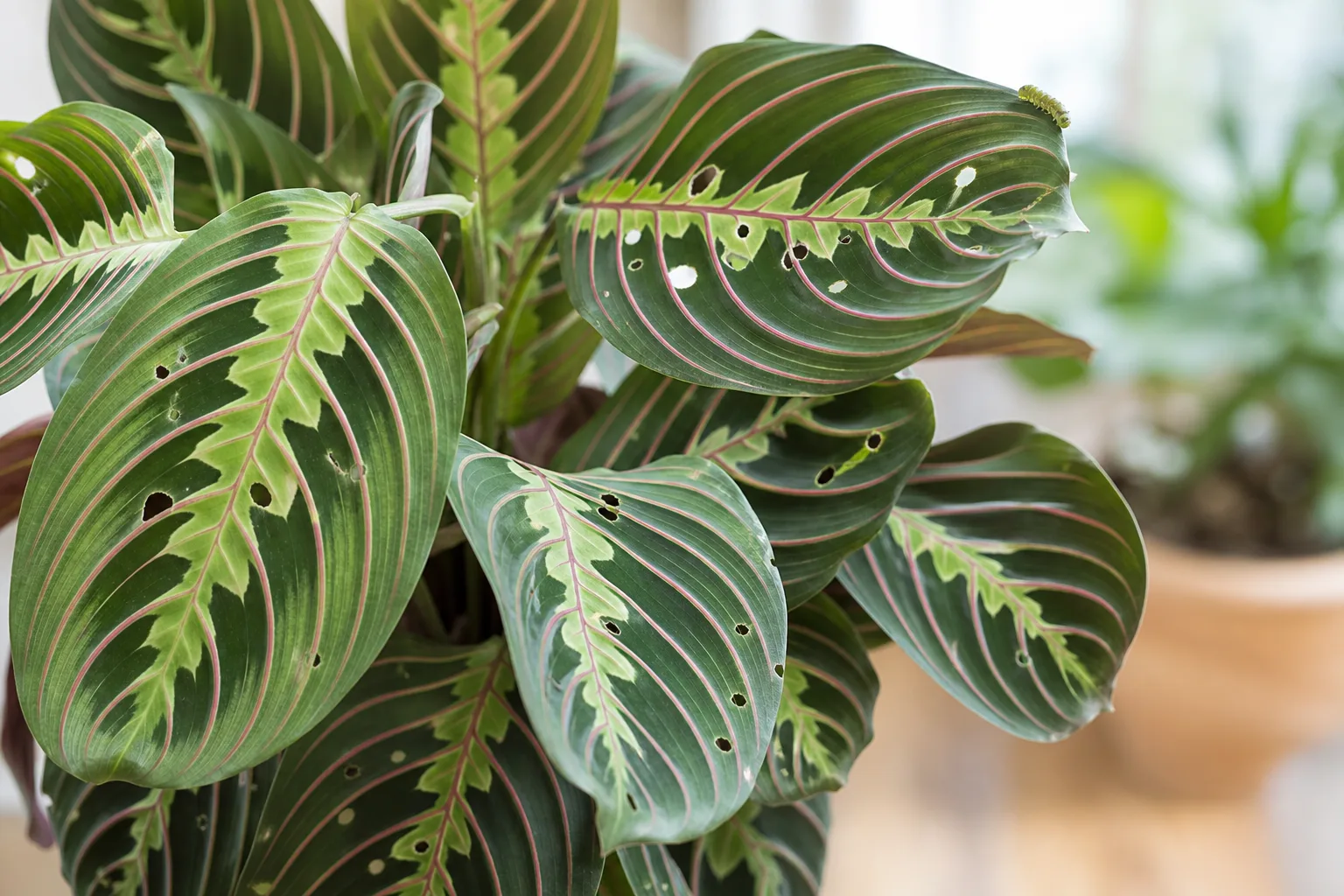
Ragged holes in your prayer plant's herringbone pattern overnight usually mean a caterpillar is feeding-not normal night folding. Look for black frass pellets on leaves or the pot rim. First step: isolate the plant and hand-pick any visible larvae after a dusk inspection before spraying anything.
Caterpillars on Prayer Plant (Maranta Leuconeura): Causes & Fixes
This guide covers caterpillars on Maranta Leuconeura. See also the general Caterpillars guide, watering, and light pages for this plant.
Caterpillars on Prayer Plant (Maranta Leuconeura): Causes & Fixes
Quick answer
You noticed ragged holes punched through the herringbone pattern on your prayer plant (Maranta leuconeura)-often overnight, with black frass pellets on the leaf surface or pot rim below. That pattern points to caterpillar feeding, not the crisp brown tips caused by dry air or fluoride.
Healthy prayer plant leaves fold upward at night in a normal nyctinastic movement. Caterpillar damage is different: holed tissue stays torn during the day, frass accumulates, and you can often find a larva or fresh chew marks on inspection. If leaves fold cleanly at night with no pellets or holes, caterpillars are unlikely.
First step: isolate the plant and hand-pick any visible caterpillars after a dusk inspection. Clemson HGIC recommends removing caterpillars and eggs by hand on houseplants before reaching for sprays. Drop larvae into soapy water and check again the next evening.
This page covers caterpillars specifically on prayer plant. For holes from slugs, leaf miners, pets, or mechanical tears, start with our holes in leaves guide-that hub covers every chewer; this page goes deeper on larval moths, frass confirmation, Bt kurstaki, and crown-safe rinsing.
Caterpillar vs lookalikes on prayer plant
Before you spray, compare what you see on patterned Maranta foliage:
| Sign | Caterpillars | Pet nibble | Slugs / snails | Thrips | Mechanical tear |
|---|---|---|---|---|---|
| Hole shape | Irregular, ragged chew | Clean edge tear | Irregular holes | Silvery scrape streaks, not large holes | One-time clean break |
| Droppings | Dark pellet frass | None | Silvery slime trails | Tiny black specks | None |
| Spread | New holes overnight | Same accessible leaves | Floor-level pots | Distorted new leaves | Single leaf, no spread |
| Night clue | Larva feeding at dusk | N/A | Active in damp spots | Inside rolled new growth | N/A |
| Start here | This page | Holes in leaves | Holes in leaves | Thrips guide | No treatment needed |
What caterpillars look like on prayer plant
Prayer plants grow low from rhizomes near the soil line, sending up patterned leaves on thin stems. Caterpillars target the softest tissue first-newly unfurling leaves and tender edges of mature foliage.
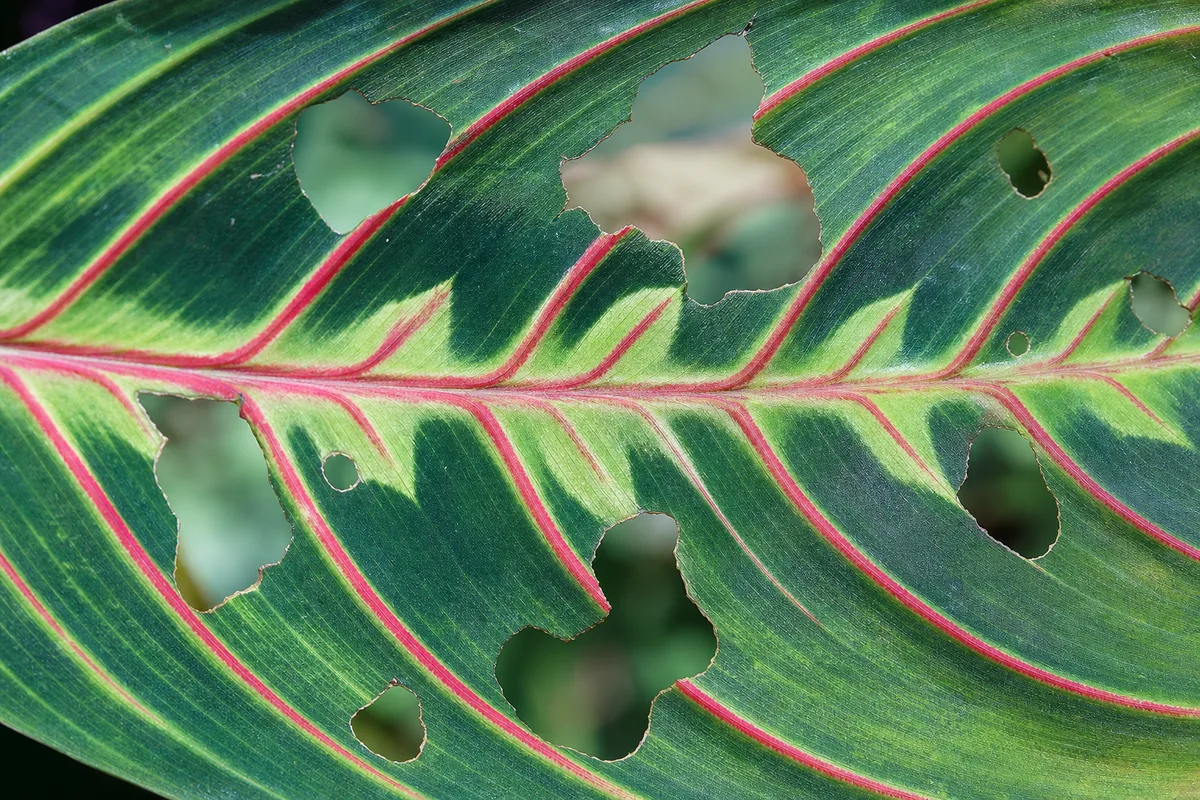
Caterpillars symptoms on Maranta Leuconeura - compare with healthy tissue on the same plant.
Typical signs include:
- Irregular holes punched through the herringbone or tricolor pattern-not uniform brown margins from low humidity
- Ragged leaf edges where larvae have chewed inward from the margin
- Black or dark green frass pellets on upper leaf surfaces, stems, or the saucer below damaged leaves-Clemson HGIC notes frass as a reliable caterpillar indicator
- Visible larvae that may be green, brown, or mottled, often curled along leaf undersides or at the crown
- Damage clustered on one side of the plant or on the newest growth, spreading overnight when feeding is active
- Skeletonized patches where only veins remain on severely chewed leaves
Caterpillars are butterfly and moth larvae ranging from tiny newly hatched worms to two-inch feeders. Colors vary; many blend into green prayer plant foliage until damage accumulates.
Why prayer plant gets caterpillars (rare but real indoors)
Caterpillars are not a chronic weakness of prayer plants the way spider mites can be in dry winter air. They arrive as introduced larvae or unhatched eggs, then exploit the same soft foliage that makes Maranta attractive as a houseplant.
Strictly indoor collections. In a year-round indoor setup with no patio summers and closed windows, caterpillars are unusual on houseplants. When holes appear anyway, pet nibbles, mechanical tears during unfurling, or thrips rasping are more likely-confirm frass and a live larva before treating.
Hitchhiking on new plants or soil. Eggs laid on nursery stock or in potting media can hatch weeks after you bring a Maranta home. Extension experts note that caterpillars in houseplants often trace to moths or butterflies that laid eggs on the plant or in the soil-sometimes before the plant ever reached your shelf.
Summer outdoors. Prayer plants often spend warm months in shaded patios or porches. A brief visit from an adult moth can leave eggs on undersides of leaves. When the plant returns indoors, larvae hatch in stable humidity and begin feeding on tender new growth.
Open windows and nearby outdoor plantings. Indoor Marantas near open windows in spring or summer can receive eggs from moths drawn to light. Low-growing leaves sitting near window sills are easy landing spots.
Tender new leaves. Happy Marantas in bright indirect light with evenly moist soil produce fresh leaves regularly from rhizomes. Those unfolding leaves are easier to chew than hardened older foliage.
Moist crown environment. Maranta leuconeura needs consistently moist soil and high humidity. Organic debris on the soil surface or tucked leaf bases gives hiding spots for small larvae during the day-without causing the problem on its own, but making daytime detection harder until holes multiply.
Pet nibbles vs caterpillars on non-toxic Maranta
Because prayer plant is non-toxic to cats and dogs, pets sometimes sample accessible leaves. That chewing looks different from caterpillar feeding:
- Pet nibbles: Clean tears on lower leaves at nose height, no frass pellets, no larvae on inspection, damage does not spread to new growth overnight
- Caterpillars: Rough holes with pellet droppings, often on newest unfurling leaves anywhere on the plant, fresh damage appears daily while a larva feeds
If you are unsure, inspect at dusk for three evenings. A caterpillar will show itself or leave new frass; pet damage stays static. For the full multi-cause chewer workflow, see holes in leaves on Maranta.
How to confirm the cause
Work through these checks before you spray:
- Inspect at dusk - Many caterpillars feed openly in low light. A flashlight check catches larvae that hide during daytime watering.
- Look for frass - Black pellet droppings below holed leaves strongly confirm caterpillar feeding even when the larva is hidden.
- Search the crown - Part leaves gently at the soil line and check rhizome tips, cataphylls, and the soil surface where larvae curl up.
- Examine new growth first - Unfurling prayer plant leaves show damage early; older hardened leaves alone with holes suggest an older infestation or mechanical injury.
- Shake test - Hold white paper under a damaged leaf and tap the stem. A falling caterpillar confirms the diagnosis; stippling dust without insects points to mites instead.
- Rule out slime trails - Silvery mucus on pots or leaves suggests slugs or snails, not caterpillars.
- Review history - New nursery plant, recent repotting with outdoor soil, or patio summer strongly supports caterpillar introduction over chronic indoor pest pressure.
If you find holes but no frass, no larvae over three dusk inspections, and no overnight spread, reconsider mechanical tears from handling or pet contact before treating for insects.
First fix for prayer plant
Isolate the plant and hand-pick caterpillars after a dusk inspection.
Move the Maranta away from Calathea, Stromanthe, and other nearby tropicals. At dusk, examine leaf undersides, stem joints, and the soil surface around rhizomes. Pick off every larva you find and drop it into soapy water. Wipe frass from leaves and the pot rim so you can tell whether new damage appears tomorrow.
Do not spray insecticide on day one if manual removal clears the plant. Do not drench the crown when rinsing-Illinois Extension warns that water standing on prayer plant crowns can cause stem rot. Do not repot immediately unless you find multiple larvae in the soil and hand-picking fails after several nights.
Step-by-step recovery
After the initial hand-picking:
- Repeat dusk inspections for three to five evenings - Caterpillars missed on day one often appear when feeding resumes.
- Rinse foliage gently if eggs or tiny larvae may remain. Use lukewarm water in a sink, support thin stems, and tip the pot so water runs away from the crown. UMN Extension lists forceful spray or washing among nonchemical options for indoor plant pests when appropriate for the species.
- Apply Bacillus thuringiensis var. kurstaki (Bt) if hand-picking cannot keep up. UMN Extension notes that Bt must be eaten by caterpillars to work, targets caterpillars specifically, and works best on young larvae. Clemson HGIC lists Bt among microbial insecticides for leaf-feeding caterpillars. Coat tops and undersides of leaves thoroughly; reapply per label if feeding continues.
- Use insecticidal soap only for very small larvae if Bt is unavailable-UMN Extension notes soap must contact caterpillars directly with no residual activity. Test one leaf first; prayer plant foliage can mark under repeated soap or oil in bright light.
- Remove badly skeletonized leaves once new clean growth appears and no live larvae remain.
- Hold fertilizer until feeding stops and new leaves unfurl without holes-soft nitrogen-rich shoots are easier for any remaining larvae to chew.
- Repot with fresh sterile potting mix only if larvae persist in soil after a week of picking and Bt. UMN Extension recommends repotting with new soil and washing roots to eliminate soil-borne pests when necessary.
Because Maranta leuconeura is non-toxic to cats and dogs per ASPCA, hand-picking and labeled Bt are practical in pet homes-Btk targets caterpillar digestive systems and is not activated in mammal stomachs per California Department of Food and Agriculture health guidance. Still keep pets away from soapy water disposal and wet foliage until sprays dry.
Recovery timeline
A single caterpillar on an established prayer plant often resolves within a few days of hand-picking and one follow-up dusk check. Multiple larvae may need one to two weeks of nightly inspections plus two to three Bt applications spaced per label directions, since Bt works best on very young caterpillars and older larvae may need another cycle.
Judge success by clean new leaves rolling normally at night, not by holed older foliage repairing itself-chewed tissue does not fill in. No fresh frass for five to seven days after the last larva is found means you are clear.
Worsening signs: new holes daily despite picking, larvae on every new shoot, severe defoliation leaving thin stems with few remaining leaves, or frass reappearing after you thought the plant was clean.
Compact prayer plants have limited spare leaf area compared with large floor specimens-five or more larvae on a small Maranta can strip visible foliage within days.
Mistakes to avoid
Do not spray broad-spectrum insecticide before confirming a live caterpillar or fresh frass-you may burn delicate prayer plant leaves without fixing the problem.
Do not skip dusk inspections. Daytime checks miss caterpillars that hide at the crown while you work.
Do not pool water in the stem crown when rinsing. Stem rot from standing moisture is a real risk on Maranta-see overwatering if crown tissue softens after a heavy rinse.
Do not use Bt subspecies israelensis meant for fungus gnat larvae in soil-that strain targets fly larvae, not caterpillars. Use B.t. var. kurstaki for chewing caterpillars per extension guidance.
Do not return an isolated plant to the shelf after one clean day. Hold it two weeks with weekly dusk checks before mixing it back with your collection.
Do not compost removed larvae or heavily infested leaf debris indoors where adults could re-emerge.
Do not reach for neem oil as a first caterpillar treatment-hand-picking and Bt kurstaki are more targeted for chewing larvae on delicate patterned foliage.
Prayer plant care cross-check during treatment
While treating caterpillars, keep baseline care steady-swinging watering or light mid-infestation adds stress that slows replacement leaf production.
- Light: Bright indirect light per Missouri Botanical Garden guidance and our light guide; too much direct sun bleaches patterned leaves
- Water: Keep mix evenly moist at about 2 cm depth per watering guide; do not let the pot go bone dry mid-recovery when the plant needs energy for new leaves
- Humidity: Target 60% or higher per Wisconsin Horticulture houseplant care; stable humidity supports recovery without the dry air that favors spider mites
- Temperature: Above 60°F; cold drafts weaken new growth and slow recovery after leaf loss
- Crowns: When rinsing after hand-picking, tipping the pot beats overhead soaking that pools at the rhizome base
Caterpillars are the primary issue to eliminate first; perfect humidity alone will not remove an active larva chewing new growth.
How to prevent caterpillars next time
Quarantine new Marantas and cuttings two weeks before placing them near other prayer plants or tropicals. Wisconsin Horticulture advises keeping new plants separated for one to two weeks until pest-free.
After summer outdoors, rinse foliage and check the crown before the plant re-enters your home.
Scout weekly during warm months-focus on newest leaves and the soil line where rhizomes push growth.
Keep the soil surface clear of fallen leaves and organic debris that give larvae daytime cover.
Use sterile bagged potting mix for repotting; UMN Extension advises against using garden soil or open outdoor bags of mix for indoor plants.
Close or screen windows on nights when moths gather near indoor lights if you keep Marantas on nearby sills.
When to worry
Escalate when hand-picking and Bt fail after two to three weeks, when most leaves are skeletonized on a small plant, or when larvae reappear immediately after repotting-suggesting repeated egg introduction from an undetected source.
A single caterpillar on one leaf is manageable. Contact your local cooperative extension office if outbreaks repeat despite quarantine-chronic egg introduction may mean an undetected moth source in the room.
One last check: night folding on clean leaves
After treatment, confirm recovery with the prayer plant’s signature behavior: undamaged leaves should fold upward cleanly at night. If new foliage rolls normally and you find no frass for a week, the caterpillar chapter is closed-even though older holed leaves will always show their scars.
Related Maranta guides
- Holes in leaves - multi-cause hub for every chewer on prayer plant
- Thrips - silvery streaks without pellet frass
- Watering - crown-dry habits during rinse recovery
- Low humidity - brown margins vs chew holes
- Overwatering - crown rot risk after heavy rinsing
Author: sai-ananth. Reviewed by: LeafyPixels Review Board (2026-06-17). Cross-checked against Clemson HGIC houseplant insects, UMN Extension indoor pests and caterpillar guidance, Illinois Extension prayer plant care, Missouri Botanical Garden PlantFinder, Ask Extension houseplant caterpillar FAQs, Wisconsin Horticulture houseplant care, ASPCA pet toxicity listing, and LeafyPixels prayer plant overview and holes in leaves guides. Factual claims in the body were validated with inline extension citations; see the validatedClaims block below for the audit trail.