Stunted Growth on Manjula Pothos: Causes, Checks & Fixes
Quick answer
Stunted Manjula Pothos means new leaves stay noticeably smaller than mature foliage on the same vine-progressive shrinkage, not just slow cultivar pace. First step: move to bright indirect light, then confirm the top 3–5 cm (1–2 in) of mix dries within a week and roots are firm, not mushy.
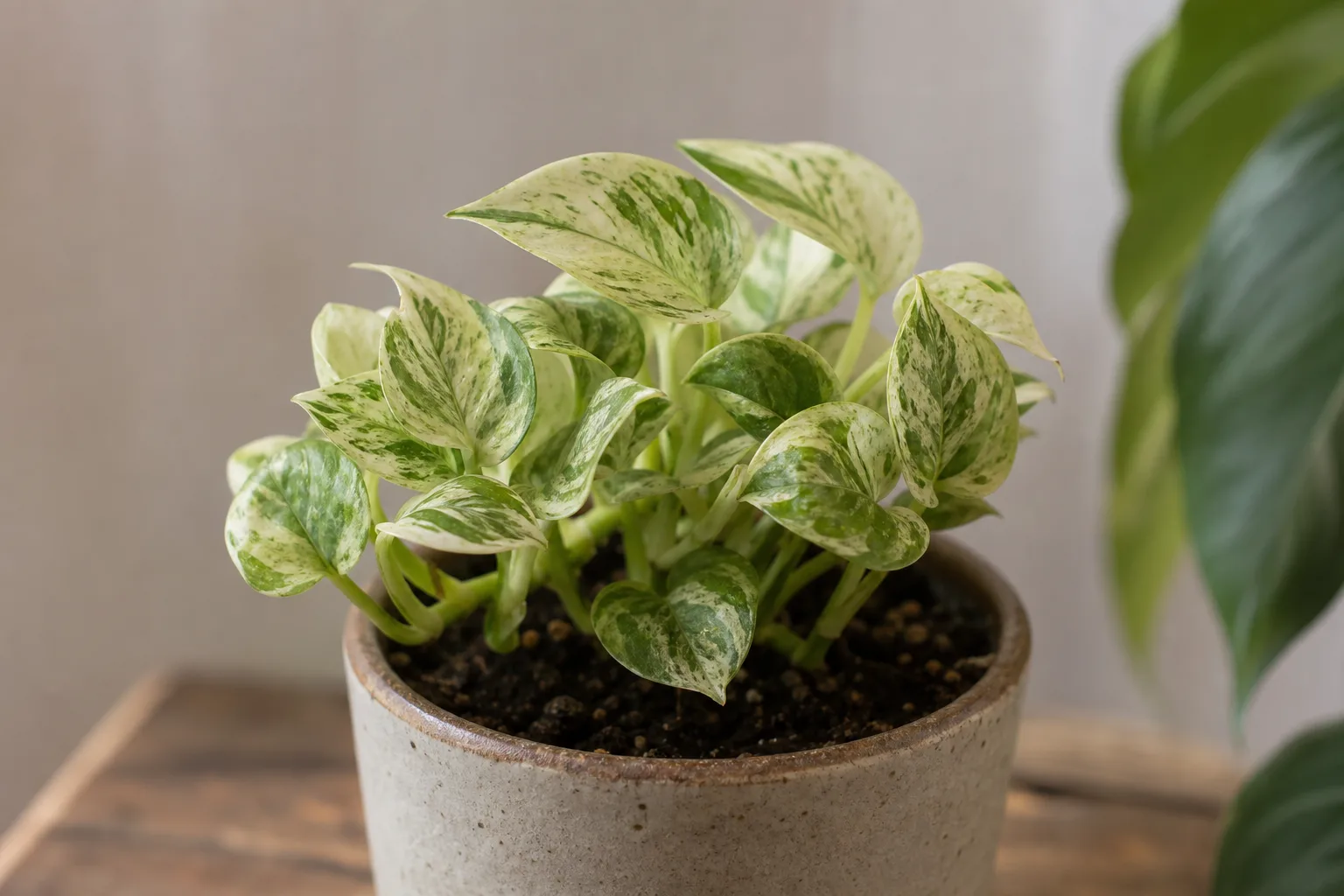
Stunted Growth on Manjula Pothos: Causes, Checks & Fixes
This guide covers stunted growth on Manjula Pothos. See also the general Stunted Growth guide, watering, and light pages for this plant.
Stunted Growth on Manjula Pothos: Causes, Checks & Fixes
Quick answer
Stunted growth on Manjula Pothos (Epipremnum aureum ‘Manjula’) means the plant fails to size up-each new leaf opens smaller than leaves produced six to twelve months ago on the same vine, stems stay thin and weak, or the whole plant remains miniature for months despite regular care. That progressive shrinkage is the diagnostic hallmark; it is not the same as normal Manjula slowness, where occasional marbled leaves still unfurl at a stable size.
First step: move the pot to bright indirect light within about 1–3 feet of an east window or a south or west window filtered by sheer curtain. Manjula’s heavy white variegation limits photosynthetic tissue, so dim placement is the most common reason growth never gains momentum. Give the plant one week in the brighter spot before repotting or fertilizing-brighter light changes how fast the mix dries and often reveals whether watering, not genetics, was holding the plant back.
Stunted vs. slow vs. no new growth on Manjula Pothos
These three slugs overlap in symptoms but answer different questions. Use this table before diving into causes:
| Pattern | Leaf size trend | New leaf output | Internode pattern | First fix | Read next |
|---|---|---|---|---|---|
| Stunted growth (this page) | Each new leaf smaller than the last on the same vine | Occasional tiny leaves, then stall | Short gaps but plant stays doll-sized | Bright indirect light + dry-down watering | - |
| Slow growth | Stable size-new leaves match recent ones | One leaf every 2–4 weeks in summer | Compact, bushy habit | Light upgrade if pace drops below baseline | Pace baseline for this cultivar |
| No new growth | N/A-nothing unfurls | Zero leaves or nodes for 8+ weeks in warm months | Bare tips, no extension | Light first; inspect roots if soil stays wet | Full growth pause |
| Leggy growth | Leaves may stay normal size | Sparse leaves on long stems | Long bare gaps between nodes | Light + prune back to nodes | Stretch, not shrinkage |
This page owns progressive leaf-size regression. If your Manjula still produces occasional leaves at a steady size but slowly, start on slow growth. If nothing emerges at all through spring, see no new growth.
What stunted growth looks like on Manjula Pothos
Read the newest leaves and stems, not the older display foliage near the pot.
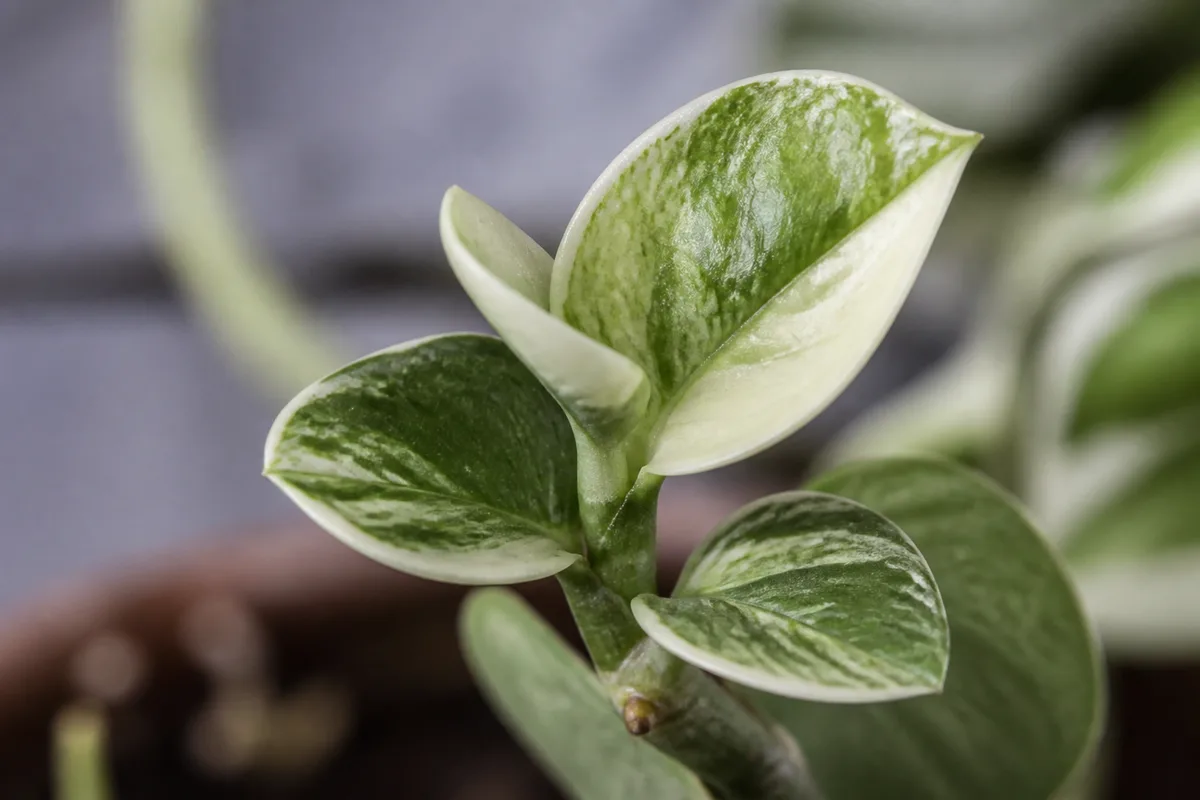
Stunted Growth symptoms on Manjula Pothos - compare with healthy tissue on the same plant.
Classic stunting patterns
- New leaves consistently smaller than leaves produced six to twelve months ago, sometimes with faded variegation
- Thin, wiry stems that never thicken even as the plant ages
- Internodes that stay short but the overall plant remains doll-sized compared with healthy Manjula photos or nursery stock
- No new leaves for two or more months during spring or summer while temperatures are comfortable indoors
- Vines that produce one tiny leaf, then stall again for weeks
- Lower leaves yellowing while new tips stay pin-sized-often root uptake failure, not simple underwatering
What is not stunting
- One new leaf every two to four weeks with healthy marbled pattern at stable size-that is normal Manjula pace for a slower-growing cultivar
- A full winter pause from late fall through early spring when pothos is naturally dormant
- Long bare gaps between leaves while occasional foliage still opens at normal size-that pattern fits leggy growth; stunting shrinks leaves, legginess stretches stems
Stunted Manjula often looks “stuck” at propagation size while the mix stays wet or the pot has not been refreshed in years.
Visual ID: three patterns to compare
Use these three checkpoints on the same vine, oldest to newest:
A - Healthy mature reference leaf. A fully expanded Manjula leaf from six or more months ago: broad, wavy margins, bold cream-and-green marbling, leaf blade roughly palm-width or larger on a mature plant.
B - Progressive shrinkage (stunting). Three consecutive new leaves on one vine, each visibly narrower and shorter than the one before-newest leaf half the width of leaf A, mostly green with little cream, pin-sized at unfurl.
C - Normal slow-but-stable pace. New leaves every few weeks that match the size of leaves from the last two months-marbling intact, no downward size trend even though the plant grows slower than golden pothos nearby.
If your plant matches B, you are on the right page. If it matches C, see slow growth instead.
Worked example: dim-corner shrinkage
A Manjula sat on a north-facing shelf three metres from the window for eight months. Leaves from last spring measure roughly 8 cm wide with strong cream splashes. The three newest leaves measure 5 cm, 3.5 cm, and 2 cm on the same vine-all mostly green. Soil stayed damp ten days after each watering. Diagnosis: compound dim-light stall plus wet-soil root stress. First fix: move to an east window at 60–90 cm distance; wait one week before repotting. Recovery signal: first new leaf approaching 6–7 cm width with returning marbling within four to six weeks in April-not enlargement of the existing pin-sized leaves.
Why Manjula Pothos gets stunted growth
Insufficient light starving variegated tissue
Manjula carries large cream and white sectors that photosynthesize poorly. In dim spots the plant cannot build enough energy for normal leaf expansion, so each new leaf opens smaller and greener as the plant tries to capture more light. Lower light may cause variegated pothos cultivars to lose coloring and produce weak growth. Low light also slows water use, so soil stays wet-creating a second stall from oxygen-starved roots. See not enough light for placement checks beyond this page.
Root rot and chronic overwatering
Epipremnum aureum needs potting medium that dries between waterings. When mix stays saturated, roots decay. Damaged roots cannot move water or nutrients, so top growth stops even though you keep watering on schedule. Stunted Manjula in a dim corner plus frequent watering is a common combination: the plant is not using moisture, but the calendar says water anyway. Active rot with yellow spreading leaves belongs on root rot.
Compacted or exhausted soil
Old peat-heavy mix that has collapsed blocks oxygen and root expansion. Compacted soil prevents proper root expansion and water penetration-growth stalls even when you water and feed on schedule. Manjula left in the same pot for three or more years without refresh often shows progressively smaller leaves as nutrients deplete. Match mix structure to our soil guide.
Root-bound container
Pothos tolerate slight snugness, but severely circling roots leave little soil volume to support new tissue. When the pot dries within a day of every watering or roots spiral tightly at the drainage holes, the plant may stay miniature despite surface care. See root-bound for when to size up one pot-not jump to an oversized container.
Nutrient depletion or fertilizer burn
Pale, pin-sized new leaves on an otherwise well-lit plant in old mix can signal nitrogen depletion. Conversely, salt buildup from over-fertilizing damages roots and produces stunted, scorched tips rather than vigorous leaves. Do not feed a stressed, waterlogged plant hoping to force size-see fertilizer burn if tips crisp after feeding.
Pests draining sap
Spider mites and mealybugs weaken vines before obvious webbing appears. Hidden sap loss keeps new leaves small and slow to unfurl even when light and watering look acceptable.
Cold drafts and temperature shock
Manjula prefers comfortable room temperatures roughly 18–29°C (65–85°F). Exposure below about 10°C (50°F) or repeated cold drafts can halt new growth for weeks and produce distorted small leaves on the few buds that open.
How to confirm the cause
Work through these checks in order:
- Season - Is it late fall or winter? Firm stems with no new leaves for six to eight weeks may be dormancy, not stunting.
- Leaf size trend - Compare the last three new leaves to mature foliage lower on the same vine. Progressive shrinkage confirms stunting, not normal slowness.
- Light at the plant - Can you read comfortably next to the pot without a lamp for several hours daily? Fading variegation on newest leaves supports insufficient light.
- Soil moisture - Stick a finger 3–5 cm (1–2 in) deep. Mix wet more than seven days after watering in moderate indoor temperatures points to overwatering or poor drainage-not a fertilizer shortage.
- Pot weight and smell - Lift the pot. Heavy, cold mix with sour odor fits root decay. Very light pot with crispy leaves fits drought stress.
- Root spot-check - Slide the plant out gently. Firm white or tan roots in airy mix differ from brown mushy rot. Circling roots packed tight against the pot wall confirm bound status.
- Pest scan - Inspect leaf backs and stem joints for mites, mealy fluff, or scale bumps.
If light is adequate, soil dries on schedule, roots are firm, and new leaves still shrink through summer, repot into fresh airy mix or apply light fertilizer-not the reverse order.
First fix for Manjula Pothos
Move the plant to the brightest indirect light available in your home.
Place Manjula within a few feet of an east-facing window, or three to five feet from a south or west window filtered by sheer curtain. Pothos prefers bright, indirect light and becomes a vigorous grower under those conditions; Manjula needs even more because of its variegation-details on our light guide. Avoid direct sun that scorches pale patches-white tissue burns easily-but do not leave a stunted plant in a dim hallway and expect it to size up.
Wait one week in the new spot. Brighter light increases photosynthesis and water use, which often corrects both tiny-leaf stall and soggy-soil stall without repotting or fertilizer on day one.
Step-by-step recovery
After the light upgrade:
- Reset watering to dry-down - Water only when the top 3–5 cm (1–2 in) of mix feels dry per our watering guide. In better light the pot dries faster; adjust frequency upward, not volume per drink.
- Hold fertilizer for two weeks - Let the plant respond to light and corrected moisture before feeding. Skip feed entirely if soil was recently waterlogged or roots were mushy.
- Address root rot if confirmed - Trim soft brown roots with clean scissors, repot into fresh airy mix with perlite, and withhold feed until new growth appears. Do not leave rotted roots in place hoping the plant outgrows them.
- Repot if roots circle or mix is compacted - Move up one pot size in spring using standard potting mix with 20–30% perlite. Repot when roots show through drainage holes or the plant dries out within a day of every watering. Do not jump to an oversized container-extra wet soil around a small root ball invites further rot.
- Prune weak spur growth - Cut pin-sized stalled tips back to a healthy node once conditions stabilize. Manjula branches from nodes when energy returns.
- Feed lightly in active growth - After two weeks of stable new growth, apply balanced liquid fertilizer at half strength once monthly through summer. Stop feeding when the plant is dormant in winter.
- Treat pests if found - Rinse leaf undersides and isolate until populations clear.
Change one major variable at a time. Manjula responds poorly to simultaneous repot, fertilizer, and relocation.
Post-repot pause: Expect a two-to-four-week stall after repotting even when roots are healthy-normal disturbance, not renewed stunting. Judge recovery by leaves produced after that pause.
Recovery timeline
In spring or summer, brighter indirect light often produces the first normal-sized new leaf within three to six weeks. Unfurling still takes one to two weeks-that is cultivar-normal.
Existing small leaves will not enlarge. Judge recovery by new leaves approaching mature size and stronger cream-and-green variegation. Internode spacing on leaves produced after the fix matters; older stunted sections stay small until pruned.
Winter corrections may show little until day length increases. If no appropriately sized new growth appears eight weeks after confirmed good light, dry-down watering, and firm roots in summer, repot into fresh mix or inspect again for hidden pests.
Severe root rot may leave a permanently smaller plant even after recovery-it can survive but never match nursery size.
Lookalike symptoms to rule out
Slow growth (normal cultivar pace) - Occasional healthy marbled leaves every few weeks without progressive shrinkage. Manjula is slower growing than golden pothos by nature; that is not stunting. See slow growth.
Leggy growth - Long gaps between leaves while occasional foliage still opens at normal size. Fix light and prune; see leggy growth if stretch is the main pattern.
Root rot active phase - Yellow spreading leaves, soft stems at soil line, sour smell. Growth will not resume until decay is trimmed and watering corrected.
Underwatering - Crisp, curling leaves and very light pot weight with bone-dry mix throughout-not damp for days.
Not enough light alone - Often overlaps with stunting; variegation fades and leaves shrink together. Light fix resolves both-see not enough light.
Mistakes to avoid
Do not dump fertilizer on a stunted plant in low light hoping to force size-salts on weak roots worsen stunting and can trigger fertilizer burn.
Do not repot into a much larger pot “to give it room to grow.” Excess wet soil around a small root ball slows recovery.
Do not compare a stunted Manjula to golden pothos in the same window-they have different chlorophyll budgets.
Do not ignore wet soil while waiting for growth. Stunted plants with chronically damp mix need root assessment, not patience alone.
Do not place Manjula suddenly in harsh direct midday sun. Scorched white tissue sets growth back further.
Manjula care cross-check
When growth stays miniature, verify the full system:
- Light: Bright indirect most of the day; variegated cultivars need strong light to maintain color and size-see light guide
- Water: Top 3–5 cm (1–2 in) dry before watering; reduce frequency in winter-see watering guide
- Mix: Standard potting soil with 20–30% perlite; pH roughly 6.0–6.5; refresh before severe compaction-see soil guide
- Temperature: Roughly 18–29°C (65–85°F); avoid cold drafts below 10°C (50°F)
- Humidity: 40–60% is adequate; humidity alone rarely fixes stunting if light and roots are wrong
How to prevent stunted growth next time
Keep Manjula where bright indirect light is realistic all day, not only where the pot looks decorative. Rotate monthly for even exposure.
Water on dry-down, not a fixed calendar. As light increases in spring, shorten the interval between drinks; as days shorten in fall, lengthen it.
Repot every one to two years in spring when roots circle or mix breaks down-before years of compaction produce permanently small leaves.
Feed lightly during active growth only. Skip winter feed when the plant rests.
Scout leaf undersides monthly so hidden sap loss does not masquerade as a “just small” plant.
When to worry
Treat as urgent when stems soften at nodes while mix stays wet, multiple leaves yellow within a week, roots are brown and mushy on inspection, or pests coat most of the plant. Those patterns point to rot or infestation-not cultivar temperament.
Seasonal winter pause with firm green stems and appropriate dry-down is not urgent. A Manjula producing occasional healthy marbled leaves at stable size in summer is succeeding even if it grows slower than less-variegated pothos nearby.
Related Manjula Pothos guides
- Manjula Pothos overview - cultivar context and full care map
- Slow growth - normal cultivar pace baseline; this page owns progressive shrinkage
- No new growth - zero-output stall for eight or more weeks in warm months
- Leggy growth - long bare internodes with normal-sized leaves
- Not enough light - chronic dim placement and hand-shadow test
- Root rot - mushy roots and spreading yellow leaves
- Root-bound - circling roots and one-day dry-down
- Light guide - window placement for variegated Manjula
- Watering guide - dry-down rhythm after light correction
- Faded leaves - variegation loss before size regression
- Spider mites - hidden sap loss on variegated tissue
- Fertilizer burn - salt stress from feeding a stalled plant
Conclusion
Stunted growth on Manjula Pothos means the plant is failing to develop normal leaf size and stem strength-usually because light, roots, or soil cannot support expansion. Move to bright indirect light first, then match watering to how fast the pot dries and confirm roots are firm. Existing small leaves will not catch up; watch for new marbled foliage that matches the scale Manjula should carry. For pace baseline when leaves stay stable but slow, see slow growth on Manjula Pothos.