Chemical Damage on Maidenhair Fern: Causes, Checks & Fixes
Quick answer
Chemical damage on Maidenhair Fern shows as sudden bleached, scorched, or twisted fronds within hours to days of a spray, fertilizer dose, harsh tap water, or nearby cleaner use. First step: stop all chemical exposure and rinse fronds with filtered or rainwater - do not spray again until new croziers emerge clean.
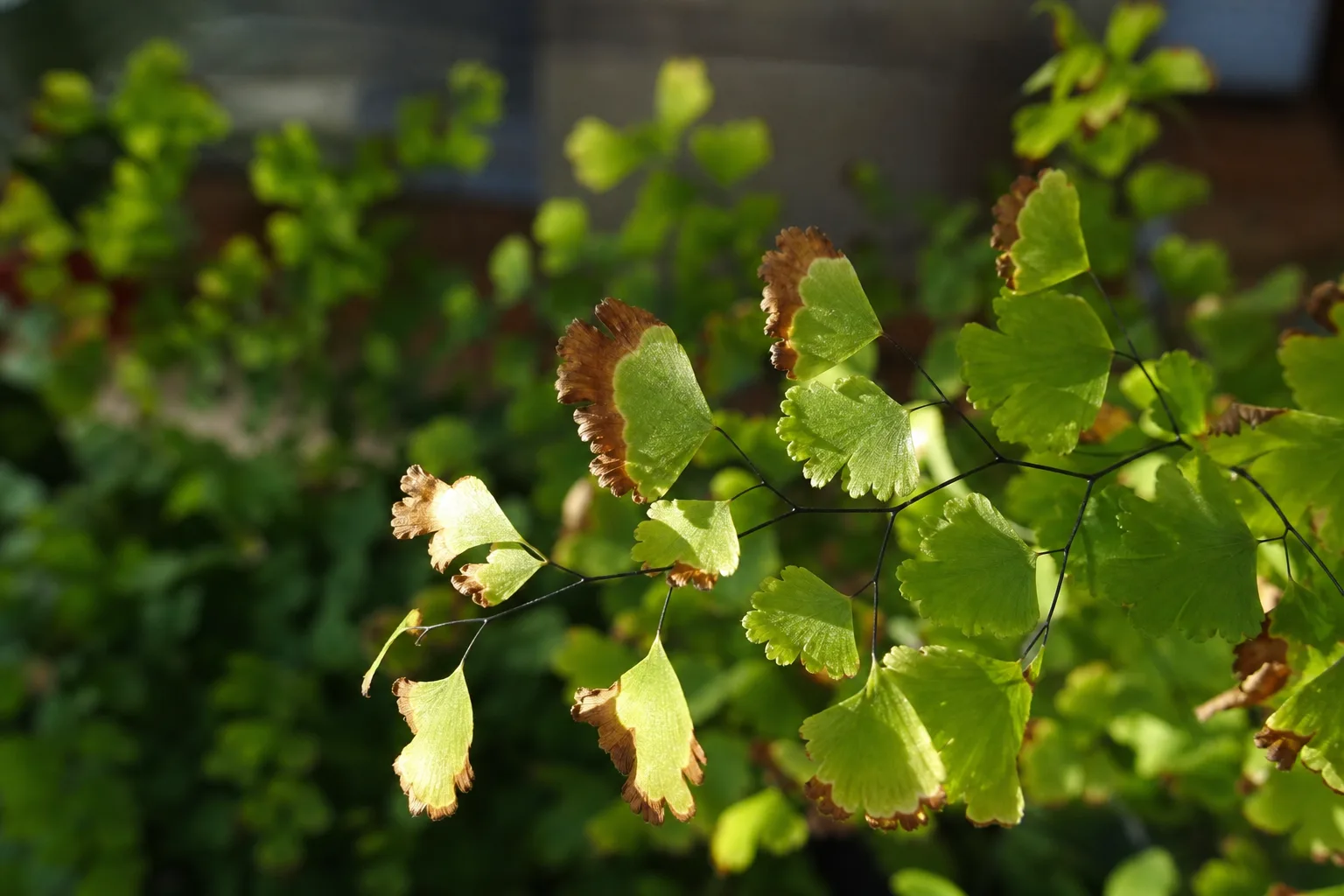
Chemical Damage on Maidenhair Fern: Causes, Checks & Fixes
This guide covers chemical damage on Maidenhair Fern. See also the general Chemical Damage guide, watering, and light pages for this plant.
Chemical Damage on Maidenhair Fern: Causes, Checks & Fixes
Quick answer
Chemical damage on Maidenhair Fern (Adiantum raddianum) is acute tissue injury from pesticides, soaps, oils, soluble salts, fluoride, solvents, or household product drift - not slow winter humidity fade or window-side sun scorch. This page covers spray phytotoxicity, tap-water chemistry, and indoor chemical exposure. If fronds browned within days of feeding alone, start with the fertilizer burn guide. If bleached patches face the window with no spray event, see sunburn scorched leaves.
First step: stop all chemical exposure and rinse fronds thoroughly with filtered or rainwater. Move the plant away from the spray zone, discard saucer runoff, and do not apply any pest product, fertilizer, or leaf treatment until new growth emerges clean.
Review the last 72 hours for any pest spray, leaf shine, fertilizer, repotting with fresh mix, or cleaning product used nearby - chemical injury on this fern often appears within hours when tissue was already stressed.
Maidenhair ferns are among the most chemically sensitive common houseplants. Clemson Extension lists maidenhair fern among plants sensitive to insecticidal soap, and their paper-thin leaflets absorb foliar sprays and mineral salts faster than thick-leaved tropicals.
How chemical damage differs from fertilizer burn, sun scorch, and humidity browning
Use this table before you change watering, light, or feeding - the wrong fix wastes time on a fern that needs exposure stopped, not more humidity alone.
| Symptom pattern | Typical trigger | Timing | Best first move |
|---|---|---|---|
| Blotchy bleached patches, one-sided drift, post-spray twist | Pesticide, soap, oil, cleaner mist, neem drift | Hours to 3 days after exposure | Stop chemicals, rinse fronds - this page |
| Brown tips + white crust after feeding | Too-strong or dry-soil fertilizer | 1–7 days after feed | Stop feed, flush pot - fertilizer burn |
| Bleached or dark patches on window-facing pinnae | Direct sun through glass | 24–72 hours after move or seasonal sun shift | Shade immediately - sunburn |
| Slow tan tips, no spray or feed event | RH below 50% in winter | Weeks, gradual | Humidifier - low humidity |
| Even tip necrosis on many fronds, no crust | Fluoride or hard tap water | Weeks to months | Switch water source - brown tips |
| Limp fronds, sour wet mix, soft crown | Root rot after salt or spray stress | Days to weeks | Inspect roots - root rot |
Chronic salt crust without a recent spray may overlap with salt build up - leach first if white crystals sit on the soil surface, but still stop any foliar product until new croziers are clean.
What chemical damage looks like on Maidenhair Fern
On Maidenhair Fern, chemical injury targets newest fronds and outer leaflets first because that tissue is thinnest and still hardening. The black wiry petiole often stays firm even when leaflets fail - a useful clue that separates spray burn from crown rot.
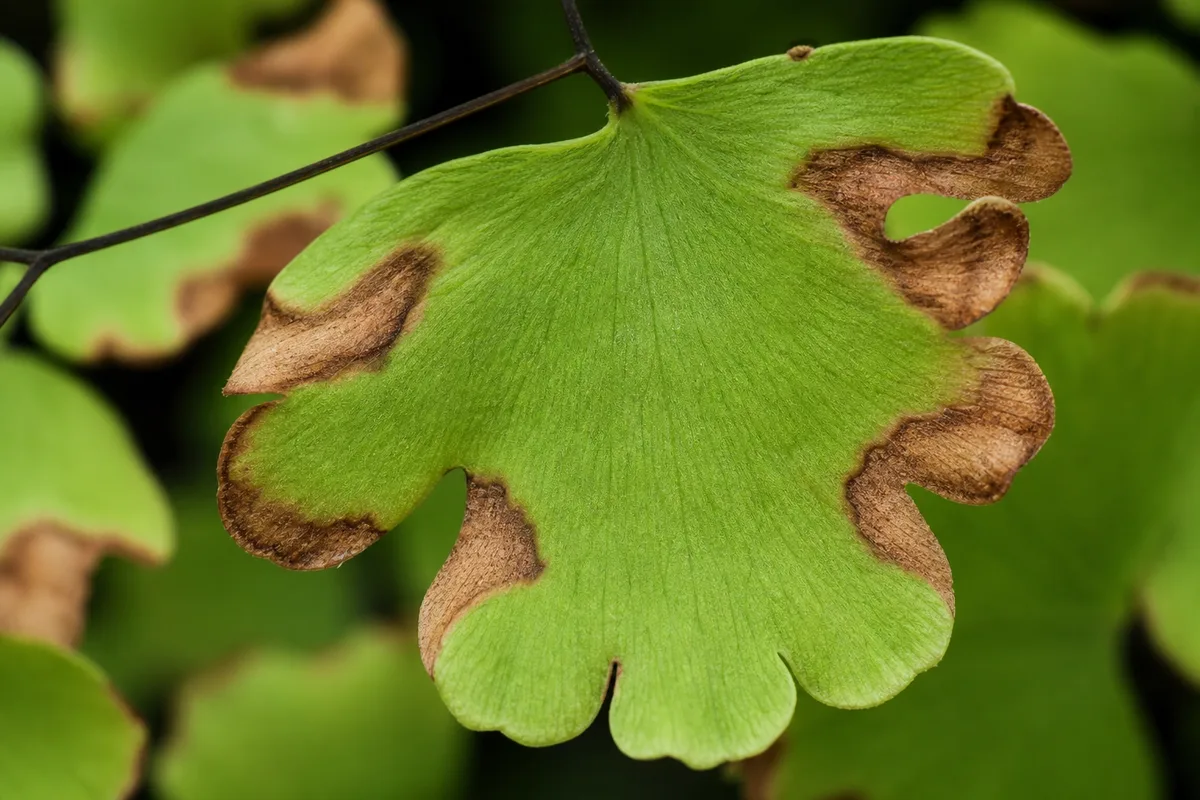
Chemical Damage symptoms on Maidenhair Fern - compare with healthy tissue on the same plant.
Patterns that fit chemical damage:
- Bleached, silvery, or water-soaked patches on fronds that were green yesterday
- Crispy brown margins or tip burn appearing right after watering with straight tap water
- Twisted, cupped, or stunted new fronds after a fertilizer dose or repot with fresh mix
- Spotty scorch on one side of the plant where drift from a cleaner or outdoor spray landed
- White crust on soil surface plus marginal browning when salts and sprays stack
Phytotoxicity symptoms include leaf spots, blotches, scorch, or tip burn and are easily confused with disease or watering mistakes. On Maidenhair Fern, whole-frond collapse from dry soil usually wilts evenly; chemical burn often leaves a patchwork of green and dead tissue on the same frond.
Photo check (when you have no camera): Sun scorch concentrates on the glass-facing side. Cleaner drift often scars every frond in the aerosol path on one shelf level. Soap phytotoxicity after treating spider mites may show blotches on newest croziers within 24 hours if the fern was dry or warm during application.
Why Maidenhair Fern gets chemical damage
Pesticide and soap phytotoxicity
Even products labeled for houseplants can burn sensitive species. Pesticide burn may occur when sprays hit stressed plants, and insecticidal soaps and horticultural oils can injure sensitive plants - especially in heat, high humidity, or slow-drying conditions. Cornell Extension advises testing delicate ferns on a small portion before treating an entire plant and watching 48 hours for spotting or scorched tips.
Maidenhair Fern’s fine fronds hold spray residue on the surface longer than waxy-leaved plants, increasing burn risk. Neem oil and horticultural oil deserve the same caution as soap - oils raise phytotoxicity risk above roughly 85°F and on drought-stressed tissue per UMD horticultural oil guidance.
Fluoride and soluble salts in tap water
Fluoride and other dissolved minerals accumulate in the root zone and leaf margins. Sensitive plants irrigated with fluoridated city water can develop fluoride toxicity with necrosis at tips and margins. Maidenhair Fern is routinely grown with filtered or rainwater for this reason; straight tap water is a chronic chemical stressor, not just a preference.
Over-fertilization and salt buildup
Over-fertilization burns delicate fern roots and shows on fronds as tip scorch or pale, stunted new growth. Over-fertilization can cause leaf scorch along margins or between veins. For feeding strength and seasonal rhythm, follow the Maidenhair Fern fertilizer guide - do not feed a burned fern until new croziers unfurl clean. Acute feed injury with heavy crust is covered on the fertilizer burn page.
Household chemical drift
Glass cleaner, aerosol deodorant, perfume, paint fumes, or hand sanitizer mist can bleach fronds on contact. Maidenhair Fern often sits on bathroom shelves where cleaning products are used; one spray session can spot-burn every frond in the plume path. Move the fern before deep-cleaning days or close the door and ventilate away from the plant.
Temperature plus chemical overlap
Most pesticides are best applied below 85°F, and oil-based products pose high phytotoxicity risk above that threshold. Spraying a fern near a sunny window or heat register combines heat stress with chemical burn - a common indoor mistake after spider mite treatment.
How to confirm the cause
Work through this timeline before repotting or cutting the whole plant back:
- Recent events (72-hour priority) - List sprays, fertilizer, repotting, new potting mix, or tap-water-only watering in the last two weeks.
- Pattern on fronds - Blotchy one-sided damage suggests drift; uniform tip burn on many fronds suggests water salts or fluoride; new-frond-only distortion suggests recent foliar or root-zone chemical exposure.
- Soil surface - White crust or shiny salt layer points to fertilizer or hard-water buildup - pair with salt build up guidance if chronic.
- Stem firmness - Black petioles should stay wiry and firm. Soft crown with sour soil suggests rot, not primary chemical burn.
- Neighbor plants - If only the Maidenhair Fern scorched while tougher plants nearby look fine, sensitivity - not room-wide heat - is the likely factor.
- Spray conditions - Recall whether product was applied in direct sun, above 85°F, or while soil was dry.
If damage appeared gradually over a month with no sprays and only tap water, treat it as mineral or fluoride stress and see brown tips. If damage appeared overnight after treating spider mites, treat it as phytotoxicity and pause all sprays.
First fix for Maidenhair Fern
Stop all chemical exposure and rinse fronds with clean, room-temperature filtered or rainwater.
Move the fern out of the spray path - away from bathrooms during cleaning, kitchen counters during aerosol use, and windows where outdoor drift enters. Hold the pot at the sink and shower fronds gently from above, letting water run through leaflets without soaking the crown in standing water. Discard any saucer runoff so salts do not wick back up.
Do not reapply insecticidal soap, neem, horticultural oil, or fertilizer “to help recovery.” Plants damaged by heavy insect or mite feeding can be further injured by insecticidal sprays; a chemically burned Maidenhair Fern is more vulnerable, not less.
Switch all future watering to filtered, distilled, or rainwater. If fertilizer or heavy salts are suspected, leach the pot once by watering thoroughly until excess drains freely - then resume the normal barely-dry-top-centimeter schedule from the watering guide.
Step-by-step recovery
- Relocate to bright indirect light away from vents, radiators, and direct sun.
- Rinse fronds once with filtered water; allow to air-dry in moderate humidity.
- Stop every spray and fertilizer for at least three to four weeks.
- Water with low-mineral water when the top centimeter is barely dry.
- Run a humidifier or use a pebble tray to keep local humidity at 60–80% - stressed fronds desiccate faster in dry air, but do not raise humidity alone when salt crust is heavy; leach or flush first.
- Trim fully brown or black fronds at soil level with clean scissors; leave partially green fronds unless more than half the leaflet area is dead.
- Monitor weekly for clean new croziers (coiled fronds) emerging from the crown.
If white salt crust is heavy, flush the pot twice over two weeks rather than repotting immediately - repotting on day one adds another stressor unless roots smell sour or mix is clearly failing.
Test-frond protocol before any future spray
When pests return after recovery, never treat the whole plant on day one:
- Choose one outer frond on a firm, well-watered plant at room temperature out of direct sun.
- Apply the registered product at label dilution to that frond only.
- Wait 48 hours and check for spotting, bleaching, or cupping - Cornell and Clemson both recommend this window for sensitive species.
- If the test frond stays clean, treat remaining fronds in early morning; if it scorches, switch to repeated plain-water rinses and consult the spider mites guide for non-spray options.
Recovery timeline
Expect 2–4 weeks before new fronds unfurl without scorch once exposure stops and humidity stays steady. Existing bleached or brown leaflet tissue will not green up again - necrotic regions from chemical exposure are generally irreversible on the affected tissue, though healthy new growth can replace damaged fronds.
Severe cases where every frond blackens but stems stay firm may require cutting all fronds to the soil line; Maidenhair Fern often resprouts from rhizomes when roots remain healthy and moisture is consistent. If the crown softens or soil smells sour during recovery, inspect for root rot overlapping chemical stress.
Typical recovery arc: Day 1–3 - stop exposure and rinse; damage may still spread slightly on injured leaflets. Week 2 - first clean crozier if roots stayed firm. Week 3–4 - multiple unstained fronds if humidity and water quality held steady.
Lookalike symptoms
- Low humidity browning - Gradual tan tips in winter without a spray or fertilizer event; fixes with humidifier, not rinse-only. See low humidity.
- Direct sun scorch - Dark or bleached patches on the sun-facing frond side, not random blotches after product use. See sunburn.
- Underwatering collapse - Whole fronds wilt and blacken quickly when soil went dry; usually no bleached patches.
- Spider mite stippling - Fine yellow dots and webbing on undersides; stippling precedes spray injury if you treated recently, both may coexist.
- Root rot - Yellowing, wet sour mix, soft crown; may follow over-fertilization but needs root inspection, not just rinsing.
Mistakes to avoid
Do not spray again with a “milder” product while fronds are still scorched - test one frond weeks later if pests require treatment. Do not increase fertilizer to “boost recovery.” Do not use leaf shine, vinegar, or DIY soap mixes on this fern. Avoid repotting and pruning heavily on the same day as a chemical rinse. Do not assume tap water is fine because other houseplants tolerate it - Maidenhair Fern is a documented sensitive species for foliar and waterborne salts. Do not apply neem or horticultural oil in afternoon sun or above 85°F room temperature.
How to prevent chemical damage next time
Use filtered or rainwater exclusively for watering and any foliar rinse. This fern needs consistently moist but well-drained soil and dislikes dry air - stable humidity reduces secondary desiccation after minor chemical stress.
For feeding strength and timing, follow the fertilizer guide - never feed on dry soil or after repotting. For pests, prefer a strong water rinse on fronds first; if a registered product is necessary, confirm the label lists ferns or sensitive foliage, apply in early morning at room temperature, and test one frond for 48 hours before full treatment. Keep the plant off bathroom shelves during heavy cleaning days and away from open windows when neighbors spray gardens.
Maidenhair Fern care cross-check
Chemical damage often arrives when humidity and watering already borderline - a fern stressed by dry air burns faster from the same soap dose a healthier plant might survive. After stopping exposure, stabilize humidity and water quality before judging whether the plant needs repotting or pest retreatment.
When to worry
Escalate if new fronds continue scorching two weeks after all chemicals stopped - hidden salt buildup or ongoing tap-water fluoride may need repeated leaching or full mix replacement. Discard the plant if the crown collapses, rhizomes turn mushy, or every new frond dies instantly despite clean water and 60%+ humidity - recovery is unlikely when root tissue is gone.
For persistent phytotoxicity after you stopped exposure, or when you need label-confirmed pesticide options for a recurring pest, contact your local cooperative extension office - they can help interpret product labels for sensitive ferns without guessing in a chat forum.
Conclusion
If you sprayed spider mites yesterday and today’s croziers look bleached, the takeaway is simple: map the last 72 hours, stop every chemical immediately, rinse with clean water, and test one frond - never the whole plant - before any future spray. Maidenhair Fern will not forgive heat, dry soil, or soap the way tougher houseplants do; prevention beats rescue on this species every time.
Related Maidenhair Fern guides
- Fertilizer burn on Maidenhair Fern - acute tip burn and crust after recent feeding
- Sunburn scorched leaves - window-side light injury without spray event
- Brown tips - chronic fluoride and hard-water tip necrosis
- Salt build up - white crust and wilt despite moist mix
- Spider mites on Maidenhair Fern - rinse-first pest control and safe retreatment after burn
- Maidenhair Fern fertilizer - half-strength feeding rhythm after recovery
- Root rot - when soft crown follows salt or spray stress