Java Fern Plantlets Falling Off: Causes, Checks & Fixes
Quick answer
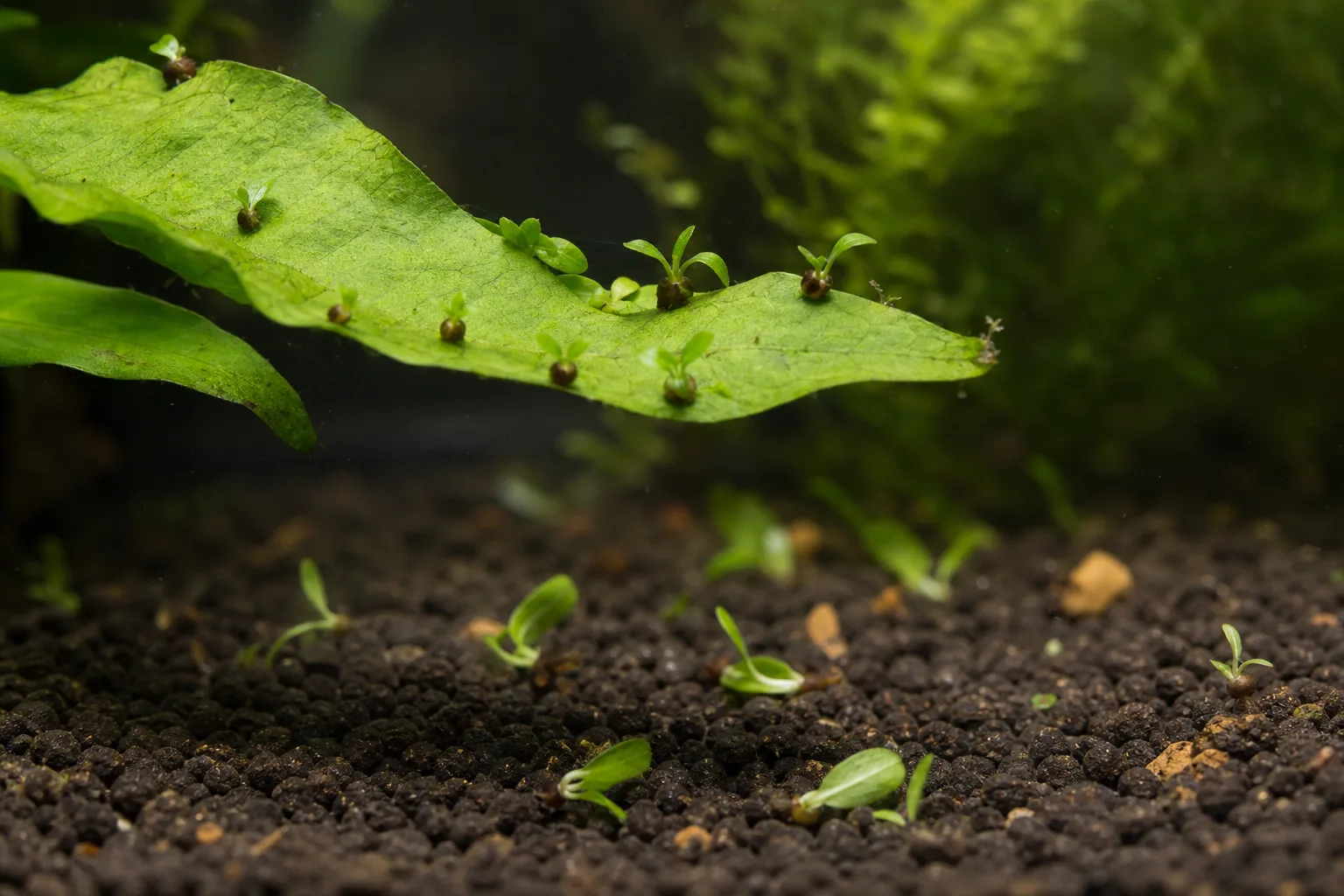
Java Fern does not grow true seedlings-it produces adventitious plantlets on mature fronds that naturally detach when roots form. Falling plantlets usually need anchoring to wood or stone, gentler flow, or more time attached-not staking in soil.
Java Fern Plantlets Falling Off: Causes, Checks & Fixes
This guide covers seedlings falling over on Java Fern. See also the general Seedlings Falling Over guide, watering, and light pages for this plant.
Java Fern Plantlets Falling Off: Causes, Checks & Fixes
Quick answer
When Java Fern (Microsorum pteropus) “seedlings” fall over in your aquarium, you are almost always seeing adventitious plantlets-miniature clones that sprout from sporangia on mature fronds and detach once they grow roots. That is normal vegetative propagation/27914), not weak seedlings. First fix: gather floating plantlets and tie the rhizome to wood or stone with thread or plant glue on the rhizome only-never bury it in substrate, where Microsorum pteropus rhizomes rot.
If you want deliberate harvest timing and attachment workflows, see the Java Fern propagation guide. For whether dark bumps are healthy sporangia or disease, start with the black spots guide and Java Fern overview.
Why Java Fern plantlets detach
Java fern reproduces asexually in tanks by forming adventitious plantlets/27914) on leaf margins and undersides. The dark spots on older fronds are sporangia-reproductive structures, not pests. From these patches, tiny ferns develop leaves and roots while still attached. When the plantlet is heavy enough-or when flow or fish bump the parent leaf-it falls away naturally to colonize new hardscape.
Tropica notes easy propagation by splitting the rhizome; plantlet drop is the same species habit in aquariums. Premature detachment happens when:
- Parent fronds melt during emersed-to-submerged acclimation, tearing off undeveloped bumps-see
transparent-leavesfor melt triage - Filter current tears plantlets off before roots mature
- Aquarists peel bumps too early thinking they are disease rather than sporangia
- Fish nipping rags parent fronds and loosens developing plantlets
Vertical driftwood placement helps plantlets land on wood instead of gravel-a layout choice that turns natural drop into free propagation rather than substrate burial.
What falling plantlets look like on Java Fern
Healthy plantlets are 1–3 cm tall with a few bright green leaves and fine white roots at a pinhead-sized rhizome. They may float, tumble along the substrate, or lean against glass. Parent leaves show rows of dark sporangia; some bumps already sprouted miniature fronds.
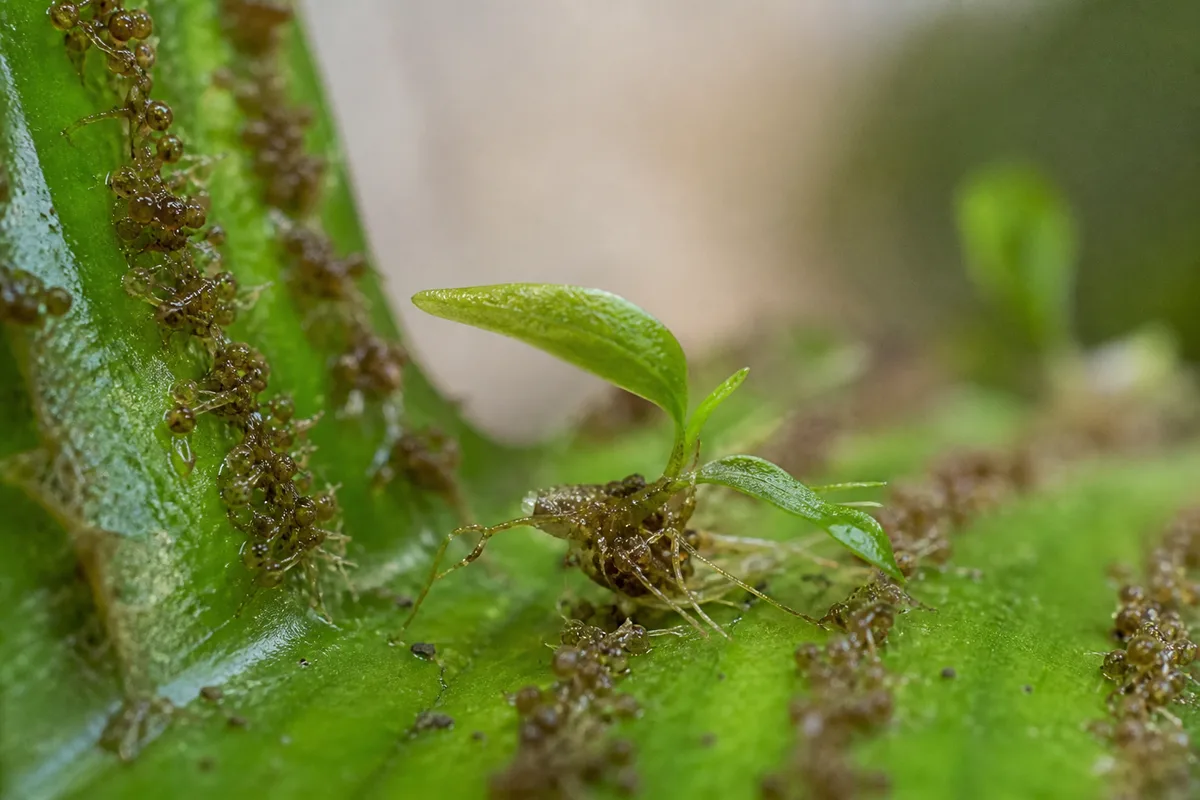
Seedlings Falling Over symptoms on Java Fern - compare with healthy tissue on the same plant.
| What you see | Likely meaning | Urgency |
|---|---|---|
| Firm plantlet with 2–3 leaves and white roots, floating after parent bump loosens | Normal detachment-attach to hardscape | Low-rescue within 48 hours |
| Tiny bump with one leaf, no roots, torn off during parent melt | Premature drop-may survive if tied; parent needs melt care | Medium |
| Plantlet sinks into gravel, turns mushy in 3–5 days | Burial rot-not a detachment problem | High-see root-rot |
| Ragged leaf edges, plantlets missing sporangia patches | Fish nipping-redirect flow and review tankmates | Medium |
If the “seedling” has no roots and only a leaf fragment, it was removed too soon. If it sinks into gravel and turns mushy within days, burial-not detachment-is the problem.
How to confirm the cause
Work through these checks in order:
- Inspect the parent frond - symmetrical dark patches with tiny ferns emerging confirm plantlet propagation, not disease. Fuzzy spots on dying tissue point to melt or algae; compare
black-spots. - Feel the fallen plantlet’s base - a firm nub means it can be saved; jelly-like tissue means rot or too-early removal.
- Check flow direction - plantlets under powerhead blast detach faster. Redirect outflow with moss, wood, or a baffle.
- Confirm the rhizome was never planted - Java fern must grow on wood or stone, not buried. Roots may touch substrate; the rhizome itself must stay exposed.
- Review tankmates - platies, goldfish, and large cichlids may nip broad fronds; shrimp and otocinclus are usually safe.
If the parent rhizome is firm and only old leaves melted, falling plantlets on healthy sporangia rows are a healthy sign-not an emergency.
First fix for Java Fern
Collect loose plantlets and attach each rhizome to hardscape with cotton thread, fishing line, or a small dot of aquarium-safe gel glue on the rhizome only-not the leaves. Place them in low to moderate flow so they are not sandblasted.
If plantlets are still on the parent leaf but wobbly, leave them until you see two to three miniature fronds and visible root threads-the same maturity threshold in the propagation guide. Rushing harvest mimics disease panic and kills propagation stock.
Shrimp and snail tanks: use plain cyanoacrylate gel without accelerator additives; a rice-grain dot on the rhizome is enough. Thread avoids glue entirely on pinhead plantlets.
Step-by-step recovery
- Turn off or redirect strong filter flow while attaching plantlets.
- Tie plantlets to the same driftwood as the parent, or a nearby rock, leaving rhizomes fully exposed.
- Trim only melted parent tissue; keep fronds that still carry developing plantlets.
- Maintain weekly water changes so parent and offspring have stable nutrients in a low-CO₂, slow-growth tank.
- After two weeks, snip thread once holdfast roots grip the surface.
Tank note (June 2026): In a 20-gallon low-tech community tank, three floating plantlets from a melting parent frond were tied to parent driftwood with cotton thread after redirecting a powerhead. Two anchored within ten days; the third lacked roots and was discarded. Parent melt stabilized after rhizome was confirmed above substrate.
Recovery timeline
Attached plantlets usually upright themselves within one to two weeks as roots grip wood. Adventitious plantlets establish more slowly than rhizome divisions/27914)-expect four to eight weeks before visible expansion and two to four months before they read as small mature ferns. Parent plants may keep producing plantlets for months. Expect some natural loss-not every bump becomes a mature fern. Success is multiple anchored plantlets with green new leaves.
What not to do
Do not push fallen plantlets into aquasoil or gravel-buried rhizomes rot. Do not glue entire leaves to rock-glue on the rhizome can harm the plant. Do not strip all sporangia thinking they are pests. Do not dose heavy fertilizers to “strengthen seedlings”; melt on the parent leaf worsens premature drop. Do not remove every developing plantlet from one parent frond at once-the aging leaf still donates resources to offspring.
Lookalike symptoms
- Melting fronds - parent tissue turns translucent; plantlets on that leaf may die too. Triage:
transparent-leaves. - Rhizome rot - whole plant collapses from buried rhizome, not isolated falling babies. Escalate:
root-rot. - Fish nipping - ragged leaf edges, not clean detachment at sporangia sites. Review tankmates before assuming propagation failure.
- Black spots panic - firm symmetrical sporangia rows are reproduction; fuzzy decay on soft tissue is not. See
black-spots.
How to prevent plantlets falling over next time
Grow Java fern on vertical wood so plantlets detach onto nearby surfaces instead of substrate. Buffer filter outflow with moss or wood. Leave plantlets on the parent until roots are obvious-Dennerle lists adventitious plantlets as the standard propagation pathway/27914). For dense propagation, deliberately cut mature plantlets once they reach roughly 2 inches and tie them in place-the deliberate harvest workflow in the propagation guide gives more control than waiting for random drop.
When to open the propagation guide
Open the Java Fern propagation guide when you want to multiply stock on purpose-rhizome division for instant colonies, or scheduled plantlet harvest at two to three fronds plus visible roots. Stay on this troubleshooting page when plantlets are already falling and you need to know whether that is normal, how to rescue floaters, and how to stop gravel burial kills.
When to use this page vs other Java Fern guides
- Java Fern watering guide - Use for routine moisture checks before assuming seedlings falling over is the main issue.
- Java Fern problems hub - Browse all 28 common issues on this species.
Related Java Fern guides
- Java Fern overview
- Java Fern watering
- Java Fern light
- Java Fern soil
- Java Fern problems
- Black Spots on Java Fern
- Chemical Damage on Java Fern
- Cold Damage on Java Fern
Related tool
Use the Plant Problem Diagnosis Tool to narrow causes for seedlings falling over on this plant before changing multiple variables at once.