Exposed Roots on Java Fern: Causes, Checks & Fixes
Quick answer
Visible brown or black roots on Java Fern are normal—this epiphyte anchors to wood and stone with hairy holdfasts. Worry only when the rhizome itself turns soft, black, or smells, not when roots simply hang in open water.
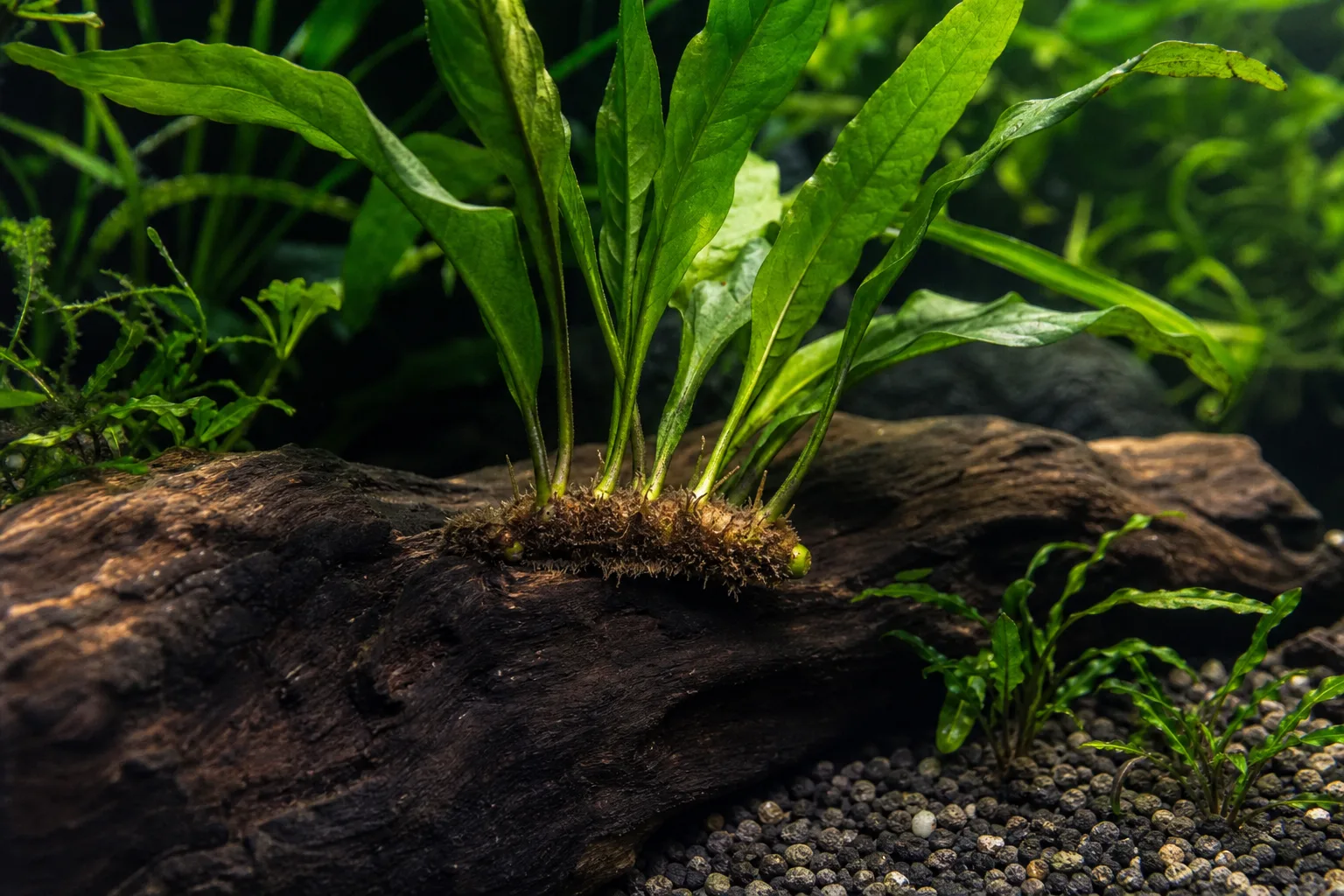
Exposed Roots on Java Fern: Causes, Checks & Fixes
This guide covers exposed roots on Java Fern. See also the general Exposed Roots guide, watering, and light pages for this plant.
Exposed Roots on Java Fern: Causes, Checks & Fixes
Quick answer
Aquarium guides for terrestrial plants treat exposed roots as drought stress. Java Fern (Microsorum pteropus) is different: it is a slow-growing epiphyte meant to grow on root or stone. Dark, hairy roots gripping driftwood—or waving in current—are normal. The structure to protect is the rhizome (the thick horizontal stem leaves sprout from). Do not cover the rhizome in substrate; covering it causes rot that can leave roots dangling from dead tissue.
For how exposed roots signal drought on terrestrial plants, see our exposed roots guide. On Java Fern, visible holdfasts are anchoring—not a call to bury anything.
First step: run a finger along the rhizome—firm and woody means exposed roots are healthy; soft black tissue means rot.
Why Java Fern roots look exposed
In nature, Microsorum pteropus attaches to submerged wood and rocks in shaded streams. Holdfast roots secrete adhesive compounds and absorb nutrients from water. In your tank, roots often remain visible because the rhizome is deliberately mounted above gravel.
Why roots stay visible:
- Epiphyte growth habit - Java Fern is not a root feeder like stem plants; holdfasts anchor and supplement uptake from the water column.
- Deliberate mounting - Aquascapers tie rhizomes to hardscape with the entire stem above substrate.
- Creeping growth - Over months, roots creep across driftwood and into open water—that is growth, not failure.
- Rescape disturbance - Substrate pushed aside during planting exposes previously hidden holdfasts without harming the plant.
Dark root color is normal on Java Fern—the roots themselves stay dark in both healthy and rotting plants. Feel the rhizome to tell them apart.
Normal exposed roots vs rhizome rot
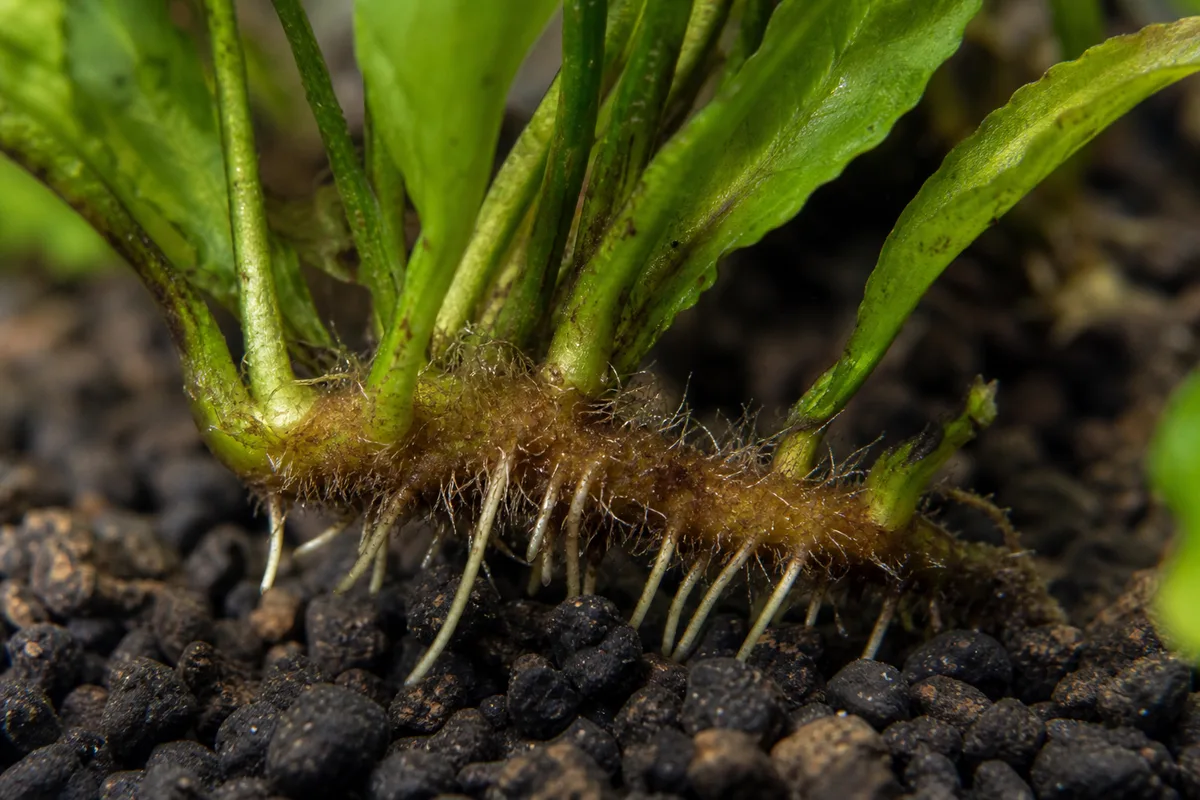
Exposed roots on Java Fern—dark holdfasts gripping wood with firm green-brown rhizome above substrate.
Healthy pattern:
- Firm green-to-brown rhizome
- Dark wiry roots clinging to wood or stone
- New frond tips emerging from the rhizome
- Older leaves may carry sporangia on undersides
- Roots extending into open water without rhizome softening
Rot pattern:
- Rhizome soft, black, or foul-smelling
- Fronds melt from the base
- Roots pull away easily from mushy stem tissue
- Often follows rhizome burial in gravel or aquasoil
- Substrate falls away revealing a decaying stem—not healthy anchoring
How to confirm the cause
- Rhizome texture test - Woody and firm means exposed roots are cosmetic or functional anchoring.
- Mounting check - Thread or glue should hold the rhizome to hardscape, not bury it.
- Frond base inspection - Melting fronds at the rhizome junction suggest overwatering or root rot, not normal exposed roots.
- Flow assessment - Gentle current across the mount prevents debris accumulation; stagnant pockets cause rot unrelated to visible roots.
- Recent purchase context - A plant tied to a small stone may simply be reaching for a better grip with long exposed holdfasts.
If the rhizome is firm, do nothing to the roots—no burying, no trimming of healthy holdfasts.
First fix for Java Fern
If the rhizome is firm, leave exposed roots alone.
No burying, no trimming of healthy holdfasts, no terrestrial potting mix. Accept visible roots as part of the aquascape—or tuck them behind hardscape without burying the stem.
If rot is present:
- Cut back to firm rhizome with sterile scissors.
- Discard mushy sections.
- Remount the healthy portion on rock or wood above substrate.
- Increase gentle flow across the mount to limit debris accumulation.
- Avoid pulling established holdfasts off hardscape unless the rhizome is clearly failing—disturbing anchors sets back growth.
Step-by-step recovery after rot trim
- Isolate the salvage section on fresh hardscape in moderate current.
- Partial water change if parameters were poor during rot.
- Trim all melting fronds at the rhizome—do not leave decaying tissue attached.
- Wait two to four weeks at 22–28°C optimum before expecting new fronds.
- Leave the mount undisturbed while holdfasts re-anchor—roots reattach slowly.
Recovery timeline
Healthy exposed roots keep extending over weeks with no intervention needed. After rot trim, expect two to four weeks before steady new fronds if water stays clean. Roots re-anchor slowly; judge recovery by firm rhizome and new frond tips, not by root length.
Holdfast roots vs rhizome: what not to bury
This distinction is Java Fern-specific and does not apply to terrestrial houseplants. Holdfast roots are dark, hairy, and may touch gravel or wave in water—they absorb nutrients and grip hardscape. The rhizome is the thick horizontal stem where fronds emerge—burying it causes anaerobic rot.
Beginners see dark roots and bury them, which buries the rhizome by accident. The fix is always remounting above substrate, not trimming visible roots to hide them.
What not to do
Do not pack gravel around the rhizome to hide roots. Do not trim dark roots that attach firmly to wood—they are the anchor system. Do not assume exposed roots need terrestrial soil correction—Java Fern does not grow in soil.
Do not confuse post-rescape exposed holdfasts with drought stress from houseplant guides. Do not pull a healthy plant off hardscape to “fix” visible roots.
How to prevent rhizome rot while roots stay visible
Mount with the entire rhizome above the substrate line from day one. Use porous driftwood so holdfasts grip well. During rescapes, verify carpet plants have not pushed substrate over the rhizome. Maintain gentle flow so mulm does not pack against the stem.
Pair visible-root aesthetics with weekly detritus vacuuming around the mount—debris against a buried section is how rot starts even when most roots look healthy above gravel.
When to worry
Worry when the rhizome softens, turns black, or smells while roots detach from mushy tissue—not when roots simply look long or dark. If rot has consumed most of the rhizome, salvage only firm sections or replace the plant.
Conclusion
Exposed roots on Java Fern are normal epiphyte anchoring. Protect the rhizome, not the visibility of holdfasts. Firm woody stem tissue with dark gripping roots is healthy—soft black rhizome with melting fronds needs surgery and remounting, not burial.
When to use this page vs other Java Fern guides
- Overwatering - Buried rhizome and tank water quality.
- Root rot - Advanced rhizome decay.
- Java Fern watering guide - Routine maintenance.