Soil Too Alkaline on Jade Plant: Causes, Checks & Fixes
Quick answer
Jade plant soil should stay slightly acidic to neutral-pH 6.0 to 7.0. Above 7.0, iron and manganese become less available and new leaves show yellow tissue between green veins. First step: test moist mix with a pH strip or meter before repotting or adding sulfur.
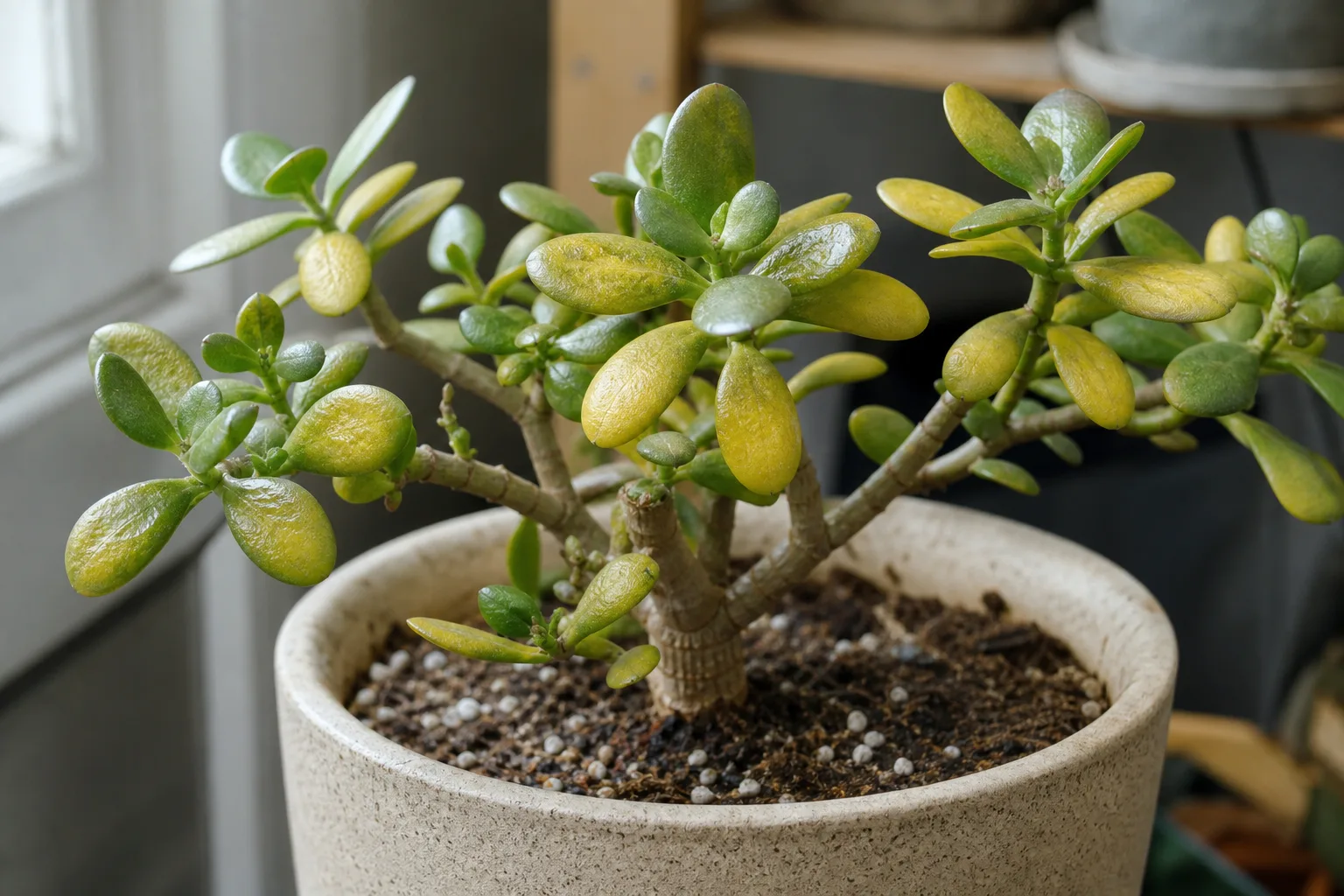
Soil Too Alkaline on Jade Plant: Causes, Checks & Fixes
This guide covers soil too alkaline on Jade Plant. See also the general Soil Too Alkaline guide, watering, and light pages for this plant.
Soil Too Alkaline on Jade Plant: Causes, Checks & Fixes
Quick answer
Jade plant (Crassula ovata) grows best in slightly acidic to neutral soil, pH 6.0 to 7.0. When mix drifts above 7.0, iron and manganese become less available even when those nutrients are present-new leaves develop interveinal chlorosis (yellow tissue between green veins) while stems may still feel firm.
First step: test moist mix with a pH strip or meter. Do not repot, add sulfur, or pour vinegar until you have a reading. A strip pulled from 2 inches below the surface after a normal watering is more useful than guessing from leaf color alone.
Jade is a slow-growing succulent that stores water in thick leaves and woody stems. Its slow metabolism means early alkaline stress can look subtle-slightly pale new leaves-before whole branches stall. Baseline mix targets and DIY recipes live in the jade soil guide.
What alkaline soil looks like on Jade Plant
Alkaline stress on jade shows up in the newest growth first, because iron is immobile in the plant-older leaves may stay green while tips fail.
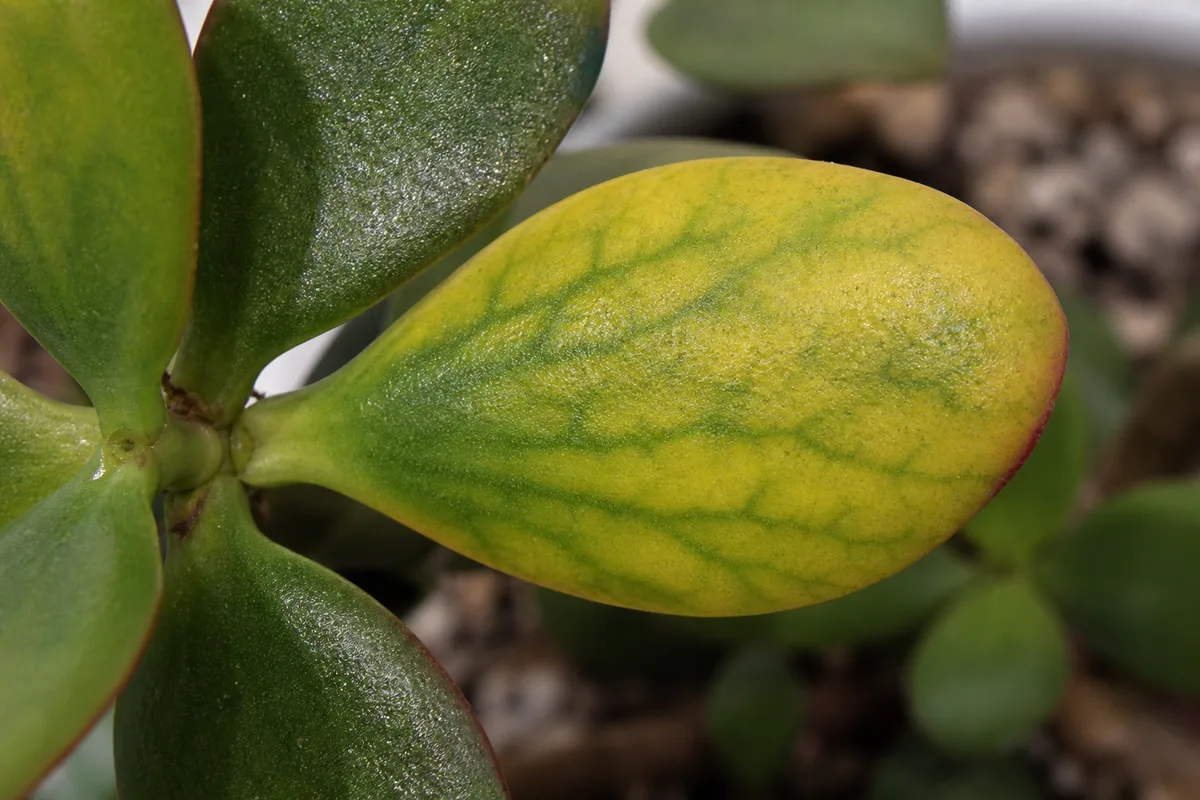
Soil Too Alkaline symptoms on Jade Plant - compare with healthy tissue on the same plant.
Interveinal chlorosis on new leaves (key alkaline clue):
- Young leaf pairs turn light green or yellow between veins while veins stay darker green
- Pattern concentrates on branch tips and the most recent leaf sets, not random old lower leaves
- Leaves may look thin or smaller than earlier pairs on the same branch
- In severe cases, new growth bleaches nearly white before browning at edges-classic iron chlorosis in high-pH conditions
White mineral crust on soil or pot:
- Chalky white or tan ring on the inside rim of terracotta or on the soil surface
- Crust often builds where hard tap water evaporates, leaving calcium and magnesium salts behind
- Surface crust does not prove alkalinity alone, but it strongly supports a hard-water + high-pH audit
Stunted growth without obvious rot:
- New leaf pairs emerge slowly or stop while stems remain firm and soil dries on a normal schedule
- Canopy looks pale overall but without sour smell, mushy stem bases, or constant wet heaviness
Not alkaline lockout: Whole lower leaves yellow and drop on a heavy, wet pot with soft stem bases-that pattern fits overwatering or root rot more than pH drift. Random old-leaf drop on a firm plant in correct light is often normal aging.
For yellowing without a confirmed pH reading, cross-read yellow leaves on jade.
The pH range Crassula ovata prefers
Most credible sources place jade soil pH between 6.0 and 7.0, with many growers targeting around 6.5. The jade soil guide aligns with Clemson HGIC’s recommendation for a cactus mix with added organic matter or a blend of sterilized organic soil, sphagnum peat, and coarse sand for fast drainage.
pH controls nutrient chemical availability, not just fertilizer dose. In overly alkaline mix, iron and manganese uptake suffers. In overly acidic, peat-heavy substrates, calcium and phosphorus availability drops and the mix tends to hold more moisture as organic matter breaks down. Quality bagged cactus soils often land near neutral because of limestone or dolomite buffering-fine at potting, but months of alkaline irrigation water can push readings above 7.0.
Jade tolerates a modest pH range and is not as acid-demanding as blueberries, but chronic readings above 7.5 on moist mix commonly produce the chlorosis pattern above on indoor specimens.
Why Jade Plant soil becomes too alkaline
Alkalinity on jade is usually a slow accumulation problem, not a single bad watering.
Hard or alkaline tap water. Irrigation water with high dissolved minerals deposits carbonates at the soil surface each time you water. Utah State Extension notes that alkaline irrigation waters promote high soil pH over time-relevant even outside arid regions when municipal water is mineral-heavy.
Limestone or dolomite in bagged mix. Many cactus and succulent blends include pH buffers. That helps at repotting, but buffer plus hard water can creep pH upward across 12–24 months without a full soil refresh.
Wrong soil type at repot. Garden soil, compost-heavy potting mix, or crushed limestone top-dressing pushes pH toward alkaline and holds moisture jade roots cannot tolerate long term-see compacted soil and poor drainage when texture is also wrong.
Wood ash, lime, or alkaline amendments nearby. Dust from fireplace ash, agricultural lime, or concrete surfaces splashed into the pot can shift surface pH locally.
Over-fertilizing with nitrate-heavy feeds is a secondary factor; the primary indoor driver is usually water chemistry plus aging mix, not a single fertilizer application.
How to confirm the cause
Work through these checks in order. One pH reading on moist mix beats guessing from photos.
Six-step inspection checklist
- pH test on moist mix - Pull a small sample from 2 inches below the surface after a normal watering. Strips or a calibrated meter should read above 7.0 to support an alkaline diagnosis. Below 6.5 with chlorosis suggests a different deficiency or lookalike.
- Leaf pattern - Chlorosis on newest leaves with green veins fits iron lockout in alkaline conditions. Yellowing on oldest leaves first fits nitrogen stress or normal senescence more often.
- Mineral crust audit - White rings on the pot rim or soil surface support hard-water buildup; photograph before scraping so you can compare after a flush routine.
- Water source check - Test tap water pH or review your municipality’s water quality report. Water consistently above 7.5 raises mix pH over months.
- Root and stem firmness - Firm white or tan roots and solid stem bases suggest pH stress without advanced rot. Mushy roots and sour smell mean prioritize root rot protocol before acidifying.
- Repot history - Mix unchanged for 3+ years in the same pot with daily tap watering is high risk for alkaline drift regardless of initial bagged mix pH.
| Signal | Alkaline lockout | Overwatering / root rot |
|---|---|---|
| New leaf chlorosis, green veins | Common | Uncommon unless roots already failing |
| Soil pH on moist mix | Above 7.0 | Any pH; wetness is the driver |
| Pot weight between waterings | Normal dry-down | Stays heavy; outer mix wet for days |
| Stem bases | Usually firm | Soft, discolored, may smell sour |
| White mineral crust | Often present | May appear but rot symptoms dominate |
| Recovery after pH fix | New growth greens in weeks | Needs dry-down and possible repot rescue |
First fix for Jade Plant
Test pH on moist mix before changing anything.
If reading is above 7.0 and stems are firm:
- Stop alkaline inputs - Pause lime, wood ash, or alkaline top-dressings. Switch irrigation to rainwater, distilled, or filtered low-mineral water for the next four to six weeks.
- Flush surface salts once - Water slowly until liquid runs from drainage holes; discard saucer water. Repeat once after the mix partly dries if crust was heavy. This removes surface carbonates; it does not permanently fix deep mix pH.
- Plan repot or amend - For readings 7.5+, or chlorosis spreading on multiple branches, repot into fresh gritty succulent mix targeting pH 6.0–7.0 per the soil guide. For moderate drift (7.0–7.5) on an otherwise healthy root ball, blending Canadian sphagnum peat into the top third at repot or as a careful top-work can help acidify soilless mix more predictably than sulfur alone indoors.
Do not stack repotting, heavy pruning, sulfur, and fertilizer on the same day. Change one major variable, then watch new growth for four weeks.
Step-by-step pH correction and repot
When repot is the right call-common once pH exceeds 7.5 or chlorosis is advancing-follow this sequence.
- Choose timing - Repot as new growth starts in spring or early summer when possible. Avoid winter repots on stressed plants unless rot forces urgency.
- Prepare mix - Use fast-draining succulent blend near pH 6.0–7.0. Pre-made cactus mix plus extra perlite or pumice is fine; avoid garden soil. Full recipes: jade soil guide.
- Unpot gently - Shake away old alkaline crust. Trim only black or mushy roots; keep firm tan roots. Wear gloves-jade is toxic to cats and dogs.
- Repot one size up at most - Match pot width to root ball plus 1–2 inches. See repotting guide for sizing.
- First watering - Use low-mineral water. Let mix dry before the next drink per watering guide.
- Optional in-place sulfur - If repot is not yet possible, elemental sulfur can lower pH but acts slowly and is less effective in soilless media than in mineral garden soil. Apply label rates only for containers; retest in 8–12 weeks. Never dump vinegar into the pot as a shortcut-it shocks roots and does not fix buffered mix.
Recovery timeline and warning signs
Improvement markers:
- New leaf pairs emerge darker green within four to eight weeks after pH correction and improved water
- Chlorosis stops spreading to the next leaf set even if older spotted leaves stay pale
- Mineral crust builds more slowly once you switch water sources
Realistic limits:
- Old chlorotic leaves rarely re-green fully-judge success by tip growth, not lower canopy cosmetics
- Jade’s slow growth rate means severely stunted specimens may need a full spring-to-summer season to refill branches
Escalate if:
- Chlorosis worsens after repot into known-good mix-test water pH and consider chelated iron only after confirming alkaline lockout, not as a blind first spray
- Stem bases soften or soil smells sour-switch to root rot rescue
- No new growth six weeks after correction in warm bright conditions-inspect roots and verify the pH meter or strips are calibrated
Lookalike symptoms
Overwatering and root rot - Wet heavy pot, soft stem bases, and sour smell outweigh pH clues. Chlorosis from root failure can mimic nutrient lockout; always check moisture and root firmness before acidifying. Guide: overwatering.
Nitrogen deficiency - Often yellows older leaves first while new growth may still look relatively green. Alkaline iron chlorosis hits new leaves first with green veins.
Normal old-leaf drop - Lower leaves shrivel and fall on an otherwise firm plant in good light without interveinal pattern on new tips.
Low light pale growth - Whole plant stretches and dulls without crisp vein contrast or mineral crust; fix light before repotting for pH.
What not to do
- Do not pour vinegar, lemon juice, or large sulfur doses into the pot without a pH reading and label math-root burn is common.
- Do not fertilize heavily on a chlorotic jade hoping to “feed your way out” of lockout; unavailable iron does not respond to more generic NPK.
- Do not repot into peat-heavy tropical potting soil to acidify-pH may drop while drainage collapses, triggering rot.
- Do not ignore hard water while only amending soil; minerals will rebuild crust within weeks.
- Do not assume acidic soil harms jade-slightly acidic mix near 6.5 is within the preferred range, not a threat.
How to prevent alkaline soil next time
- Target pH 6.0–7.0 at repot using gritty succulent mix from the soil guide.
- Water with lower-mineral sources when tap water runs alkaline, or flush monthly in hard-water regions.
- Refresh mix every 2–3 years before limestone buffers and salt crust compound.
- Test pH annually on long-lived specimens-one strip test in spring catches drift before chlorosis.
- Avoid garden soil, ash, and lime in jade containers.
- Use terracotta with drainage holes so salts exit with leachate instead of concentrating on plastic walls.
When to worry
Act within one to two weeks if chlorosis is spreading to every new leaf pair, the plant is wilting despite firm stems and dry soil (rare-check roots), or repot revealed mostly mushy roots. Those cases need rot assessment, not only pH adjustment.
Lower urgency: isolated pale tips on one branch with pH 7.2 and firm roots-correct water and plan a spring repot.
Jade care cross-check
Also sold as money tree or lucky plant, jade should be judged by firm new growth and stable roots, not by older leaf color alone. If pH is in range but the pot stays wet for weeks, fix watering and drainage before chasing acidifiers.
Related Jade Plant guides
- Soil - ideal pH range, DIY mix, and limestone buffer context
- Repotting - when and how to refresh alkaline mix
- Yellow leaves - yellowing without confirmed pH drift
- Overwatering - wet-soil lookalike
- Root rot - escalation when stem bases soften
- Compacted soil - dense mix that worsens water and salt stress
- Poor drainage - moisture problems overlapping pH
- Watering - dry-down rhythm and hard-water habits
Conclusion
Soil too alkaline on jade is a chemistry problem that shows up as iron lockout on new leaves, not a mystery fertilizer shortage. Test moist mix, stop hard-water buildup, repot into gritty blend near pH 6.0–7.0 when readings climb above 7.0, and judge recovery by healthy new tip growth over the next month-not by old yellow tissue re-greening.