Seedlings Falling Over on Jade Plant: Causes, Checks & Fixes
Quick answer
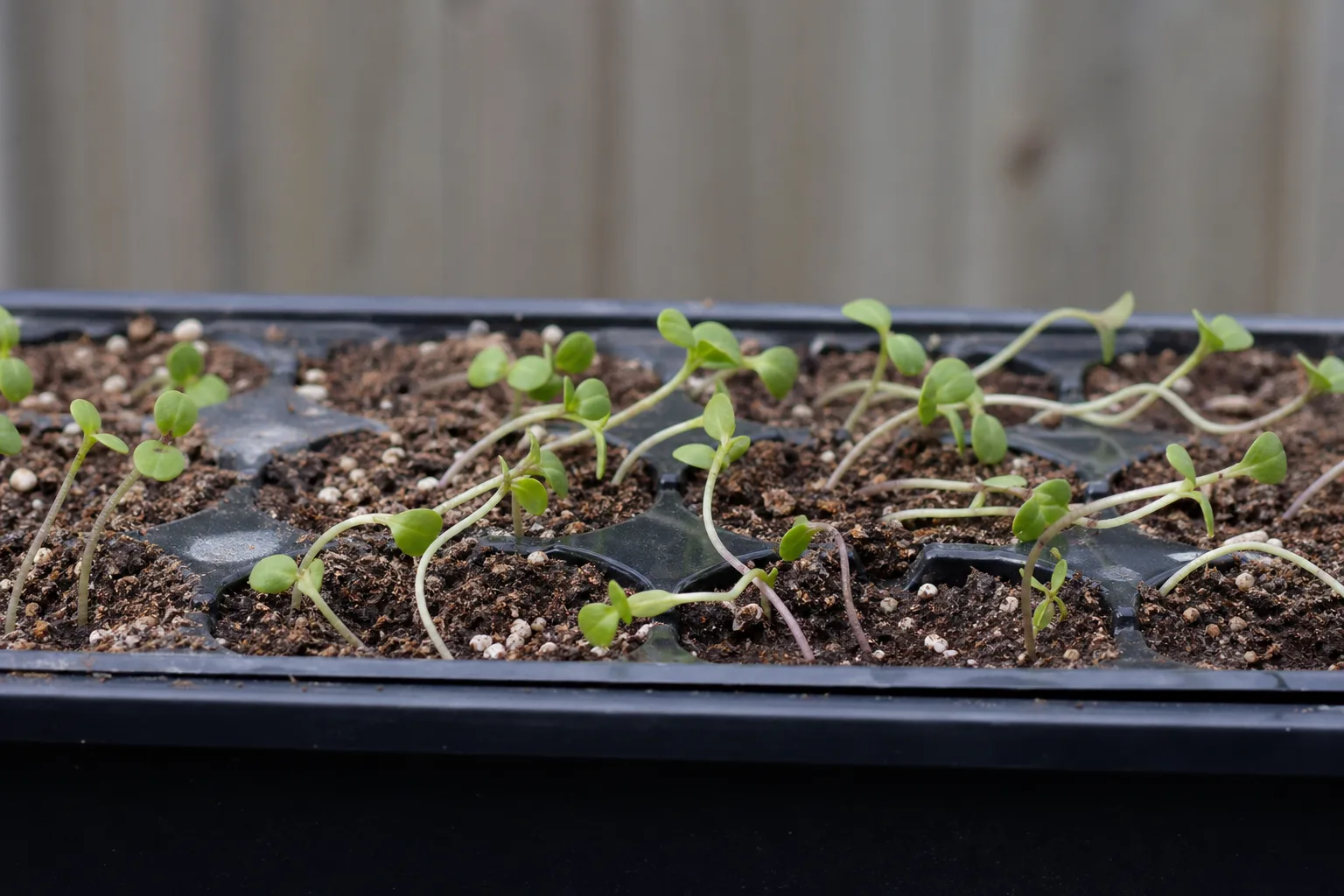
Most home jade 'seedlings' are leaf or stem plantlets, not seed-grown plants-and they fall over from damping-off in wet trays, leggy stretch in dim light, or rot on uncallused cuttings. First step: press the stem base where it meets the mix; mushy tissue means discard collapsed starts and dry the tray surface today.
Seedlings Falling Over on Jade Plant: Causes, Checks & Fixes
This guide covers seedlings falling over on Jade Plant. See also the general Seedlings Falling Over guide, watering, and light pages for this plant.
Seedlings Falling Over on Jade Plant: Causes, Checks & Fixes
Quick answer
When jade plant (Crassula ovata) “seedlings” fall over, you are almost always looking at young propagation starts-leaf plantlets, callused stem cuttings, or newly potted babies-not plants grown from seed. Jade is especially easy to propagate from stem or leaf cuttings, and those fresh starts flop for one of three reasons: damping-off (fungal stem collapse at the soil line in wet trays), leggy weak growth (pale stretched stems that cannot support the shoot in insufficient light), or uncallused cutting rot (wet soil attacking an open wound before roots form).
First step: press the base of each still-upright start where it meets the mix. Mushy, pinched, or discolored tissue means damping-off or rot-remove every collapsed start and stop misting or overhead watering today. Firm green tissue at the base points to leggy stretch or weak roots instead; fix light before you change watering.
For full propagation protocol-callusing timelines, stem vs. leaf methods, and rot prevention-see jade plant propagation.
Seed-grown vs. leaf plantlets: what you are actually looking at
Most growers never sow jade from seed indoors. Wisconsin Horticulture Extension notes jade can be grown from seeds sown in spring or summer, but germination is slow and mature plants rarely flower indoors-so seed trays are uncommon in home propagation. What people call “seedlings” are usually:
- Stem cuttings callused and stuck in gritty succulent mix
- Leaf cuttings laid on soil with tiny plantlets emerging at the meristem
- Newly potted plantlets moved from a propagation tray into individual pots
NC State Extension lists leaf and stem cutting as the standard propagation methods for Crassula ovata. Stem cuttings carry more stored energy and root faster; leaf plantlets take months to develop enough stem and root mass to stand upright on their own. That difference matters when diagnosing flop-a 2-inch leaf baby with pencil-thin roots topples far more easily than a 4-inch callused stem start.
If you are genuinely sowing jade seeds, falling is still usually damping-off or etiolation in a wet, dim flat-but the fixes below apply equally. For seeds that never sprout at all, see seeds not germinating on jade plant.
What falling jade starts look like
Young jade starts have fleshy oval leaves on thick succulent stems. In good light, leaf edges may show red tinting. A slight lean toward the window is normal; a start that cannot hold itself upright at the soil line is a structural or rot problem.
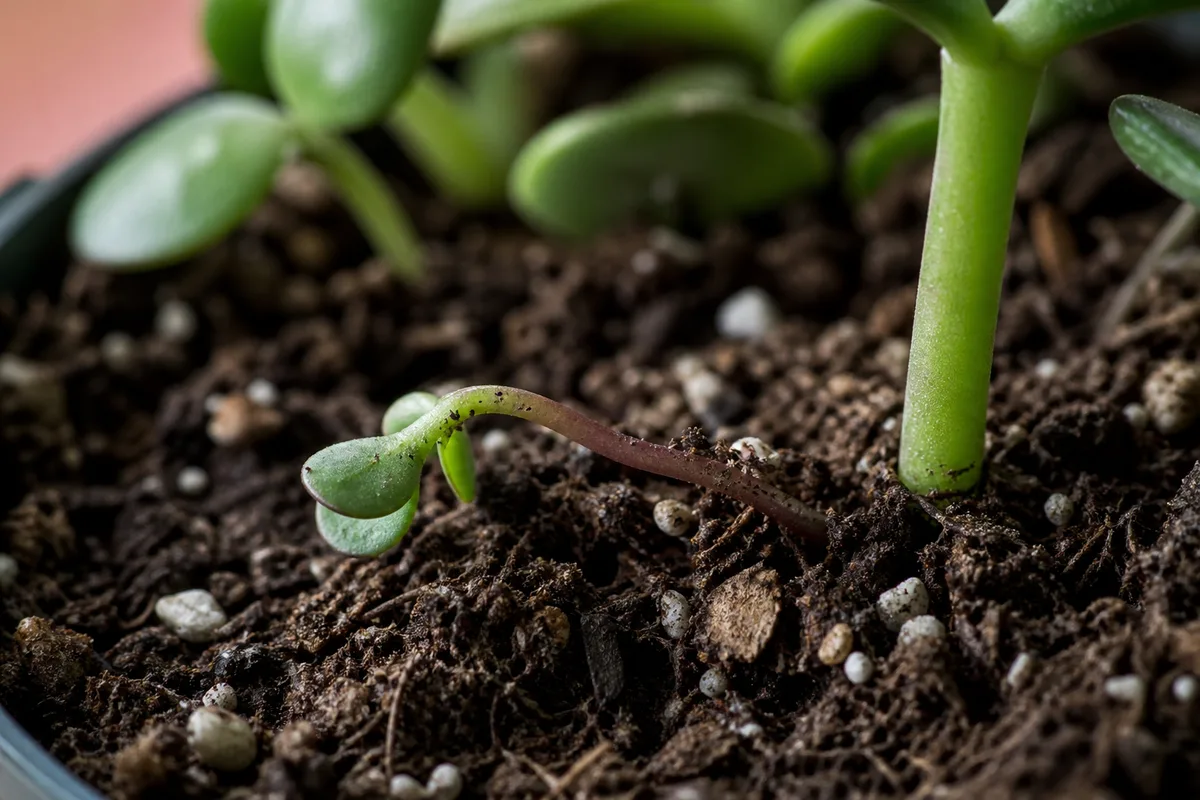
Seedlings Falling Over symptoms on Jade Plant - compare with healthy tissue on the same plant.
Damping-off or wet-tray rot collapse:
- Start looks fine at first, then wilts and topples right at the soil line
- Lower stems turn thin, water-soaked, brown, or thread-like where they enter the mix
- Affected starts often fall in patches across one tray, not uniformly across every cell
- White or gray fuzzy growth may appear on constantly wet soil surfaces
- Leaves may shrivel or yellow before the whole shoot dies
Leggy flop (no stem rot):
- Starts are noticeably tall and pale, reaching toward the light source
- Stems are thin but still firm and green at the soil line when pressed
- Inadequate light produces deep green leaves and drooping stems-there is nothing wrong with the tissue other than insufficient sun for compact growth
- Often affects an entire tray evenly when light is too weak
- Common on leaf plantlets left on a north windowsill through short winter days
Uncallused cutting rot at the base:
- Cutting was planted before the cut end dried and sealed
- Stem turns black or mushy from the buried end upward; top may still look green briefly
- Happens within days of sticking a fresh wet cut into moist mix
- More common on thick spring stems than on small leaf propagations
Newly potted plantlet with weak roots:
- Tiny plantlet looked healthy in the tray but flops within days after individual potting
- Stem base stays firm; upper stem and leaves hang limp
- Mix may be too wet, too heavy, or roots were too small to anchor the fleshy top growth
Do not confuse these with mature jade droop on an established tree-like plant-that is usually watering or root health on a full specimen, not a propagation-tray failure. See drooping leaves on jade plant for mature-plant diagnosis.
Why jade starts fall over
Damping-off in wet propagation trays
Damping-off is caused by soil-borne fungi and water molds including Rhizoctonia, Pythium, and Fusarium that thrive in cool, wet seed-starting mix and infect stems at or just below the soil line. Infected tissue cannot support the shoot; the cutting collapses and dies.
Jade soil-propagated cuttings fail this way because:
- Overhead watering or misting keeps foliage and the soil surface constantly wet-unlike mature jade, which tolerates dry-down between deep waterings
- Humidity domes or closed bags trap stagnant moisture around succulent tissue that needs dry air during callusing
- Heavy peat-heavy mix without perlite holds water around nodes longer than this succulent shrub tolerates
- Cool rooms slow rooting so cuttings stay in the susceptible stage longer
- Crowded leaf trays reduce airflow between fleshy leaves
Even though mature jade forgives occasional overwatering on Jade Plant, uncallused or freshly rooted stem tissue rots quickly when the surface never dries. Jade’s succulent leaves and stems store water through thick tissue-open cuts invite pathogens the moment they touch wet soil.
Leggy stretch from insufficient light
Jade does best with four or more hours of direct sun daily indoors. Clemson HGIC notes jades prefer full sun or bright filtered light from a south-facing window. Young starts in dim corners stretch toward the nearest light source; stems grow tall and thin, then flop under the weight of plump leaves they cannot support.
This is the same etiolation mechanism behind leggy growth on jade plant-but on propagation trays the weak stems topple before the plant develops woody structure. Variegated cultivars with less chlorophyll stretch faster than solid-green plants.
Uncallused cutting rot
Wisconsin Horticulture Extension recommends allowing cut pieces to dry for several days so the cut surface heals before planting. Skipping callusing is the most common cause of blackening stem bases. A wet open wound in moist mix rots within days-faster than a mature rooted jade in the same pot would decline, because the cutting has no functional roots to manage water uptake.
Leaf cuttings are especially vulnerable if laid on wet soil before the wound seals. Stem cuttings planted too deep or watered before callusing show the same mushy-base collapse that mimics damping-off.
Transplant shock on weak root systems
Leaf-derived plantlets may sit unchanged for weeks, then flop the moment you pot them individually-the tiny adventitious root mass cannot anchor fleshy leaves and stem tissue. Stem cuttings potted before roots grip the mix, or moved into heavy wet soil after water propagation, fall over even when the stem base is not actively rotting.
Diagnostic table: causes, checks, and first fixes
| What you see | Likely cause | First check | First fix |
|---|---|---|---|
| Pinch at soil line, brown thread stem, patch collapse | Damping-off / wet-tray rot | Press stem base-mushy tissue | Discard collapsed starts; dry surface; stop misting |
| Tall pale lean toward window, firm green base | Leggy low light | Count direct sun hours on tray | Move to brightest window or grow light; stake firm leaners |
| Black mushy buried end days after planting | Uncallused rot | Inspect cut end before replanting | Trim to firm tissue, callus 3–7 days, restart in dry gritty mix |
| Flop days after potting tiny plantlet | Weak roots / transplant shock | Gently tug-roots pull free | Replant shallow in dry mix; wait for anchor before next move |
| Whole tray wilted, mix waterlogged | Overwatering stress | Scratch surface-never dries | Hold water until surface lightens; check jade soil drainage |
How to confirm the cause
Work through these checks in order before you fertilize, repot again, or discard the whole batch:
- Stem pinch test - Gently press the base of an upright start where it meets the soil. Mushy, thread-thin, or discolored tissue confirms damping-off or rot. Firm green tissue points to legginess or weak roots instead.
- Callus check - Pull one collapsed start if safe. Was the buried end wet, shiny, and unhealed when planted? That confirms uncallused rot, not random bad luck.
- Collapse pattern - Random patches dying in one tray suggest fungal damping-off. An entire flat leaning the same direction suggests insufficient light.
- Propagation stage - Still callusing on a paper towel? Should not be in wet soil at all. Leaf on soil with no roots? Flop is expected until plantlet develops.
- Soil surface moisture - Scratch the top centimeter. If it never dries between waterings and algae is visible, damping-off risk is high.
- Light distance and duration - Fewer than four hours of direct sun on young jade, or a tray more than a few feet from a window in winter, supports leggy flop. See jade plant light for placement guidance.
- Neighbor spread - New collapses appearing daily in the same tray mean active damping-off. Static lean without new deaths suggests light correction may be enough.
If stems are firm and only the upper shoot bends, skip fungicide thoughts and fix light first. If stems pinch at the soil line, light alone will not save that start.
First fix for jade plant
Remove every collapsed or mushy-base start and stop overhead watering or misting immediately.
Place survivors where they get bright light with several hours of direct sun, let the soil surface dry slightly before the next drink, and water the soil only-keep leaves and stems dry. This single step limits pathogen spread and stops the wet conditions that kill remaining starts.
Do not mist trays, do not seal cuttings in humidity domes after callusing, and do not try to prop up starts whose stems have already rotted at the base-they cannot recover. Hold off on fertilizer until new growth is firm for several weeks.
Step-by-step recovery
Once collapsed starts are discarded and overhead water is stopped, protect survivors in this order:
- Isolate the tray - Move healthy cells away from any tray with active collapse if space allows.
- Dry the surface slightly - Wait until the top of the mix lightens in color before watering again. Mix should stay barely moist deeper down but not soggy on top.
- Water soil only - Pour at the edge of the pot or tray cell, not over leaves. Pour off standing water in saucers immediately.
- Correct light immediately - Move to the brightest available location with direct sun. A grow light a few inches above plant tops supplements weak winter windows.
- Thin crowded cells - Keep one strong start per small pot so light and air reach each stem.
- Stabilize leggy firm plantlets - A clean bamboo stake and loose tie can support a firm-base leaner until roots grip soil. Do not bury the stem deeper to compensate-that invites rot.
- Re-callus and restart if losses are heavy - Take fresh stem cuttings from a healthy parent, allow cuts to dry several days, and plant in new dry gritty mix per the propagation guide.
For leggy but firm cuttings, improving light is the priority. Once new leaves show tighter spacing and restored color, you can prune back to the last healthy node-jade branches readily from cut surfaces.
Mild, moderate, and severe recovery branches
Mild (one or two leaners, firm bases, no new collapse): Increase light, stake if needed, adjust watering to dry-down rhythm. Expect stiffer stems within one to two weeks.
Moderate (patch collapse, some survivors, wet surface): Discard all mushy starts, dry the tray, relocate to brighter drier conditions. No new deaths within three to five days confirms the environment fix worked.
Severe (majority collapsed, sour-smelling mix, thread stems throughout): Discard the tray contents, sterilize or replace containers, and restart from callused cuttings on a healthy parent plant. Root rot and stem rot on jade advance quickly once tissue softens.
Recovery timeline
Damping-off collapsed starts: No recovery. Once the stem pinches at the soil line, that plant is done within a day or two.
Still-upright neighbors after environment fix: You should see no new collapses within three to five days. If toppling continues, discard the tray and restart from callused cuttings.
Leggy firm plantlets: Stronger stems often develop within one to two weeks under corrected light. New leaves should show tighter spacing and red edge tinting in sun-not pale widely spaced pairs.
Leaf plantlets developing roots: May take two to four months before they stand without support. Judge progress by firm new leaves at the meristem, not by the shrinking parent leaf.
Lookalike symptoms
| What you see | Likely cause | Key difference |
|---|---|---|
| Pinch at soil line, brown thread stem | Damping-off | Base tissue is rotten, not just bent |
| Tall pale lean toward window | Leggy low light | Stem base firm when pressed; see leggy growth |
| Black wet buried cut end | Uncallused rot | Timing follows planting before callus healed |
| Flop days after potting tiny plantlet | Weak roots / transplant shock | Stem base firm; roots pull free easily |
| Yellow pale seedlings in tray | Nutrient or light stress | May coexist with flop; see yellow seedlings |
| Limp mature tree-like jade, heavy pot | Established plant droop | Parent with woody trunk-not a propagation tray issue |
Mistakes to avoid
- Standing up collapsed starts with toothpicks - If the base is rotten, propping the top does not restore vascular tissue.
- Misting or spraying foliage in enclosed trays - Wet stems favor fungi on young succulent cuttings; jade needs dry air during callusing, not tropical humidity.
- Planting before callusing - The cut end must dry and seal; wet wounds in soil rot within days.
- Reusing old mix or uncleaned trays - Dirty flats carry damping-off pathogens.
- Using dense water-retentive mix for propagation - Jade needs well-drained succulent mix with extra perlite.
- Starting cuttings on a dim windowsill alone in short winter days - Leggy stretch is nearly guaranteed without supplemental light.
- Fertilizing stressed young starts - Wait until moisture, light, and roots are stable.
- Treating jade like pothos in water jars - Jade roots more reliably in gritty soil after callusing; extended wet exposure at the stem base increases rot risk.
How to prevent falling starts next time
Prevention is the only reliable control for damping-off-treatment after collapse rarely saves affected starts.
- Callus all cuts for several days before soil contact, per Wisconsin Extension propagation guidance
- Use sterile, fast-draining succulent mix - never garden soil in trays
- Clean or replace trays between propagation batches
- Provide bright light with direct sun from day one - not a distant shelf
- Water only when the surface lightens - bottom-watering is fine if stems stay dry
- Never mist enclosed jade trays - unlike tropical cuttings, jade calluses in dry air
- Pot leaf plantlets only when roots anchor in the mix and the baby stem can support itself
- Take stem cuttings with nodes for faster upright growth than leaf propagations alone
Full protocol: How to propagate jade plant.
When to worry
Act the same day if:
- Multiple starts topple in one tray within 24–48 hours
- Stems look thread-thin or water-soaked at the soil line on otherwise healthy-looking tops
- White fuzzy growth spreads across the mix surface
- New collapses keep appearing after you reduced watering
- Mix smells sour and stems soften up the length of the shoot-possible advancing root rot
You can wait a few days to adjust light if:
- Starts are leaning but stem bases stay firm and green
- No new deaths appear after you corrected watering
- Only stretch and paleness are present without stem pinch
Wear gloves when handling cut fallen tissue-jade is toxic to cats and dogs.
Jade propagation cross-check
Jade is among the easiest succulents to multiply once you respect its dry rhythm: callus first, gritty soil, bright sun, and patience before moisture. The indoor propagation stage is where most collapse happens-not on a mature tree-like specimen that has had years to build woody stems and roots.
If soil-tray starts fail repeatedly, return to the callusing-and-dry protocol in the propagation guide, take fresh stem cuttings from healthy growth, and give each start its own small terracotta pot with drainage. A single healthy parent branch can rebuild a tray faster than nursing a damp flat of rotting stems.
For watering rhythm on established plants after your starts graduate from the tray, see jade plant watering.
When to use this page vs other Jade Plant guides
- Jade Plant watering guide - Use for routine moisture checks before assuming seedlings falling over is the main issue.
- Jade Plant problems hub - Browse all 49 common issues on this species.