Yellow Seedlings on Jade Plant: Causes, Checks & Fixes
Quick answer
Yellow jade starts usually mean a wet propagation tray, an uncallused cutting rotting before roots form, insufficient grow light causing pale stretch, or fertilizer on tender plantlets-not normal healthy green. First step: check stem base firmness, tray moisture, and whether cut ends were callused before planting.
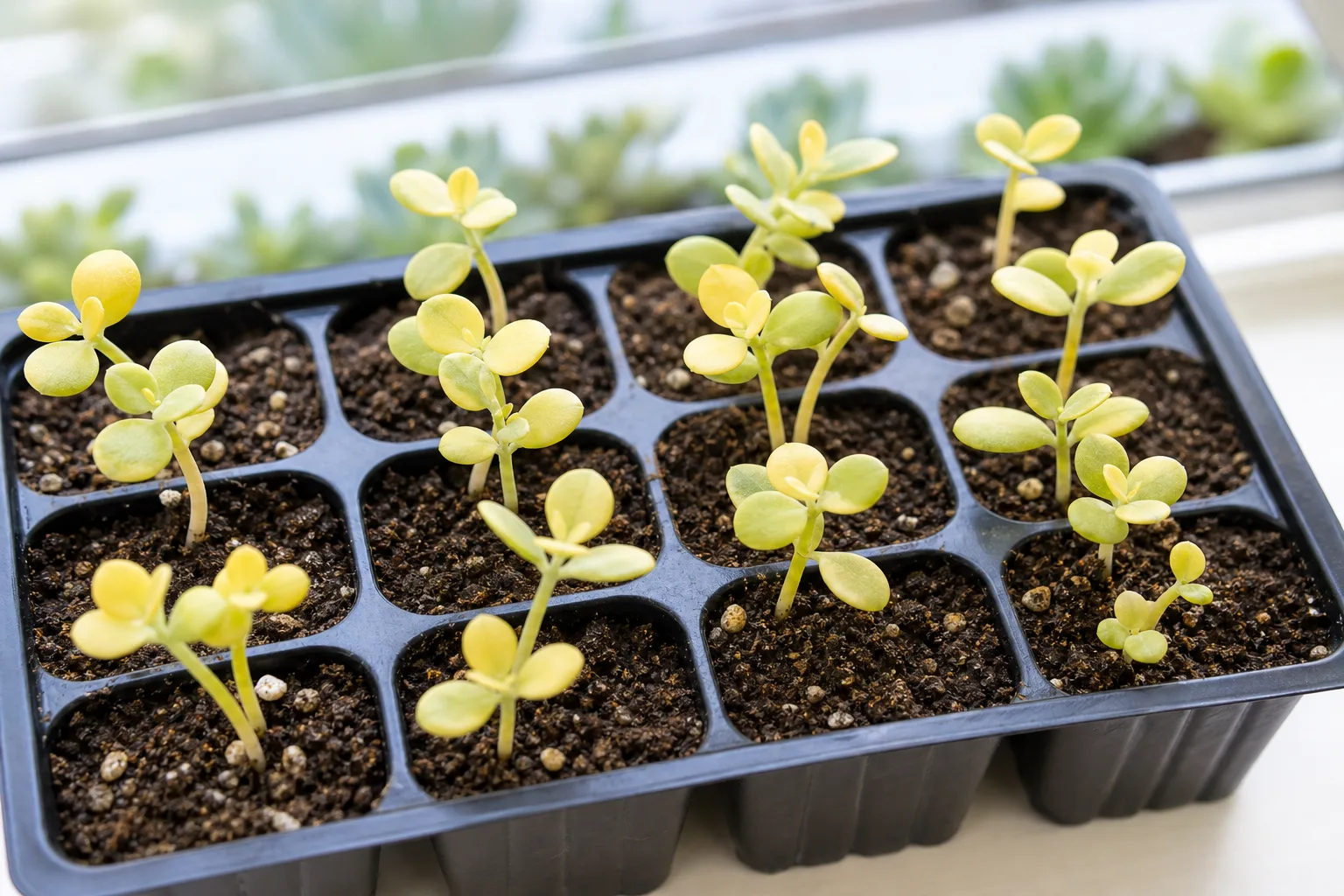
Yellow Seedlings on Jade Plant: Causes, Checks & Fixes
This guide covers yellow seedlings on Jade Plant. See also the general Yellow Seedlings guide, watering, and light pages for this plant.
Yellow Seedlings on Jade Plant: Causes, Checks & Fixes
Quick answer
Yellow jade starts trace to wet propagation trays, uncallused cutting rot, low-light pale stretch, or fertilizer burn on tender plantlets-healthy young Crassula ovata should look plump and green, not yellow and limp. First step: pinch the stem base or leaf meristem for firmness, check whether tray mix stays wet for days, and confirm cut ends were callused before planting. Do not reach for fertilizer until you rule out moisture and light.
Most home “jade seedlings” are leaf plantlets or stem cuttings, not seed-grown plants-jade is especially easy to propagate from stem or leaf cuttings but rarely started from seed indoors. That matters because unrooted succulent tissue rots faster than a mature potted jade in the same wet mix.
Seed-grown vs. leaf plantlets: what you are actually looking at
When growers search “yellow seedlings,” they usually mean one of three things:
- Leaf-propagated plantlets - a tiny rosette emerging from a callused leaf base on a shallow tray. These have minimal root mass and depend on the shrinking parent leaf for energy for months.
- Stem-cutting starts - a 5–15 cm cutting with a few leaves and a callused base in small pots. Stored stem tissue carries more reserve than a single leaf.
- True seed-grown starts - rare indoors; jade can be grown from seeds sown in spring or summer but germination is slow and seedlings stay fragile the first year.
Each type yellows for different reasons, but wet soil before roots exist and too little light cover most cases. Mature-plant advice-pot weight, old-leaf drop, winter dormancy-does not apply here; see yellow leaves for established jade instead.
What yellow jade starts look like
Healthy young jade should show glossy green, plump leaves on firm stems. Yellowing patterns differ by cause:
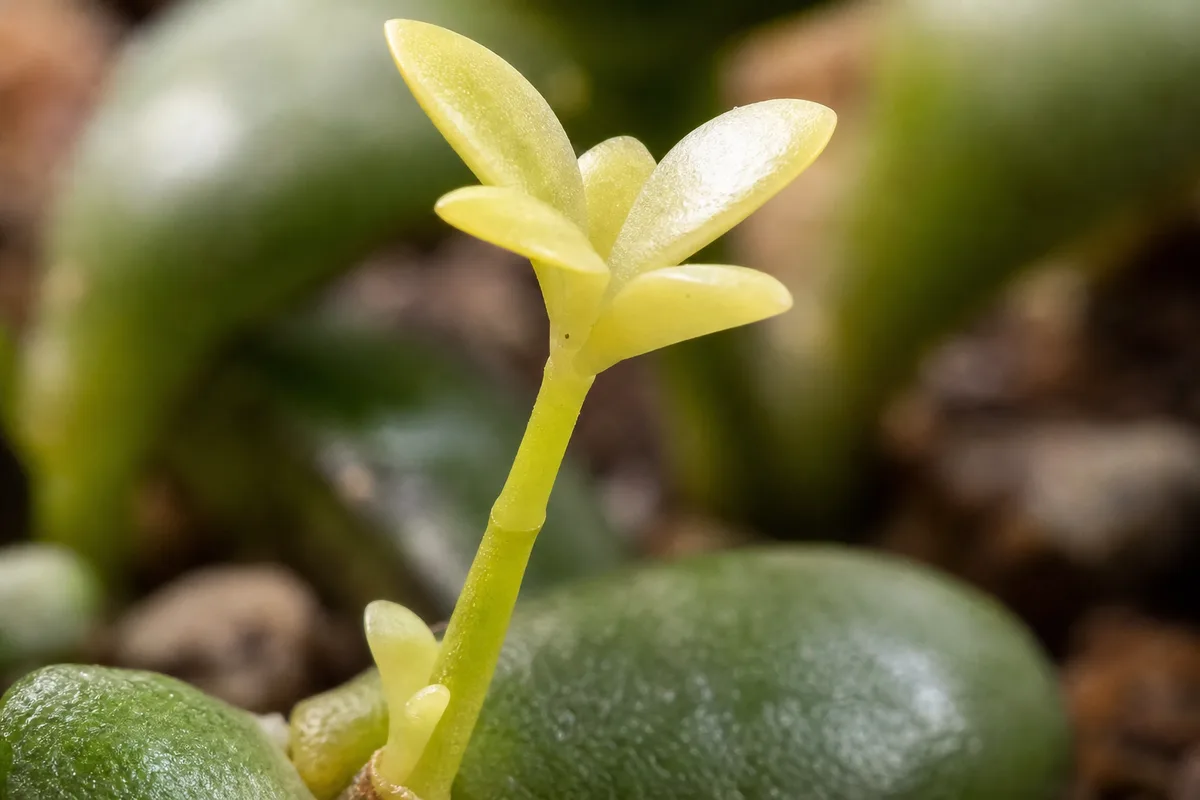
Yellow Seedlings symptoms on Jade Plant - compare with healthy tissue on the same plant.
Damping-off and wet-tray rot (uniform yellow limp collapse)
In a propagation tray with constantly damp surface, multiple starts turn uniform yellow-green, then limp and translucent. The collar where tissue meets soil goes soft before the whole plantlet collapses. This overlaps with fungal damping-off on overcrowded wet trays-remove affected cells immediately so spores do not spread to neighbors.
Leggy pale stretch from insufficient light (firm base, pale yellow)
Long internodes, small pale yellow leaves, and leaning toward glass on firm stem tissue point to etiolation, not rot. The mix may be appropriately dry. Jade does best with four or more hours of direct sun and produces deep green compact growth only in strong light; dim windows produce stretch that reads as yellowing. See leggy growth for mature plants; young starts show the same pattern faster.
Uncallused cutting rot (yellow-brown cut end)
A stem or leaf planted before the wound callused develops yellow-brown, soft tissue at the cut end while upper leaves may still look green briefly. Wisconsin Extension recommends allowing cut pieces to dry for a few days so the surface heals before soil contact-skipping this step is the most common propagation failure on jade.
Newly potted plantlet transplant stress
A firm plantlet moved into a larger pot may show slight yellowing on one or two lower leaves for a week after repotting if the mix was watered heavily. This differs from tray-wide collapse-stem bases stay firm and only the oldest leaf may fade as the plant redirects energy to new roots.
Why Jade Plant starts turn yellow
Jade evolved on dry rocky slopes in South Africa with water-storing succulent tissue. Fresh cuts left open in wet media invite bacteria and fungi; a cutting without roots cannot transpire normally, so stored tissue collapses into rot rather than rooting. That is why uncallused young starts yellow and die faster than a mature jade sitting in the same wet pot-mature plants have functional roots and thicker stem bark.
Leaf plantlets show chlorosis before stem cuttings in identical conditions because propagation by leaf cutting produces smaller starts with less stored energy and slower root development than stem segments. A stem segment with multiple leaves can photosynthesize lightly while callusing; a flat leaf on soil has only its internal reserves.
Low light slows photosynthesis so the plant cannot use water efficiently even when mix is not soggy-pale yellow stretch results. Fertilizer on unestablished tender tissue can burn delicate cells; jade needs fertilizer only every three to four months on established plants, and seedlings need none until several true leaves are firm.
Diagnostic table: three causes, checks, and first fixes
| Pattern | What you see | First check | First fix |
|---|---|---|---|
| Wet-tray rot / damping-off | Uniform yellow limp starts, mushy collar, wet surface | Tray moisture; collar pinch test | Remove collapsed starts; dry surface; improve airflow; water only when top 1 cm is dry |
| Etiolation / low light | Pale yellow stretch, long gaps between tiny leaves, firm base | Light hours; distance from window or grow lamp | Move to brightest spot or add grow light 14–16 h/day; do not increase water |
| Uncallused rot | Yellow-brown soft cut end, may smell sour | Was cut end dry and rough before planting? | Discard mushy tissue; recut to firm green; callus 2–7 days; restart in dry gritty mix |
How to confirm the cause
Work through these checks in order-change one variable at a time after you identify the likely cause:
- Collar or meristem firmness - Firm pinch vs. mushy collapse?
- Tray or pot moisture - Does surface stay wet for days without drying?
- Callus status - Was the cut end dry, lighter, and rough before soil contact?
- Light - Dim window only, or grow light with 14–16 hours?
- Recent fertilizer - Any feed on yellow tender starts?
- Spread - One cell or tray-wide in wet conditions?
Lookalike differentiation
| If you see… | Likely cause | Not this |
|---|---|---|
| Mushy collar, wet tray, tray-wide yellow | Damping-off / wet rot | Mature yellow leaves from heavy pot overwatering |
| Pale stretch, firm stem, dry-ish mix | Low light etiolation | Seedlings falling over from weak leggy stems alone |
| Yellow-brown cut end, planted within 48 h of cutting | Uncallused rot | Root rot on established rooted jade |
| Cotyledons fade as first true leaves expand | Normal seedling transition | Whole tray yellow and limp |
First fix for Jade Plant
Match the fix to the pattern-do not stack repot, prune, fertilizer, and pesticide on the same day.
Wet-tray rot: Remove collapsed starts immediately. Let the tray surface dry until the top centimeter of mix feels dry, then water lightly from the side so leaves stay mostly dry. Add airflow; avoid humidity domes on sprouted trays.
Uncallused rot: Pull the cutting, slice back to firm tissue, callus on dry paper in bright indirect light for 2–7 days, then replant in fairly dry, well-drained soil as Wisconsin Extension recommends. Wait 7–10 days before the first light water.
Low-light stretch: Move firm plantlets to the brightest location or add a grow light 14–16 hours daily, positioned 15–30 cm above tops. Do not increase watering because leaves look pale-dry mix with firm stems confirms light, not thirst.
For step-by-step callusing and tray setup, follow the jade propagation guide and use fast-draining succulent mix with drainage holes.
Mild, moderate, and severe recovery branches
- Mild (pale firm plantlets, dry mix): Add light; new leaves should green within one to two weeks.
- Moderate (one soft cut end, upper leaves still firm): Recut, callus, restart; expect 3–5 weeks before visible rooting.
- Severe (mushy collar, sour smell, tray-wide collapse): Discard affected starts; sterilize tray; restart with callused material-salvage is unlikely once collars liquefy.
Recovery timeline
Light-correction greening often appears within days to two weeks on firm-stemmed pale plantlets once grow lights or direct sun increase. Uncallused rot recovery requires a full callus cycle plus 2–4 weeks for stem roots under warm bright conditions. Old yellow or stretched leaves rarely re-green; judge success by firm new growth at stem tips or leaf meristems, not by damaged tissue returning to deep green.
What not to do
Do not fertilize yellow wet plantlets-wait months before feeding repotted jade and skip feed entirely on unrooted cuttings. Do not keep watering because tissue looks tired when the tray is already wet. Do not plant fresh cuts directly into moist soil without callusing. Wear gloves when handling cut tissue and keep starts away from pets-jade is toxic to cats and dogs.
How to prevent yellow starts next time
Callus before soil every time-stem and leaf bases need 2–7 dry days until cuts look sealed. Use shallow trays with drainage and gritty succulent mix that dries within a few days indoors. Water sparingly until roots anchor; overwatering causes leaf drop and stem rot on established jade and kills unrooted starts faster. Provide bright light from day one per the jade light guide. Hold fertilizer until plantlets have several pairs of firm true leaves. If seed-starting, see seeds not germinating for sowing issues separate from post-germination yellowing.
When to worry
Treat as same-day urgent when collars turn mushy, cut ends blacken and smell sour, or yellow collapse spreads across a wet tray-remove affected material before spores spread. Add light this week when stems are firm but pale and stretched. Escalate to the root rot protocol only after plantlets have rooted and stem bases soften in pots, not during initial propagation callus failures.
Related Jade Plant guides
- Jade propagation - callusing, stem vs. leaf methods, tray aftercare
- Jade light requirements - direct sun hours and grow-light placement
- Jade soil and drainage - gritty mix ratios for trays and pots
- Yellow leaves on mature jade - different diagnosis for established plants
- Seedlings falling over - weak leggy stems without uniform yellow collapse
Conclusion
Yellow jade starts are a propagation-culture problem, not a mysterious seedling disease. Wet trays, skipped callusing, dim light, and early fertilizer explain nearly every case. Check collar firmness and tray moisture first, match the fix to the pattern, and restart from callused material when rot has reached the meristem. Firm new green growth-not re-greening old yellow tissue-marks success.