No Drainage Hole on Jade Plant: Causes, Checks & Fixes
Quick answer
A jade plant in a sealed pot traps water around drought-adapted roots and woody stem bases, causing root rot even with careful watering. Move it to a pot with drainage holes, drill holes in the container, or use a lift-and-drain cachepot - and never let the plant sit in pooled water.
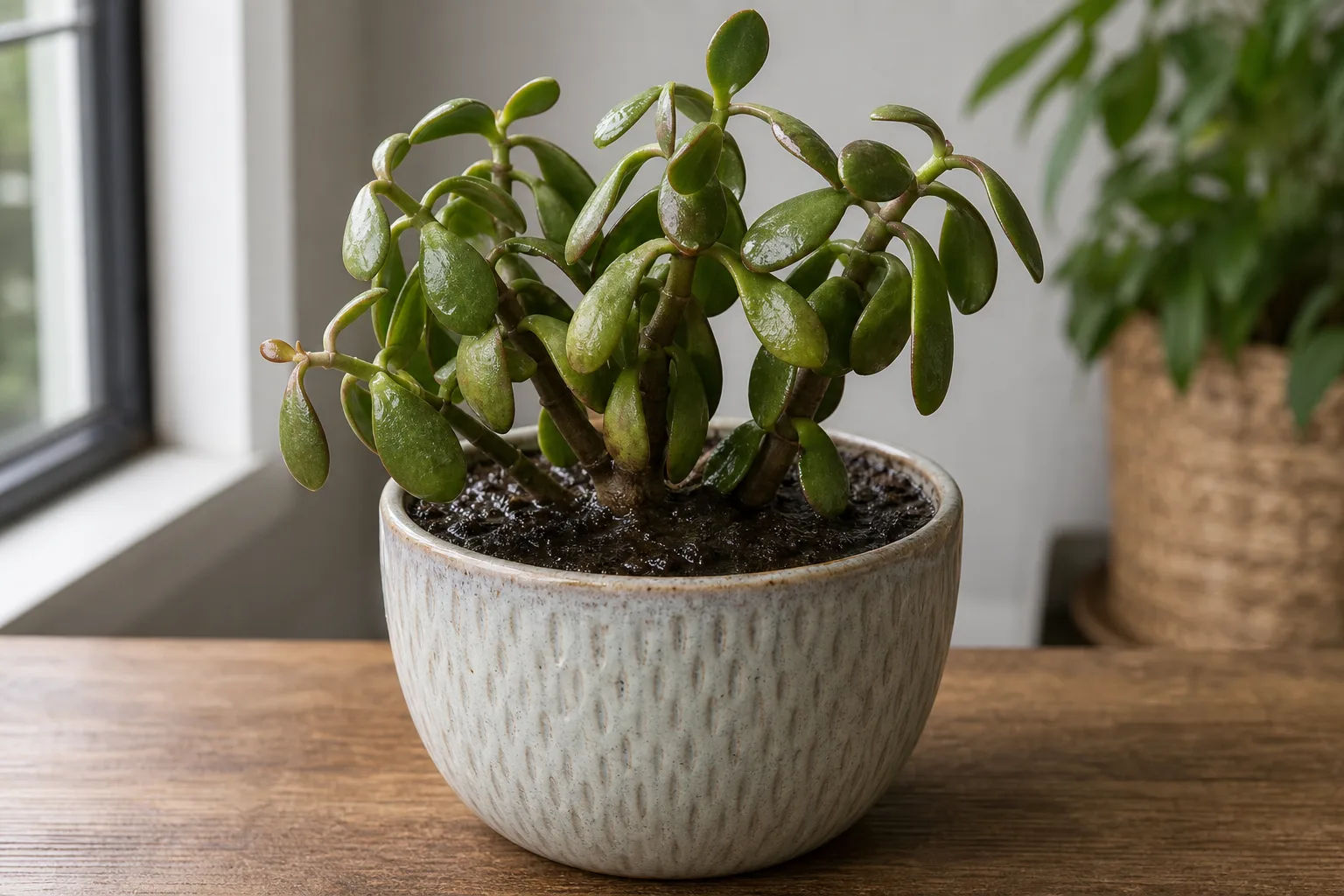
No Drainage Hole on Jade Plant: Causes, Checks & Fixes
This guide covers no drainage hole on Jade Plant. See also the general No Drainage Hole guide, watering, and light pages for this plant.
No Drainage Hole on Jade Plant: Causes, Checks & Fixes
Quick answer
A jade plant (Crassula ovata) in a pot with no drainage hole traps water around drought-adapted roots and the woody stem base. Even careful watering and gritty mix cannot compensate when excess water has nowhere to exit - roots sit in low-oxygen, stagnant soil where rot fungi thrive. First step: move the plant to a pot with drainage holes, drill holes in the container bottom, or adopt a lift-and-drain cachepot routine, then never let the pot sit in standing water.
Jade stores water in thick leaves and stems, so upper foliage can look firm while roots fail silently in a sealed pot. Decorative cache pots, glazed ceramic planters without holes, and gravel-at-the-bottom setups are common reasons tough jades die indoors. Confirm whether you are double-potted with a hidden water pool before trimming leaves or applying fungicide.
Why a pot without holes harms jade
Jade evolved for dry rocky slopes in South Africa. Its fleshy leaves, stems, and shallow roots need oxygen between waterings. When a sealed pot holds water at the bottom, the mix stays saturated long after the surface looks dry - exactly the condition that favors root and stem rot on Crassula ovata.
Illinois Extension is explicit: a hole at the bottom of the container is critical because it lets water drain freely so air reaches roots. Wet soils leave little space for oxygen; few plants recover once rot advances. Jade’s tolerance for drought does not mean tolerance for waterlogged roots - overwatering is the biggest killer indoors, especially in winter when growth slows.
Jade has a distinctive vulnerability: the woody stem base at soil level rots before upper leaves show obvious distress. Thick leaf water storage masks early root failure - a jade can look plump while the caudex softens underneath. Sealed pots accelerate this pattern because trapped moisture attacks the lowest tissue first.
Double-potting without discipline causes the same failure. An inner nursery pot inside a sealed outer planter works only if you lift the inner pot to water, let it drain completely, and empty the outer shell before returning it. Illinois Extension warns that plants in a pot liner must never stand in water unless they are aquatic - remove the inner pot and drain accumulated water from the outer container every time.
Gravel or pebbles in the bottom of a sealed pot do not create drainage. Illinois Extension calls this a myth: water perches in the soil above the gravel until all air space fills, then excess drains below - gravel does little to keep roots out of saturated mix. A plant in a pot with no hole is trapped regardless of stones at the base.
Wisconsin Horticulture Extension notes jade should not be allowed to sit in water and that overwatering causes leaves to drop and stems to rot - a sealed decorative pot makes every watering act like overwatering.
Signs your sealed pot is hurting jade (not just “thirsty” leaves)
Without exit holes, damage follows classic rot patterns with jade-specific timing:
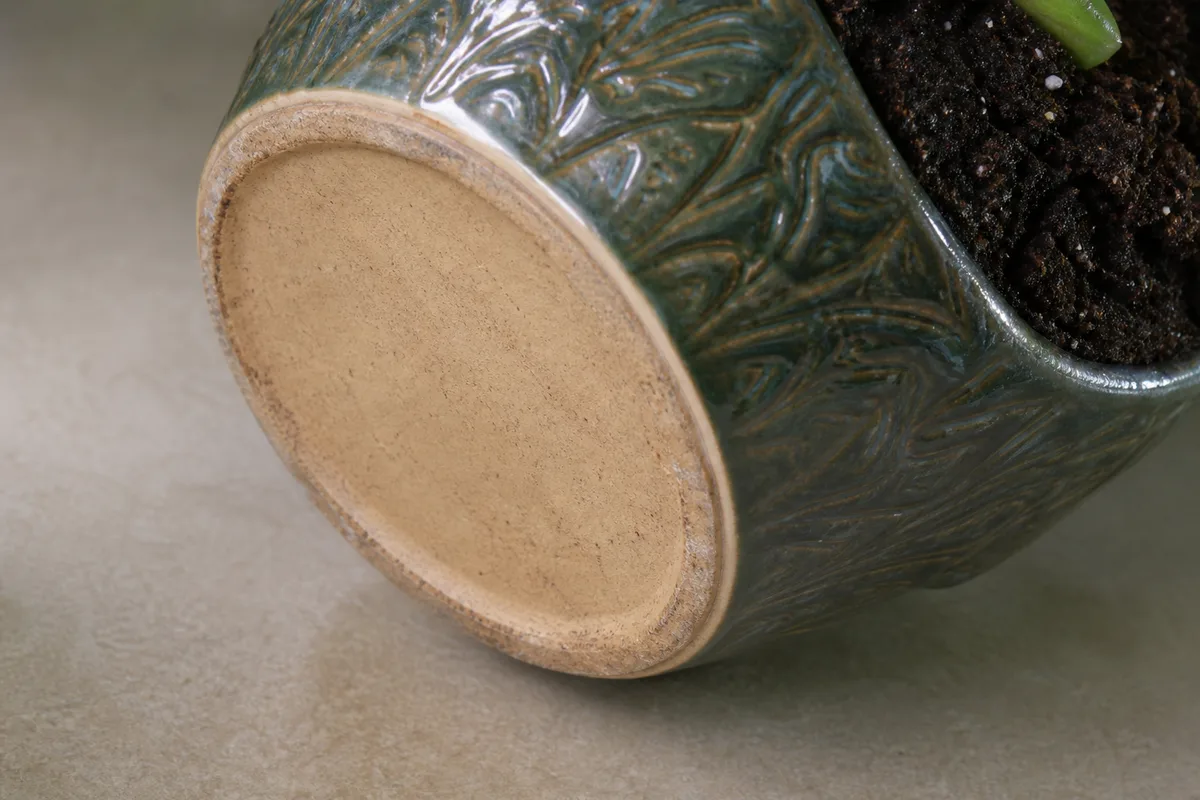
No Drainage Hole symptoms on Jade Plant - compare with healthy tissue on the same plant.
- Soil surface or lower mix staying damp many days after watering
- Pot feeling heavy continuously; sour or swampy smell from the container
- Soft or discolored woody stem base at soil level while upper leaves still look firm
- Lower leaves yellowing or dropping before tips crisp - rot progression, not simple thirst
- White mold on soil surface from chronic moisture
- New growth stalling or emerging smaller and weak
Firm leaves with completely dry soil throughout in a holed terracotta pot point away from drainage failure. Crispy brown tips alone with dry soil suggest underwatering or water-quality stress, not sealed-pot rot. For chronic wet-soil symptoms in a holed pot, see overwatering on jade plant.
Worked example
A jade in a glazed decorative pot with no holes gets a modest weekly soak. The owner checks the surface - it feels dry - and waters again. After six weeks the pot stays heavy, soil smells faintly sour, and the stem base feels spongy when pressed, but leaves still look plump. Trapped water at the bottom saturated the mix while the surface dried first - classic sealed-pot failure on a succulent that hides stress in its leaves.
How to confirm drainage is the problem
Inspect in this order:
- Pot bottom - Are there open holes? Are they blocked by roots, saucer mat, or decorative feet?
- Double-pot setup - Is water sitting in the outer cache pot after watering?
- Gravel layer myth - Is the plant in a sealed pot with only pebbles at the base?
- Pot weight and smell - Heavy and sour after your normal Jade Plant watering guide?
- Stem base firmness - Soft at soil line while upper leaf looks green?
- Unpot if unsure - Mushy brown roots confirm rot from trapped water regardless of hole debate.
If holes exist but saucer water is never emptied, the functional problem is the same as no drainage - roots sit in stagnant liquid.
Lookalike symptoms to rule out
Overwatering in a holed pot mimics sealed-pot rot but fixes with schedule change only. Wrong peat-heavy mix in a holed pot still rots roots - see jade plant soil - but restoring exit holes remains step one. Underwatering gives light pots and slightly wrinkled leaves with dry soil throughout. Cold damage after draft exposure can mark leaves while the stem base stays firm and soil smell stays neutral.
Fixes for jade in pots without drainage holes
Choose one path based on pot material and plant health.
Option A: Move to a pot with drainage holes
The most direct fix. Repot into a container with at least one open hole the same size or one size up - jade prefers a snug pot. Use fast-draining succulent mix. If stem base is soft or soil smells sour, unpot first: trim mushy roots with sterile scissors, air-dry cut surfaces several hours, and repot into dry mix. Do not water for seven to ten days after rot rescue repot. Full protocol: jade plant repotting.
Option B: Cachepot method (lift, water, drain, return)
When the decorative outer pot cannot be drilled:
- Slip jade into a plastic nursery pot with drainage holes that fits inside the decorative shell.
- Lift the inner pot out to water at the sink until water runs from holes.
- Let the inner pot drain completely - ten to twenty minutes is normal.
- Empty any water from the outer cachepot; wipe the shell dry.
- Return the inner pot only when dripping has stopped.
Never pour water directly into the sealed outer pot around the root ball.
Option C: Drill holes in the existing container
For glazed ceramic, concrete, or thick plastic:
- Use a masonry or tile drill bit sized for at least one ¼–½ inch hole.
- Drill slowly with light pressure; mist or drip water on the bit to reduce heat and crack risk.
- Place a saucer underneath to catch runoff.
- Thin or hairline-cracked ceramics may shatter - use Option B instead.
Illinois Extension drainage guidance supports drilling decorative containers or using a liner when holes are missing.
Rescue steps if roots are already compromised
When stem base softens or roots are mushy on inspection:
- Stop watering immediately - more water accelerates rot.
- Unpot and inspect - Trim all black, mushy root and stem tissue back to firm white or green tissue.
- Air-dry - Let cut surfaces callus several hours before repotting.
- Repot dry - Fast-draining succulent mix in a holed pot only; never return to a sealed container during rescue.
- Withhold water - Seven to ten days, then water lightly only when mix is fully dry.
- Salvage propagation - If the main trunk is mushy but firm branches remain, cuttings from healthy tissue may be the only save. See jade plant pruning.
For advanced rot patterns, see root rot on jade plant.
Pet safety during rescue
Jade is toxic to cats and dogs. Wear gloves when trimming mushy tissue and keep cuttings and soil away from pets. Contact your veterinarian if a pet ingests jade material - this page is not veterinary advice.
Recovery timeline
Healthy jades moved from sealed to holed pots before rot often need no root surgery - simply stop pooling water and wait for normal dry-down. Mild rot cases with firm stem tissue remaining stabilize in two to four weeks after trim and dry repot. Severe caudex involvement may require branch propagation from healthy sections.
Old yellow or dropped leaves will not revert; new firm leaves and a stable stem base mark success. Judge recovery by new growth, not by old blemished tissue re-greening.
What not to do
Do not add gravel instead of holes. Do not assume jade toughness survives standing water. Do not water on a calendar without checking dry-down after fixing holes. Do not leave full saucers for later.
Avoid fertilizing stressed jade before checking moisture and roots. Do not keep watering because leaves look tired when the pot is already wet. Do not repot into a larger sealed decorative pot for aesthetics.
Prevention for future jade pots
Choose only pots with open drainage holes for jade, or use the nursery-pot liner method with a dry outer shell. Pair holes with fast-draining succulent mix and terracotta if you tend to overwater. Empty saucers after every soak.
When buying decorative pots, drill before planting or keep the plant in a removable inner pot. Reduce watering sharply during winter dormancy - sealed containers make dormant-season soakings especially dangerous. Water only when the mix is dry, and less in winter.
Confirm holes stay open as roots grow - matting roots can block drainage over years. Refresh compacted mix every two to three years so water moves through the column.
When to worry
No drainage in a wet root zone is high severity on jade. Escalate immediately if:
- Stem base collapses or feels mushy at soil level
- Soil smells sour while the pot is heavy
- Black tissue spreads up from roots into the trunk
- More than one-third of roots are mushy on inspection
- The plant declines within seven to ten days despite surface dry appearance
Early conversion to holed pots prevents most losses; delayed action is how tough jades die in pretty planters.
Conclusion
Jade in a pot without drainage fails because roots and the woody stem base need dry-down, not perpetual moisture. Confirm sealed pots, pooled cache water, or blocked holes; fix by drilling, repotting with holes, or adopting lift-and-drain cachepot discipline; prevent with holed containers or removable liners only. Judge success by firm stem bases and new growth - not by keeping a decorative pot that traps water.
When to use this page vs other Jade Plant guides
- Jade Plant watering guide - Use for routine moisture checks before assuming no drainage hole is the main issue.
- Jade Plant problems hub - Browse all 49 common issues on this species.