How to Prune a Jade Plant: When, Where, and What to Cut
How to Prune a Jade Plant: When, Where, and What to Cut
How to Prune a Jade Plant: When, Where, and What to Cut
Quick Answer - Inspect First, Then Cut Dead Wood
First action: in good light, inspect stems for mealybug, scale, soft rot, and any brown or shriveled wood - then remove one dead, damaged, or diseased stem with sterilized bypass shears, cutting back to healthy tissue or just above the nearest viable node. Jade plant pruning on Crassula ovata is structural shaping and cleanup, not hedge shearing. This slow South African succulent branches from nodes - the rings where leaf pairs attach - not from smooth internode tissue. Shape and rejuvenate in late winter through early summer when active growth can push new shoots within weeks; limit routine removal to roughly one-third of foliage per session; and cut 3–10 mm above a healthy node with a single clean slice.
What Jade Plant Pruning Can and Cannot Fix
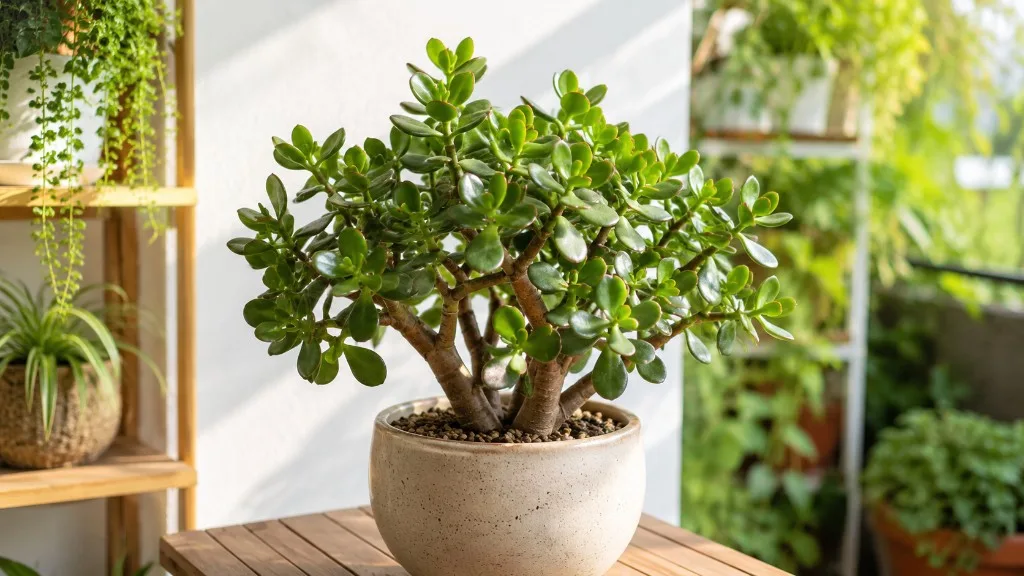
Indoors, jade is grown for thick woody stems, plump oval leaves, and a sculptural silhouette - either a rounded shrub or a miniature tree with an exposed trunk. Without intervention, the same plant often becomes leggy: long bare internodes, leaves clustered at tips, and a pot that tips from uneven weight.
Pruning can control size, redirect growth to dormant buds below a cut, develop trunk girth over seasons, remove pest-hiding dead tissue, and replace sparse tips with fresh branching when timing and light are right. Wisconsin Horticulture notes that spring pruning keeps jade compact, encourages trunk development, and supports miniature-tree training, with cuts healing in days and new growth appearing within weeks under favorable conditions.
Pruning cannot substitute for light. In dim rooms, stems stretch regardless of how often you shorten them. It also cannot speed a plant stressed by chronic overwatering on Jade Plant, fresh Jade Plant repotting guide, or active root rot - delay major shaping until leaves hold firm and the mix dries on your normal schedule.
What to Check Before You Cut
Walk through this inspection before structural cuts:
- Stem joints: look at leaf axils for white mealybug cotton, brown scale bumps, and black mush at the base of leaves.
- Node viability: on bare stems, trace downward until you find a node with a visible bud scar, swelling, or remaining leaf pair - that is where new branches can emerge.
- Balance: note stems that lean hard toward the window, cross through the center, or carry most of the plant’s weight on one side.
- Recent stress: if the plant wilted after watering, was repotted within two weeks, or dropped many leaves suddenly, postpone major shaping until growth stabilizes.
Have 70% isopropyl alcohol, sharp bypass pruners or snips, and a clear view of tan-green nodes. Dull blades crush succulent tissue and slow callusing on thick lower branches.
When to Prune Jade Plant
Timing decides whether buds swell in three weeks or three months. Jade slows in short days and cooler rooms; major cuts during that slowdown leave open wounds on a plant with little drive to branch.
Cosmetic shaping, tree training, and rejuvenation belong in the active growth window - late winter through early summer, roughly February through June in the Northern Hemisphere for indoor plants, adjusted for your warmth and light. Penn State Extension recommends spring pruning to keep jade compact and encourage new growth, cutting stems just above a ring or lateral branch.
Dead, diseased, damaged, or pest-infested stems come out the day you find them, regardless of month. A blackened rot tip or a branch gouged by a fall should not wait for spring.
Spring and Early Summer Shaping Window
During active growth, removing the apical tip redirects hormones to buds below the cut - often producing two new stems from one node in bright light. Pinch soft tips anytime the plant is visibly growing; save trunk clearing and major height reduction for spring when the full bright season lies ahead.
Avoid bulk shaping in late fall and winter unless you accept doubled recovery time. The same cut made in April near a south or east window commonly shows bud swell in two to three weeks; in December it may sit unchanged until warmth returns.
Emergency Removal Any Time
Sanitation cuts remove tissue that will not recover: shriveled dry tips, stems blackened by rot, branches broken by weight, and wood with persistent scale you cannot wash off. Cut to healthy green-tan tissue or back to the main trunk if necessary. After removal, keep light steady, let cut faces dry, and avoid soaking the mix until wounds callus.
The First Cut to Make
After inspection, your first cut should always target the worst dead or damaged stem - not the tallest live branch and not a cosmetic shorten on healthy wood. Removing failed tissue reduces rot spread, exposes hidden pests, and tells you whether remaining stems have viable nodes before you commit to shape.
Once dead wood is cleared, pause and reassess the live silhouette from eye level and from above. The next cuts depend on your goal: tree training keeps one trunk line; bush form shortens the tallest whips first; leggy recovery may need staged shortening rather than one dramatic chop.
Where to Cut: Just Above the Node
The technical heart of jade pruning is node placement. Locate a healthy node - a slightly raised ring where a leaf pair attaches or once attached, often with a tiny bud scar. Position the blade about ⅛ to ¼ inch (3–10 mm) above that node. Too close damages the bud; too high leaves a brown stub that dies back without branching.
Slice at a slight angle so moisture runs off the face. One clean motion beats three partial crushes. On fully leafed stems, cut just below the lowest leaf you intend to keep - effectively just above the next node down. On bare leggy stems, the highest viable node may sit much lower than you expect; cut there, not at mid-internode smooth tissue where leaves will not sprout.
Penn State Extension also describes pinching soft tips about ⅛ inch above a leaf pair during active growth to keep the plant bushy - the same node logic without shears.
Step-by-Step Jade Plant Pruning
- Sterilize tools with alcohol; re-wipe between plants if you handle multiple pots.
- Remove dead, diseased, and crossing stems first, cutting to healthy tissue or just above viable nodes inside your target outline.
- Identify your goal - miniature tree, rounded bush, or leggy rejuvenation - before shortening live wood.
- Shorten live stems one at a time, each cut just above a node that sits inside the silhouette you want. Rotate the pot every few snips.
- Stop at roughly one-third of total foliage removed in one session for routine shaping. You can return in three to four weeks for a second pass.
- Collect healthy trimmings for propagation if desired; discard rot- or pest-infested pieces.
- Hold conditions steady for two weeks - no new window, no same-weekend repot, no fertilizer push.
Do not apply wound sealants. Jade calluses best with open air on a dry cut face.
How Much You Can Safely Remove
For routine maintenance, stay within the one-third rule - remove no more than about one-third of living foliage in a single session.
For moderate legginess - a few long stems but leaves still along mid-stem - shorten each whip to a node one-third to halfway down from the tip, or stagger major stems across two sessions two to three weeks apart.
Routine Shaping vs Hard Rejuvenation
Hard rejuvenation is a different category: a severely stretched plant with eight to ten inches or more of bare stem and leaves only at the tip may need beheading in early spring - removing the lollipop top four to six inches above soil or at the highest viable node on each bare stem. A healthy root system often pushes multiple fresh shoots from remaining nodes on the stump. This may temporarily remove nearly all leaves once, on a well-rooted plant with excellent light ahead - a rescue move, not an annual habit.
Never combine hard cutback with repotting, heavy feeding, or a major location change the same weekend.
Shaping a Miniature Tree
The miniature-tree look - single thickened trunk, exposed lower stem, rounded leafy canopy - matches how Crassula ovata grows as a rounded shrub on rocky slopes in its native range, but indoors you build proportion over years, not weeks.
- Choose one upright stem as the trunk; stake gently the first year if it leans permanently toward light.
- Remove competing basal shoots gradually - one or two per spring - rather than stripping all lower growth at once on a small root system.
- Allow a sacrifice branch to extend freely for a season if you want faster trunk thickening; the extra foliage drives girth before you cut it back the following spring.
- Clear the lower trunk once wood looks intentional - usually after two to three years in bright light - removing side shoots and leaves from the bottom one-third to one-half of the chosen stem.
- Develop the canopy by shortening top branches to nodes just inside a rounded outline; pinch racing tips through summer.
- Rotate the pot weekly so the tree does not lean permanently toward the window.
Patience beats one hard chop on a pencil-thin trunk. Wisconsin Horticulture describes jade as an excellent choice for succulent bonsai or sculptural training when pruned in spring.
Encouraging Bushier, Denser Growth
Bush form uses the same node biology differently: keep multiple low branches, pinch soft tips often, and shorten leggy whips before they turn woody and bare.
- Tip pinching on young soft growth removes apical dominance without tools; expect side buds to break within two to three weeks in active season.
- Strategic cuts above nodes on established stems double branching at each point over time.
- Thin inward-growing stems so light reaches the center and inner buds activate.
- Slightly root-bound plants in fast-draining mix often branch more aggressively than specimens swimming in oversized pots - though severe bind needs repotting, not more pruning.
For a rounded shrub, shorten the tallest stems first to nodes slightly below average canopy height, then pinch any shoot that outpaces its neighbors.
When Legginess Is Really a Light Problem
Before hard-cutting the same jade for a third time, ask whether light caused the stretch. Jade prefers bright light with several hours of direct sun daily once acclimated; in too little light, internodes elongate, leaves shrink and pale, and stems lean toward the brightest source.
Pruning shortens stems but does not increase photons. Improve placement first or simultaneously - east, south, or west window with gradual acclimation from deep shade to avoid scorch. Then cut to the height that fits the brighter spot. New growth with shorter internodes confirms the fix is structural, not cosmetic.
Pinching and Light Maintenance Trims
Not every session needs shears. Pinching - removing the soft growing tip and top immature leaf pair with fingernails - redirects growth to side buds during spring and summer. Pinch every few weeks on young plants while building framework; taper off by early fall so stems harden before winter slowdown.
Light maintenance removes rogue stems or damaged tips anytime the plant is actively growing. Avoid shearing jade like a hedge - every cut needs node awareness.
Hard Cutback for Severely Leggy Plants
When moderate shortening fails - bare stems dominate and only tip clusters remain - spring beheading is appropriate. Cut the entire top just above the highest viable node on each bare stem, or four to six inches above soil on a single-trunk specimen. Multiple hard-cut stems on healthy roots often produce several shoots each from stump nodes.
Expect a sparse look for weeks. Judge success by bud swell at nodes, not immediate lushness. Let cut faces callus for several days before resuming your normal dry-top-inch Jade Plant watering guide - open succulent wounds plus wet mix invite rot.
Aftercare and Recovery Timeline
Jade is slower than many tropical houseplants. Use this as a guide, not a guarantee:
| Phase | Active spring/summer | What to expect |
|---|---|---|
| Callusing | Days 0–5 | Cut faces dry tan; avoid heavy watering on open wounds |
| Bud swell | Days 10–21 | Visible enlargement at nodes below cuts |
| First new branches | Weeks 3–6 | Small shoots with firm leaves unfurl |
| Canopy fill | Weeks 8–12 | Side branches lengthen; silhouette fills in |
| Winter cut | Cool short days | Timeline may double until spring warmth |
Light: keep bright and consistent - no move to a darker room while the plant has fewer leaves to photosynthesize. Water: resume normal rhythm after callusing; reduced foliage uses less water, so resist overcompensating. Fertilizer: pause two to three weeks after moderate pruning and three to four weeks after hard cutback; resume dilute balanced feed only when new growth is clearly underway. Repotting: separate from major pruning by at least a month unless severe root bind forces repot first - then settle three weeks before shaping.
Healthy stem sections 2–4 inches long with at least one node root readily after callusing cut ends three to seven days in dry shade - a practical bonus from spring trimming many growers discard.
Signs Pruning Worked - and When It Did Not
Success: swollen buds or tiny green nubs at nodes within one to three weeks in active season; new stems with plump leaves and good color by weeks three to six; balanced silhouette from multiple angles; cut faces drying to clean tan edges without endless black mush.
Failure signals: black mushy cut ends - trim back to healthy tissue with sterile blades and dry the mix out; long brown stubs above nodes - you cut too high, remove stub to just above the node; no bud break after eight weeks in spring with decent light - nodes may be damaged, stems too woody without viable buds, or roots compromised from chronic overwatering; continued leggy new growth after a correct spring prune - almost always insufficient light, not pruning failure.
Common Mistakes to Avoid
The failures that show up most often trace to timing, placement, volume, or pre-existing stress:
- Bulk pruning in late fall or winter when recovery stalls
- Cutting mid-internode or leaving long stubs instead of just above a node
- Pruning without fixing light - reshaping the same bare stems annually
- Dull or dirty tools that crush stems and invite rot
- Heavy watering before wounds callus
- Wound sealant on succulent cuts - jade heals with open air
- Pruning the same weekend as repot or pest treatment
- Fertilizing immediately after hard cutback
Handle trimmings carefully around pets: the ASPCA lists jade (Crassula argentea) as toxic to dogs and cats, with vomiting, depression, and incoordination if ingested (ASPCA - Jade Plant). Do not confuse Crassula ovata with Portulacaria afra (elephant bush), which has smaller leaves and different care.
Conclusion
Jade plant pruning succeeds when timing, node placement, and light align before you pick up shears. Inspect and remove dead wood first, then shape in late winter through early summer with cuts just above healthy nodes, staying within the one-third rule for routine work and reserving spring beheading for severely leggy specimens with bright light ahead. Let wounds callus, keep conditions steady, pause fertilizer until new shoots prove recovery, and judge progress by bud swell and firm new leaves - not by how lush the plant looked the day before you cut. When in doubt, less in one session beats a winter hack on stressed roots; jade tolerates staged trims across seasons far better than one aggressive chop.
When to use this page vs other Jade Plant guides
- Jade Plant overview - Start here for whole-plant context before deep-diving this topic.
- Jade Plant problems hub - Jump to symptom-specific fix guides when this care topic does not resolve the issue.
- Leggy Growth on Jade Plant - Escalate here when pruning adjustments are not enough.