Spider Mites on Dieffenbachia Tropic Snow: Causes, Checks &
Quick answer
Spider mites on Dieffenbachia Tropic Snow thrive in warm, dry winter air and often show first on pale cream leaf sectors as bleaching before webbing appears. First step: isolate the pot and inspect leaf undersides along the cane-then rinse in the morning with gloves on, because Dieffenbachia sap irritates skin.
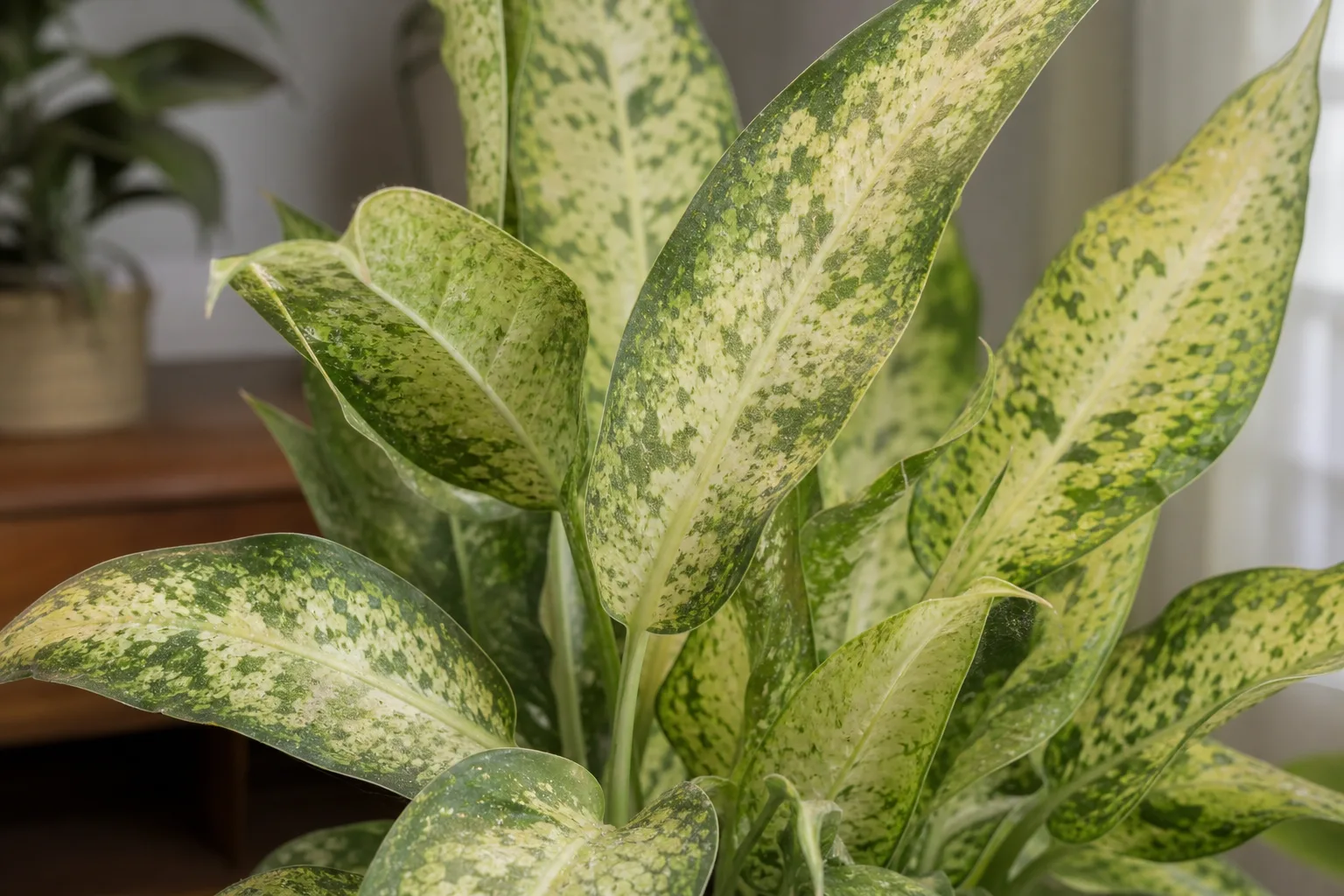
Spider Mites on Dieffenbachia Tropic Snow: Causes, Checks & Fixes
This guide covers spider mites on Dieffenbachia Tropic Snow. See also the general Spider Mites guide, watering, and light pages for this plant.
Spider Mites on Dieffenbachia Tropic Snow: Causes, Checks & Fixes
Quick answer
Spider mites on Dieffenbachia Tropic Snow (Dieffenbachia amoena ‘Tropic Snow’) are tiny sap-feeding arachnids-not insects-that explode in warm, dry indoor air. On this large cane-forming dumb cane, damage starts as fine yellow or white stippling on broad cream-and-green mottled leaves and delicate webbing at leaf bases along the upright stem. Tropic Snow’s pale variegation hides early feeding marks: stippling on white sectors can look like bleaching or yellowing for days before silk appears.
First step: isolate the pot and inspect leaf undersides along the cane with a magnifier. Move Tropic Snow away from other houseplants before you rinse or spray. Confirm live mites with the white-paper tap test, then rinse undersides in the morning so smooth aroid leaves dry before evening. Wear gloves-Dieffenbachia sap contains calcium oxalate crystals that irritate skin when you handle cut or bruised tissue during cleanup.
For the full Dieffenbachia mite biology and genus-wide treatment escalation, see the genus spider mites guide. This page focuses on what Tropic Snow owners should check differently on a tall, variegated floor plant-and how dry-air stress ties to the low-humidity guide.
What spider mites look like on Dieffenbachia Tropic Snow
Tropic Snow is an upright, cane-forming dumb cane with heavily variegated cream and green leaves-one of the largest Dieffenbachia cultivars indoors. Mites colonize leaf undersides and sheltered joints where broad blades meet the thick central cane, not the open green margins you see from across the room.
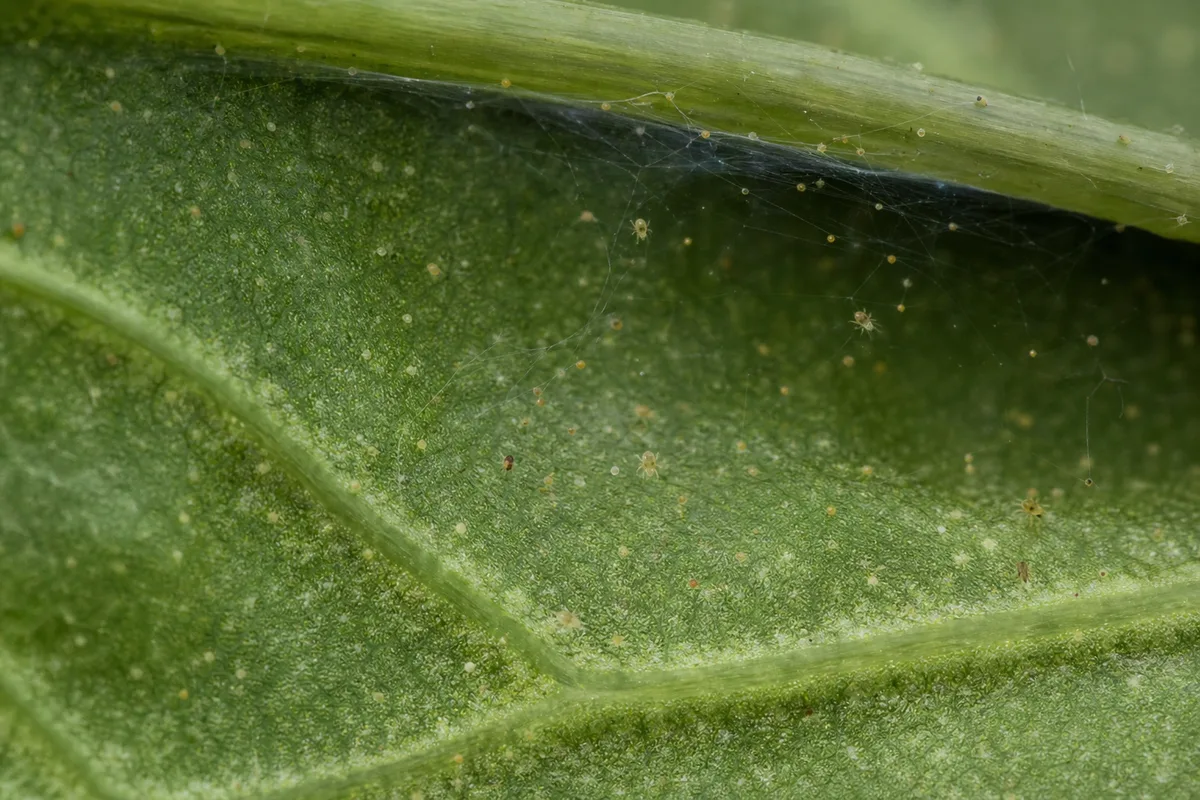
Spider Mites symptoms on Dieffenbachia Tropic Snow - compare with healthy tissue on the same plant.
Typical signs on Tropic Snow:
- Fine yellow or white stippling on leaf tops-individual feeding punctures that bleach chlorophyll
- Bleached or dull cream sectors that look like variegation fading until bronzing and webbing confirm mites
- Delicate silk webbing at petiole bases, cane nodes, and between overlapping lower leaves
- Bronzing or crisp edges spreading from stippled zones while the cane itself stays firm
- Slow-moving specks on white paper after tapping a suspect leaf-mites crawl; dust does not
Why variegation delays diagnosis on Tropic Snow
Pale cream and white mottling on Tropic Snow contains fewer chloroplasts than the green margins. When mites feed on cream sectors, the damage can mimic natural variegation loss from low light-both look like yellowing or washed-out patches from a distance. The differentiator is pattern and location: mite stippling is thousands of tiny discrete dots in irregular clusters, often with matching damage on the leaf underside. Low-light fade produces uniformly greener new leaves without dots, webbing, or crawl on the tap test.
Practical check: Compare an older stippled leaf to the newest unfurling leaf at the crown. Mites often hit mature lower foliage on tall canes first-layers of broad leaves hide undersides until webbing bridges between petioles. Kneel and inspect the lower third of the cane, not just eye-level foliage.
Large leaf surface: Tropic Snow’s broad blades hold more feeding sites per leaf than compact cultivars like ‘Camille’. One heavily infested leaf can harbor a large colony before stippling is obvious on the pale center-inspect undersides directly rather than judging from the variegated top alone.
Why Tropic Snow gets spider mites
Spider mites are not proof you failed as a grower. They arrive on nursery stock, drift from infested neighbors, or explode when dry air meets warm light on a floor-scale Dieffenbachia. Tropic Snow has traits that make outbreaks common once mites are in the room.
Winter heating plus sunny glass. Spider mites thrive in warm, dry conditions and multiply quickly when relative humidity drops. A Tropic Snow beside a south-facing window above a heat register combines leaf heating with furnace-dry air-the same microclimate that triggers crisp margins on the low-humidity page. Dry indoor air increases pest pressure on foliage.
Large transpiring leaves in bright rooms. Tropic Snow in medium to bright filtered light transpires heavily through broad variegated blades. When ambient RH falls below 30–35% at leaf height, leaf moisture stress overlaps with mite reproduction-mites are common on houseplants stressed by low humidity and heat.
Cane architecture hides colonies. Lower leaves on a tall cane naturally age and drop over time. Mites feeding on hidden undersides of mid-cane foliage can build for weeks before webbing reaches the crown you see daily. Rotate the pot and inspect from below.
Crowded plant groups. Spider mites crawl between pots that touch. Skipping quarantine on a new floor Dieffenbachia is a frequent entry route onto a cluster of philodendrons, aglaonemas, and other aroids that share dry winter air.
Co-occurring sap pests. Mealybugs also cluster in Tropic Snow leaf axils along the cane. Honeydew from mealybugs does not cause stippling, but shared weak-air placement means checking for both pests when humidity crashes in heating season.
Lookalike symptoms on Tropic Snow
| What you see | Soil / cane | Likely cause | Quick check |
|---|---|---|---|
| Fine stippling plus silk on undersides | Either; firm cane | Spider mites | Tap test shows moving specks |
| Silvery streaks, black fecal specks, no webbing | Either | Thrips | No silk; elongated insects under magnification |
| Crisp full leaf margins, firm leaves, moist soil | Moist | Low humidity | Hygrometer under 35% RH; no stippling dots |
| Brown tips only, no margin stippling | Moist | Brown tips (fluoride/salt) | Tips persist after humidity improves |
| Evenly greener new leaves, no dots | Either | Low light | No webbing; see not-enough-light guide |
| White cottony tufts in cane axils | Either | Mealybugs | Smears pink when crushed |
| Yellow lower leaves, wet heavy pot, soft cane base | Wet | Overwatering | Soggy mix; no webbing |
The Tropic Snow pairing that matters most: stippling dots plus webbing or live mites confirm spider mites. Crisp margins on firm leaves with moist soil and no dots point to dry air alone-fix humidity first, then re-check undersides in a week.
How to confirm the cause
Work through these checks before you commit to sprays. The goal is to confirm live spider mites, not to treat natural variegation change or brown tips from tap water.
- Isolate first - Move the pot away from other houseplants before handling so crawlers do not walk to neighboring pots.
- Underside scan along the cane - Lift broad lower leaves and inspect where each petiole meets the stem. Webbing appears in crotches before it spans open leaf faces.
- White-paper tap test - Hold white paper under a suspect leaf and tap sharply. Slow-moving specks confirm mites; static dust or perlite does not crawl.
- Variegation cross-check - Compare stippled cream sectors to the newest crown leaf. Uniform greening without dots suggests light, not mites.
- Hygrometer reading - Note RH at leaf height. Sustained readings below 30–35% support treating low humidity alongside mites-not instead of mite treatment when webbing is present.
- Neighbor plants - Inspect other floor aroids and Dieffenbachia cultivars in the same room for stippling or webbing.
Confirmed diagnosis requires stippling plus webbing or live mites on the tap test. A single pale patch on one cream sector without undersides checked is not enough.
First fix for Dieffenbachia Tropic Snow
Isolate the pot and rinse leaf undersides with lukewarm water in the morning.
That single action knocks down adult mites you can reach, briefly raises local humidity, and confirms the pest is active before you add sprays. Mississippi State Extension recommends washing mites from leaves with a forceful spray repeated at three- to five-day intervals for houseplant spider mite control. On Tropic Snow’s smooth, broad aroid leaves, rinse in the morning so foliage dries in Dieffenbachia Tropic Snow light guide with airflow before evening-avoid leaving the crown wet overnight in a stuffy corner, which can invite fungal spotting on large leaves.
Wear gloves when rinsing heavily infested foliage or trimming damaged leaves. Dieffenbachia contains insoluble calcium oxalate crystals that irritate skin and mucous membranes; the ASPCA lists Dieffenbachia as toxic to cats and dogs, naming Tropic Snow among common cultivars. Keep pets away from runoff in the sink until it drains.
Do not reach for miticides, repot, or fertilize on day one. Do not apply leaf-shine products during active treatment-they coat leaves and block rinses or soaps from reaching mites.
Numbered treatment protocol
After the initial rinse, follow this sequence based on severity:
Light infestation (stippling on a few leaves, minimal webbing):
- Isolate - Separate Tropic Snow from other houseplants for at least two weeks.
- Rinse undersides - Aim lukewarm water at leaf undersides and petiole crotches every three to five days for two weeks.
- Raise humidity - Move off heating vents; target 45–50% RH or higher at leaf height per the low-humidity guide.
- Re-check with tap test - Stop rinsing when no specks move on paper and no new webbing appears for seven days.
Moderate infestation (webbing on multiple leaves, bronzing spreading):
- Complete steps 1–3 above.
- After the second rinse cycle, apply insecticidal soap or horticultural oil labeled for mites, covering undersides thoroughly.
- Repeat labeled applications every three to five days until the tap test stays clear-most miticides do not kill eggs, so repeat treatments are required.
- Remove heavily damaged leaves - Bag and discard leaves more than half bronzed or densely webbed; wear gloves when cutting.
Heavy infestation (webbing across cane levels, crown stippling, mites on neighbors):
- Isolate and treat all susceptible houseplants in the room-not just Tropic Snow.
- Continue rinse plus soap/oil cycles on a three- to five-day schedule for three weeks minimum.
- Discard a severely webbed plant only if crown leaves collapse and new growth stops after a full treatment cycle-rare on an otherwise firm cane if caught early.
- Escalate to a miticide labeled for spider mites only if soap and oil fail after three weeks; many insecticides do not control mites and can worsen outbreaks.
For tall floor specimens, hand-rinsing in a sink or tub may be safer than daily shower drenching that keeps the potting mix constantly wet-Tropic Snow stores water in its cane but still rots when overwatered at the base. Match rinse frequency to soil dryness per the watering guide.
Recovery timeline
Week 1: Stippling should stop spreading to new tissue if rinses and isolation are consistent. Old dots on cream sectors do not re-green-that tissue is permanently bleached.
Weeks 2–3: New leaves unfurling from the crown without stippling are the real recovery signal. Lower cane leaves may stay bronzed until you trim them cosmetically or they age off naturally.
Week 4+: If clean crown growth continues and the tap test stays clear, gradually reintroduce the plant to its display spot-after humidity and placement fixes from the low-humidity page are in place, or mites often return the next dry heating season.
Signs treatment is failing: New webbing on crown leaves within a week, spreading bronzing despite repeat rinses, or mites appearing on plants that were not isolated. Escalate to labeled soap/oil or miticide rather than waiting.
What not to do
- Do not assume insecticides labeled for general pests kill mites-mites need miticides, horticultural oil, or insecticidal soap labeled for mite control. Systemic imidacloprid treatments do not control spider mites.
- Do not apply leaf shine, wax, or oil-based “cleaners” during active treatment-they interfere with contact sprays and rinses.
- Do not rinse at night and leave large wet leaves in a cold draft-finish rinses in the morning so smooth Tropic Snow foliage dries before evening.
- Do not handle cut stems bare-handed when removing infested leaves-sap exposure causes skin irritation; wear gloves and wash tools after.
- Do not overwater to “help” a mite-stressed plant-extra soil moisture does not fix dry air and invites cane rot on a tall pot.
- Do not discard lightly stippled leaves prematurely-green margins on partially damaged blades still support recovery while you treat.
How to prevent spider mites on Tropic Snow
Prevention on Tropic Snow is mostly humidity and placement, not pesticide rotation.
- Target 50–70% RH at leaf height through winter heating season-see the low-humidity guide for humidifier and vent placement.
- Pull pots off radiators and forced-air registers where mites multiply fastest in warm, dry microclimates.
- Inspect leaf undersides weekly from November through February-especially lower cane foliage below eye level.
- Quarantine new Dieffenbachia purchases for two weeks before grouping with existing floor plants.
- Shower or rinse proactively when RH drops sharply and you see early stippling without webbing-one morning rinse beats a three-week infestation on a layered cane.
When dry air and mites overlap, fix both humidity and pest treatment. Humidity alone does not eliminate an established colony; rinses alone do not stop reinfestation if the plant returns to a 20% RH heat register.
When to worry
Treat as urgent if webbing spreads to crown leaves within a week, mites appear on multiple houseplants after handling Tropic Snow without isolation, or new growth stalls with dense stippling despite two weeks of rinses.
You can wait and monitor if stippling is on one or two lower leaves, the tap test shows few specks, no webbing is present, and you have already moved the pot off the heat vent and started weekly underside checks.
Dieffenbachia Tropic Snow care cross-check
Spider mites are an air-moisture and placement problem on a cultivar that prefers relatively high humidity and broad filtered light. Pair mite treatment with realistic baseline care: medium to bright indirect light, temperatures around 18–27°C (65–80°F), and watering when the top 3–5 cm of mix dries per the overview and watering guide.
Related Tropic Snow problems
- Overview - care baseline and toxicity
- Low humidity - shared dry-air stressor
- Mealybugs - co-occurring cane pest
- Brown tips - dry-air and water-quality lookalike
- Watering - avoid overwatering during repeated rinses
- Genus spider mites - full Dieffenbachia treatment escalation
When to use this page vs other Dieffenbachia Tropic Snow guides
- Dieffenbachia Tropic Snow watering guide - Use for routine moisture checks before assuming spider mites is the main issue.
- Dieffenbachia Tropic Snow problems hub - Browse all 16 common issues on this species.
- Low Humidity on Dieffenbachia Tropic Snow - Different entry point when symptoms overlap with spider mites.
- Slow Growth on Dieffenbachia Tropic Snow - Different entry point when symptoms overlap with spider mites.