Brown Tips on Dieffenbachia Tropic Snow: Causes, Checks &
Quick answer
Brown tips on Dieffenbachia Tropic Snow most often trace to dry air pulling moisture from the wide cream-and-green leaves, fluoride or chloramine in tap water, or a heavy floor-pot root ball that stays wet too long. First step: lift the pot and check pot weight plus the top 3 to 5 cm of mix before adding water, and move the cane off any heating vent or AC supply register.
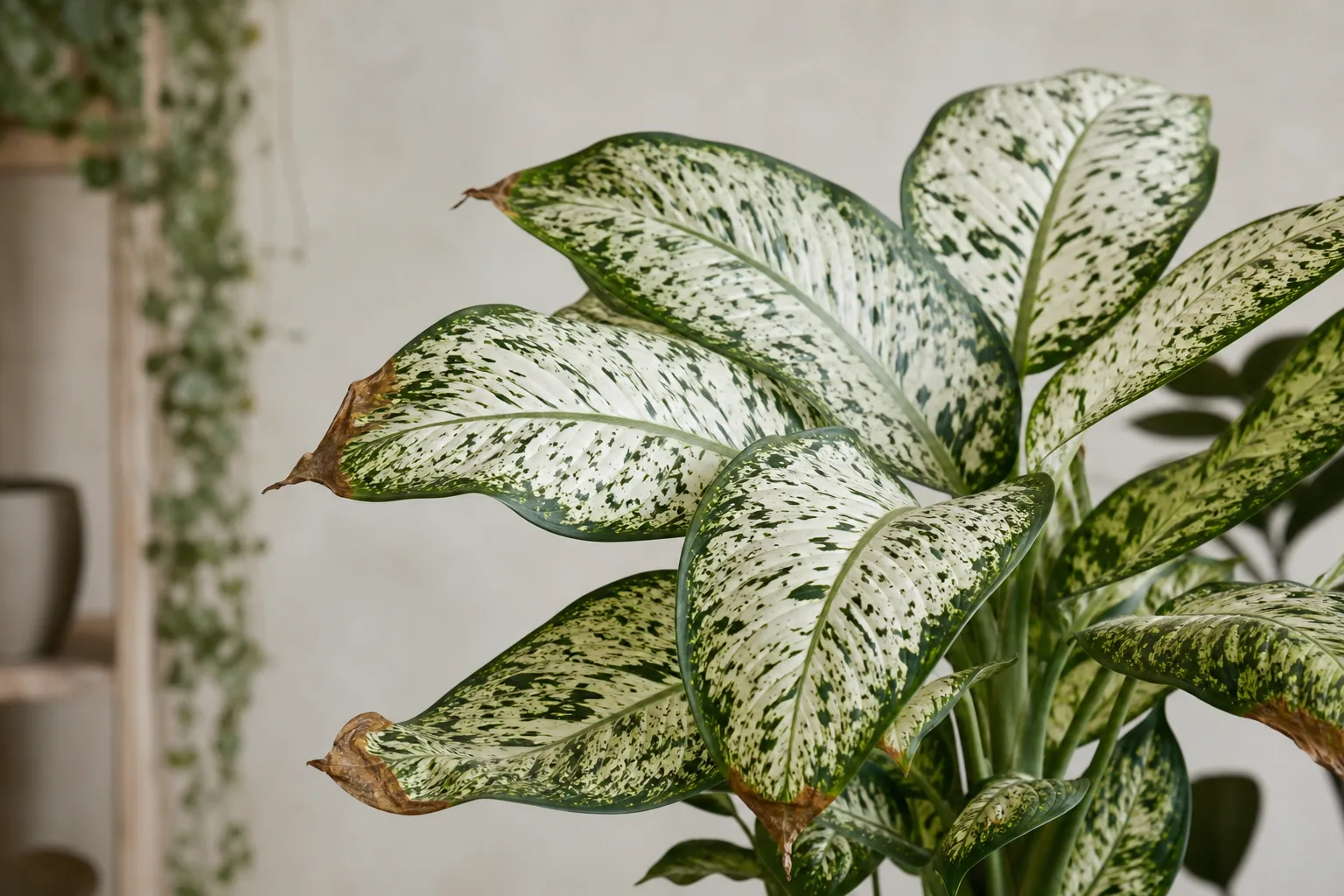
Brown Tips on Dieffenbachia Tropic Snow: Causes, Checks & Fixes
This guide covers brown tips on Dieffenbachia Tropic Snow. See also the general Brown Tips guide, watering, and light pages for this plant.
Brown Tips on Dieffenbachia Tropic Snow: Causes, Checks & Fixes
Quick answer
Dieffenbachia Tropic Snow (Dieffenbachia amoena ‘Tropic Snow’) is the bold, architectural dumb cane of the genus: tall canes that can reach 4 to 6 feet indoors, broadly ovate leaves that unfurl creamy white and slowly reveal lime speckles and a deep green margin, and a thick stem up to 6 cm across that holds water through dry spells. The species itself is a Caribbean-to-South-American tropical understory plant in the Araceae family. Every cut surface bleeds sap loaded with calcium oxalate raphides that burn skin and oral tissue - relevant here because trimming a damaged tip means handling sap that can hurt you and your pets.
On Tropic Snow, that morphology dictates the diagnosis: tips dry first because the leaves are wide and the cream mottling has less chlorophyll than the surrounding green margin, fluoride and salts accumulate faster because the cultivar keeps pushing new growth in good light, and a heavy floor pot hides root stress that a smaller cultivar would show through pot weight within a day.
First step: lift the pot, feel its weight, and probe the top 3 to 5 cm of mix at the pot edge. If the mix is still damp at that depth, do not water - brown tips on a Tropic Snow that is already wet usually means root stress, not thirst. If the pot is light and the mix is dry and the cane sits within a meter of a vent or AC supply register, move it before you do anything else. That single sequence - weight first, depth probe second, placement third - is the fastest way to stop more tips from crisping.
For shared symptom mechanics that apply to any foliage plant, see the genus brown tips hub. The rest of this page is about Tropic Snow specifically - the cultivar whose cane height, leaf width, and growth rate change how you read every tan tip you see.
What brown tips look like on Dieffenbachia Tropic Snow
Tropic Snow builds a tall cane topped by a loose crown of large, broadly ovate leaves that emerge creamy white, develop lime speckles, and feather into a deep green margin. On a mature plant each leaf can stretch wider than a dinner plate, with the cream center occupying a much smaller share of the blade than the cream-and-green centers on compact cultivars.
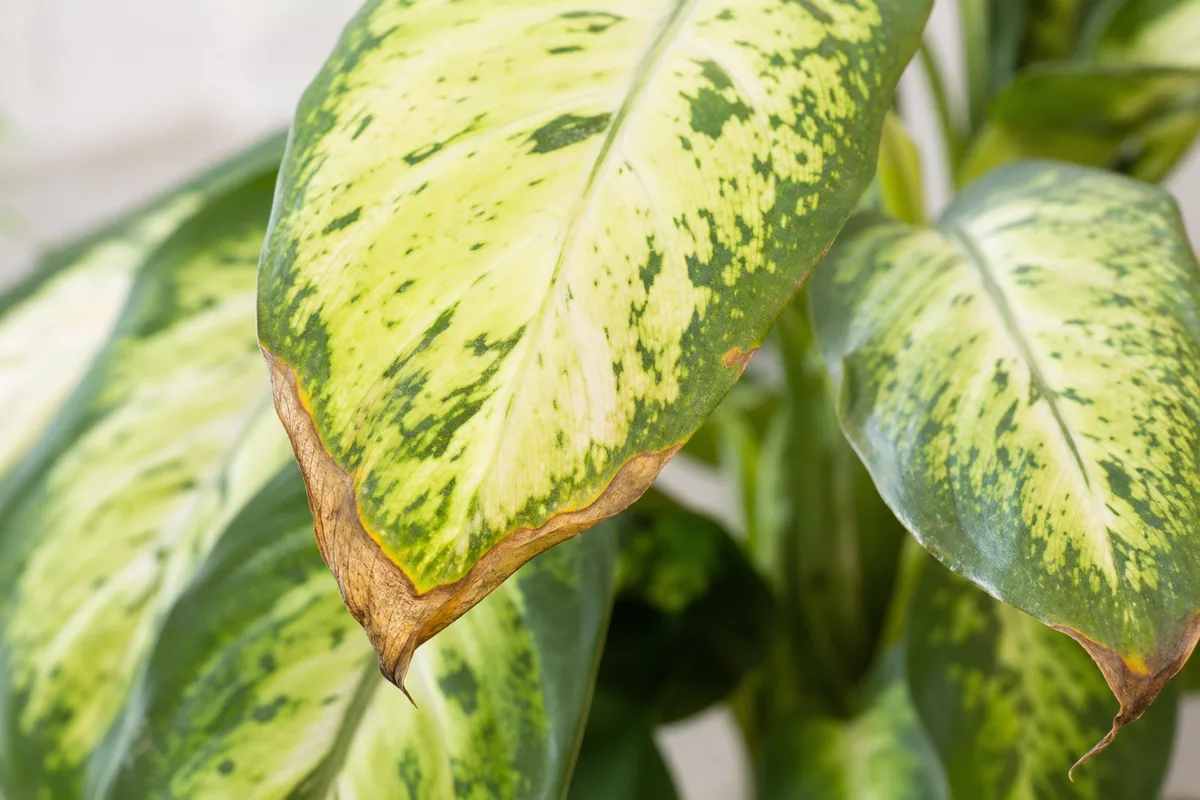
Brown Tips symptoms on Dieffenbachia Tropic Snow - compare with healthy tissue on the same plant.
The patterns you will see:
- Vent-draft tip burn on outer crown leaves - The outermost leaves, often the largest, develop dry tan tips that feel papery, while the smaller center leaves stay clean. This shows up first on the leaves facing the draft because Tropic Snow’s crown is open and air moves through it. A pot on a windowsill above a radiator, beside a floor vent, or in an AC stream is the usual setup on a tall cane that nobody can easily move.
- Fluoride or chloramine tip burn on new leaves - The newest leaf unfurls with a crisp tan tip and a narrow yellow band between dead and live tissue, often within days. Tropic Snow pushes new leaves through warm months on a steady rhythm, so the damage can march up the cane if you keep watering with municipal tap water that contains fluoride or chloramine. White crust on the soil rim supports the diagnosis.
- Deep-pot overwatering tip stress - Tips crisp while the pot still feels heavy days after watering and lower leaves yellow, soften, or drop. This pattern is more common on Tropic Snow than on smaller dumb canes because the tall cultivar is often sold in oversized floor pots that hold more mix than the root ball can dry in a normal indoor cycle. The mix at the bottom of a 25 cm pot stays saturated long after the top has dried.
- Direct sun scorch on cream mottling - Tropic Snow prefers bright indirect light and tolerates lower light than many variegated houseplants, but pale cream and white mottling contains far less chlorophyll than the green margin and bleaches in direct rays. The result is papery bleached patches on the sun-facing half of the leaf, not uniform tan tips on every leaf edge.
- Salt buildup from feeding or hard water - White crust on the soil surface or pot rim, edge burn on multiple leaves at once, and damage that mimics fluoride but follows a recent feeding or repot into a starter-charged mix. Tropic Snow feeds lightly through spring and summer; heavy feeding through the slow months overloads a root zone that cannot use the salts yet.
- Cosmetic aging on the lowest cane - One or two oldest leaves at the base of a tall cane may show minor tan tips over months while the crown stays vigorous and new leaves emerge clean. Lower leaves naturally drop on a cane that has stretched toward the light, and a little tip browning on the bottom leaves alone is rarely urgent.
Worry when browning hits the newest center growth, spreads down the margin on most leaves, or pairs with a wet, sour-smelling mix. A single tan tip on a leaf that sits in the path of a winter vent is cosmetic.
Why Dieffenbachia Tropic Snow gets brown tips
Dry indoor air hits the largest leaves first
Tropic Snow carries a bigger leaf surface than compact cultivars, and that larger surface exposes more margin to dry winter air. Leaf tips are the farthest point from the roots, so they lose moisture first when hot or cold airflow pulls water from the margin faster than the cane can resupply it. The same low humidity that a smaller, slower cultivar tolerates will crisp a Tropic Snow margin within weeks because the cultivar pushes new leaves faster and grows more leaf area per cane.
Aim for 50 to 60 percent relative humidity in the room; below about 30 percent near a running heater, you can watch the outer crown leaves crisp overnight. Grouping with other tropicals helps; a humidifier is more reliable than misting, because water sitting on the broad leaves in stagnant indoor air encourages bacterial leaf spot. For humidity-specific recovery, see the low humidity guide when RH stays below about 30 percent at leaf height.
Fluoride, chloramine, and salts in tap water build up faster
Dieffenbachia is among the aroids most sensitive to fluoride in municipal tap water. Fluoride accumulates in leaf tissue over months of regular watering and shows up as a clean brown tip with a narrow yellow halo. Many cities have also replaced chlorine with chloramine, which does not dissipate overnight the way chlorine does, so leaving tap water out no longer solves the problem.
This damage shows up faster on Tropic Snow than on slower cultivars simply because the plant produces more leaf area in the same period. Each new leaf is another opportunity for fluoride to land at the tip. Filtered, distilled, or rainwater removes the variable in one move.
Salt buildup from fertilizer follows the same logic: Tropic Snow is a moderate feeder during active growth and cannot use salts during the cooler months, so anything applied in fall and winter concentrates in the root zone and burns tips. Flushing the pot with plain water two to three times the pot volume once during the growing season leaches the surplus before it accumulates.
A deep floor pot hides root stress
A mature Tropic Snow in a 20 to 25 cm floor pot has a deep mix column that dries unevenly. The top 3 to 5 cm may be bone dry while the bottom third is still wet, because dumb cane stems store water internally and the canopy looks fine even while roots sit in saturated mix. When roots lose function in that saturated zone, the plant cannot move water to the leaf margin even though the pot is wet - so tips crisp while the soil is damp.
This pattern overlaps with the yellow lower leaves branch because the same root failure causes both symptoms. Owners who see brown tips and water more deepen the exact problem. Lift the pot before you water: a heavy pot days after watering confirms the issue is saturation, not thirst. For full root-zone recovery, see the overwatering guide or the watering guide for a top-cm dry rhythm.
Fast growth on bright light exposes pale mottling
Tropic Snow tolerates lower light than many variegated cultivars, but it grows faster in bright filtered light, and that faster growth produces more leaf area for sun, fluoride, and salt to damage. Cream mottling on new leaves is more exposed than the green margin because pale tissue holds less chlorophyll, so it bleaches and crisps faster under any harsh condition. Move the plant out of direct rays before chasing water-quality or humidity fixes, and look at the new leaves one at a time - each one tells you whether the most recent watering, feeding, or weather change helped or hurt.
Cane height changes how you read the same symptom
A tall cane exposes the lower leaves to whatever sits at floor level - heating supply registers, drafts under windows, cold air pooling off a sliding door - while the upper leaves sit in warmer, brighter air. Tip browning concentrated on the lowest leaves while the upper crown stays clean points to airflow or temperature at floor level, not the usual humidity problem. Rotating the cane so the draft side faces the room can help without relocating the plant, and removing the lowest damaged leaves once you have fixed the cause makes future patterns easier to read on a tall specimen.
Lookalike symptoms to rule out on Tropic Snow
| Pattern on Tropic Snow | Likely cause | Key check |
|---|---|---|
| Dry tan tips, firm leaves, normal pot weight | Dry air or fluoride | Vent placement vs. new-leaf tipping |
| Tips plus yellow lower leaves, heavy wet pot | Overwatering / root stress | Overwatering guide |
| Bleached papery patches on sun-facing cream | Direct sun scorch | Window exposure, not uniform tips |
| White crust on soil plus edge burn | Salt / fertilizer buildup | Feeding history; flush needed |
| Stippling, webbing, bronzing from edges | Spider mites | Spider mites guide |
| Soft brown patches | Fungal or bacterial leaf spot | Wet mushy tissue, not dry papery tips |
| Yellow lower leaves only, tips clean | Natural aging or overwatering branch | Yellow leaves guide |
When tips are dry and papery, soil moisture plus pot weight tells you which column fits.
How to confirm the cause
Walk through these in order before stacking treatments:
- Which leaves are affected - Old outer leaves only with new leaves clean usually points to dry air or one missed watering. Newest leaves tipping within days usually points to fluoride, chloramine, or fertilizer salts. Most leaves affected with a wet pot usually points to root stress.
- Pot weight and top 3 to 5 cm of mix - Lift the pot. A heavy pot days after watering confirms slow dry-down in a deep mix column. A light pot with dry mix at that depth means the plant is actually thirsty.
- Placement and airflow - Is the pot above a radiator, beside a floor vent, or in the path of a winter AC supply stream? Cold draft from a window at night on a tall cane? Floor-level drafts hit the lowest leaves of a Tropic Snow before the upper crown.
- Soil surface and pot rim - White crust or gritty deposits suggest salt buildup from fertilizer or hard water. The crust tends to form at the rim first on a deep pot.
- Water source - Months of untreated municipal tap water with recurring new-leaf tip burn supports fluoride or chloramine sensitivity. Filtered water that resolved the problem on a previous plant is a strong hint.
- Light exposure - Direct sun on cream mottling? Or very low light on a wet mix? Both create distinct stress patterns but the latter usually pairs with yellow lower leaves.
- Root spot-check (only if wet soil and spreading margin browning) - Slide the plant partway out of the pot. Firm pale roots support a dry-down fix. Mushy brown roots confirm rot and need trimming before recovery - escalate to the root rot guide.
The first fix to try on Dieffenbachia Tropic Snow
Lift the pot, feel its weight, and slide your finger 3 to 5 cm into the mix at the pot edge - then move the cane off any heating vent or AC supply register.
That single sequence handles the two most common mistakes: watering a Tropic Snow that is already wet in the bottom of a deep floor pot, or leaving a tall cane in airflow that keeps pulling moisture from the largest leaves. If the deep layer is still damp, hold the watering can and start checking placement and water source instead. If the deep layer is dry and the pot sits in a draft, relocation is the fastest single move.
After placement and the moisture probe, wait two weeks before stacking a repot, a heavy feeding change, or a water-source experiment unless you see salt crust or mushy roots. Tropic Snow responds to one good change at a time - the cane carries enough internal water to ride out a small adjustment.
If the roots are mushy
When a spot-check finds brown, slimy roots and sour-smelling mix with browning margins on most leaves, escalate to root-rot recovery: unpot, trim dead roots, let cut surfaces dry briefly, and repot into fresh well-draining mix. Do not water for seven to ten days after repotting, and keep the cane in bright filtered light while it recovers. That path is for confirmed rot - not for a few tan tips on one old leaf near a vent.
Step-by-step recovery
Match follow-up steps to what you confirmed:
Dry air and drafts (older tips only, clean new growth):
- Keep the cane away from radiators, supply registers, AC streams, and cold glass.
- Group with other tropicals or run a humidifier if the room stays below about 40 percent RH in winter; a humidifier delivers more sustained relief than misting.
- Watch for two consecutive new leaves emerging with clean tips before you call it fixed.
Tap-water fluoride or chloramine sensitivity (new leaves tipping):
- Switch to filtered, distilled, or rainwater for four to six weeks.
- Skip fertilizer until new growth stays clean.
- Trim old brown tips for looks if you want to, following the natural leaf curve. Wear gloves - Dieffenbachia sap irritates skin and the plant is toxic to cats and dogs if chewed.
Salt buildup (white crust, tips on multiple leaves):
- Water slowly with plain room-temperature water until it runs freely from the drainage holes - about two to three times the pot volume in one session - to leach accumulated salts.
- Let the pot drain fully and empty the saucer.
- Resume light feeding only during spring and summer active growth, not while the plant is recovering.
Overwatering (wet soil, heavy pot, limp lower leaves):
- Let the top 3 to 5 cm of mix dry fully between waterings.
- Adjust winter frequency - deep floor pots often need water every 10 to 21 days in cool months versus every 7 to 14 days in active summer growth.
- Keep drainage holes open and saucers empty so the deep mix column never sits in standing water.
Direct sun scorch:
- Shift to bright indirect light - never direct rays on cream mottling.
- Remove severely scorched leaves; new growth should show stronger variegation in correct light.
Recovery timeline on a tall Tropic Snow cane
Brown tip tissue does not turn green again; recovery is measured by new growth from the crown:
- Dry-air tip burn - New leaves often emerge clean within two to three weeks after placement improves, because Tropic Snow pushes new growth steadily when conditions are right. Old tipped leaves can stay trimmed or in place.
- Water quality or salt burn - Switching water and flushing salts may take four to eight weeks before several consecutive new leaves show clean margins on a tall cane.
- Overwatering-related tip stress - Tips stop spreading once soil oxygen returns, often within one to two dry-down cycles. New leaves emerge crisp within two to four weeks if roots are still firm.
- Advanced root rot on Dieffenbachia Tropic Snow - Recovery takes longer and may be partial. If the crown softens or new leaves keep browning after a dry-down and root trim, the plant may not be saveable.
Signs of improvement: new mottled leaves with clean tips, pot weight dropping on a normal schedule, and browning that does not spread down margins. Signs of worsening: sour smell, soft stems, tipping on every new leaf despite filtered water, or soil that never dries.
What not to do on Dieffenbachia Tropic Snow
Do not water more because tips look dry when the soil is already wet - that deepens root stress on a cane that stores water internally, and it is the most common mistake on floor-size Tropic Snow pots.
Do not mist as the only humidity fix. Brief misting evaporates within minutes and sitting water on the broad leaves can invite bacterial leaf spot; move the pot, group with other tropicals, or run a humidifier.
Do not fertilize a tipped, stressed plant to force new growth. Salt buildup from overfeeding causes the same tip burn you are trying to fix.
Do not repot on day one unless roots are mushy, salt crust is severe, or drainage has failed. Repotting a waterlogged plant into a bigger pot often makes drying slower on a deep floor specimen.
Do not trim brown tips back into green tissue. Cut along the natural leaf shape and leave a thin brown edge to avoid wounding healthy cells, and wear gloves whenever you handle cut cane, stem, or leaf tissue because Dieffenbachia sap contains calcium oxalate raphides.
Do not ignore wet soil while treating water quality. Fluoride sensitivity and overwatering overlap on this cultivar; fix saturation before stacking multiple remedies.
How to prevent brown tips on Dieffenbachia Tropic Snow
Prevention comes down to stable margins, clean water, and watering that matches how fast a deep floor pot actually dries:
- Placement first - Keep the cane off radiators, away from AC and heat supply registers, and out of direct sun on cream mottling. Tall canes are hard to move, so pick the spot before the plant gets large.
- Water on dryness and weight, not calendar - Check the top 3 to 5 cm of mix every time and lift the pot to feel weight. Summer may mean every 7 to 14 days; winter may mean every 10 to 21 days in a deep floor pot.
- Use appropriate water - Filtered or rainwater if new leaves repeatedly tip; most municipal water is fine when tips stay clean on new growth.
- Feed lightly - Balanced fertilizer during spring and summer only; skip feeding in fall and winter on this slow-finishing cultivar.
- Flush salts occasionally - One thorough plain-water flush during active growth if you feed regularly, at two to three times the pot volume.
- Remove spent lower leaves promptly - Makes new tip problems easier to spot on a tall cane and keeps airflow through the crown healthy.
When to worry
Treat brown tips as urgent when:
- Browning spreads from tips down most leaf margins on many leaves at once.
- Soil smells sour or stems feel soft at the soil line while tips crisp.
- New center growth tips brown within days of unfurling despite filtered water and good placement - inspect roots the same week.
- The plant collapses despite moist soil - roots may be failing to absorb water.
A few tan tips on one or two oldest leaves near a winter vent on an otherwise stable Tropic Snow is cosmetic. Widespread margin browning with wet soil is not - inspect roots promptly.
Tropic Snow care cross-check
If brown tips keep returning after you adjust placement and water, compare your routine to what this cultivar actually needs:
| Checkpoint | Healthy target on Tropic Snow | Brown-tip risk when wrong |
|---|---|---|
| Airflow | Stable room air; no floor-level supply drafts | Radiators, AC supply registers, cold glass drying margins |
| Soil moisture | Top 3-5 cm dry before watering; deep mix column dries between cycles | Wet mix for days in a floor pot; roots cannot hydrate tips |
| Water quality | Clean new leaf tips over months | Hard tap water or heavy feeding burning new growth |
| Light | Bright filtered; no direct rays on cream tissue | Sun scorch on pale mottling |
| Feeding | Light; growth season only | Salt crust and recurring edge burn |
| Humidity | 40-50% workable; 50-60% ideal | Below about 30% RH with constant heat running |
| Cane height | Rotation when one side faces a draft | Lower leaves crisping while upper crown stays clean |
Fix the condition that fails this check before repotting for size, adding fertilizer, or treating for pests you have not confirmed.
Related Dieffenbachia Tropic Snow problems
- Overview - cultivar context and toxicity
- Watering - top-cm dry rhythm
- Low humidity - dry-air margin burn
- Overwatering - wet-soil lookalike
- Yellow leaves - different symptom branch
- Genus brown tips hub - general Dieffenbachia guidance if you grow multiple cultivars
When to use this page vs other Dieffenbachia Tropic Snow guides
- Dieffenbachia Tropic Snow watering guide - Use for routine moisture and weight checks before assuming brown tips is the main issue.
- Dieffenbachia Tropic Snow problems hub - Browse all common issues on this species.
- Low humidity on Dieffenbachia Tropic Snow - Different entry point when symptoms overlap with brown tips and RH stays low.
- Underwatering on Dieffenbachia Tropic Snow - Different entry point when symptoms overlap with brown tips.
- Overwatering on Dieffenbachia Tropic Snow - Different entry point when symptoms overlap with brown tips.
Related Dieffenbachia Tropic Snow guides
- Dieffenbachia Tropic Snow overview
- Dieffenbachia Tropic Snow watering
- Dieffenbachia Tropic Snow light
- Dieffenbachia Tropic Snow soil
- Low humidity on Dieffenbachia Tropic Snow
- Underwatering on Dieffenbachia Tropic Snow
- Overwatering on Dieffenbachia Tropic Snow
- Yellow leaves on Dieffenbachia Tropic Snow
- Dieffenbachia Tropic Snow problems