Low Humidity on Dieffenbachia Tropic Snow: Causes, Checks &
Quick answer
Dieffenbachia Tropic Snow prefers 50–70% relative humidity; winter heating below ~30% RH causes crisp leaf margins, slow new-leaf unfurling, and spider mite risk. First step: measure RH with a hygrometer at leaf height-if readings stay low, move the pot off heating vents and run a small humidifier nearby.
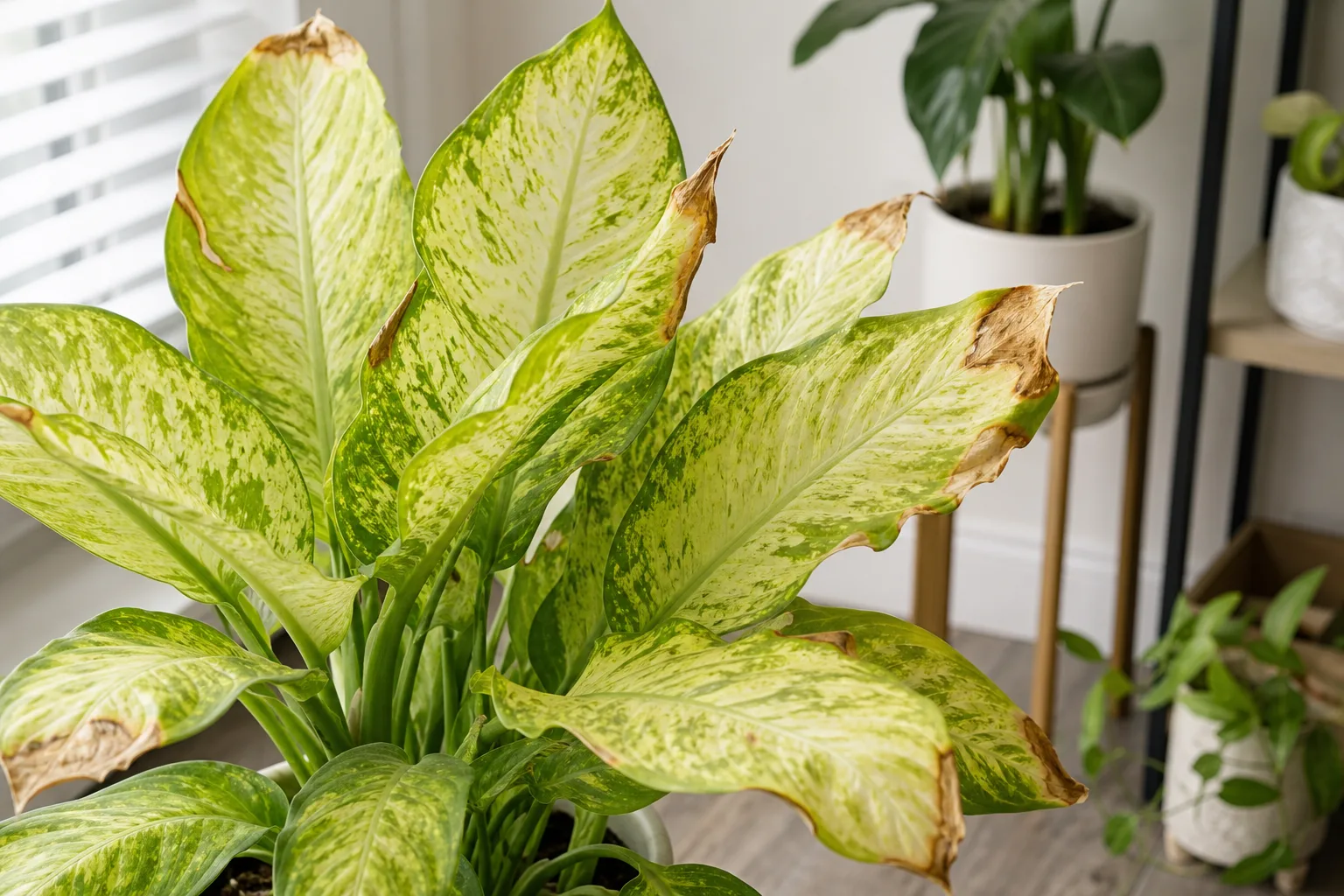
Low Humidity on Dieffenbachia Tropic Snow: Causes, Checks & Fixes
This guide covers low humidity on Dieffenbachia Tropic Snow. See also the general Low Humidity guide, watering, and light pages for this plant.
Low Humidity on Dieffenbachia Tropic Snow: Causes, Checks & Fixes
Quick answer
Dieffenbachia ‘Tropic Snow’ has wide-spreading, dark green leaves blotched in creamy white along the veins-a large leaf surface that loses moisture faster than compact cultivars when indoor air dries out. The plant prefers relatively high humidity and does best around 50 to 70% relative humidity for clean edges and steady new growth. Many homes hold 40 to 50% during active months, which is workable when watering and light match the plant’s needs. Humidity levels are low inside during winter months, and heating can push RH below 30%-when brown leaf margins, slow new-leaf opening, and spider mites appear on large-leaved aroids like Tropic Snow.
First step: place a hygrometer at leaf height near the plant and read the RH for several days. If winter readings stay under 30–35%, move the pot off heating vents and run a small humidifier within a few feet before you change watering. Dry air is not fixed by more water-and extra drenching on an already moist Tropic Snow invites root rot on a cane that stores water but still needs oxygen at the roots.
What low humidity looks like on Dieffenbachia Tropic Snow
Low humidity rarely collapses a healthy Tropic Snow overnight. Symptoms build gradually, often from November through February when furnaces run and relative humidity drops sharpest.
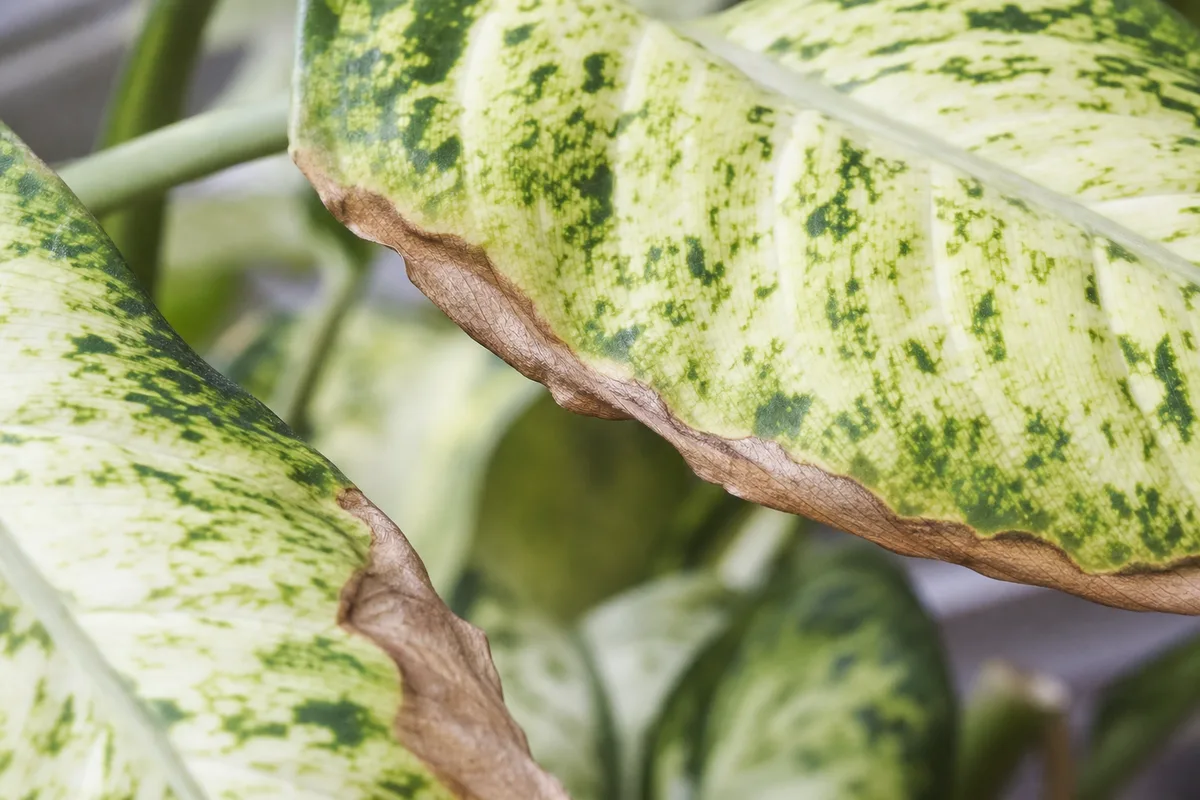
Low Humidity symptoms on Dieffenbachia Tropic Snow - compare with healthy tissue on the same plant.
Crisp leaf margins on broad mottled leaves
The hallmark pattern: brown or tan crisp edges along the entire leaf margin on otherwise firm, upright foliage while potting mix is appropriately moist-not the soft limp wilt of drought. Tropic Snow’s large variegated leaves expose more edge surface to dry air than smaller Dieffenbachia cultivars, so margins crisp before the center of the leaf shows stress. New leaves may unfurl slowly, stay partially rolled, or emerge with brown edges already present when air has been dry for weeks.
A subtle Tropic Snow-specific clue: crowded leaf canopies can trap humidity against stems while outer margins still crisp in dry room air-the plant looks lush in the center but shows papery brown edges on the leaves facing the room. That pattern is common on floor specimens with layered foliage.
Slow new-leaf unfurling
When RH stays low, the newest leaf at the crown may stall halfway open for days. The unfurling leaf looks thin or wrinkled rather than crisp and mottled. This differs from insufficient light, where new leaves are small and pale but usually still open-see the not-enough-light guide if spacing between leaves is elongating.
Spider mites as a secondary dry-air problem
Very dry, warm air near sunny glass or heating vents creates conditions where mites are common on houseplants stressed by low humidity and heat. On Tropic Snow, look for fine yellow or white stippling on leaf tops, delicate webbing at leaf bases, and bronzing that spreads from edges inward-distinct from uniform crisp margins alone. Dry indoor air increases pest pressure on foliage. If stippling or webbing appears, see the spider mites guide after you address air moisture.
Why Tropic Snow struggles in dry indoor air
Dieffenbachia species evolved in tropical understory with periodic rain and high ambient moisture. NC State Extension notes dieffenbachia prefers high humidity indoors. Tropic Snow tolerates average home conditions better than rainforest specialists, but its broad leaf area still transpires heavily in bright, warm rooms.
Environmental triggers
- Winter forced-air heating - Furnaces and radiators drop whole-room RH sharply. A hygrometer beside a heat register can read 15–20% while the center of the room shows 35%.
- Placement above or beside vents - Hot dry air blasts directly across leaf margins and accelerates transpiration even when room-average RH looks acceptable.
- Sunny glass in winter - South or west windows intensify leaf heating; transpiration outpaces what dry air can replace.
- Office HVAC - Constant air exchange and low humidity are common in commercial buildings where large floor dieffenbachias are popular.
- Cachepot humidity illusion - A decorative outer pot does not raise RH; only sustained moisture in the surrounding air helps leaf edges.
Tropic Snow is noted for tolerating lower light levels than most other dieffenbachias, which often means it sits in dimmer corners where owners forget humidity matters until winter damage appears. The overview guide covers the full humidity baseline for this cultivar.
Lookalike symptoms to rule out
| Pattern | Soil | Leaf feel | Likely cause |
|---|---|---|---|
| Crisp margins, firm leaves | Evenly moist | Thick, turgid | Low humidity - see this page |
| Limp wilt, thin leaves | Dry 3–5 cm down, light pot | Soft, drooping | Underwatering - rewet root ball |
| Brown tips only, no margin burn | Moist | Firm | Low humidity or fluoride/chlorine in tap water |
| Stippling + webbing | Either | Firm or crisp | Spider mites - often with dry air |
| Yellow lower leaves | Wet, heavy pot | Soft yellow | Overwatering - not humidity |
The single most useful pairing: crisp margins on firm leaves with moist soil point to air moisture, not root thirst. Dry soil plus limp canes point to watering regardless of humidity.
If a hygrometer reads above 45% and brown tips persist on moist soil, switch to filtered or distilled water for a month-hard tap water and fluoride cause brown tips that mimic dry air on dieffenbachia.
How to confirm low humidity is the cause
Work through these checks in order so you do not treat underwatering with a humidifier or dry air with extra water.
Hygrometer check and seasonal context
- Measure at leaf height - Place a digital hygrometer on the shelf or floor beside the canopy, not across the room. RH beside a radiator can read 15–20% while the center of the room shows 35%.
- Track for several days - One low reading after opening a door means little; sustained readings below 30–35% during heating season support a humidity diagnosis.
- Note placement - Pots above heat registers, in direct sun near glass, or in drafty hallways dry leaf tissue faster. Bright Tropic Snow transpires more than the same plant in medium light.
- Seasonal baseline - Compare winter readings to summer. A drop of 15–20 percentage points when the furnace starts explains new crisp tips that appeared without any watering change.
Leaf and growth checks
- Margin pattern - Uniform crispness along the full edge of broad leaves with firm petioles supports low humidity.
- New growth - Partially unfurled or edge-burned new leaves at the crown while older leaves look otherwise healthy point to current dry air.
- Pest inspection - Tap a suspect leaf over white paper; moving specks or webbing mean mites, not humidity alone.
- Soil moisture - Press a finger into the top 3–5 cm of mix. Moist soil with firm, crisp-margined leaves rules out drought as the primary cause.
Confirmed low humidity: sustained RH below 35% at leaf height, crisp margins on firm leaves, moist appropriate soil, no mite stippling. Suspected fluoride lookalike: adequate RH, isolated tip burn only, tips persist after humidity improves-see brown tips.
First fix for Dieffenbachia Tropic Snow
Move the pot off heating vents and run a small humidifier near the plant until RH at leaf height holds roughly 45–50% or higher.
Relocation is free and immediate: slide Tropic Snow at least 1 m (3 ft) from radiators, forced-air registers, and fireplace drafts before you buy equipment. Then place a humidifier on a stable surface within 1–2 m (3–6 ft) of the pot, aimed to raise ambient room humidity rather than blasting a single leaf. Run it during the hours you heat most-often evenings and mornings in winter-and recheck the hygrometer after 24 hours. Most rooms need several hours of runtime to move RH meaningfully.
Humidity fix ladder
Work through one step at a time so you can read the plant’s response:
- Relocate - Off vents, away from sunny glass that superheats leaves, out of dry hallway drafts.
- Pebble tray - Saucer filled with pebbles and water, pot elevated above the water line so roots never sit in standing water. MOBOT recommends placing pots on a bed of wet pebbles to increase humidity. Helpful as a supplement, not a whole-room fix when RH starts below 25%.
- Small humidifier - Most reliable fix for sustained winter dryness. Empty and rinse weekly to avoid mineral dust on mottled foliage.
- Group plants slightly - Shared transpiration raises local humidity a few points; keep airflow between crowns to avoid fungal issues on layered Tropic Snow leaves.
Target 50% minimum in the problem zone; pushing toward 60–70% helps recovery if margin burn was advanced. The overview humidity section aligns with this range.
Misting limits on large aroid leaves
Misting raises RH for minutes, not hours, and wet foliage in poor airflow can leave water spots or invite fungal issues on large dieffenbachia leaves. An occasional wipe with a damp cloth removes dust without soaking the canopy overnight. Treat misting as a minor supplement after humidifier or pebble-tray steps-not the primary fix.
Recovery timeline
Crisp margins on existing leaves do not re-plump once tissue desiccates; judge success by new growth at the crown. After RH stabilizes above ~45% for one to two weeks:
- Spreading crisp edges should stop on newly forming leaves.
- Existing damaged margins remain brown until you trim them for appearance or they age off naturally. Wear gloves when cutting dieffenbachia-sap contains needle-like raphide crystals that irritate skin and mouth tissues.
- Spider mite stippling may need separate treatment even after humidity improves-allow two to three weeks for clean new leaves if pests were present.
Mild winter margin burn on an otherwise healthy Tropic Snow often stabilizes within one growing season once air moisture and the watering rhythm stay consistent. Severe mite damage or months below 25% RH can leave sparse lower foliage until spring growth fills in.
What not to do
Do not increase watering to compensate for dry air. Tropic Snow’s cane stores water, but roots still need the usual dry-down rhythm-root rot results from overly frequent watering or soil that does not drain quickly, producing yellow lower leaves faster than crisp tips from humidity alone.
Do not fertilize a stressed plant hoping to push new growth in dry air. Feed only after humidity stabilizes and new leaves emerge cleanly.
Do not stack Dieffenbachia Tropic Snow repotting guide, heavy pruning, and humidifier setup on the same day. Make one care correction at a time so you can read the plant’s response.
Do not assume misting replaces a humidifier in a room that reads under 30% RH for days.
How to prevent low humidity next time
- Run a humidifier proactively when heating season starts-not after margins crisp.
- Keep Tropic Snow off vent paths year-round, including summer AC blowers that dry air differently but still stress leaf edges.
- Check RH monthly at leaf height with a cheap digital hygrometer; a 10-point winter drop is your early warning.
- Maintain the overview care baseline - Dieffenbachia Tropic Snow light guide, well-drained mix, and watering when the top 3–5 cm dries-so the plant tolerates the 40–50% RH many homes naturally hold.
- Inspect leaf undersides weekly in winter for early mite colonies before stippling spreads.
When to worry
Treat as urgent if stippling and webbing spread despite humidity improvements-mites need direct treatment, not just a humidifier. Soft crown tissue on wet soil is root failure, not humidity; see overwatering or root rot. Rapid widespread margin burn on multiple new leaves with RH under 25% and placement directly above a heat source needs immediate relocation before the growing point stalls.
Related Tropic Snow problems
- Overview - humidity and care baseline
- Brown tips - fluoride and salt lookalike
- Spider mites - dry-air pest vector
- Not enough light - pale small leaves vs. humidity stress
- Watering - avoid overwatering compensation
When to use this page vs other Dieffenbachia Tropic Snow guides
- Dieffenbachia Tropic Snow watering guide - Use for routine moisture checks before assuming low humidity is the main issue.
- Dieffenbachia Tropic Snow problems hub - Browse all 16 common issues on this species.
- Brown Tips on Dieffenbachia Tropic Snow - Different entry point when symptoms overlap with low humidity.