Yellow Leaves on Coleus: Causes, Checks & Fixes
Quick answer
Yellow leaves on Coleus are a multi-cause triage problem-not one diagnosis. First step: lift the pot and check whether mix is heavy and wet or light and dry, then note whether colour is fading plant-wide or only on the lowest leaves. For limp leaves on soggy soil, start with the overwatering guide instead of this page.
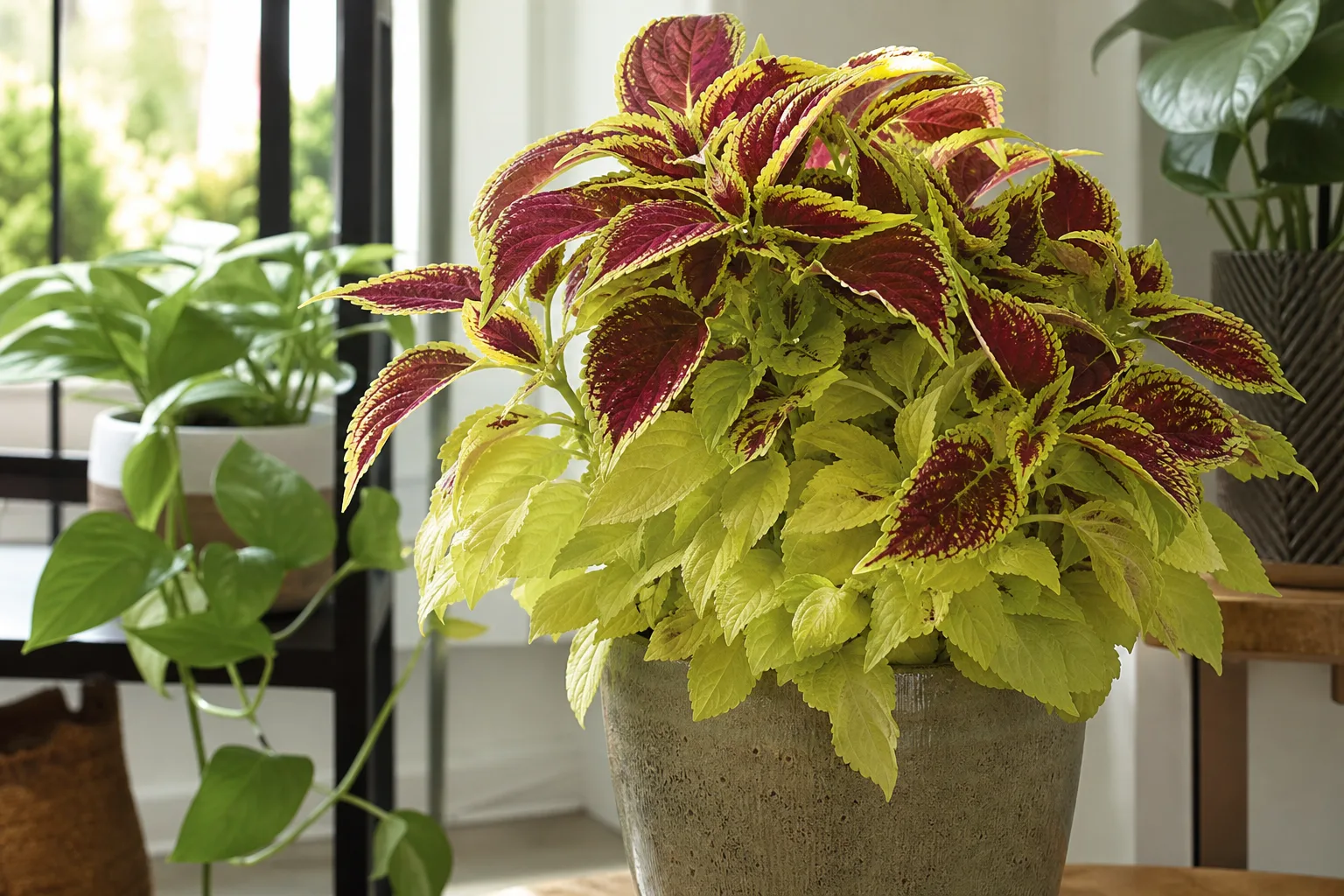
Yellow Leaves on Coleus: Causes, Checks & Fixes
This guide covers yellow leaves on Coleus. See also the general Yellow Leaves guide, watering, and light pages for this plant.
Yellow Leaves on Coleus: Causes, Checks & Fixes
Quick answer
Yellow leaves on Coleus (Plectranthus scutellarioides) are a symptom triage page, not a single diagnosis. This fast-growing foliage plant shows stress through colour loss and lower-leaf yellowing before crisp brown edges appear on every cause. The usual branches are wet soil stressing roots, too little light washing out colour, cold drafts, or normal aging on lower stems-not a mysterious nutrient deficiency.
Scope note: This page covers multi-cause yellowing triage-pattern matching, confirmation checks, and cause-matched first fixes across water, light, cold, and senescence. For the classic limp leaves on heavy wet soil fork (coleus wilts dramatically whether roots are too wet or too dry), start with overwatering on Coleus first. For pale stretch without true yellow, see not enough light. For species context and baseline care, see the coleus overview.
First step: lift the pot and check the top 2 cm of soil. Heavy wet mix with widespread yellowing points to overwatering. Light dry mix with limp faded leaves points to underwatering. Yellow only on the lowest leaves with vivid new tips often means normal senescence.
What pattern of yellowing are you seeing?
Match your plant to a row before changing care:
| Pattern | Pot / soil | Leaf appearance | Likely cause | First action |
|---|---|---|---|---|
| Lower leaves yellow, heavy pot | Wet, cool mix | Colour fades; may wilt on wet soil | Overwatering / root stress | Stop watering-see overwatering |
| Widespread pale yellow-green | Normal moisture | Leggy stems; washed-out colour | Low light | Move brighter-see not enough light |
| Lower yellow, light pot | Dry 2 cm down | Limp before yellowing | Underwatering | Thorough soak-see underwatering |
| Yellow after cold exposure | Variable | Soft leaves near draft or window glass | Cold stress | Move off vents; warm above ~55°F (13°C) |
| One or two bottom leaves only | Appropriate moisture | New tips colourful and firm | Normal aging | Remove leaf when fully yellow; monitor |
| Yellow with stem mush | Wet, sour smell | Base darkening | Root rot | Unpot-see root rot |
Coleus is grown for colourful foliage that needs bright filtered light and consistently moist-but not soggy-soil. Yellowing is often the first signal that one of those requirements has slipped.
Photo check (what to compare): Shade-washed yellowing looks pale yellow-green across the whole plant with longer gaps between leaves-soil may feel normal. Overwatered lower yellow looks dull on bottom leaves only with a heavy wet pot and sometimes wilt on damp mix. Cold-draft yellow often clusters on leaves touching window glass or above a vent after a temperature drop.
What yellow leaves look like on Coleus
Overwatering yellowing
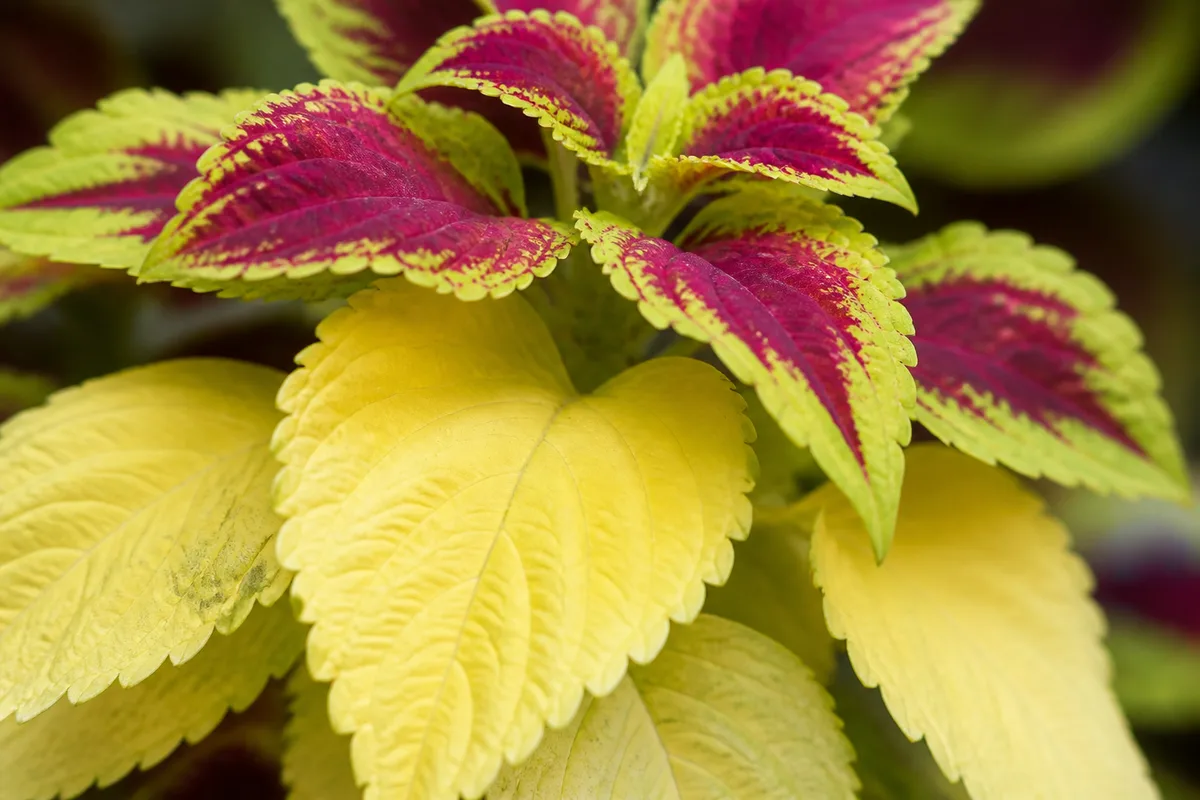
Yellow Leaves symptoms on Coleus - compare with healthy tissue on the same plant.
- Lower leaves yellow first, often before crisping
- Colour fades across multiple leaves-not just one bottom leaf
- Wilt on wet soil-the coleus fork where limp leaves mean stop watering, not more
- Fungus gnats near constantly damp surface
- Growth slows; new leaves small or distorted
Low-light yellowing
- Pale yellow-green or washed-out colour across the plant
- Leggy internodes with smaller new leaves
- Soil moisture may be correct-brightness is the limiter
- Plants grown in too much shade may become leggy and lose colour intensity
Underwatering yellowing
- Follows dramatic wilt on light dry pot
- Crispy brown edges may develop after drought cycles
- Lower leaves yellow and drop as plant sheds tissue
- Perks after thorough soak if roots are healthy
Cold stress
Cold yellowing on Coleus is often misread as a watering problem because the plant still looks limp. The difference is timing and placement: yellow leaves appear after a cold night, an AC blast, or winter contact with single-pane glass-not after you skipped a watering on a light pot.
Typical cold-stress signs:
- Yellowing or dulling on leaves nearest a cold window, AC vent, or unheated porch
- Soft limp tissue that does not perk after a normal soak
- Lower leaf drop accelerating when room temps hold below about 55°F (13°C)-The Old Farmer’s Almanac notes coleus languishes below 55°F and leaves fall off in colder air
- Growth stalls completely; no new colourful tips for weeks in a cool room
- University of Minnesota Extension warns coleus is very cold sensitive and among the first plants affected by cold overnight lows
Indoor cold scenarios that yellow Coleus:
- Winter windowsill above a radiator: warm dry air by day, cold glass at night
- Coleus brought indoors from a porch without acclimation
- Desk plant under a constant AC stream in summer
- Overwintered cutting on a shelf that drops below comfortable room temp
Cold vs. overwatering fork: Overwatered coleus has a heavy wet pot and often fungus gnats. Cold-stressed coleus may have appropriate soil moisture but no new growth until warmth returns. If the pot is light-to-normal weight, soil dries on schedule, and yellowing followed a cold spell-warmth and brighter light come before another drink.
Normal lower-leaf aging
- One or two oldest lower leaves yellow while stem tips push vivid new growth
- Firm stems; appropriate soil moisture; no sour smell
Damaged yellow tissue does not regain full pigment. Judge recovery by colourful new leaves at stem tips.
Case snapshots (what owners usually describe)
Case A - Shade fade: A coleus on a bookshelf six feet from a north window loses colour plant-wide over a month. Internodes stretch; soil feels normal; no wilt on wet mix. Action: move within 1–3 feet of a brighter window or add a grow light-see not enough light.
Case B - Winter wet + cold stack: An overwintered coleus on a windowsill gets watered every Monday like summer. Lower leaves soft-yellow over two weeks; pot stays heavy; room feels cool. Action: stop scheduled watering until top 2 cm dry, move off cold glass, brighten placement-then open overwatering if wilt persists on damp mix.
These snapshots are diagnostic sketches-your plant may combine patterns. Mixed stress is common; use the table and checks below before stacking fixes.
Why Coleus gets yellow leaves
Overwatering in cool dim rooms. Coleus needs moist soil, but winter calendar watering on slow-drying mix yellows lower leaves while roots decline. Clemson HGIC links poorly drained soils and excessive watering to stunted growth with muddy brown leaves. UMN Extension recommends watering when the top 1 to 2 inches of soil are dry-a check that prevents chronic wetness.
Insufficient light. Coleus colour is sunlight-dependent indoors. Dim corners produce pale yellow-green foliage even with perfect watering. NC State Extension notes full shade may lead to leggy growth on coleus; as a houseplant it requires bright light.
Drought cycles. Container coleus is more susceptible to drought in warm bright windows. Repeated dry spells yellow and drop lower leaves.
Temperature swings. Coleus is a tropical tender perennial-winter hardy only in USDA Zones 10–11. Indoors, sustained cool air yellows and drops leaves faster than many houseplants because metabolism stalls and roots move water sluggishly.
Natural senescence. Fast growth means older lower leaves age out-normal on mature plants.
Stacked stress: dim room + wet mix + cold draft
Picture a coleus on a winter windowsill: short daylight, cold glass at night, same weekly watering as summer. Growth slows, mix stays damp, lower leaves soft-yellow over two weeks, and the plant may wilt despite wet soil-mimicking overwatering when light and cold are co-drivers.
Fix order: stop watering until top 2 cm dries, move off cold glass and vent blast, then place in the brightest filtered spot available. Open overwatering only if smell, mushy stems, or persistent wilt on wet mix appear after dry-down.
How to confirm the cause
- Pot weight and soil probe - Wet heavy pot = overwatering branch. Light dry pot = underwatering branch.
- Light assessment - Leggy growth and washed-out colour with correct moisture = move brighter.
- Pattern scope - Widespread yellow on wet soil vs. one bottom leaf only.
- Temperature check - Thermometer near the pot; recent cold exposure near windows, vents, or after porch bring-in?
- Stem and root inspection - Soft brown roots on wet mix = root rot; firm roots on dry mix = drought.
First fix for Coleus
Match action to confirmed cause-one fix first.
Overwatering: Stop watering until top 2 cm dry. See overwatering guide.
Underwatering: Thorough soak at base until drainage; empty saucer. See underwatering guide.
Low light: Move to bright indirect light per our light guide. No fertilizer substitute.
Cold stress: Move away from drafts and cold window contact; target above ~55°F (13°C) at night with brighter filtered light so the plant can resume growth. Do not soak cold-stalled coleus on already-moist mix-wait for normal dry-down rhythm.
Normal aging: Remove yellow lower leaf; continue current care.
Recovery timeline
- Overwatering: Spreading stops within 1–2 weeks after dry-down; new colourful leaves in 2–4 weeks
- Underwatering: Perk within hours of soak; colour returns on surviving leaves over days
- Low light: New growth vivid within 2–4 weeks after brighter placement
- Cold: Halt new damage within days once warmth stabilizes; replace badly damaged leaves via new growth over 2–4 weeks
- Normal aging: No spread beyond occasional bottom leaves
Worsening signs: yellowing climbs weekly on wet soil, stems soften at the base, or new tips stay pale after light and watering corrections.
What not to do
- Fertilize yellow stressed plants without diagnosis
- Water wilted coleus on wet soil-the classic misread; see overwatering
- Keep in dim corners hoping colour returns without more light
- Remove all yellow leaves at once on stressed plants
- Blame nutrient deficiency before checking moisture, light, and temperature
How to prevent yellow leaves next time
- Bright indirect light per light guide
- Water when top 1–2 cm dry per watering guide
- Protect from cold drafts and AC blasts; use a thermometer near overwintered pots
- Well-draining mix in appropriately sized pots per soil guide
- Expect occasional lower-leaf yellowing on mature stems
- For baseline species care, see coleus overview
When to worry
Escalate when yellowing spreads weekly on wet soil, stems soften at the base, or new tips stay pale after light and watering corrections. Open root rot if sour smell and mushy stems accompany yellow collapse.
Related Coleus problem guides
- Overwatering - wet-soil wilt paradox and dry-down protocol
- Underwatering - dry-pot yellow edges and recovery soak
- Not enough light - pale stretch and washed-out colour
- Root rot - mushy roots and salvage cuts
- Wilting and drooping leaves - posture changes without full yellowing
- Slow growth - cold and light stalls
- Coleus watering - moisture rhythm hub
Conclusion
Yellow leaves on Coleus reward systematic triage: pattern first, then pot weight and soil moisture, then one targeted fix. Single lower-leaf yellowing on vivid new tips is often benign; widespread pale yellow-green in dim rooms needs brighter light; multi-leaf soft yellowing on heavy wet mix is a pause-water moment routed to the overwatering guide. Judge recovery by new colourful stem tips-not old foliage turning green again.