Best Soil for Coleus: Mix, Drainage & Containers
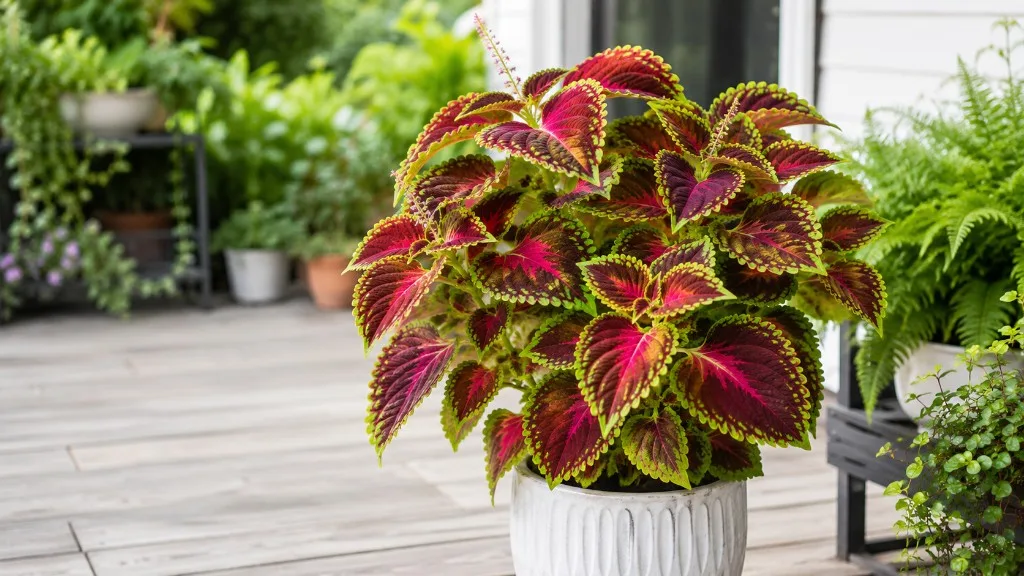
Best Soil for Coleus: Mix, Drainage & Containers
Best Soil for Coleus: Mix, Drainage & Containers
Quick Answer
The best coleus soil is a rich, moist, well-draining blend - roughly 50% peat- or coir-based potting soil, 30% compost or worm castings, and 20% perlite by volume. The mix should feel light and crumbly when moist, drain within a minute after watering, and stay evenly damp - not wet or bone dry - between drinks. Target pH 6.0 to 7.0 with high organic matter (University of Minnesota Extension). Always use a pot with a drainage hole for containers, and refresh the medium every 6 to 12 months on fast-growing plants - often before leaf color dulls, not only when wilting appears. For full repot steps, see the coleus repotting guide; this page focuses on what goes in the pot and how to tune it.
By sai-ananth · Reviewed by LeafyPixels Review Board · Updated 2026-06-15
Why Soil Drives Coleus Color Before Wilting Shows
Coleus is grown for painted foliage - burgundy veins, lime margins, sunset oranges - and most troubleshooting starts with light or watering. Those matter, but the root zone often fails first. On a fast-growing coleus in a small summer pot, a dense or exhausted mix can dull new leaf color and shrink leaf size days before the plant wilts dramatically. Growers who wait for obvious droop have already lost a growth cycle.
Soil controls how oxygen reaches fibrous roots, how minerals accumulate after fertilizer feeds, and how quickly a pot dries on a hot balcony versus a dim indoor shelf. Clemson HGIC describes the wet-feet pattern clearly: stunted growth, muddy brown leaves, and scorched margins when drainage fails. On coleus, that muddy dulling can look like too much sun until you lift the pot and find saturated mix at depth. A well-built soil system makes every other care signal easier to read - and ties directly to the branching and pinching rhythm covered in the coleus overview.
What Plectranthus scutellarioides Needs From Its Root Zone
Plectranthus scutellarioides (formerly Coleus scutellarioides) is a tender perennial in the Lamiaceae family, native to tropical Asia, where it grows in warm, humid, partly shaded conditions (Missouri Botanical Garden). In cultivation it reaches roughly 30 to 90 cm tall with soft, fibrous roots that root easily from cuttings - a structural clue that the medium should be open and moisture-retentive, not heavy clay or pure grit.
Missouri Botanical Garden recommends moist, organically rich, loose soils in part shade, noting that soils must not be allowed to dry out completely. NC State Extension describes the same profile for containers: rich, loose, well-worked medium. The functional target indoors and on patios is consistently moist, well-aerated soil that dries down gradually at the surface while staying lightly damp at depth - damp like a wrung-out sponge, not saturated like a sealed wet towel.
Fast Fibrous Roots and One-Season Soil Exhaustion
Coleus grows rapidly in warm weather - Clemson HGIC notes plants can reach full summer size quickly - and that pace burns through potting structure faster than slow houseplants like snake plants. A 15 cm plastic pot that drains well in May can hold water unevenly by August as peat compacts and roots fill the volume. Dwarf Wizard-series types may exhaust a small pot in one active season; upright 3-foot cultivars can outgrow soil structure even faster.
Plan to refresh or repot every 6 to 12 months on vigorous plants, or sooner if new leaves emerge smaller or less vivid despite good light and watering. Pinching encourages bushiness, but pinching cannot compensate for a root zone that has collapsed into an anaerobic block - refresh the mix when color dulls, not only when stems flop.
Container vs. Garden Bed: Different Soil Rules
Coleus performs well in both garden beds and containers - but the soil rules differ because physics changes when you remove native ground.
| Setting | Extension guidance | Practical mix approach |
|---|---|---|
| In-ground summer bed | Well-drained site; pH 6–7; high organic matter; amend heavy soil with compost or sand (UMN Extension) | Work compost into the planting hole; avoid low spots that collect rainwater; mulch surface only to slow evaporation |
| Container / patio pot | Very well-drained mix required; containers more susceptible to drought and need frequent checks (Clemson HGIC) | DIY 50/30/20 blend below; never use unamended garden soil in a pot |
| Indoor winter pot | Same moisture principle; slower evaporation | Increase perlite slightly if mix stays wet more than 7–10 days |
In-Ground Summer Beds vs. Patio Pots
In a garden bed, drainage depends on site grading and native soil texture. UMN Extension advises incorporating compost or sand into heavy soils before planting once soil temperatures exceed 60 °F (16 °C). Water when the top 1 to 2 inches dry - typically every 3 to 5 days depending on weather - and space plants about 30 cm (12 inches) apart by cultivar.
In a container, you supply the entire root environment. Clemson HGIC requires a very well-drained soil mix and warns that container coleus is more susceptible to drought - so the blend must retain moisture and exit excess water within minutes. That is why the 50/30/20 container recipe below is the default, while in-ground culture leans on site amendment rather than perlite-heavy blends.
Signs Your Current Coleus Soil Is Wrong
Soil failure on coleus often shows up before roots are visibly rotten. Water beads on the surface for minutes, then channels down the pot wall - usually hydrophobic peat after hard drying. The pot stays heavy for days while the top inch looks merely damp, common with dense nursery plugs in plastic. New leaves emerge smaller or paler than older growth despite adequate light and feeding. A sour smell from the drainage hole signals anaerobic conditions.
Clemson HGIC describes the wet-feet signature - stunted growth, muddy brown leaves, scorched margins - which overlaps with overwatering symptoms on the watering guide, but the fix starts with mix texture and pot size, not a calendar change. If you adjust water and light and the same pattern returns within two weeks, inspect the mix before stacking fertilizer and relocation.
Worked scenario: A coleus arrives in a dense peat nursery plug inside a 12 cm plastic pot in late spring. Color is vivid for three weeks. By midsummer, lower leaves muddy and new growth stays small; the top inch dries in a day but the pot still feels heavy. Diagnosis: collapsed, water-retentive plug with insufficient perlite. Fix: repot into 45% base mix, 25% compost, 30% perlite, same or one-size-larger pot with a clear drainage hole, hold fertilizer three weeks, expect brighter new leaves within 2 to 4 weeks if roots are still firm and white.
Best Soil Mix for Coleus
The best soil for coleus is a rich, moist, well-draining potting mix with enough coarse amendment to keep fibrous roots breathing. You are aiming for a medium that feels light and crumbly when moist. Squeeze a handful lightly: it should hold shape briefly and fall apart. A tight mud ball means more perlite; instant crumble with next-day wilt means too coarse or too small a pot for summer transpiration.
The Quick-Answer Recipe
| Ingredient | Proportion | Role |
|---|---|---|
| Quality peat- or coir-based potting soil | 50% | Organic base, moisture, starter nutrients |
| Well-aged compost or worm castings | 30% | Fertility, microbial activity, moisture buffering |
| Perlite or coarse cocopeat | 20% | Drainage channels, air space |
Tuning fractions: Plastic indoor pot drying too slowly → 45/25/30. Terracotta on a hot July balcony → 55/30/15 with optional vermiculite replacing part of perlite. Equal-parts 1:1:1 peat or coir, compost, perlite also works. Moisten dry peat or coir before blending so the first watering penetrates evenly.
Core Ingredients Explained
Peat moss holds moisture evenly and supports slightly acidic conditions, but it compacts and can turn hydrophobic within 6 to 12 months of active summer growth. Coconut coir rewets more easily and typically sits near pH 5.8 to 6.5; pair with generous perlite because coir alone can stay wet in cool rooms. Either works as the 50% foundation when compost and perlite are added.
Perlite creates non-decomposing air space - choose coarse grade. Vermiculite holds more water; use sparingly in cachepots or cool indoor rooms. Compost and worm castings at 25 to 30% supply slow nutrition without heavy synthetic loading in the soil itself.
Avoid garden soil in containers - it compacts and drains unpredictably. Avoid gravel at the pot bottom; it reduces root volume and can worsen perched water at the peat interface. Avoid sand as the main amendment in small indoor pots unless you chronically underwater.
pH and Fertilizer Compatibility
NC State Extension and University of Minnesota Extension place coleus in slightly acidic to neutral soil, roughly pH 6.0 to 7.0, with high organic matter. Most peat- and coir-based recipes with compost fall in range without testing. Test only if growth stays pale despite correct watering and light.
Soil interacts with feeding because salts accumulate over months, especially with hard tap water. A white crust, worsening leaf-edge burn after feeding, or stalled color intensity may mean flush or repot as much as feed adjustment. Clemson HGIC warns explicitly: avoid fertilizers formulated for flowering - the phosphorus content causes coleus to become leggy and bloom, which diverts energy from the foliage most growers want. Use balanced soluble feeds during active growth and see the coleus fertilizer guide for rates.
Drainage Speed and Moisture Retention Balance
Drainage for coleus means excess water exits quickly while the mix retains even moisture - not bone-dry cycles. After a thorough watering, water should run from the hole within minutes. Use the one-minute drainage check: pour until runoff, lift the pot - streaming should stop within 30 to 60 seconds. If the saucer keeps filling, the mix is too dense, holes are insufficient, or a cachepot traps runoff.
The top-inch dry-down rule matches Clemson HGIC guidance to water when the entire top inch is dry during active growth. Stick a finger 2 to 3 cm deep; it should feel barely dry when you water in warm weather. If the top is dry but the bottom stays wet for days, you have a density or oversize-pot problem, not a schedule problem.
| Observation | Likely soil issue | First adjustment |
|---|---|---|
| Top dry, bottom wet for days | Dense or degraded mix; oversized pot | Repot airier; reduce pot size |
| Water beads on surface | Hydrophobic peat | Bottom-water once; repot with pre-moistened mix |
| Wilting with wet soil | Root damage from past saturation | Inspect roots; rescue mix below |
| Wilting with hard dry soil | underwatering on Coleus or compacted mix | Rehydrate; refresh structure |
| Salt crust on surface | Mineral/fertilizer buildup | Flush or repot; reduce feed strength |
Pot Choice and How It Changes Soil Behavior
The same coleus soil mix behaves differently by container. Plastic and glazed ceramic retain moisture longer - useful indoors. Terracotta pulls water through walls, speeding dry-down on sunny balconies where coleus transpires heavily. Cachepots work only if the inner pot drains freely and you empty runoff within 15 minutes.
Every long-term container needs a drainage hole (Clemson HGIC). Pot size matters: move up only 2 to 5 cm (1 to 2 inches) in diameter at repotting. An oversized pot holds unused wet mix the roots cannot colonize quickly - a common reason vivid spring coleus turns muddy by August. For top-heavy upright cultivars, heavier terracotta anchors the plant without changing chemistry.
Commercial Mixes vs. DIY Blends
All-purpose potting soils work as the 50% base if they contain visible perlite and feel springy - not peat-only mud. Amend with 20 to 30% extra perlite and 20 to 30% compost for coleus. Feel the bag when possible: a good commercial base clumps lightly when moistened, then breaks apart.
Unamended store mix in a small plastic pot often stays wet too long indoors. If that is what your plant arrived in, refresh within the first month of active growth rather than waiting for decline. Cactus mix alone is too fast-draining unless blended 50/50 with compost-enriched potting soil; straight succulent media forces drought cycles that fade leaf color.
DIY mixing lets you tune aeration for your balcony or windowsill and guarantees freshness at the start of a fast growth phase. Commercial mixes save time and may include starter fertilizer - dilute feeding after the first month because coleus shows salt stress on margins quickly.
Seasonal Dry-Down Calendar
The same pot and mix dry at different speeds by season. Use this calendar as a starting observation frame, then adjust by finger check and pot weight - not by calendar alone.
| Season / setting | Typical dry-down signal | Soil tuning note |
|---|---|---|
| Indoor January (cool, lower light) | Top inch may take 7–14 days to dry | Same mix stays wet longer - water less; avoid major repot unless rescue |
| Indoor March–April (growth resumes) | 4–7 days | Good window to refresh tired mix before summer push |
| Balcony May–June (warm, part shade) | 2–4 days | Standard 50/30/20 usually adequate |
| Balcony July–August (heat, sun-tolerant cultivar) | Daily to every 2 days in terracotta | Consider 55/30/15; see watering guide for drink timing |
| Outdoor bed midsummer | Top 1–2 inches every 3–5 days (UMN Extension) | Site drainage matters more than perlite ratio |
| Indoor under grow lights | 2–3 days often | Slightly more retentive blend than a dim corner |
Grow lights and humidity above 50% change leaf water loss but not soil evaporation equally - a humid bathroom can still hold wet mix in a cachepot. Record how long your specific pot stays moist after watering for two weeks each season; that log beats any generic schedule.
When to Refresh or Replace Coleus Soil
Peat-based mixes decompose and compact; coleus exhausts structure within one active season in a vigorous container. Refresh every 6 to 12 months, or when roots circle the bottom, water runs straight through collapsed mix, the medium smells sour, salt crust persists after flushing, or growth stalls in warm weather with no other cause.
Top-dressing - replacing the top 3 to 4 cm - can help non-root-bound plants between major repots but cannot fix a saturated lower zone. Spring and early summer are safest windows; avoid winter repotting unless rescuing rot. Even if the plant still fits visually, soil age alone justifies refresh on fast foliage plants - expect brighter new leaves and steadier branching after pinching when the root zone is renewed.
Rescue Repotting Essentials
When roots are firm and white, a standard refresh into the 50/30/20 mix with one-size-up potting is enough - full step-by-step timing, tools, and aftercare live on the coleus repotting guide. This page covers mix choice; that page covers procedure.
For overwatering recovery, unpot immediately. Trim dark, mushy roots with sterilized scissors. Repot into rescue mix: 40% base potting soil, 40% perlite, 20% compost in a pot only slightly larger than the trimmed root mass. Water lightly once, place in bright indirect light, hold fertilizer three to four weeks, and do not pinch, feed, and relocate in the same week. Healthy roots are pale, firm, white to tan; loosen only the outer 1 to 2 cm of the old ball - coleus fibrous roots tear easily.
Persistent color loss after three weeks suggests oversize pot, mix still too wet, or damaged roots - reassess before increasing water or feed.
Soil Mistakes That Damage Coleus Roots
Root decline is almost always prevention failure. Unamended dense potting soil in a large plastic pot is the top error - the bottom stays wet while the surface looks fine. Oversized pots, blocked drainage holes, gravel layers, reused compacted mix, and burying the stem deeper at repotting follow close behind. Cachepots holding stale water create the same anaerobic stress as swampy mix.
Garden soil in pots compacts within weeks under summer watering. If you suspect rot, act immediately with rescue mix rather than waiting for lower leaves to drop. Leaf damage already present will not fully reverse, but clean soil stops the cycle and lets vivid new foliage replace stressed leaves after pinching.
Conclusion
Coleus soil must hold steady moisture for fast fibrous roots and drain fast enough that oxygen never disappears - refresh before leaf color dulls, not only when stems wilt. Start from 50/30/20, tune perlite for your pot and season, keep pH near 6.0 to 7.0, and pair the mix with a drained, correctly sized container. For garden beds, amend heavy ground with compost or sand (UMN Extension); for pots, never substitute garden soil. When roots need moving, use the repotting guide for full steps - and keep this page bookmarked for what belongs in the blend.
When to use this page vs other Coleus guides
- Coleus overview - Start here for whole-plant context before deep-diving this topic.
- Coleus problems hub - Jump to symptom-specific fix guides when this care topic does not resolve the issue.
- Root Rot on Coleus - Escalate here when soil adjustments are not enough.
- Mold on Soil on Coleus - Escalate here when soil adjustments are not enough.