Root Rot on Coleus: Causes, Checks & Fixes
Quick answer
Root rot on Coleus starts when soggy mix suffocates soft herbaceous roots-often after overwatering in cool dim rooms. Stop watering, unpot to inspect, and trim mushy roots before repotting into airy mix.
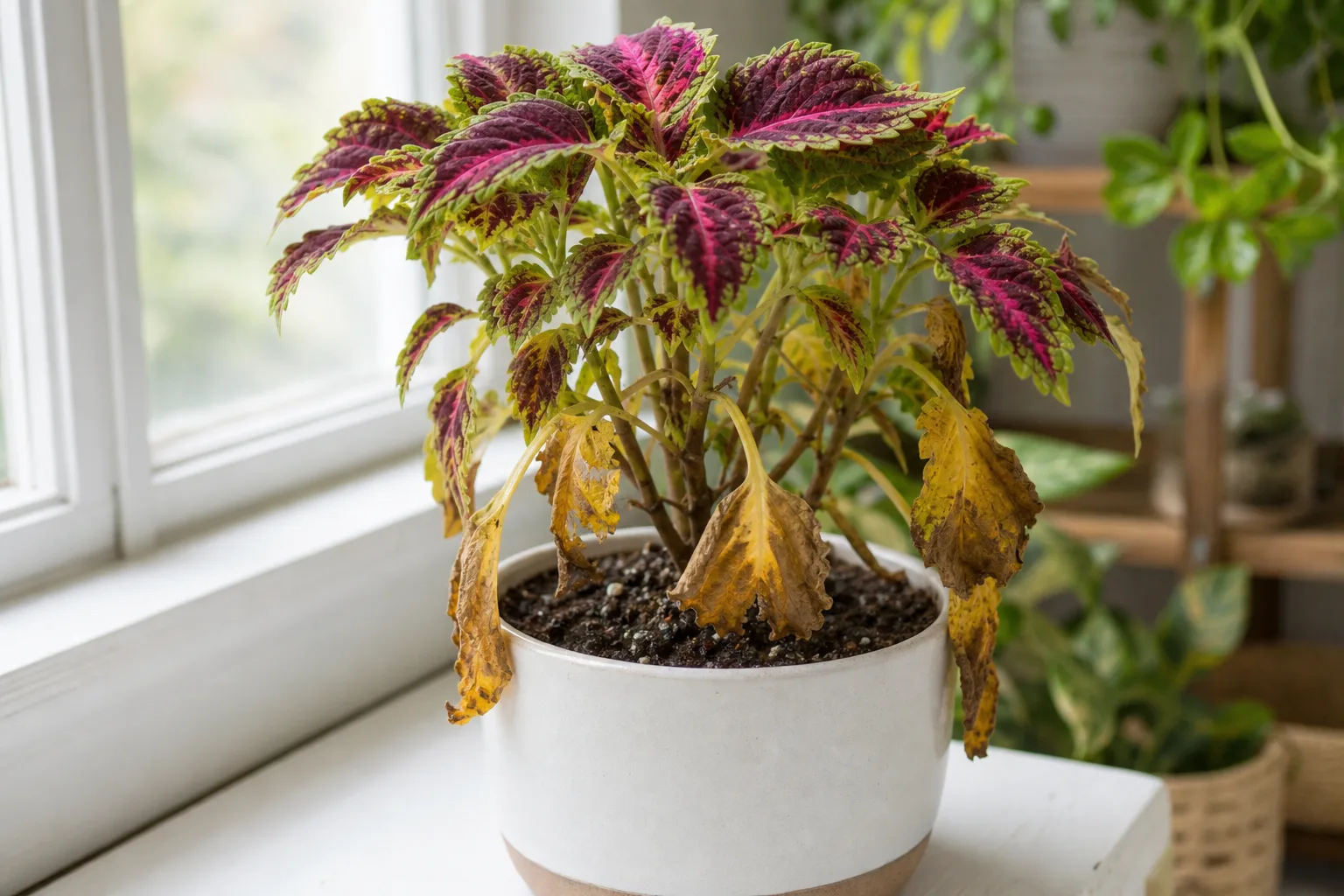
Root Rot on Coleus: Causes, Checks & Fixes
This guide covers root rot on Coleus. See also the general Root Rot guide, watering, and light pages for this plant.
Root Rot on Coleus: Causes, Checks & Fixes
Quick answer
Root rot on Coleus (Plectranthus scutellarioides) is almost always a drainage and watering failure, not a mysterious disease you spray away. This bushy, fast-growing foliage plant has soft square stems and herbaceous roots that suffocate quickly when mix stays saturated-especially in cool, low-light indoor pots where evaporation slows.
First step: stop watering and lift the pot. Heavy wet mix with limp colourful leaves means damaged roots cannot move water. Unpot only after you confirm soggy soil; then trim mushy tissue and repot into fresh airy mix. If the stem base is already soft, salvage firm upper tips through propagation instead of hoping the base recovers.
For early wet-soil decline before roots turn mushy, see our overwatering guide.
What root rot looks like on Coleus
Coleus declines fast once roots fail. Unlike succulents that linger with crispy leaves, this tropical foliage plant wilts dramatically and can collapse within days on rotting roots.
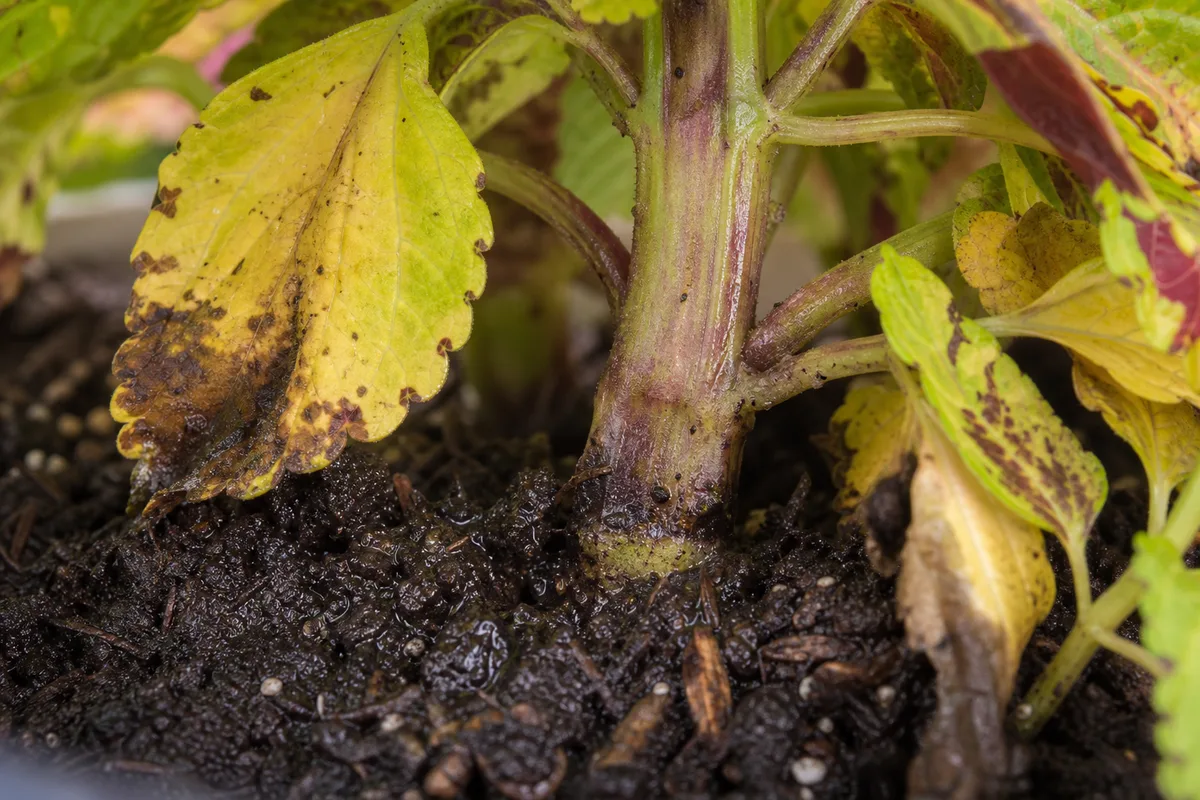
Yellow muddy lower leaves with scorched margins and a darkened square stem base on persistently wet mix - compare with firm colorful upper tips still briefly holding color.
Early signs:
- Lower leaves yellow while mix stays damp many days
- Muddy brown leaves with scorched margins-the Clemson HGIC “wet feet” cluster
- Limp colourful foliage despite a heavy wet pot
- Sour or rotten smell when you tip the plant out
- Growth stalls; new leaves stay small or distorted at stem tips
Advanced signs:
- Soft square stem at the soil line-Coleus-specific urgency signal
- Brown translucent or slimy roots on inspection
- Widespread leaf drop on wet mix
- Stem tissue darkens and spreads upward from the base
- Fungus gnats persist on never-drying surface
Coleus is an upright bushy herb with opposite leaves on square stems-not a rosette. Symptoms usually start on lower leaves and the stem base while upper tips may still look colourful briefly. That window is when trim-and-repot saves the plant; once mush climbs past several nodes, cuttings are the realistic salvage.
Root rot vs. overwatering on Coleus
| Signal | Overwatering (roots still mostly firm) | Root rot (roots decaying) |
|---|---|---|
| Pot weight | Heavy | Heavy |
| Root texture on unpot | Mostly firm, pale | Brown, mushy, slimy |
| Smell | May be absent early | Sour or rotten |
| Stem base | Usually firm | Often soft on square stem |
| Wilt pattern | Limp on wet soil | Persists into next morning on wet soil |
| Recovery after dry-down | Improves in days | Does not improve without surgery |
Both problems share wet mix-but overwatering is the stage where roots are stressed but not yet destroyed. Root rot means tissue has decayed and cannot absorb water. If you are unsure, unpot and look: firm pale roots mean pull back watering; mushy brown roots mean trim and repot now.
Why Coleus gets root rot
Coleus evolved in warm Southeast Asian woodlands with moist, well-drained soil-two ideas that must stay paired. Clemson HGIC notes that poorly drained soils and excessive watering damage coleus, producing stunted growth, muddy brown leaves, and scorched margins. Disease problems in coleus include stem rot and root rot, typically triggered by wetting foliage during watering and excessive soil moisture.
Cool dim winter rooms. The summer watering rhythm that worked on a sunny sill leaves mix wet for weeks in a north-facing room. Roots sit anaerobic while owners keep watering on habit.
Cachepots and full saucers. Decorative outer pots trap runoff. The bottom of the root ball rots even when the surface looks acceptable.
Heavy peat mix without perlite. Standard potting soil holds moisture at the pot center. UMN Extension recommends well-drained soil and drainage holes for container coleus-without both, rot follows.
Watering on a calendar. Coleus in active summer growth may need frequent drinks, but water only when the top 1 to 2 inches of soil are dry in garden beds-the same dry-down rule applies indoors, adjusted for slower winter evaporation.
The wilt misread. Coleus wilts dramatically for thirst and for rotting roots. Adding water to a wilted plant on already-wet mix accelerates decay-roots in waterlogged soil die from oxygen deprivation, then cannot supply the plant with water or nutrients.
How to confirm root rot
- Pot weight and smell - Heavy heft plus sour odor when lifted strongly suggests anaerobic mix and rotting roots.
- Soil probe - Wet clinging soil 2 cm down many days after the last watering confirms chronic saturation, not a one-time soak.
- Wilt recovery test - Afternoon wilt that perks up within an hour after watering points to thirst. Wilt into the next morning on wet soil points to root failure.
- Unpot and inspect roots - Healthy coleus roots are firm and pale tan or white. Rotted roots are brown, translucent, or slimy. Soil without oxygen for too long smells sour or rotten.
- Stem base check - Press the square stem at the soil line. Soft, dark tissue confirms stem rot advancing from the root zone.
- Drainage hole - Blocked holes or roots matting over exits keep the bottom waterlogged regardless of surface dryness.
First fix for Coleus
Stop watering immediately. Do not add another soak because leaves look limp on wet soil-that is the classic coleus trap that turns overwatering into full rot.
Move the plant to Coleus light guide with good airflow so remaining surface moisture evaporates faster. Light supports dry-down but does not replace root surgery when tissue is already mushy.
Mild case (yellow lower leaves, firm square stem base, mostly pale roots, sour smell absent):
- Withhold water until top 2 cm of mix dry completely
- If roots are mostly firm, repot into fresh well-drained mix per our soil guide without aggressive trimming
- Resume base-watering when top 1–2 cm dry per our watering guide
Confirmed rot (mushy roots, sour smell, or soft stem base)-follow the step-by-step recovery below.
Step-by-step recovery
- Unpot gently - Knock the plant from its container without pulling the stem. Shake off wet mix; rinse roots under lukewarm running water to see damage clearly.
- Trim all mushy tissue - Cut brown, slimy roots back to firm white tissue with a clean blade. If the stem base is soft, cut above the last firm node. Sterilize the blade between cuts with rubbing alcohol.
- Air-dry cut surfaces - Lay trimmed roots on a paper towel for two to four hours so cut ends callus slightly. This reduces reinfection in fresh mix.
- Discard old mix and sanitize the pot - Never reuse sour-smelling soil. Scrub the pot with soap and water; add fresh drainage material if holes were blocked.
- Repot into airy well-drained mix - Use a light blend with perlite or bark as described in our soil guide. Choose a pot sized to the trimmed root mass, not dramatically larger.
- Hold fertilizer - Stressed roots cannot process feed. Wait until new firm leaves appear at stem tips, usually two to four weeks.
- Water cautiously - Wait three to five days after Coleus repotting guide, then give a moderate soak at the base only when the top 1–2 cm feel dry. Empty the saucer within thirty minutes.
- Salvage via cuttings if the base is gone - When upper stems are still firm and colourful, take 4–6 inch tip cuttings, strip lower leaves, and root in water or moist mix. Coleus roots easily from cuttings in two to three weeks. See our propagation guide for the full protocol.
Do not reach for fungicide as a substitute for trimming and drainage repair-without removing decayed tissue and fixing soggy conditions, chemical treatments do not restore function.
Recovery timeline
- Days 1–7: Wilt stops spreading; mix dries on schedule between cautious drinks
- Weeks 2–3: First firm new colourful leaves unfurl at stem tips or lateral shoots
- Weeks 4–6: Bush fills out with new growth; old yellow or brown leaves may drop naturally
Judge success by new firm tip growth and stable roots, not by saving every damaged lower leaf. Coleus recovers through stem tips and lateral shoots-there is no central rosette to watch.
Worsening signs: spreading stem blackening above the soil line, collapse on drying soil after repot, persistent sour smell, or no new tips after four weeks in bright indirect light.
Indoor winter recovery runs slower than summer active growth. A plant that would push new tips in two weeks on a warm sill may need four to six weeks in a cool room.
Lookalike symptoms
| What you see | Likely cause | Key check |
|---|---|---|
| Afternoon wilt, perks by evening | Heat or thirst | Light pot or dry top 2 cm |
| Wilt into morning on wet soil | Root rot | Mushy roots, sour smell |
| Yellow lower leaves only, firm stem | Normal aging or nitrogen stress | Vivid new tips, firm roots |
| Muddy brown leaves, wet soil | Wet feet / early rot | Scorched margins, heavy pot |
| Wilting with dry light pot | underwatering on Coleus | Perks within hour after soak |
| Tiny flying insects on wet surface | Fungus gnats | Chronic surface moisture-see fungus gnats |
Overlap with yellow leaves is common. Yellow on wet heavy mix with soft stem base means rot, not a nutrient fix.
What not to do
- Keep watering wilted leaves when soil is already wet-the mistake that converts overwatering into rot
- Repot into dense garden soil or a pot without drainage holes
- Fertilize a rotting plant to “strengthen” it
- Mist foliage during recovery-wet foliage contributes to downy mildew and stem rot
- Assume fungicide alone fixes mushy roots without trimming and drainage repair
- Judge recovery by old damaged lower leaves instead of new firm tips
How to prevent root rot next time
- Check the top 1–2 cm of mix before every drink per our watering guide-not on a fixed weekly calendar
- Water at the base so foliage stays dry; empty saucers after every session
- Use well-drained mix and pots sized to root mass per our soil guide
- Reduce frequency in cool dim winter rooms where the same pot holds moisture longer
- Never let coleus sit in a decorative cachepot full of standing water
- Read wilt correctly: pair dramatic droop with pot weight before pouring-see overwatering for the wet-soil branch
When to worry-and when to propagate instead
Escalate immediately when the square stem base feels soft, black tissue climbs above the soil line, or more than half the root mass is mushy on inspection. At that stage, repotting the whole plant rarely saves the base-take firm tip cuttings and discard the rotting lower stem.
Act within days when leaves collapse across the plant on wet mix with sour odor, or when wilt persists two weeks after a proper dry-down and trim. Mild cases with firm stems and mostly pale roots after trimming often stabilize if drainage and watering rhythm improve.
Related Coleus guides: watering, overwatering, soil, propagation, yellow leaves, fungus gnats. Species overview: Coleus.
When to use this page vs other Coleus guides
- Coleus watering guide - Use for routine moisture checks before assuming root rot is the main issue.
- Coleus problems hub - Browse all 16 common issues on this species.
- Overwatering on Coleus - Different entry point when symptoms overlap with root rot.
- Yellow Leaves on Coleus - Different entry point when symptoms overlap with root rot.
- Wilting on Coleus - Different entry point when symptoms overlap with root rot.