Underwatering on Coleus: Causes, Checks & Fixes
Quick answer
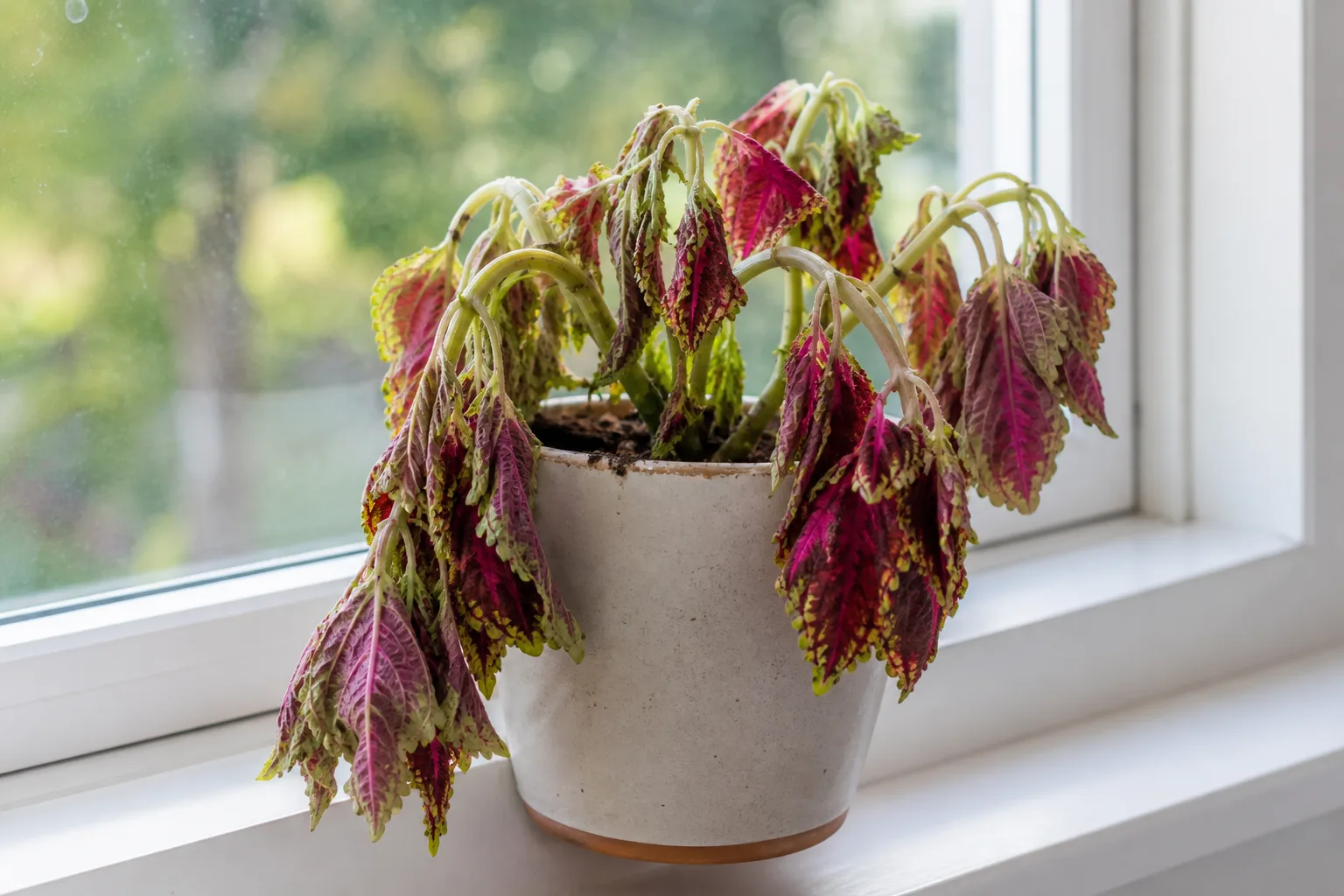
Coleus underwatering shows as dramatic wilting, a very light pot, and bone-dry soil 1–2 cm down. First step: soak the root zone thoroughly at the base until water drains, then move the plant out of direct sun while it recovers.
Underwatering on Coleus: Causes, Checks & Fixes
This guide covers underwatering on Coleus. See also the general Underwatering guide, watering, and light pages for this plant.
Underwatering on Coleus: Causes, Checks & Fixes
Quick answer
Coleus is one of the most vocal houseplants about thirst. When the root zone runs dry, stems flop and colourful leaves lose turgor-sometimes within a single warm afternoon. The good news: if you catch it while roots are still alive, coleus usually bounces back within hours of a thorough drink.
First step: water the base of the plant thoroughly until excess drains from the bottom, then move it out of direct sun while leaves rehydrate. Do not mist the foliage or give repeated tiny sips that never reach the bottom of the pot.
Why Coleus runs dry so easily
Coleus (Plectranthus scutellarioides) evolved in moist tropical and subtropical woodlands. Missouri Botanical Garden notes that soils must not be allowed to dry out for Coleus overview to stay healthy. That is a sharper requirement than many succulents or drought-tolerant houseplants carry.
Several traits make coleus especially prone to underwatering indoors:
- Fast foliage growth - In warm bright conditions, coleus pushes soft new leaves constantly. More leaf surface means faster water loss through transpiration.
- Container culture - Clemson HGIC states that coleus grown in containers are more susceptible to drought than plants in open ground. A small pot in a sunny window can go from evenly moist to bone dry in one or two days.
- Wilting as a signal on Coleus - Coleus and impatiens wilt visibly when they need water. Owners who wait for crispy leaves instead of responding to the first flop lose recovery time.
- Environmental accelerators - Coleus light guide, heating vents, air conditioning drafts, and small root-bound pots all speed drying. A coleus that needed water every three days in spring may need daily checks in a hot summer bay window.
Underwatering is usually a rhythm problem-skipping checks, fear of overwatering on Coleus after a past soggy episode, or assuming all houseplants can wait a week between drinks-not a mysterious disease.
What underwatering looks like on Coleus
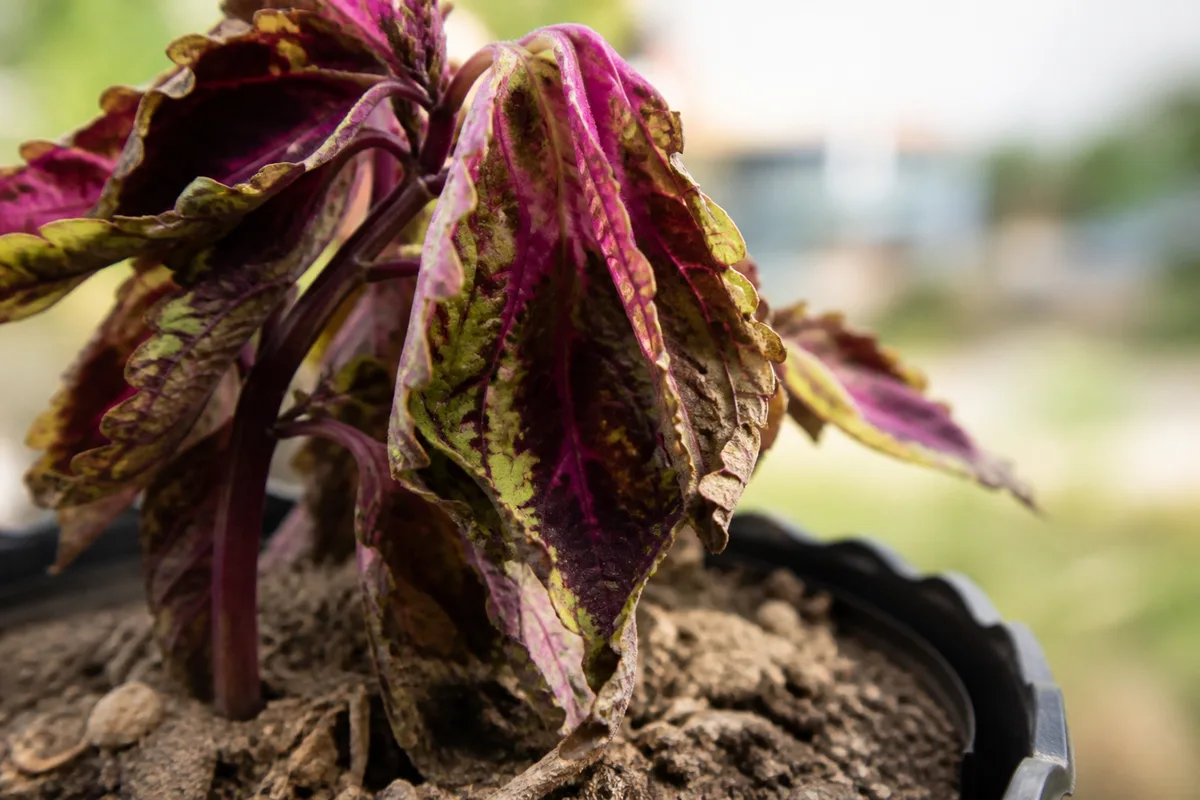
Limp, drooping Coleus foliage with slightly curled dry leaf edges above dusty dry potting mix - stems stay firm, unlike mushy root rot.
Early drought stress:
- Dramatic wilting: entire stems and leaves hang limp, though colour may still look normal
- Pot feels very light when lifted
- Top 1–2 cm of mix is dry; soil may pull slightly away from the pot wall
- Leaf edges may curl inward before browning
Repeated or severe drought:
- Crispy brown margins on older leaves, especially on lower stems
- Lower leaves yellow and drop as the plant sheds tissue to conserve moisture
- Growth stalls; new tips stay small or stop entirely
- Soil becomes dusty hard; water may run straight through without soaking the root ball
Unlike root rot on Coleus, underwatered coleus has dry, light mix and firm pale roots when you tip the plant out. Stems stay woody at the base rather than turning black and mushy. Leaf colour often stays vivid until damage is advanced-wilting happens before widespread yellowing.
How to confirm the cause
Work through these checks before you treat:
- Pot weight - Lift the pot before and after watering to learn what “dry” feels like. A plastic pot that feels feather-light needs water; a heavy pot with limp leaves suggests overwatering or root damage instead.
- Soil probe - Push your finger 1–2 cm deep, or use a moisture meter at root depth. Surface dust can hide dry soil below. UMN Extension recommends watering coleus when the top 1 to 2 inches of soil are dry.
- The rebound test - If you are unsure, give one thorough soak at the base. Underwatered coleus typically firms up within a few hours. No improvement after 24 hours with moist soil means inspect roots-you may be dealing with rot, not drought.
- Stem and root check - Tip the plant out gently. Underwatering: roots white or tan, firm, and still attached to mix. Overwatering: brown soft roots, sour smell, wet compacted mix clinging to dead root tips.
- Light and placement - Plants grown in too much sun may wilt even when soil is moist, because transpiration outpaces uptake. If soil is wet and stems are soft, do not add more water.
Confirmed underwatering: dry root zone, light pot, wilt that resolves after one proper soak, firm roots.
First fix for Coleus
Water thoroughly at the base until water runs freely from the drainage holes, then empty the saucer.
Use room-temperature water and a long-spout can to wet the soil without soaking foliage. Clemson HGIC recommends delivering water to the base of coleus because wet leaves in shade can invite fungal problems on this species.
Steps:
- Move the wilted plant out of direct sun or hot windows until leaves firm up.
- Water slowly until the entire root ball is moist and excess drains out. Stop when water runs clear from the bottom-not after a quick splash on the surface.
- If water races through immediately and the pot still feels light, the mix may have gone hydrophobic. Soak the pot in a tray of water until the surface darkens, then drain completely.
- Wait until the top 1–2 cm dries before the next full watering. Do not drench daily out of guilt-that swings toward overwatering.
That single thorough rehydration is the first fix. Adjusting your check schedule comes next, not on the same day as Coleus repotting guide, pruning, or fertilizing.
Step-by-step recovery
After the initial soak:
- Days 1–3: Watch for leaves regaining turgor. Remove only fully brown crispy leaves that crumble when touched; keep partially wilted leaves if they firm up.
- Week 1: Resume checking the top 1–2 cm of mix daily in warm spots. Clemson advises not allowing coleus to dry out completely during active growth.
- Week 2–3: Look for new side shoots and firm leaf tips. Pinch only after the plant looks stable-stressed coleus does not need extra pruning pressure.
- If a root-bound pot dries within 24 hours every cycle: Plan a spring repot into a slightly larger container with fresh well-draining mix. That is a secondary fix once hydration is restored, not an emergency day-one step.
Do not fertilize until new growth looks normal for two weeks. Drought-stressed roots cannot handle concentrated salts.
Recovery timeline
| Situation | What to expect |
|---|---|
| First-time wilt, caught same day | Leaves often firm within 2–6 hours after a thorough soak |
| Leaf-edge crisping already present | Brown margins stay; judge success by new undamaged leaves |
| Repeated dry cycles with leaf drop | Full bushiness may take 2–4 weeks of steady moisture |
| No rebound 24 hours after soaking | Some fine roots may have died; inspect for rot before watering again |
Missouri Botanical Garden notes that even after watering, a plant may decline if drought stress killed roots. Honest recovery tracking means watching new growth, not expecting old crispy tissue to green up.
Lookalike symptoms
Overwatering and root rot - The trickiest mimic. Wilted leaves can mean soil that is too dry or too wet, because rotting roots cannot absorb water. Wet mix, heavy pot, yellow lower leaves, and mushy stems point away from underwatering. Never soak a coleus whose soil is already soggy.
Heat and sun stress - Coleus in harsh direct sun may wilt while soil is still moderately moist because leaves lose water faster than roots can replace it. Move to bright indirect light or partial shade and check whether wilting returns when soil is properly moist.
Low humidity alone - Dry air can brown leaf tips on coleus, but true underwatering also involves a dry root zone and dramatic whole-plant wilt. Humidity trays help tip browning; they do not replace soil moisture.
Mistakes to avoid
- Misting instead of watering - Surface moisture does not rehydrate roots. Coleus needs water in the mix, not on leaves.
- Daily shallow sips - Small top-only drinks leave the bottom of the root ball dry while you think you watered. One thorough soak beats five teaspoons.
- Overcorrecting with constant drenches - After one dry spell, some owners water daily and trigger root rot. Return to checking the top 1–2 cm instead.
- Fertilizing a wilted plant - Rehydrate first. Salts on dry roots burn tender tissue.
- Ignoring the first wilt - Coleus is telling you the schedule failed. Waiting until leaves crisp costs more foliage than responding to the initial flop.
Coleus care cross-check
Underwatering often appears when other basics drift:
- Light - Brighter appropriate light increases water use. A coleus moved closer to a window needs more frequent checks, not the same old weekly habit.
- Pot and mix - Heavy compacted mix or an oversized dry outer pot can hide moisture levels. Root-bound plants dry fast; waterlogged oversized pots dry slowly-different problems, same wilt confusion.
- Season - Cool indoor winters slow growth, but dry heating air still pulls moisture from small pots. Reduce frequency but do not let the mix go rock-hard for weeks.
Align watering with how fast your pot dries in your room, not a generic calendar.
How to prevent underwatering next time
Build a simple check habit:
- Probe the top 1–2 cm of mix every one to two days in warm bright spots; every three to four days in cool dim winter corners.
- Learn your pot’s dry weight by lifting it before and after each watering.
- Water container coleus frequently enough that the root ball never goes completely dry during active growth, while still allowing the surface to dry slightly between drinks.
- Keep plants away from heating vents that desiccate foliage while you forget the soil.
- Refresh peat-heavy mix that repels water after repeated dry cycles.
Coleus rewards consistent attention more than perfection. A daily finger check in summer prevents the dramatic rescue wilts that strip lower leaves and stall colour.
When to worry
Escalate if:
- The plant stays limp 24 hours after a confirmed thorough soak with moist soil throughout
- Stems turn black and soft at the base-possible rot from prior overwatering, not current drought
- More than half the plant is crispy and no new buds appear after two weeks of stable moisture
- Soil never holds moisture even after soaking-root ball may be dead or mix may need replacing
At that point, inspect roots, trim dead tissue, and repot into fresh mix only if firm roots remain. A coleus reduced to a few healthy stem cuttings can still be propagated, but a crown that has fully desiccated may not come back.
Conclusion
Underwatering on coleus is common because this fast-growing foliage plant expects steady moisture and announces drought with dramatic wilting. Confirm it with a light pot and dry soil 1–2 cm down, fix it with one thorough base watering, and prevent repeats by checking the mix often enough for your light and pot size. Respond to the first wilt-not the crispy aftermath-and coleus usually returns to vivid form within days.
When to use this page vs other Coleus guides
- Coleus watering guide - Use for routine moisture checks before assuming underwatering is the main issue.
- Coleus problems hub - Browse all 16 common issues on this species.
- Wilting on Coleus - Different entry point when symptoms overlap with underwatering.
- Brown Tips on Coleus - Different entry point when symptoms overlap with underwatering.
- Yellow Leaves on Coleus - Different entry point when symptoms overlap with underwatering.