Drooping Leaves on Coleus: Causes, Checks & Fixes
Quick answer
Coleus droops fast when the root zone is wrong-dry mix, soggy mix, or failing roots all look similar at first glance. Lift the pot and probe the top 1–2 inches of soil before you water; a light dry pot needs a deep drink, a heavy wet pot needs drying, not more water.
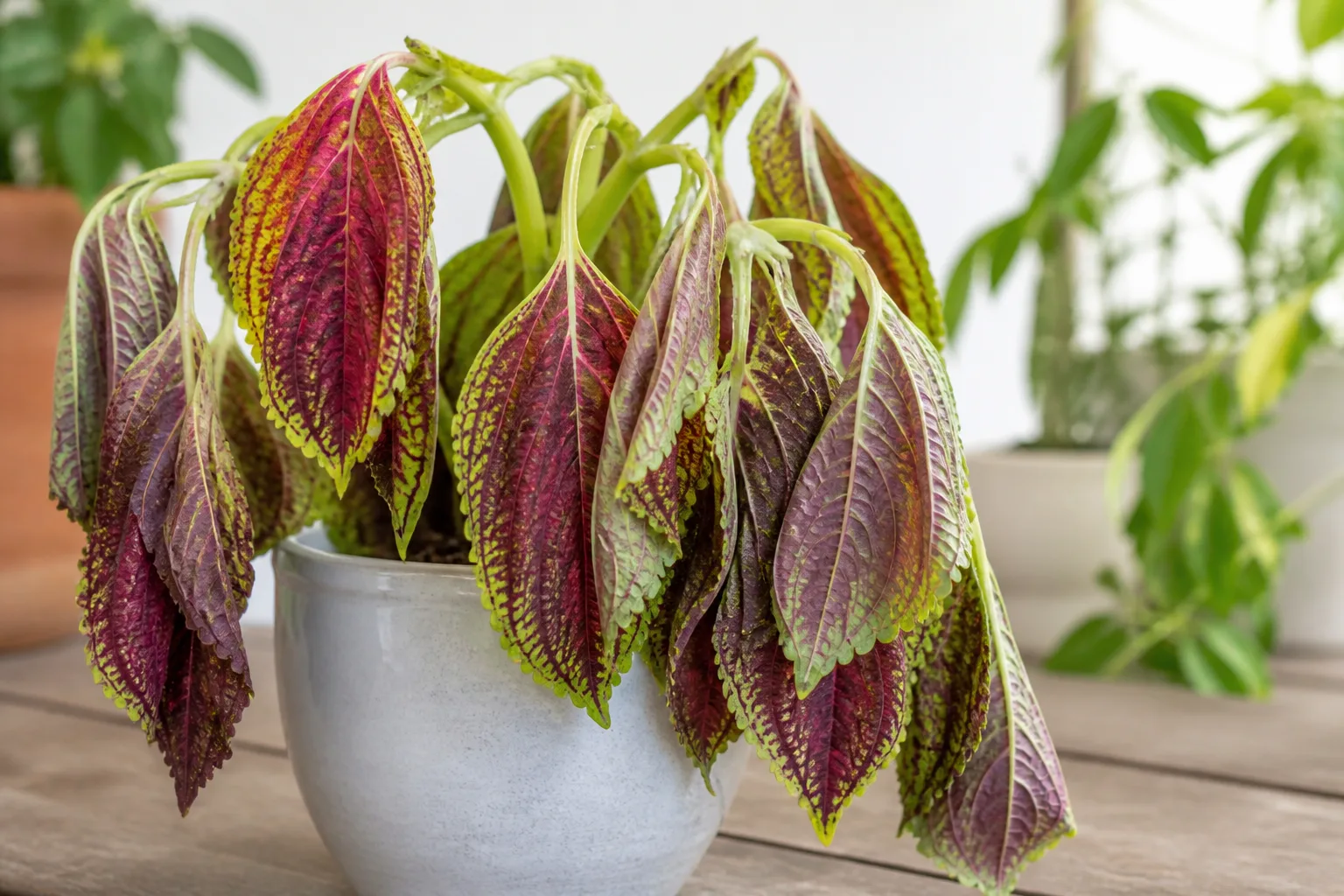
Drooping Leaves on Coleus: Causes, Checks & Fixes
This guide covers drooping leaves on Coleus. See also the general Drooping Leaves guide, watering, and light pages for this plant.
Drooping Leaves on Coleus: Causes, Checks & Fixes
Quick answer
When coleus leaves hang limp, the fastest mistake is watering on autopilot. Coleus (Plectranthus scutellarioides) is a fast-growing tropical foliage plant that wants evenly moist, well-drained soil-not a swamp and not a desert. Proven Winners describes coleus as preferring evenly moist soil with good drainage. Leaves lose turgor when roots cannot deliver water, whether because the mix is too dry, too wet, or damaged by rot.
That is why drooping leaves on coleus look almost identical for opposite problems. A thirsty plant collapses dramatically. An overwatered plant with failing roots also collapses-often with wet soil at the surface.
First step: lift the pot and press your finger 1–2 inches into the mix near the pot edge. A light, dry pot usually needs water. A heavy, wet pot with limp leaves needs drying and drainage checks-not another drink. Do not fertilize, repot, or prune until you know which side you are on.
For full watering rhythm and seasonal schedules, see our Coleus watering guide.
What drooping leaves look like on Coleus
Healthy coleus holds its broad, often colorful leaves at a slight angle from square stems. When turgor drops, petioles go slack and blades hang straight down or fold along the midrib. The change can hit the whole plant at once or start on the outer leaves nearest heat and light.
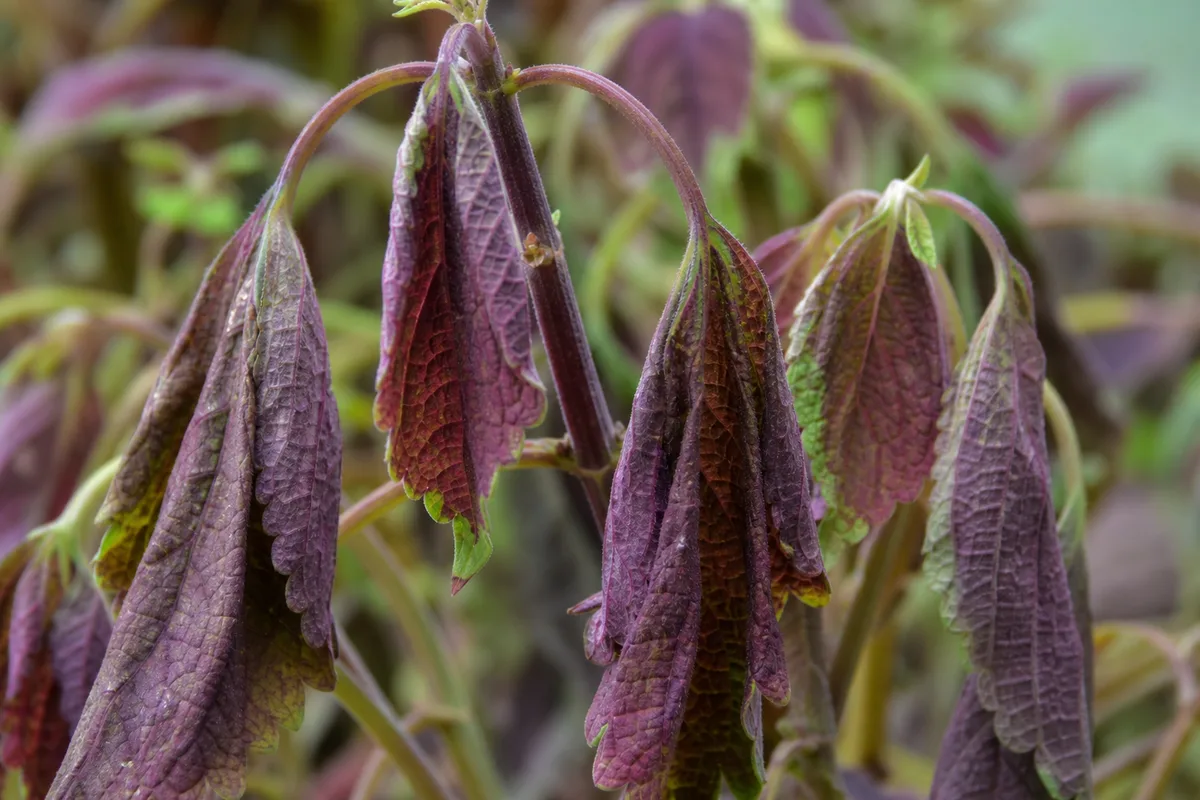
Limp coleus petioles and blades hanging straight down - turgor loss from thirst, wet roots, or afternoon heat slump.
Several patterns narrow the cause quickly:
Afternoon heat slump (often harmless):
- Leaves droop in midday or late-afternoon sun even when soil moisture is fine
- Stems stay firm; color may look slightly dull but not muddy brown
- Plant perks up by evening without your intervention
- Common on outdoor containers, south-facing windows, and sun-tolerant cultivars in hot weather
Dramatic wilt on dry mix (underwatering on Coleus):
- Leaves collapse noticeably-sometimes the whole plant looks flattened
- Pot feels very light; top 1–2 inches of mix are dry and crumbly
- Recovery within an hour after a thorough watering is a hallmark of thirst
- Leaf edges may feel papery if drought lasted more than a day
Limp leaves on wet soil (overwatering on Coleus / root stress):
- Soil stays dark, cool, and clings to your finger at depth
- Lower leaves yellow while upper growth may still look pale
- Leaves feel waterlogged, not crisp; margins may turn muddy brown
- Wilting persists into the next morning despite wet mix
- Fungus gnats may hover near the surface
Whole-plant flop after repot, move, or cold draft:
- Drooping begins within days of disturbance
- Stems usually stay firm if roots were healthy before the change
- Mix may be evenly moist from recent watering-not necessarily rotten
Soft stem base with sour smell (urgent):
- Tissue near the soil line yields to pressure
- Mix smells sour or musty; roots may be brown and mushy when you tip the plant out
- This is stem or root rot on Coleus-not thirst
Coleus drooping is a root-zone signal, not a leaf disease. The leaves are reporting what happened below the surface.
Why Coleus gets drooping leaves
Coleus grows rapidly in warm, bright conditions and transpires heavily through thin foliage. That speed makes it sensitive to both drought and drowning-more than slow-growing succulents and more dramatically than many shade houseplants.
Underwatering during active growth
Container coleus in summer sun can dry a small pot in a single hot afternoon. When the root zone runs dry, water cannot reach leaf cells fast enough and the whole plant slumps. Because coleus prefers consistent moisture, repeated dry cycles also stress color and promote crispy margins on older leaves.
University of Minnesota Extension notes that container coleus often needs daily watering in summer when pots have drainage holes-much more often than in-ground plantings. Fast growth in warm weather increases demand mid-season even if your calendar did not change.
Overwatering and root failure (common serious cause)
Coleus must have good soil drainage. Clemson HGIC warns that poorly drained soils and excessive watering damage coleus, producing stunted growth, muddy brown leaves, and scorched margins-a cluster called wet feet. When roots sit in saturated mix, they lose oxygen and stop moving water. Leaves droop despite wet soil-a pattern common with overwatered houseplants. Adding more water accelerates decline.
Indoor coleus in cool, dim rooms is especially vulnerable: evaporation slows, calendar watering keeps the mix wet, and the plant looks thirsty while roots fail. See overwatering on Coleus for wet-soil patterns and fungus gnat signs.
Afternoon heat and sun stress
Coleus in strong sun or on a hot patio may wilt at midday even when soil moisture is adequate. Transpiration outpaces uptake for a few hours. If stems stay firm and the plant recovers by evening, you are seeing heat slump-not necessarily drought. Sun-intolerant cultivars may also bleach and discolor in full sun while leaves hang limp.
Still check soil before assuming. Heat wilt and thirst can overlap on a borderline-dry pot.
Low light and slow evaporation
In deep shade or a cool north room, the same watering rhythm that worked in July keeps the mix wet for days in January. Drooping on chronically wet soil in dim conditions usually points to root stress, not thirst. Leggy pale stretch from weak light is a different pattern-thin stems reaching toward the window rather than classic limp collapse. See not enough light on Coleus if stretch dominates.
Repot shock and root disturbance
Freshly repotted coleus often droops for several days while new root hairs form. Even correct watering limits uptake temporarily. This is usually self-limiting if stems stay firm and you avoid keeping the new mix soggy.
Less common causes
Mealybugs, aphids, and whiteflies can weaken new shoots enough that foliage hangs. Check leaf undersides and growing tips before assuming water alone is the issue. Downy mildew and stem rot are linked to wet foliage and excessive soil moisture-another reason to water at the base, not over the leaves.
Lookalike symptoms to rule out
Wilting vs drooping - On coleus the terms overlap. Both describe lost turgor. This page covers the broad limp-leaf category; acute dramatic collapse that recovers within an hour after watering is the focus of our wilting on Coleus guide. Use soil and pot weight, not the label on the URL.
Yellow lower leaves - Often accompany wet-root droop. Dry drought stress may yellow and crisp edges before full collapse. Check moisture direction before treating.
Leggy growth - Weak light causes stretch and thin stems, not sudden afternoon slump. Move to brighter indirect light; do not increase water to “help” sparse foliage.
Root rot without obvious droop first - Sometimes yellowing and stunting precede full collapse. If stems soften, see root rot on Coleus.
How to confirm the cause
Work through these checks in order. Each step narrows the field before you commit to a fix.
- Time of day - Afternoon slump on firm stems that recovers by evening fits heat. Overnight wilt fits water stress.
- Pot weight - Lift the pot. Light with droop fits drought. Heavy with droop fits saturation or poor drainage.
- Soil moisture at depth - Press your finger 1–2 inches into the mix near the pot edge, not against the stem. Dry and crumbly: thirst. Dark, cool, clinging: stop watering.
- Stem firmness at the base - Press gently above the soil line. Firm: roots may still be functional. Soft or mushy: suspect rot; do not water.
- Recent changes - Coleus repotting guide, moving outdoors, heat wave, or saucer left full within the last two weeks explains temporary droop.
- New growth condition - Pale, stunted tips on wet soil fit root stress. Firm upright young leaves after a dry spell fit thirst recovery.
- Root inspection (if stem base softens or soil is sour) - Tip the plant out. Healthy coleus roots are firm and pale. Black, slimy roots with foul smell confirm rot.
Wet-soil vs dry-soil quick guide
| What you find | Likely cause | Next move |
|---|---|---|
| Light pot, dry top 1–2 inches, fast recovery after water | Underwatering | Deep soak; resume dry-down rhythm |
| Heavy pot, wet mix, yellow lower leaves, wilt into next day | Overwatering / root stress | Stop water; empty saucer; improve drainage |
| Firm stems, afternoon droop, perks by evening, soil OK | Heat / sun slump | Shade lightly; check again tomorrow before watering |
| Drooping 3–10 days after repot, firm stems | Transplant stress | Hold stable; avoid soggy mix |
| Soft stem base, sour smell, mushy roots | Stem or root rot | Stop water; trim rot; repot into fresh mix |
The first fix to try
Lift the pot and check soil moisture 1–2 inches deep-then act on what you find, not on what the leaves look like.
If the pot is light and soil is dry during active growth: water thoroughly at the base until moisture exits drainage holes, then let the top 1–2 inches approach dry before the next drink. Proven Winners recommends watering when the top one to two inches feel dry, with more water during prolonged heat.
If the pot is heavy or soil has been wet for days: do not water. Empty the saucer, confirm drainage holes are clear, and move to brighter indirect light if the plant sits in deep shade-slow evaporation worsens wet soil. Inspect roots if decline continues after the mix dries.
If stems are firm, soil is moderately moist, and you repotted recently: skip extra interventions for several days. Keep conditions stable. The plant is likely adjusting.
One correction at a time. Stacking repot, prune, fertilizer, and pesticide on the same day hides which step helped or hurt.
Step-by-step recovery by cause
Dry-soil droop (underwatering)
Water slowly at the soil surface until the full root ball rewets-not just the top crust. Dry peat sometimes sheds water down the pot wall; a second pass five minutes later helps. Wait one to two hours. Leaves that were simply thirsty often regain stiffness.
Resume the rhythm from our watering guide: check every one to two days in warm indoor sun, daily for outdoor summer containers. Fast summer growth may shrink the dry-down window mid-season even if your calendar did not change.
Wet-soil droop (overwatering / early root stress)
Stop all irrigation. Improve airflow around the pot. If roots are still mostly firm, letting the top inch dry completely in warm bright light may stabilize the plant over one to two weeks. Remove yellowed lower leaves only if they are clearly spent.
If roots are black and soft, surgery is required-trim rotted tissue, let cuts air-dry, repot into fresh well-drained mix in a pot sized to the root mass. See root rot on Coleus for escalation steps.
Afternoon heat slump
Move the pot to filtered light or afternoon shade if wilt is daily and stressful. Do not add water unless the finger test confirms dryness. A plant that perks by evening on its own does not need a rescue drink.
Post-repot droop
Keep the plant in bright warmth without harsh midday sun for a few days. Water when the top inch dries-fresh mix in a larger pot stays wet longer than growers expect. New white root tips or upright young leaves within two to three weeks mean recovery is underway.
Recovery timeline
Expectations depend on how far stress or rot progressed:
- Single missed watering in summer - leaves often firm up within an hour; full appearance returns in one to three days.
- Afternoon heat slump - recovery by evening the same day; no treatment needed if soil moisture was adequate.
- Early overwatering without stem rot - two to four weeks of careful dry-down before stable new growth.
- Repotting stress - one to two weeks for droop to ease.
- Root or stem rot with surgery - several weeks. Judge success by firm new stem tissue and fresh tip growth, not by old leaves re-standing.
Cosmetically limp leaves rarely return to perfect form. Recovery means droop stops spreading and new growth looks healthy and upright.
What not to do
- Watering because leaves look sad - The most common error on wet soil. Damaged roots plus more water accelerates rot.
- Showering the foliage - Does not fix root-zone balance. Clemson HGIC links wetting foliage while watering to downy mildew, stem rot, and root rot. Aim water at the soil surface.
- Fertilizing a stressed plant - Salts stress roots further. Feed only after stems are firm and new growth is active.
- Repotting into a larger pot to “help drying” - Oversized pots stay wet longer and worsen wet-feet droop.
- Keeping a saucer full - Roots stay saturated even when the surface looks dry.
- Stacking treatments - One care change at a time so you can read the plant’s response over the next week.
How to prevent drooping leaves on Coleus
Match care to how coleus actually grows in your space:
- Check soil before every drink - top 1–2 inches dry for established plants; more frequent checks for outdoor summer containers.
- Use well-drained mix and open drainage holes - coleus needs moisture with air, not constant sogginess.
- Empty saucers within 30 minutes of watering; lift cachepots to drain fully.
- Water at the base in morning when possible so foliage dries during the day.
- Adjust for season - stretch intervals in cool dim months; tighten checks when fast summer growth increases demand.
- Match light to cultivar - sun-tolerant types need more water; shade types in hot afternoon sun wilt faster.
Learn your pot’s dry-down speed in your room-that matters more than a calendar. Inspect weekly while problems are still small.
When to worry
Treat drooping as urgent if:
- The stem base softens, darkens, or smells sour
- Leaves yellow and drop rapidly while soil stays wet
- Collapse worsens over 48 hours after you corrected obvious underwatering
- Mushy brown roots fill more than a third of the root ball
- The whole plant stays limp despite a light dry pot after a thorough watering-possible severe root loss or stem rot
Afternoon heat slump on firm stems with adequate moisture is lower urgency. Soft stem tissue on wet soil is not-act within a day or two.
If most of the root mass is mushy with little firm tissue left, the plant may not be saveable. Take healthy stem cuttings from firm upper growth if any exists-coleus roots easily from stem cuttings-and discard rotted tissue rather than composting it.
Coleus care cross-check
Before you chase a rare pest or repot again, confirm the basics match this plant’s needs:
| Factor | Coleus preference | Drooping risk when wrong |
|---|---|---|
| Soil moisture | Evenly moist, well-drained | Dry = dramatic wilt; wet = limp on soggy mix |
| Light | Bright indirect to part shade; cultivar-dependent | Too much sun = heat slump; too little = slow dry-down, wet feet |
| Temperature | Warm; dislikes cold wet feet | Cool + wet soil = root stress |
| Pot | Drainage holes; size matched to roots | No drainage or oversized pot = chronic wet soil |
| Watering technique | Base-level, foliage stays dry | Overhead soak = mildew and stem rot risk |
Full species context: Coleus overview. Related problems: underwatering, overwatering, wilting, root rot, yellow leaves.
When to use this page vs other Coleus guides
- Coleus watering guide - Use for routine moisture checks before assuming drooping leaves is the main issue.
- Coleus problems hub - Browse all 16 common issues on this species.
- Underwatering on Coleus - Different entry point when symptoms overlap with drooping leaves.
- Overwatering on Coleus - Different entry point when symptoms overlap with drooping leaves.
- Root Rot on Coleus - Different entry point when symptoms overlap with drooping leaves.