Overwatering on Coleus: Causes, Checks & Fixes
Quick answer
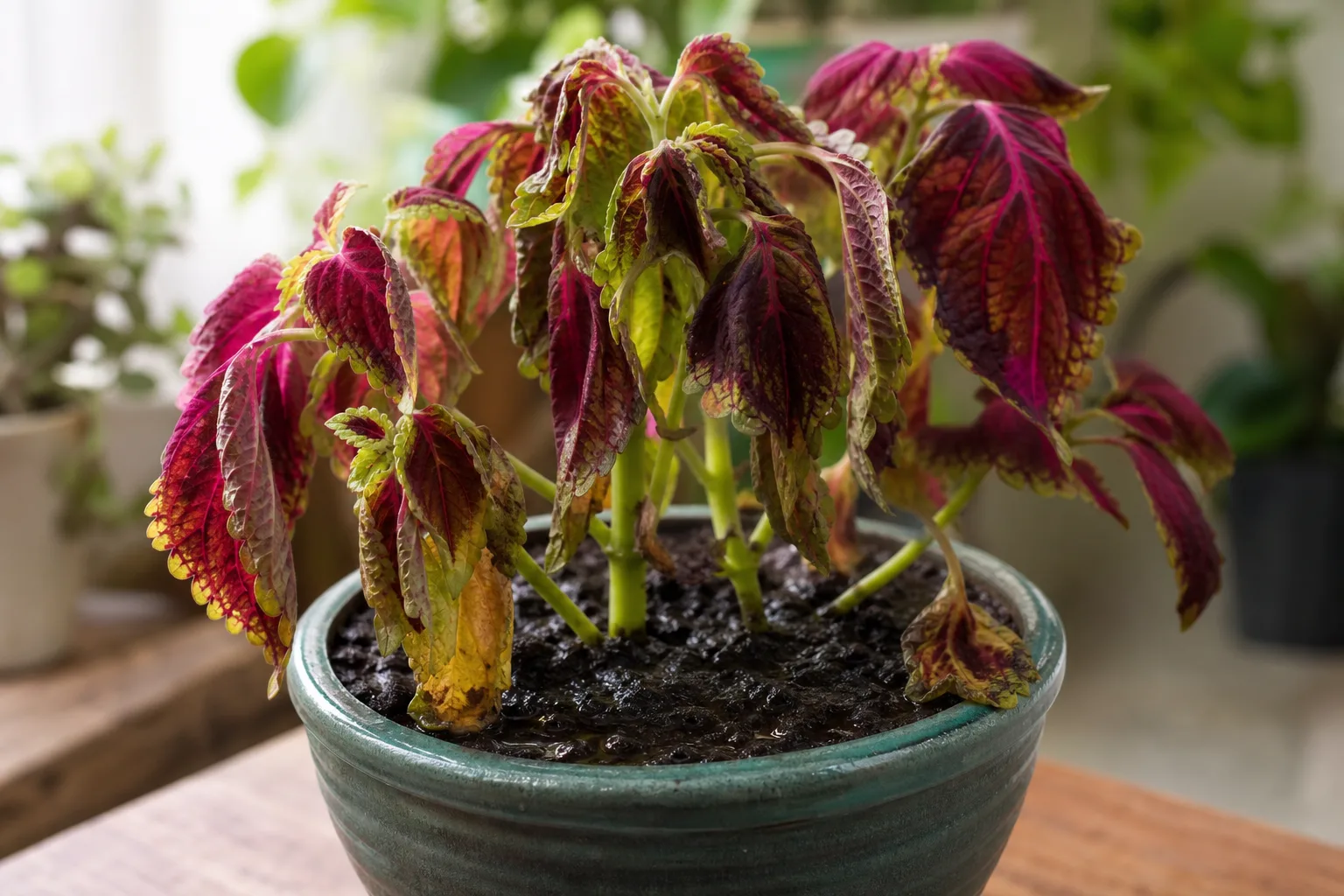
Overwatering on Coleus shows as limp colourful leaves on heavy wet soil-the same dramatic wilt this species uses for drought. First step: check pot weight and soil moisture before you add another drink.
Overwatering on Coleus: Causes, Checks & Fixes
This guide covers overwatering on Coleus. See also the general Overwatering guide, watering, and light pages for this plant.
Overwatering on Coleus: Causes, Checks & Fixes
Quick answer
Overwatering on Coleus (Plectranthus scutellarioides) is easy to misread because Coleus overview wilts dramatically whether roots are too wet or too dry. The critical fork: limp colourful leaves on a heavy wet pot mean stop watering-not another soak. Damaged roots cannot move water, so foliage collapses even while mix is saturated.
First step: lift the pot and probe the top 2 cm of soil. Heavy and damp with limp leaves = overwatering. Light and dry with limp leaves = underwatering. Getting this wrong is the most common Coleus watering mistake.
Overwatering vs. underwatering on Coleus
| Signal | Overwatering | Underwatering |
|---|---|---|
| Pot weight | Heavy for days | Noticeably light |
| Soil 2 cm down | Wet, cool, clings | Dry, dusty |
| Leaf texture | Soft, yellowing lower leaves | Limp but colour often vivid |
| Stem base | May soften or darken | Firm |
| Smell | Sour from wet mix | None |
| After one thorough soak | No improvement | Perks within hours |
Coleus and impatiens wilt visibly when they need water-but they also wilt when roots are rotting in wet soil. Always pair wilt with pot weight before you pour.
For the underwatering branch of this fork, see our underwatering guide. For advancing rot, see root rot.
What overwatering looks like on Coleus
Coleus pushes soft colourful foliage fast in warm bright conditions. That growth rate means more transpiration in good conditions-but also faster decline when roots fail in soggy mix.
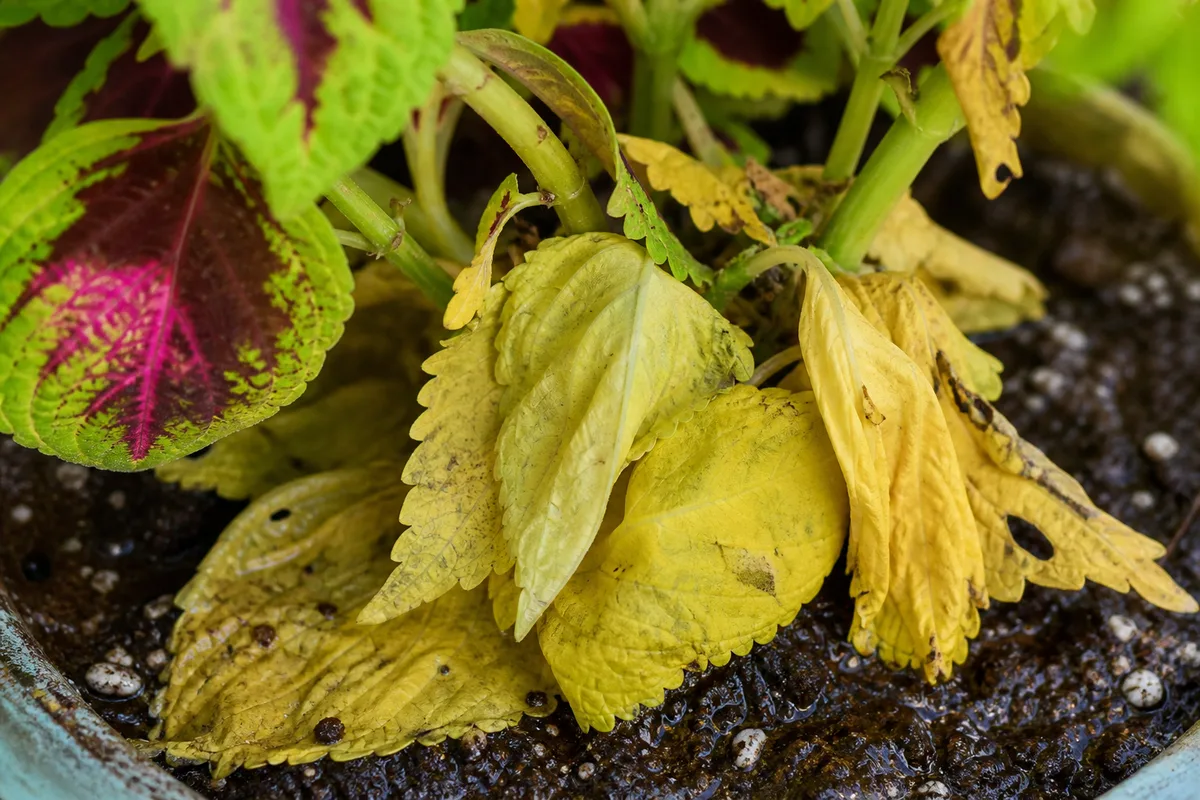
Limp yellowing lower leaves on constantly damp mix - damaged roots cannot move water even when soil stays wet.
Early signs:
- Dramatic wilt while soil stays damp-not the feather-light pot of drought
- Lower leaves yellow before edges crisp
- Soil surface stays dark and cool many days after watering
- Fungus gnats hovering near constantly wet surface
- Growth slows; new leaves stay small or distorted
Progressive signs:
- Soft stems at the soil line
- Sour smell when lifting the pot
- Brown mushy roots on inspection
- Widespread leaf drop on wet mix
- Colour fades across the plant despite moisture
Unlike drought, overwatered coleus has wet heavy mix and soft brown roots when tipped out. Stems at the base darken rather than staying woody and firm.
Why Coleus gets overwatered
Coleus evolved in moist tropical woodlands. Missouri Botanical Garden notes soils must not be allowed to dry out-which owners interpret as “keep moist always.” That overshoots into constant sogginess, especially in cool winter rooms where evaporation slows.
The wilt misread. Owners see limp coleus and water again. Clemson HGIC states coleus grown in containers are more susceptible to drought-true in summer-but the same dramatic wilt appears on rotting roots. The instinct to soak worsens overwatering.
Cool dim winter rooms. The summer rhythm that worked on a sunny sill leaves mix wet for weeks in a north window. UMN Extension recommends watering when the top 1 to 2 inches of soil are dry-a check many calendar-waterers skip.
Oversized pots and dense peat. Large volumes of wet mix surround modest root balls. Standard potting soil without perlite holds moisture at the pot center.
Saucers and cover pots. Standing water keeps the bottom anaerobic even when the surface looks acceptable.
Fear after past underwatering. One drought episode trains owners to water early and often-creating chronic surface wetness and fungus gnats.
How to confirm overwatering
- Pot weight - Heavy heft days after last watering on a wilting plant strongly suggests wet roots, not thirst.
- Soil probe - Wet clinging soil 2 cm down confirms saturation. Dry dust with light pot = opposite problem.
- Rebound test - If you mistakenly soaked an overwatered coleus, wilt will not resolve within hours. No perk after 24 hours on wet mix means inspect roots.
- Root check - Tip out gently. Firm white/tan roots = not advanced rot yet. Brown soft roots with sour smell = overwatering confirmed.
- Gnat check - Persistent fungus gnats on never-drying surface support chronic moisture problem.
First fix for Coleus
Stop watering until the top 2 cm of mix dry completely.
Move to brighter indirect light with good airflow so remaining moisture evaporates faster-light helps dry-down but does not fix mushy roots already rotting.
Mild case (limp leaves, firm stems, no sour smell, mostly white roots):
- Withhold water until top 2 cm are dry
- Resume with moderate soak at base only when dry
- Expect recovery in new tip growth over 2–4 weeks
Moderate case (yellowing on wet soil, sour smell, some soft roots):
- Unpot and rinse roots
- Trim brown mushy tissue with clean blade
- Repot into fresh well-draining mix per our soil guide
- Wait 3–5 days before first cautious drink
Severe stem mush - see root rot for trim-and-salvage steps. Coleus roots easily from healthy stem tips if the base is gone.
Recovery timeline
- Days 1–7: Wilt stops spreading; soil dries on schedule
- Weeks 2–4: First firm new colourful leaves at stem tips
- Weeks 4–8: Full colour returns on new growth; old yellow tissue may drop
Worsening: spreading stem blackening, more collapse on drying soil, persistent sour smell after repot.
What not to do
- Water because leaves look wilted on wet soil-the classic coleus trap
- Fertilize waterlogged plants
- Repot into a larger pot “to help drying”
- Mist foliage instead of fixing root-zone moisture
- Assume wilting always means drought-check weight first
How to prevent overwatering next time
- Check top 1–2 cm daily in warm bright spots per our watering guide
- Water at the base when surface dries-not on a fixed weekly calendar
- Reduce frequency in cool dim winter rooms
- Use well-draining mix in pots sized to root mass
- Empty saucers within 30 minutes after every drink
- Pair this guide with underwatering so you can read wilt correctly both directions
When to worry
Escalate when stems soften at the base, black tissue climbs above soil line, or wilt persists after two weeks of proper dry-down. Those patterns mean advancing root rot-inspect and trim before the colourful foliage collapses entirely.
When to use this page vs other Coleus guides
- Coleus watering guide - Use for routine moisture checks before assuming overwatering is the main issue.
- Coleus problems hub - Browse all 16 common issues on this species.
- Root Rot on Coleus - Different entry point when symptoms overlap with overwatering.
- Yellow Leaves on Coleus - Different entry point when symptoms overlap with overwatering.
- Wilting on Coleus - Different entry point when symptoms overlap with overwatering.