Mold on Soil on Coleus: Causes, Checks & Fixes
Quick answer
Fluffy white or gray mold on Coleus soil is usually harmless saprophytic fungus feeding on organic matter in a pot that stays wet at the surface. First step: scrape off the top 1–2 cm, then pause watering until the top 1–2 cm of mix feels dry.
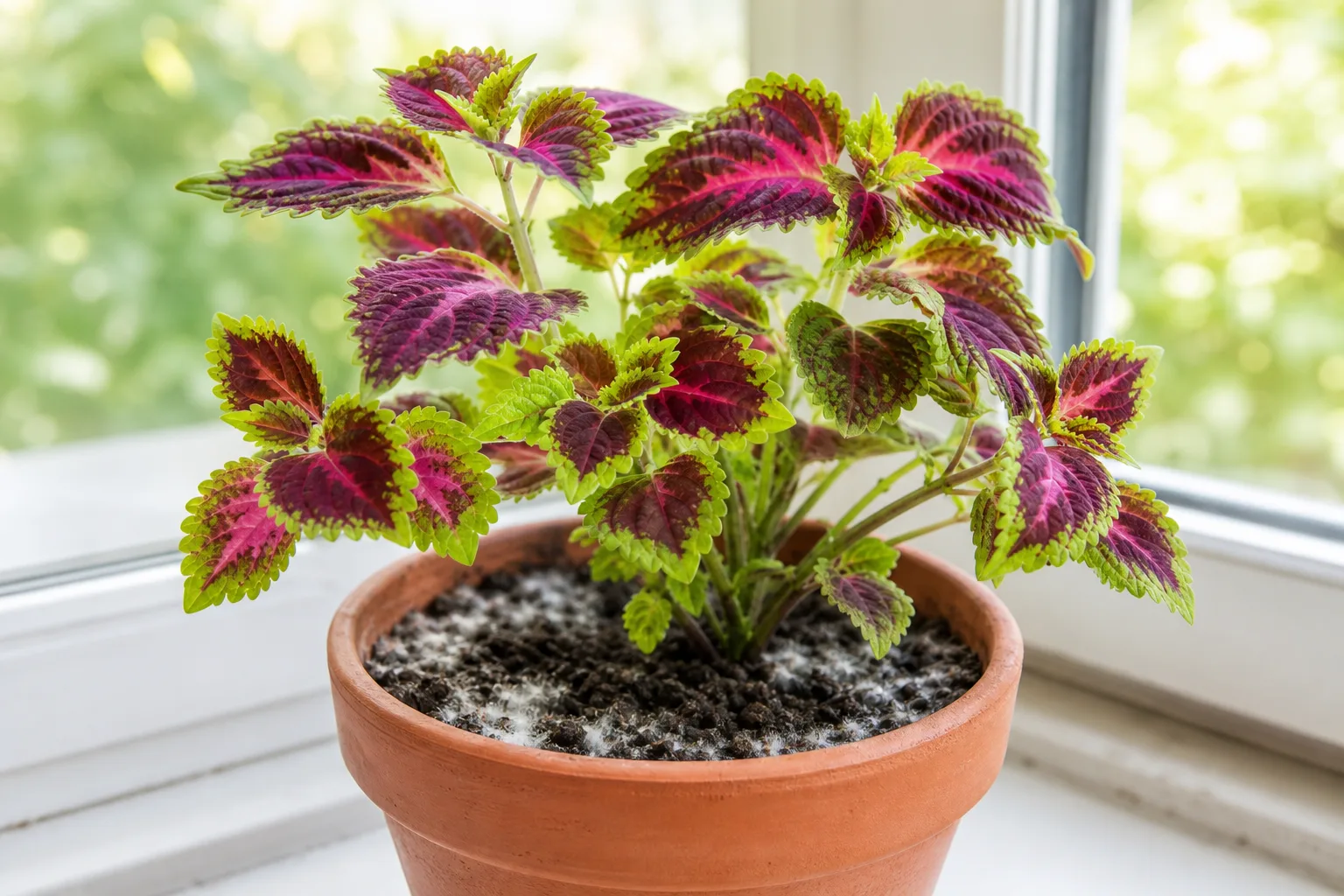
Mold on Soil on Coleus: Causes, Checks & Fixes
This guide covers mold on soil on Coleus. See also the general Mold on Soil guide, watering, and light pages for this plant.
Mold on Soil on Coleus: Causes, Checks & Fixes
Quick answer
White or gray fuzzy growth on Coleus potting mix is almost always saprophytic fungus-organisms that feed on decaying organic matter in the soil, not on living leaf tissue. On a fast-growing Plectranthus scutellarioides in a rich, compost-heavy container, that usually means the surface stayed wet too long while fallen leaves or organic mix gave the fungus something to break down.
First step: scrape off the top 1–2 cm of moldy soil, discard it, and pause watering until the top 1–2 cm of mix feels dry. Do not reach for fungicide on day one. The mold is a moisture signal; fixing how and when you water usually resolves it.
Why mold grows on Coleus soil
Coleus is a moisture-loving foliage plant that grows fast in warm, bright conditions-but it still needs the surface to dry between soaks. Several Coleus-specific habits make surface mold common indoors:
Rich, organic potting mix. A typical Coleus blend includes potting soil, compost, and perlite or cocopeat. Compost and decomposing peat are exactly what saprophytic fungi consume. When the top layer never dries, those fungi colonize visibly as white or gray fuzz.
Moist-soil preference misread as constant wetness. Coleus wants consistently moist roots but not a permanently damp surface. Clemson Extension notes that excessive soil moisture and wetting foliage while watering can lead to fungal problems including stem rot and root rot on Coleus on Coleus. Many growers water every one to two days in summer without checking whether the top 1–2 cm has actually dried-especially after cloudy weeks or when the plant moves indoors.
Dramatic wilting triggers overcorrection. Coleus wilts noticeably when thirsty and recovers quickly after a drink. That visible collapse tempts owners to water again before the surface dries, keeping the upper layer wet enough for mold even when roots below are fine.
Fallen leaves and pinching debris. Coleus drops lower leaves as it grows and produces trimmings every time you pinch for bushiness. Left on the pot surface, those soft, succulent leaf scraps decay fast in warm, humid rooms and become fungal food.
Cool winter slowdown with summer watering habits. Coleus grows slowly in cool indoor winters. If you keep the same watering calendar while day length drops and the plant uses less water, the growing medium stays moist at the surface-conditions that also favor fungus gnat development in houseplant pots.
Moderate to high humidity without airflow. Coleus thrives at 50–70% humidity, but stagnant humid air slows evaporation at the soil line. Mold on a healthy bushy plant in a steamy bathroom or crowded shelf is common when the surface never gets a dry cycle.
Shared habitat with fungus gnats. Wet organic surfaces that grow mold also attract fungus gnats, whose larvae feed on fungi and decaying matter in damp potting mix. Mold and gnats often appear together-they point to the same moisture problem, not two unrelated crises.
What mold on soil looks like on Coleus
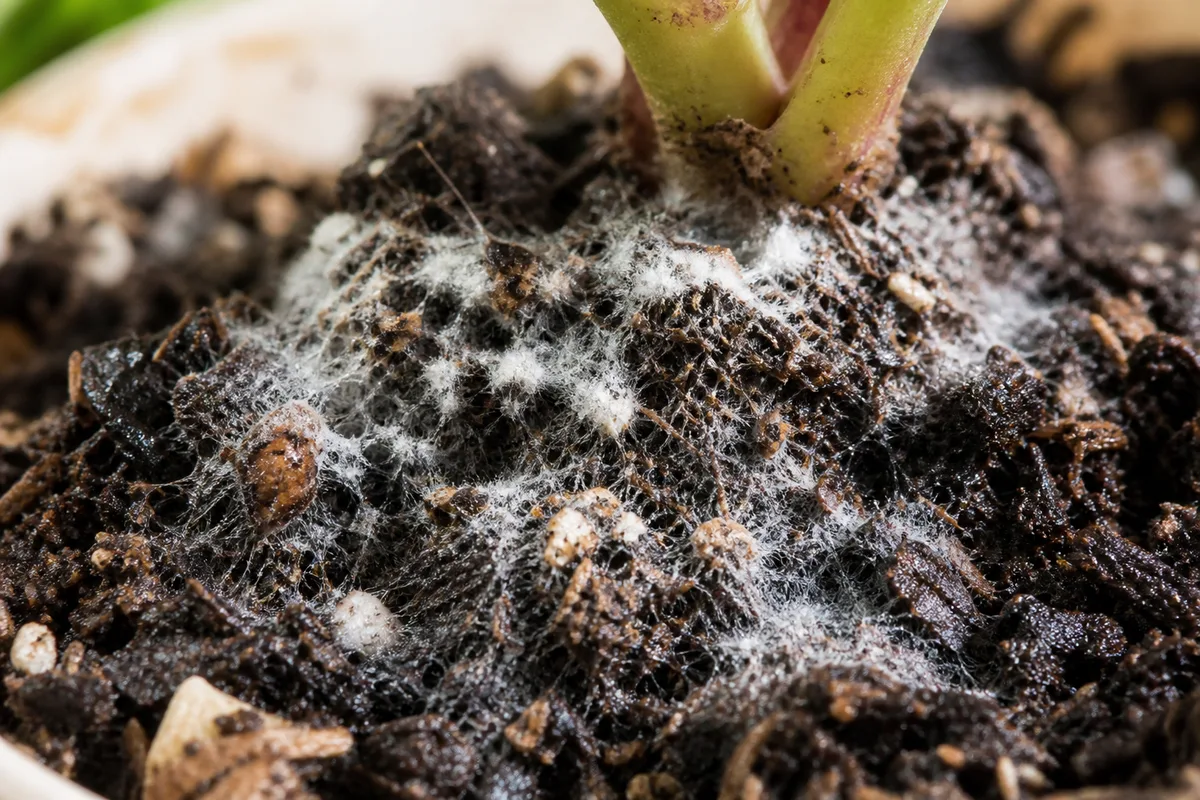
White thread-like saprophytic mold on the damp Coleus soil surface - firm stems and bright foliage above mean this is usually surface-only, not root rot.
Typical harmless surface mold:
- White, gray, or occasionally yellow-tan fuzzy film on the top of the mix
- Thread-like mycelium visible when you scrape the surface
- Soil surface still damp days after the last watering
- Stems firm and succulent, foliage colors bright, new tips still extending after pinching
- Optional musty smell near the pot rim
Signs the problem goes deeper than surface mold:
- Lower leaves yellow in clusters while soil feels wet
- Stems soft or muddy brown at the base
- Plant wilts in cool morning hours despite damp mix
- Mix smells sour or rotten when you dig below the surface
- Fungus gnats present every time you water, with growth stalling despite adequate light
Surface mold alone rarely damages Coleus leaves. Chronic wet roots and stem bases do-and Coleus is sensitive to [extended waterlogging](https://www.missouribotanicalgarden.org/gardens-gardening/your-garden/help-for-the-home-gardener/advice-tips-resources/insects-pests-and-problems/environmental/[overwatering on Coleus](/plants/coleus/overwatering/)) even though it wilts dramatically when briefly dry.
How to confirm the cause
Work through these checks in order:
- Surface vs. root test - Scrape a small area of mold. If stems are firm and new growth continues at tips, treat as surface saprophytic fungus. If the plant wilts without the mix drying out, probe deeper.
- Moisture at 1–2 cm - Insert your finger to the first knuckle. If it feels wet while the surface is fuzzy, you are watering too often or drainage is poor.
- Pot weight - Lift the container. A heavy pot days after watering suggests slow drainage, an oversized cachepot, or a pot too large for the root ball.
- Debris scan - Remove any fallen leaves, pinched tips, or spent flower spikes sitting on the soil. Note whether mold was concentrated under that layer.
- Drainage check - Water until runoff, then confirm saucers are emptied within an hour. Blocked holes or standing water confirm a moisture trap.
- Gnat check - Tap the pot rim. Small dark flies that rise from the soil surface indicate the same wet conditions mold needs.
- Light cross-check - Confirm Coleus still receives Coleus light guide. Mold on an otherwise healthy summer plant is common after rainy stretches; mold on a leggy Coleus in deep shade that never dries is a care mismatch.
If the plant passes checks 2–6 with firm growth and only fuzzy surface soil, you have confirmed saprophytic mold tied to moisture-not a pathogenic root disease.
First fix for Coleus
Scrape off the top 1–2 cm of moldy soil and stop watering until the top 1–2 cm of mix is dry.
Use a spoon or small trowel to remove the fuzzy layer and any visible decaying leaf debris. Bag and discard the scraped material rather than composting it indoors. Leave the plant in place-do not repot on day one unless the mix smells rotten below the surface.
After scraping, let the pot dry until your standard Coleus moisture check (top 1–2 cm dry) passes before the next soak. Water at the base of the stems, not over the fuzzy foliage, to keep new debris from washing onto the soil surface.
This single step removes active spore load and breaks the wet surface cycle that feeds the fungus. Secondary fixes come only if mold returns or gnats persist.
Step-by-step recovery
After the initial scrape and dry-down:
- Replace the scraped layer with a thin topping of dry, coarse mix-similar to your existing blend but without fresh compost sitting on the surface. Compost belongs in the root zone, not as a wet mulch on top.
- Empty saucers and cachepots after every watering. Never let Coleus sit in standing water.
- Remove new debris weekly during active growth season. One fallen leaf or pinch pile can restart mold under humid conditions.
- Improve airflow by spacing pots away from walls and trimming dense lower foliage that shades the soil surface-not the whole plant, just leaves blocking evaporation at the rim.
- Switch to bottom-watering temporarily if top watering keeps the surface soggy. Set the pot in a tray of water for 15–30 minutes, then remove and drain fully so the surface stays drier while roots still hydrate.
- Address fungus gnats if present by keeping the surface dry between waterings. Yellow sticky traps catch adults; a Bacillus thuringiensis israelensis (BTI) drench targets larvae if populations stay high after moisture correction.
- Repot only if mold returns within a week despite dry surface habits, or if roots smell sour when you inspect. Move to fresh, well-draining mix in a clean pot with open drainage holes-same size or one step larger, not a huge oversize container that holds moisture.
Do not apply chemical fungicide for cosmetic surface mold on an otherwise healthy Coleus. Do not fertilize to “help recovery” while the root zone may still be stressed-feed only after growth stabilizes and Coleus watering guide is corrected.
Recovery timeline
Surface mold should not reappear within one to two weeks once the top layer dries between waterings and debris stays cleared. You should see the same vigorous tip growth and leaf color the plant had before the mold appeared.
If fuzzy growth returns in three to five days, the root zone is still too wet or the mix is holding surface moisture too long-move to bottom-watering, refresh the top layer with extra perlite, or reduce watering frequency even if leaves look slightly soft on hot afternoons.
Fungus gnat counts usually drop within one to two weeks of consistent surface drying. Full gnat control may take three to four weeks because of overlapping life cycles.
Lookalike symptoms to rule out
Green algae on the pot rim and soil surface needs constant moisture plus low light. Brighten placement or accept that algae and mold share the same fix: less surface wetness and better drying.
White mineral crust from hard tap water looks chalky and flat, not fuzzy. Flush the pot with plain water periodically; it is not fungal.
Powdery mildew on leaves appears as dry white patches on foliage in humid, stagnant air-not as threads on soil. Clemson Extension links wet foliage and excessive soil moisture to fungal disease on Coleus; base watering reduces that risk.
Mushrooms or toadstools are larger fruiting bodies from the same saprophytic group. Scrape and dry as you would mold; they indicate very rich, very wet organic matter.
Root rot and stem rot yellow lower leaves, soften stems at the base, and produce brown mushy roots. Soil may smell rotten. That is a root emergency, not a surface scrape job alone.
Mistakes to avoid
Do not drench the pot with fungicide for harmless surface mold-it does not fix overwatering and adds unnecessary chemicals around a pet-toxic plant.
Do not keep watering on schedule “because Coleus wilts” without checking the top 1–2 cm. A wilted Coleus in wet soil is a root problem, not thirst.
Do not pile fresh compost on the soil surface as mulch. It feeds saprophytic fungi when wet.
Do not ignore fungus gnats. They confirm the surface is too damp even when foliage still looks colorful today.
Do not repot into a much larger container to “give roots room.” Oversized pots stay wet at the surface longer and invite repeat mold.
Do not mist foliage heavily while fighting soil mold. Wet leaves plus wet soil doubles fungal pressure on Coleus.
Coleus care cross-check
Mold on soil is a checkpoint for the whole watering system, not an isolated cosmetic issue. Reconcile these Coleus basics:
- Light: Bright indirect light to partial shade; too little light slows water use and encourages leggy growth.
- Watering: Top 1–2 cm dry before the next soak; every one to two days in warm weather is a clue, not a rule.
- Soil: Rich, moist, well-draining mix with good organic content-but drainage must still let the surface breathe.
- Container: Drainage holes open; saucers emptied after watering.
- Season: Reduce frequency in cool winter weeks; increase vigilance during humid stretches when surfaces lag behind root demand.
When mold appears, one of these variables has drifted-most often surface moisture staying high while everything else looks normal.
How to prevent mold next time
- Check the top 1–2 cm before every major watering; skip the soak if still damp.
- Water at the base; keep spent leaves and pinch debris off the soil surface.
- Use well-draining mix and avoid oversized pots that hold wet surface layers.
- Maintain airflow around crowded indoor plant shelves and empty saucers promptly.
- During cool indoor winters, favor checking dryness over calendar watering.
- If mold was paired with gnats, keep the surface dry for one full week after control before returning to your normal rhythm.
Healthy Coleus roots in fast-draining rich mix with a brief surface dry cycle rarely grow chronic mold. When fuzz appears, treat it as the pot telling you the top layer stayed wet too long-not as a reason to panic about your colorful foliage.
When to worry
Repot or escalate care immediately if:
- Stems go soft or muddy brown at the soil line
- Lower leaves yellow in waves and new growth stalls
- Soil smells sour or roots are brown and soft when inspected
- Mold returns within days after scraping and dry-down corrections
- The plant wilts repeatedly while soil is wet
Surface mold on an otherwise bushy, colorful Coleus in bright indirect light is a moisture-habit fix. Wilting, odor, and root mush mean waterlogging-and that can kill Coleus quickly if drainage is not corrected.
When to use this page vs other Coleus guides
- Coleus watering guide - Use for routine moisture checks before assuming mold on soil is the main issue.
- Coleus problems hub - Browse all 16 common issues on this species.
- Fungus Gnats on Coleus - Different entry point when symptoms overlap with mold on soil.
- Overwatering on Coleus - Different entry point when symptoms overlap with mold on soil.
- Root Rot on Coleus - Different entry point when symptoms overlap with mold on soil.