Slow Growth on Coleus: Causes, Checks & Fixes
Quick answer
Coleus normally pushes new tips every one to three weeks in warm bright conditions; a winter pause below ~55°F (13°C) is expected. Abnormal stall in summer usually means insufficient light, cold drafts, root-bound pots, wet roots in dim corners, drought stress, flowering energy redirect, or sap-sucking pests. First step: confirm room temperature and light, then check whether the top 1–2 cm of soil dries at a normal pace for your season.
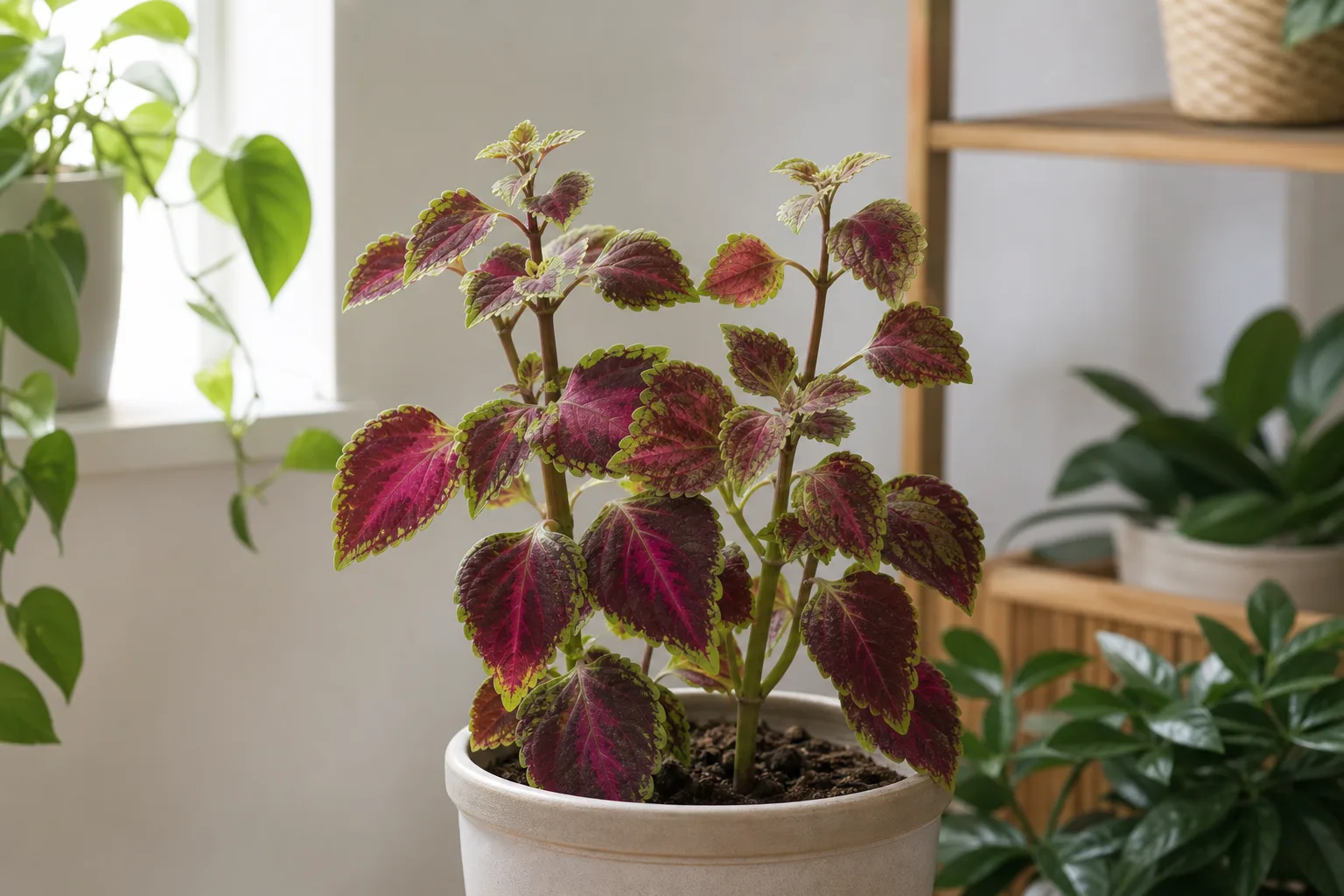
Slow Growth on Coleus: Causes, Checks & Fixes
This guide covers slow growth on Coleus. See also the general Slow Growth guide, watering, and light pages for this plant.
Slow Growth on Coleus: Causes, Checks & Fixes
Quick answer
Coleus (Plectranthus scutellarioides) is marketed as a fast warm-season foliage plant-Clemson HGIC notes that coleus rapidly grow to their full summer size when conditions are right. That speed is why owners notice a growth stall quickly. In bright indoor or outdoor summer conditions, you should see new tips or side shoots within one to three weeks after pinching. A cool-season pause when nights drop toward 55°F (13°C) is normal; The Old Farmer’s Almanac states that coleus languishes below 55°F and leaves fall off in colder air.
Abnormal slow growth means the plant stays visually static for four or more weeks during warm bright weather-no new nodes, no fresh leaf pairs, sometimes shrinking or pale new tissue while older leaves hold on.
First step: confirm room temperature and light placement before changing water or fertilizer. Measure whether the pot sits within a few feet of a bright window or grow light, and whether a heating vent or draft chills the plant below ~60°F (15°C) at night. Coleus cannot outgrow cold or chronic shade with extra feeding.
What normal fast Coleus growth looks like
Understanding the baseline prevents panic over a natural winter rest and flags real problems in summer.
Expected pace in warm bright conditions
During active growth-typically spring through early fall outdoors, or warm bright indoor setups-coleus pushes soft new leaves on square semi-succulent stems. Missouri Botanical Garden describes coleus as a popular foliage plant with cultivars ranging from dwarf 6-inch types to large 36-inch mounded forms, and growth in warm conditions can be visibly rapid within a single season.
Practical benchmarks for container coleus in 65–85°F (18–29°C) with bright indirect light:
- New leaf pairs or branching within 1–3 weeks after pinching stem tips
- Pot dries noticeably every 1–3 days in warm bright spots (check the top 1–2 cm of mix, not a calendar)
- Stem tips stay firm and leaves hold cultivar color on fresh tissue
- Pinching triggers side shoots rather than a single lonely vertical stick
Coleus cuttings root in water in about two to three weeks-that rooting speed reflects how fast the species builds tissue when warmth and moisture align. A mature parent plant in the same conditions should show comparable vigor above ground.
Seasonal winter slowdown indoors
Overwintered coleus often stalls without dying. Short days, weaker window light, and cooler room temperatures slow metabolism even when leaves look fine. University of Minnesota Extension notes that coleus is very cold sensitive and will be among the first plants affected by cold overnight lows.
Normal winter signs:
- Few or no new tips for weeks while temperatures sit in the 55–65°F (13–18°C) range
- Older lower leaves yellow and drop as the plant sheds tissue it cannot support in dim cool air
- Soil stays wet longer because transpiration drops-this is expected, not automatically overwatering
- Existing foliage holds color on many cultivars, even without much extension
This pause is not the same as pathological stall. Do not repot, fertilize heavily, or prune aggressively through a natural winter rest unless roots are rotting or pests are active.
Signs Coleus is healthy despite slower winter pace
A coleus resting correctly still has firm green stems, no sour soil smell, and stable leaf count on the upper canopy. When you move it to a brighter warmer spot in late winter or spring, the first new node should appear within two weeks. If warmth and light return and nothing happens for a month, the stall has a care cause beyond seasonality.
When slow growth is actually a problem
Treat growth as abnormal when these patterns appear during what should be active season:
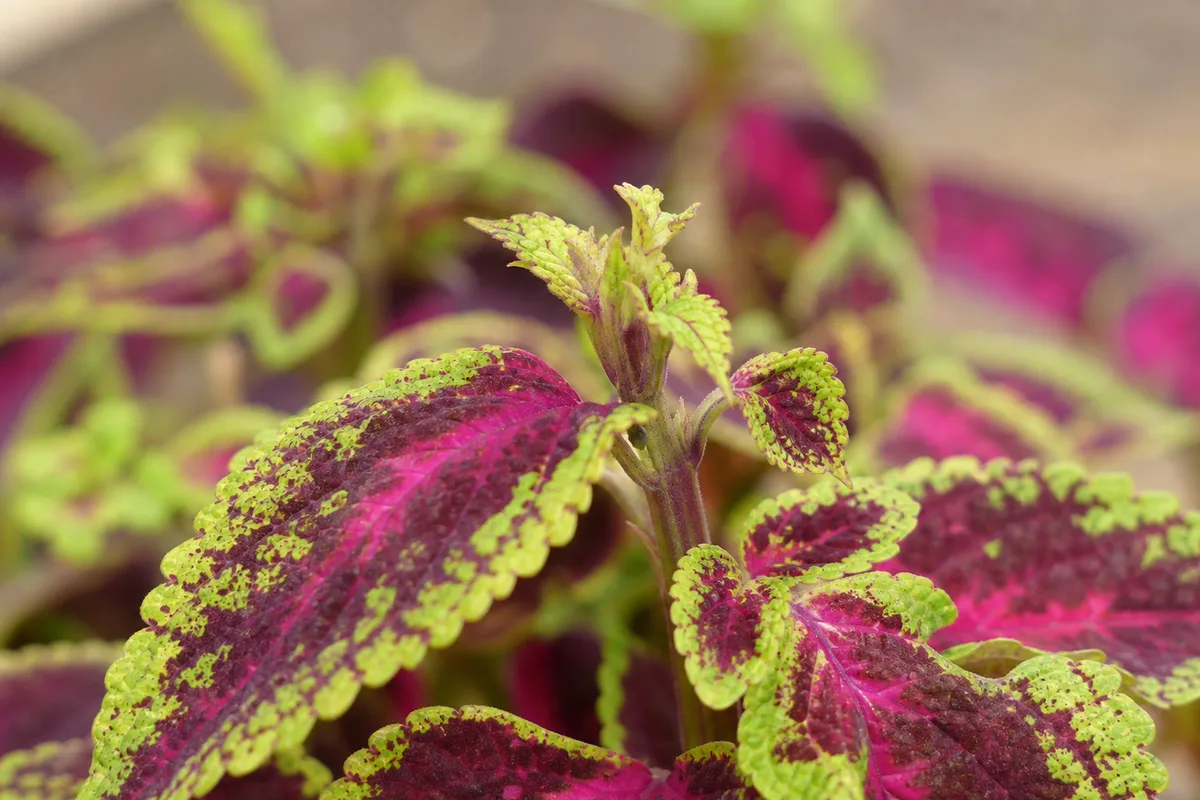
Stagnant stem tips with no fresh nodes and smaller, paler new leaves compared to the larger colorful leaves below - a fast grower that has stopped extending.
- No new tips for four or more weeks while room temperatures stay above ~65°F (18°C) and light is reasonably bright
- New leaves smaller and paler than leaves produced earlier in the same spot-energy deficit, not normal aging alone
- Wet soil for many days in a dim corner while the plant produces nothing new-roots may be suffocating even without obvious wilt
- Cold room below ~55°F (13°C) with accelerating leaf drop and zero extension-cold stall, not dormancy you can wait out indoors
- Flower spikes forming while foliage growth stops-energy redirect per Clemson HGIC guidance to pinch flowers to extend performance
- Sticky leaves, stippling, or fine webbing on undersides-sap drain from aphids, mealybugs, or spider mites common on indoor coleus
The counterintuitive framing: coleus behaves like a warm-season annual mentally even when you keep it as a houseplant. Stall in July on a bright windowsill is a red flag. Stall in January in a 58°F spare room is often expected.
Why Coleus growth stalls
Fast-grower biology and warm-season expectations
Coleus evolved in tropical and subtropical Asia as a tender perennial that builds foliage quickly when heat, moisture, and light align. NC State Extension notes the plant grows best in moist, rich, loose soil in part shade and that if grown as a houseplant it requires bright light. Metabolism drops sharply outside that comfort band-growth is not linear across seasons.
Insufficient light
Light is the most common limiter for indoor stall that is not winter rest. In dim conditions coleus may survive but photosynthesize too slowly to push new tissue. Plants grown in too much shade may become leggy-and in severe shade growth can stall entirely while soil stays wet because the plant uses less water. See our not enough light on Coleus guide for stretch-and-fade patterns; slow compact stall without stretch still often traces to weak light in overwintered plants.
Cold and draft stress
Coleus languishes below 55°F and loses leaves in colder conditions. Air-conditioning vents, single-pane windows, and unheated porches can hold ambient temps that look “fine” to you but stall coleus for weeks. Cold-stalled plants may drop lower leaves while producing zero new tips until warmth returns.
Root-bound and pot size
Fast summer growth fills small pots within one season. Root-bound coleus may show rapid drying, then stall as circling roots lose uptake efficiency-stunted growth is a classic repot signal on our Coleus repotting guide. Conversely, an oversized pot with slow root colonization stays wet and can stall growth through wet feet and stunted muddy-brown foliage.
Overwatering in shade / underwatering drought
Two water extremes both stall coleus:
- Chronic wet mix in dim light - roots cannot breathe; Clemson HGIC links poorly drained soils and excessive watering to stunted growth
- Repeated dry cycles - drought damages fine roots; growth stops even after leaves rehydrate
Match watering to how fast your pot dries in your light. Our Coleus watering guide covers the top 1–2 cm check rhythm.
Flowering energy redirect
Late-summer flower spikes are normal outdoors. Indoors, blooming often coincides with flat foliage growth. If allowed to go to seed, the plant will decline-pinching spikes redirects energy back to leaves.
Pest sap drain
Aphids, spider mites, and whiteflies affect coleus, especially indoors. Low-level infestations sap vigor before obvious leaf damage spreads. Inspect undersides and new tips when growth mysteriously flatlines.
How to confirm the cause
Work through this numbered checklist before stacking fixes:
- Season and temperature - Is it winter rest in a cool room, or warm-season stall? Note overnight lows near the pot; below ~55°F (13°C) explains pause without other changes.
- Light audit - Is the pot within 1–3 feet of a bright window or under a grow light 12–14 hours daily? Houseplants in dim corners show poor growth even when watered correctly.
- New growth inspection - Are tips producing any nodes? Smaller paler new leaves suggest energy deficit; no nodes at all suggests cold, light, roots, or pests.
- Soil moisture rhythm - Probe the top 1–2 cm. Wet for 5+ days in dim light points to overwatering or root stress. Bone dry and light pot points to drought-see underwatering on Coleus.
- Root check - Tip the plant out gently. White firm roots in a dense mat circling the pot suggest root-bound stall. Brown mushy roots suggest rot-see root rot on Coleus.
- Flower spikes - Remove any spikes and watch whether leaf production resumes in two weeks.
- Pest check - Sticky residue, stippling, webbing, or clusters on new growth confirm sap drain.
Confirmation test: Fix the single most likely limiter (usually light or temperature), wait two weeks, and judge by new nodes only. Old leaves do not shrink back to compact form.
Lookalike symptoms to rule out
| Pattern | Likely issue | Key differentiator |
|---|---|---|
| Long stems, lean toward window, dull color | Not enough light | Stems stretch; growth may continue slowly-see leggy growth |
| No new tips, compact plant, dim room | Light-limited stall | No internode stretch but zero new nodes for weeks |
| Wet soil, yellow lower leaves, sour smell | Root rot / overwatering | Mushy roots; wilt may persist despite wet mix |
| Dry soil, dramatic wilt, quick recovery after soak | Underwatering | Light pot; firm roots |
| Cold room, leaf drop, no new tips | Cold stall | Thermometer below ~55°F (13°C) |
| Flower spikes, flat foliage | Flowering redirect | Spikes present; pinch test restarts leaves |
Slow growth owns the “fast grower stalled in warm bright season” intent. Leggy growth owns stretch toward light. Do not conflate them when choosing the first fix.
First fix for Coleus
Move the plant to the brightest safe spot that meets warm-season needs-bright indirect light within 1–3 feet of an east or west window, or under a full-spectrum grow light-and confirm the room stays above ~60°F (15°C) at night.
That single step addresses the two commonest stall drivers for overwintered and indoor coleus: weak light and cool air. NC State Extension states coleus grown as a houseplant requires bright light-not a distant shelf labeled shade-tolerant.
Hold off on repotting, fertilizer, and heavy pruning on day one unless you confirm root rot (mushy roots, sour mix) or severe root-binding (dense circling mat, pot dries in hours).
After placement:
- Pinch any flower spikes immediately
- Adjust watering to the new dry-down speed-brighter spots need more frequent checks per our watering guide
- Wait two weeks for the first new node before adding secondary fixes
If light and warmth are already adequate, the next single fix is usually repotting one size up in spring when roots circle the pot-or easing watering when mix stays wet in dim conditions.
Recovery timeline
| Situation | What to expect |
|---|---|
| Winter pause in cool dim room | Growth may not resume until light and warmth increase in spring-weeks to months is normal |
| Light or warmth correction in active season | First new nodes in 1–2 weeks; fuller flush in 2–4 weeks |
| After pinching flower spikes | Side shoots within 1–2 weeks if light and warmth support growth |
| Root-bound repot in spring | 1–2 weeks adjustment pause, then 2–4 weeks to visible bushiness |
| Root rot or chronic wet feet | Several weeks after drainage fix; some lost roots never recover lost size quickly |
| Pest sap drain cleared | 2–3 weeks after population drops; severely weakened plants take longer |
Judge success by new tip frequency and leaf size, not by old leaves greening up. Damaged or stalled tissue on older leaves may not revert; new growth tells the truth.
What not to do
- Do not fertilize a stalled coleus before fixing light, temperature, and root health-nutrients cannot replace photons or warmth. Our fertilizer guide covers feeding only during active growth.
- Do not repot and fertilize the same week on a weak plant-double stress stalls recovery further.
- Do not keep a summer watering rhythm in a dim winter corner-wet feet stunt coleus when roots sit in soggy cold mix.
- Do not remove healthy leaves because “nothing is happening”-coleus needs foliage area for photosynthesis when growth restarts.
- Do not assume slow growth means more water when soil is already wet-inspect roots instead.
- Do not expect fertilizer to replace grow lights in north-facing winter rooms.
How to prevent abnormal slow growth next time
- Match light to cultivar using our Coleus light guide-houseplants need bright indirect exposure even when outdoor tags say part shade.
- Track seasonal rhythm on the Coleus overview-reduce watering and pause fertilizer in cool dim months; expect flush growth when warmth returns.
- Repot every 12–18 months or when roots circle and the pot dries within hours-before stall sets in mid-season.
- Pinch tips and flower spikes regularly per our pruning guide to keep energy in foliage.
- Check pests weekly on indoor specimens through dry winter air.
- Use a thermometer near the pot in winter-drafts below ~55°F (13°C) stall coleus silently.
Coleus care cross-check
Slow growth rarely exists in isolation. Align these basics once you identify the limiter:
- Light - Bright indirect for most indoor coleus; grow lights in winter
- Water - Top 1–2 cm dry-down check; never let active-season pots go rock-hard dry
- Soil - Rich, well-draining mix; avoid oversized pots that stay wet
- Feed - Half-strength balanced fertilizer every 2–4 weeks only during active growth
- Temperature - Target 65–85°F (18–29°C) for active extension; protect from cold drafts
When to worry
Escalate beyond routine correction when:
- No new growth after four weeks in warm bright conditions despite corrected light and temperature
- Wet soil + stall + yellow spreading leaves-possible root rot; inspect immediately
- Stem base softens or mix smells sour
- Pest populations coat new growth and stall persists after treatment
- Entire plant defoliates below 50°F (10°C)-cold damage may kill overwintered specimens
At that point inspect roots, trim dead tissue, and propagate healthy stem cuttings if the crown fails-coleus roots easily from cuttings when warmth returns.
Conclusion
Coleus is supposed to be a fast warm-season grower-so when it stalls in bright summer conditions, that is abnormal and worth diagnosing. Separate normal winter pause (cool dim months, few new tips) from pathological stall (no growth for weeks while warm and bright). Confirm temperature and light first, pinch flower spikes, match watering to the season, and repot root-bound plants in spring. Watch new nodes, not old leaves, for proof the fix worked.
Related Coleus guides
- Coleus overview - growth habit and seasonal expectations
- Coleus light - color and growth throttle
- Coleus watering - moisture rhythm by season
- Coleus fertilizer - when feeding helps vs hurts
- Coleus repotting - root-bound stall
- Coleus pruning - pinching and flower removal
- Not enough light on Coleus - stall vs stretch
- Underwatering on Coleus - drought stall
- Root rot on Coleus - wet-soil stall