Wilting on Coleus: Causes, Checks & Fixes
Quick answer
Wilting coleus usually means a water pathway problem-dry soil, failed roots, or heat stress-not simply 'needs water.' First step: push your finger 1–2 cm into the mix; water thoroughly at the base if dry, stop watering and inspect roots if wet.
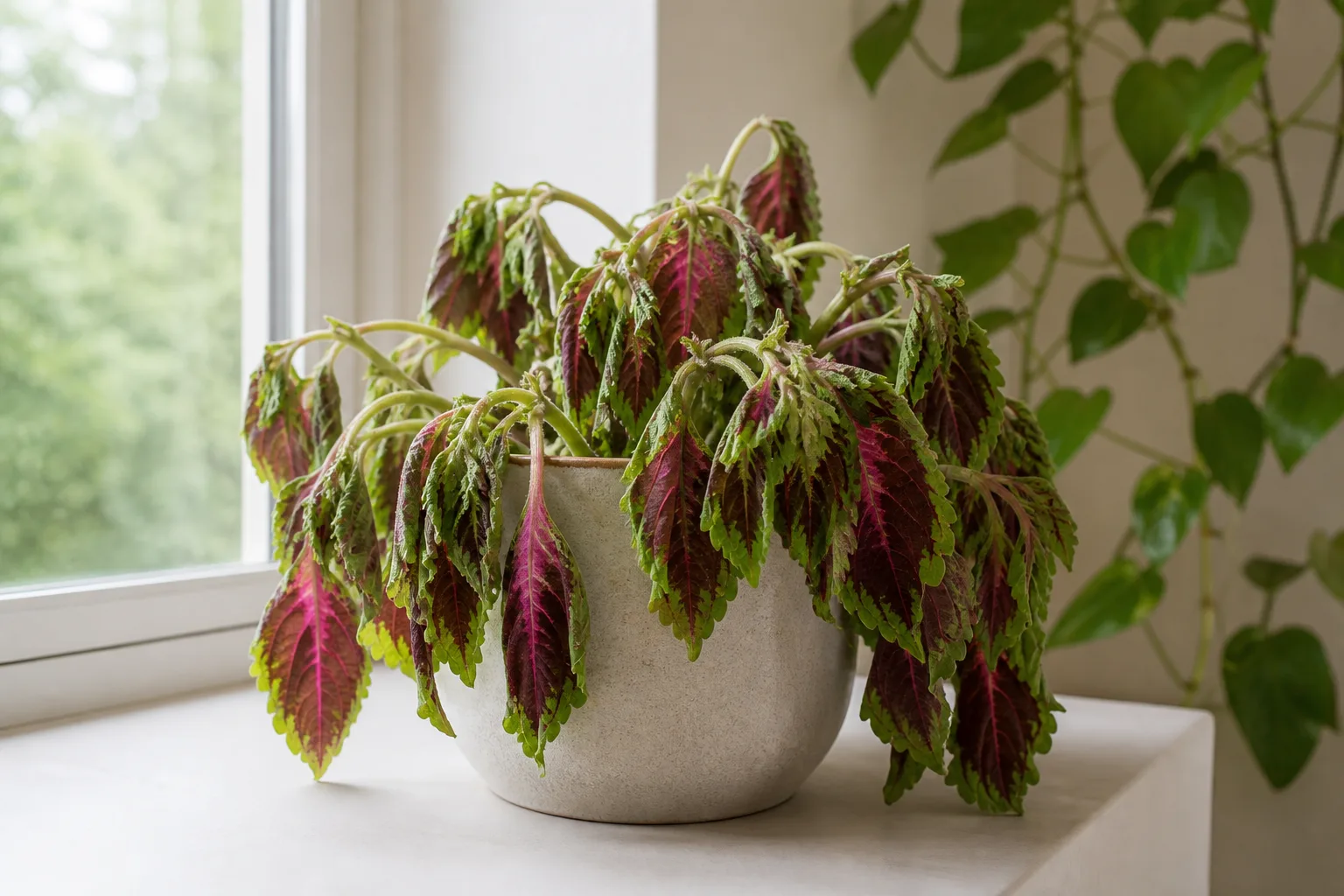
Wilting on Coleus: Causes, Checks & Fixes
This guide covers wilting on Coleus. See also the general Wilting guide, watering, and light pages for this plant.
Wilting on Coleus: Causes, Checks & Fixes
Quick answer
Wilting coleus (Plectranthus scutellarioides) means the plant cannot hold normal leaf turgor-soft stems and colourful leaves hang limp instead of firm. The same collapse can come from opposite problems: bone-dry mix, waterlogged rotting roots, afternoon heat overload, or a pot too small to hold moisture for the whole root mass.
First step: push your finger 1–2 cm into the mix before you add water. Dry at that depth → underwatering on Coleus is likely; water thoroughly at the base until drainage runs free. Wet at that depth with limp foliage → stop watering and inspect roots-[damaged roots cannot move water upward](https://www.missouribotanicalgarden.org/gardens-gardening/your-garden/help-for-the-home-gardener/advice-tips-resources/insects-pests-and-problems/environmental/[overwatering on Coleus](/plants/coleus/overwatering/)), so more water worsens collapse.
Coleus wilts dramatically when dry but often perks up within hours after a proper soak. That fast recovery is useful-unless the soil is already wet and the plant stays limp into the next morning. That wet-soil paradox is the most dangerous mistake on this species.
What wilting looks like on Coleus
Healthy coleus holds its leaves at a confident angle off square, semi-succulent stems. Wilting removes that stiffness.
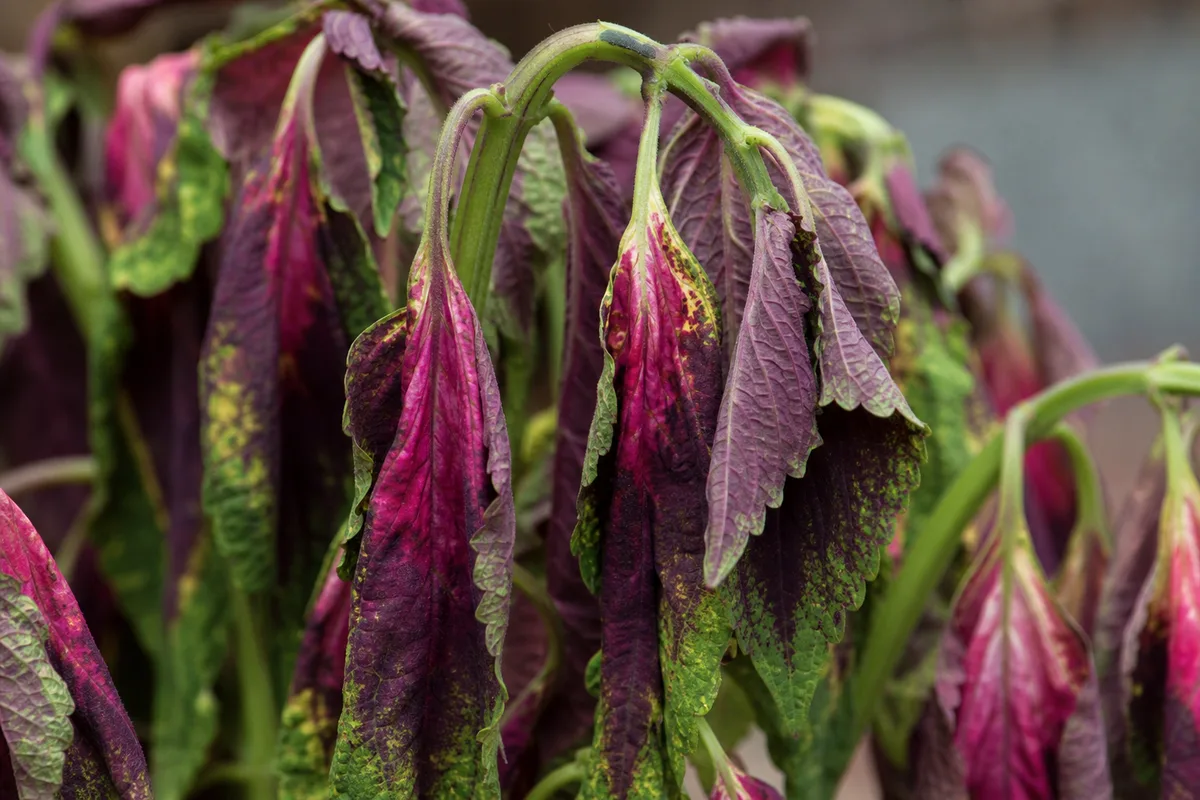
Limp colorful leaves hanging from soft square stems - Coleus loses turgor quickly, so dramatic droop is visible before leaves turn crispy.
Dry-soil wilt (underwatering):
- Entire stems and leaves flop dramatically; colour may still look vivid
- Mix is dry 1–2 cm down; pot feels very light when lifted
- Soil may pull slightly away from the pot wall
- Leaves often firm up within a few hours after a thorough base soak if roots are still healthy
Wet-soil wilt (overwatering / root rot on Coleus):
- Leaves limp and may yellow, often starting on lower foliage
- Mix stays moist or soggy at depth; pot feels heavy
- Sour or musty smell when you disturb the surface or unpot
- Stems may soften at the soil line on advanced cases
- The paradox: plant looks thirsty while soil is wet
Heat-stress wilt:
- Drooping during the warmest part of the day on otherwise moist soil
- Plant often recovers overnight or by evening without extra water
- Leaves near hot windows or heating vents dry at edges faster than roots can supply water
Coleus repotting guide shock wilt:
- Limpness within one to two weeks after repotting into fresh mix
- Stems stay firm at the base; roots have not yet re-established contact with new soil
- Usually resolves once watering rhythm matches the larger pot volume
Root-bound wilt:
- Chronic limpness even after normal watering
- Small pot dries within 24 hours every cycle; water runs through quickly
- Roots visible through drainage holes or circling the pot edge
Coleus has thin leaves and soft stems that lose turgor fast-faster than many succulents or woody houseplants. Mild wilt from a missed watering is common and usually reversible. Persistent wilt without a clear moisture match needs a deeper look at roots, pot size, and placement.
Why Coleus wilts
Coleus evolved in moist tropical and subtropical woodlands. It needs consistently moist, well-drained soil-not dust, not mud. Several traits make wilting show up quickly on this species.
Underwatering dries fine roots and deflates leaf cells. Container coleus are more susceptible to drought than plants in open ground; a sunny window pot can go from evenly moist to bone dry in one or two days because limited soil volume cannot buffer heat the way a garden bed can. Prolonged drought on a fast-growing summer plant can wilt the whole bushy crown in a single warm afternoon.
Overwatering and root rot produce the same visible wilt through a different mechanism. Saturated mix drives out oxygen; roots decline and cannot transport water. Owners see limp leaves and water again-accelerating rot. Wet feet on coleus shows up as stunted growth, muddy brown leaves, and scorched leaf margins when drainage fails.
Heat and draft stress increase water loss from thin leaves faster than roots can replace it. Plants grown in too much sun may wilt even when soil is moist, because transpiration outpaces uptake. Afternoon droop on moist soil that perks by evening is often heat alone-not a call for more water.
Repotting shock temporarily reduces root function. Fresh mix that stays too wet around disturbed roots adds stress on a plant already struggling to re-establish uptake.
Pot-bound roots leave too little soil to hold water for the whole root mass. The plant collapses between waterings even when you think you watered enough.
Hydrophobic dry pockets in old peat can leave the center of the root ball dry while the surface looks acceptable. Water runs down the sides; roots in the middle stay thirsty and stems wilt on a “watered” schedule.
For species context and seasonal watering rhythm, see our Coleus watering guide.
How to confirm the cause
Work through these checks in order-do not skip the moisture test:
- Soil moisture at 1–2 cm - Push your finger to the first knuckle near the pot edge, not against the stem. Dry = suspect drought; wet = suspect root failure or heat on saturated mix.
- Pot weight - Lift the container. Light with limp leaves fits underwatering. Heavy with limp leaves fits waterlogging or root rot.
- Stem firmness - Press stems at the soil line. Firm stems with dry soil point to thirst. Soft, darkening bases on wet soil point to rot.
- Smell and surface - Sour odor, algae, or white mold on wet mix supports chronic saturation.
- Time pattern - Afternoon-only droop on moist soil suggests heat stress. All-day wilt on dry soil suggests drought. All-day wilt on wet soil suggests roots.
- Recent events - Repotting within two weeks, a heat wave, or a missed watering week narrows the cause quickly.
- Root spot-check if mismatch persists - Slide the plant out gently. Healthy coleus roots are firm, white or tan. Brown mush that collapses between fingers confirms rot. Dry, brittle roots in dusty mix confirm drought damage.
Wilting is not always a call for water. Root injury from too much water decreases uptake; watering wet, wilted coleus can make the problem worse.
| Check | Dry wilt likely | Wet wilt likely | Heat stress likely |
|---|---|---|---|
| Soil 1–2 cm down | Dry, crumbly | Cool, clings to finger | Moist |
| Pot weight | Light | Heavy | Moderate |
| Stem base | Firm | Soft or darkening | Firm |
| Time pattern | All day until watered | All day despite wet soil | Afternoon only |
| After overnight | Still limp if dry | Still limp | Often recovered |
First fix for Coleus
Check soil moisture at 1–2 cm depth-then act on what you find.
- If dry: Water thoroughly at the base until water runs from drainage holes. Empty the saucer within 30 minutes. Move the plant out of direct sun while leaves rehydrate. Do not mist foliage or give repeated shallow sprinkles.
- If wet: Do not water. Move to Coleus light guide to speed drying, empty saucer water, and unpot if stems are soft or smell is sour.
That single diagnostic step prevents the most common mistake: watering a rotting coleus because it looks thirsty.
Do not fertilize, mist heavily, or repot on day one unless you have confirmed mushy roots or a clearly hydrophobic dry core. Stacking fixes on a stressed plant adds salt and disturbance without solving the water pathway.
Step-by-step recovery
If underwatering is confirmed
- Water deeply once at the base; for very dry mix, bottom-soak the pot in a tray until the surface darkens, then drain fully-or water, wait thirty minutes, water again.
- Trim only leaves that stay crispy and brown after 48 hours; green limp tissue often recovers turgor.
- Adjust schedule: water when the top 1–2 cm dries, not on a calendar.
- If the plant was in harsh sun, move to bright indirect light-recovery is faster without extra heat load.
See our underwatering on Coleus guide for hydrophobic dry pockets and rebound testing detail.
If overwatering or root rot is confirmed
- Stop watering immediately.
- Unpot, rinse roots, and trim all brown mushy tissue back to firm white or tan roots.
- Repot into airy, well-drained mix with perlite in a pot sized to the remaining root mass-not oversized.
- Withhold water for about a week unless the remaining root mass is very small-then give one light drink.
- Remove yellow leaves that continue to soften; they will not re-firm.
- If most roots are gone, take healthy stem cuttings above firm nodes as backup.
See overwatering on Coleus and root rot on Coleus for wet-soil patterns and escalation steps.
If heat stress is confirmed
- Move the plant away from hot windows, radiators, and heating vents.
- Ensure soil moisture is even-not bone dry, not soggy.
- Filter intense afternoon sun with a sheer curtain.
- Expect recovery within 24–48 hours once heat load drops.
If root-bound
- Repot into a container only one size larger with fresh well-draining mix.
- Tease or trim circling roots lightly so they contact new mix.
- Water once after repotting, then return to the dry-top-1–2-cm rule-do not soak repeatedly.
Recovery timeline
Underwatering: Noticeable perk within 2–6 hours after a thorough drink on healthy roots; severely dehydrated plants may need 24 hours for full turgor.
Overwatering / early rot: Days to weeks. Judge by firm stems and new side shoots, not old yellow leaves.
Heat stress: Often overnight to 48 hours once placement stabilizes.
Repotting wilt: One to three weeks for stems to feel firm again; hold fertilizer until new growth looks normal.
Collapsed leaves rarely become glossy again-they drop or stay limp while new leaves tell you recovery is real.
Lookalike symptoms to rule out
Drooping leaves without acute collapse - On coleus the terms overlap, but chronic limpness over weeks may fit our drooping leaves on Coleus guide when the pattern is gradual rather than sudden.
Yellow leaves without wilt often mean chronic overwatering or nitrogen stress-not always acute collapse. Check moisture before treating wilt.
Leggy pale stretch means low light over time, not necessarily wilt. Stems may be firm while spacing between leaves is wide. See not enough light on Coleus if stretch dominates.
Pest stress - Spider mites and aphids can cause leaf curl and limpness with fine webbing or sticky residue. Rule out water mismatch first, then inspect leaf undersides.
Mistakes to avoid
Do not water every wilt without checking soil-wet-soil wilt needs drying and root inspection, not another drink.
Do not leave saucers full. Standing water keeps the bottom anaerobic and mimics overwatering wilt.
Do not move a wilted plant into direct sun hoping to “dry it out.” Scorched margins add stress on already failing roots.
Do not fertilize collapsed coleus. Salt stress on damaged roots slows recovery.
Do not repot healthy dry wilt on day one-a deep watering usually fixes simple thirst.
Do not mist wilted foliage as a first response. Wetting foliage while watering can lead to downy mildew and stem rot on this species-water the base instead.
Do not assume a small summer pot needs the same volume as a large winter pot. Container coleus in hot sun often needs daily checks.
Coleus care cross-check
Wilting often exposes a mismatch between your routine and the plant’s current environment:
| Factor | Wilting risk when… |
|---|---|
| Light | Bright window uses more water; deep shade slows growth but can keep mix wet too long |
| Mix | Dense old peat holds water and invites rot wilt; hydrophobic peat causes dry-core wilt |
| Pot size | Oversized pots stay wet at center; root-bound small pots wilt between drinks |
| Season | Cool dim winter slows water use; calendar summer watering in January causes wet-soil wilt |
| Placement | Drafts and vents dry leaves while soil stays wet-a dual stress pattern |
How to prevent wilting on Coleus
Water when the top 1–2 cm of mix are dry, using finger, weight, or a meter at root depth-not the day of the week.
Use pots with drainage holes and empty saucers after every watering.
Deliver water to the base of the plant rather than showering foliage.
Repot when roots circle the pot or emerge from holes-before chronic dry-wilt cycles damage the crown.
Keep plants away from AC vents, radiators, and hot glass.
In bright rooms, check small containers every one to two days in summer; in low light, stretch intervals and verify depth moisture before assuming thirst.
Refresh hydrophobic mix or repot when water channels down the sides without wetting the root core.
Full prevention rhythm: Coleus watering guide.
When to worry
Treat as urgent when:
- Stems wilt on soggy soil with sour smell or soft tissue at the base
- Blackening climbs from soil line up the stem
- The plant does not perk within 24 hours after confirmed dry-soil watering
- More than half the roots are mushy on inspection
Less urgent but worth fixing soon: mild afternoon droop on moist soil, single-day wilt on a dry small pot, or wilt right after repotting with firm stems and no rot smell.
Conclusion
Wilting coleus is a diagnostic signal, not an automatic command to water. Moisture at 1–2 cm depth, pot weight, and stem firmness tell you whether to drink, dry, or repot. Acting on that check first saves plants from rot and rescues thirsty coleus before crispy damage spreads. Match watering to how fast your mix actually dries in your light-not to how limp the leaves look at first glance.
Related Coleus problems: underwatering, overwatering, root rot, drooping leaves, not enough light. Species overview: Coleus.
When to use this page vs other Coleus guides
- Coleus watering guide - Use for routine moisture checks before assuming wilting is the main issue.
- Coleus problems hub - Browse all 16 common issues on this species.
- Underwatering on Coleus - Different entry point when symptoms overlap with wilting.
- Overwatering on Coleus - Different entry point when symptoms overlap with wilting.
- Root Rot on Coleus - Different entry point when symptoms overlap with wilting.