Not Enough Light on Coleus: Causes, Checks & Fixes
Quick answer
Coleus in too little light stretches toward windows, loses leaf color intensity, and grows slowly. First step: move the pot to the brightest spot that gives bright indirect light-not a dark corner labeled shade-tolerant.
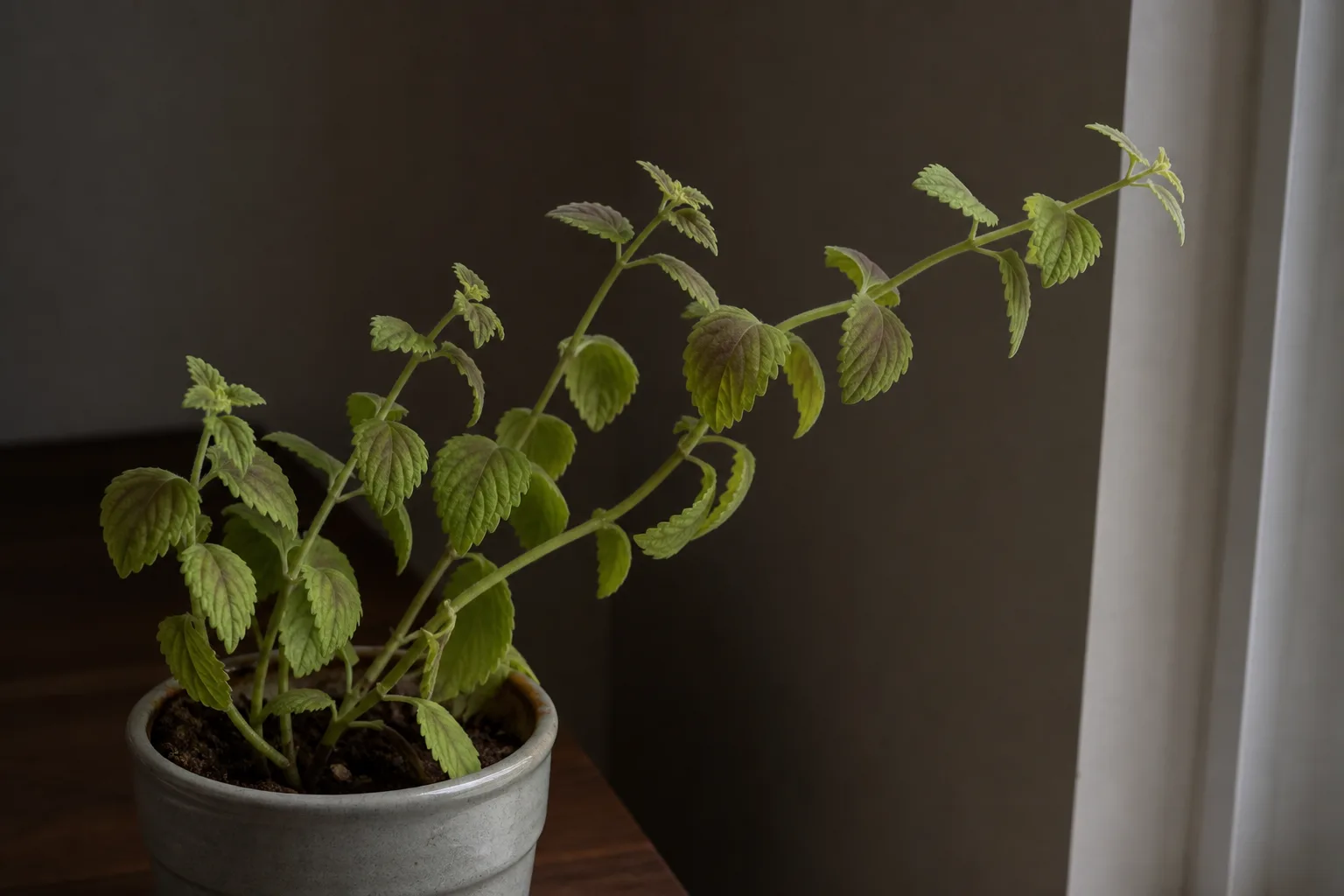
Not Enough Light on Coleus: Causes, Checks & Fixes
This guide covers not enough light on Coleus. See also the general Not Enough Light guide, watering, and light pages for this plant.
Not Enough Light on Coleus: Causes, Checks & Fixes
Quick answer
Coleus is sold for bold leaf color, but it only keeps that color when photosynthesis runs at full speed. In dim rooms, shaded hallways, or north-facing spots far from glass, stems stretch, internodes lengthen, and the painted patterns wash out to dull green.
First step: move the pot to the brightest location that still gives Coleus light guide-typically within one to three feet of an east- or west-facing window, or under a quality grow light if windows are weak. Coleus tolerates outdoor shade, but as a houseplant it needs bright light to stay compact and colorful.
Do not reach for fertilizer, Coleus repotting guide, or heavy pruning until you have corrected light. Those steps treat symptoms, not the energy deficit driving the stretch.
Why Coleus runs out of light indoors
Coleus evolved as a tropical understory plant native to Southeast Asia and is often marketed as shade-loving. Outdoors in summer, part shade or filtered sun works well. Indoors, usable light drops sharply with every foot you move away from a window-and winter short days cut intensity further.
The mismatch is common: a plant labeled for shade goes on a bookshelf six feet from glass. NC State Extension notes that full shade may lead to leggy growth, and when Coleus is grown as a houseplant, it requires bright light. What reads as “bright” to human eyes may be medium or low light for a fast-growing foliage plant.
Coleus also uses water quickly when warm and well lit. In dim conditions the same Coleus watering guide keeps roots wet longer because the plant photosynthesizes less. That combination-weak light plus persistently moist mix-invites yellow lower leaves and root stress that can look like a watering problem when light is the root cause.
Obstructed windows make it worse. Sheers, tinted glass, overhangs, and neighboring buildings reduce footcandles rapidly with distance. A Coleus that looked fine in a summer bay window may decline in the same spot by December without any change to your watering can.
What not enough light looks like on Coleus
Low light on Coleus shows up in the growth pattern and leaf quality, not as a single spot on one leaf.
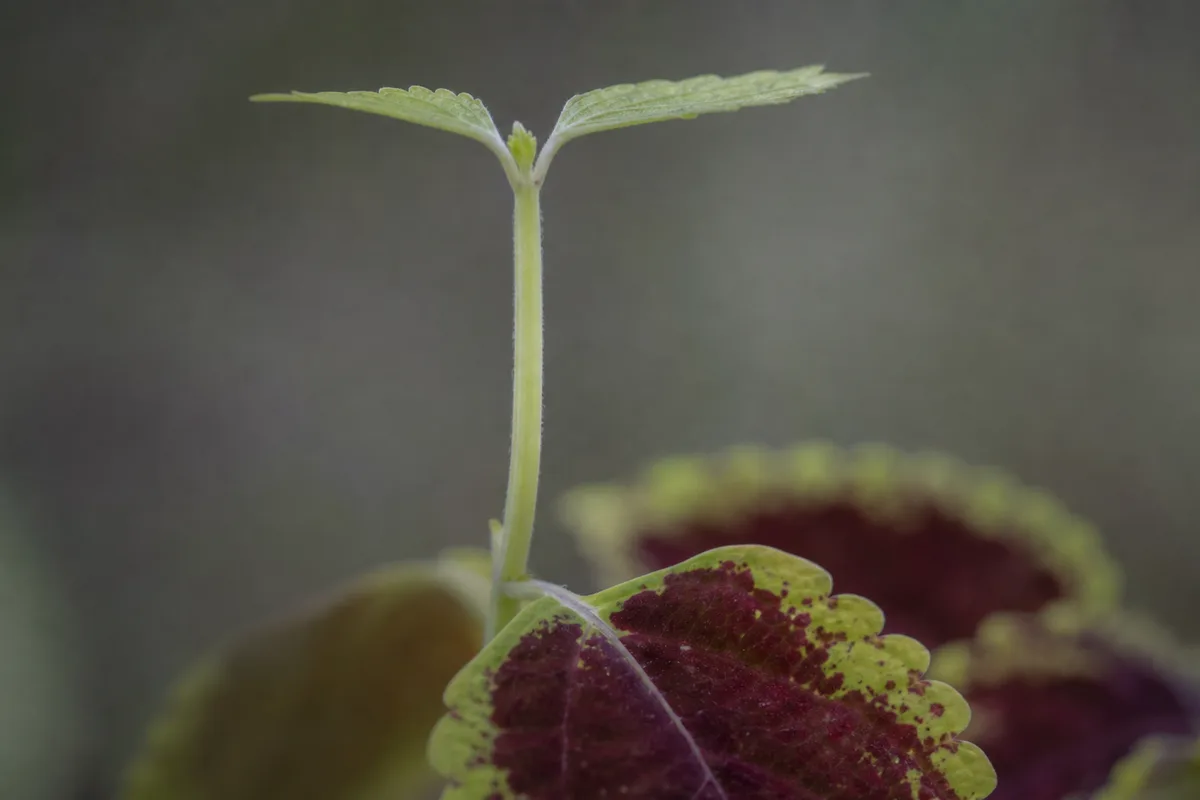
Long gaps between dull, washed-out Coleus leaf pairs on a stretched stem - compare with tighter spacing and vivid color on leaves grown in brighter light.
Typical low-light signs:
- Elongated stems with long gaps between leaf pairs-the plant reaches toward the window
- One-sided lean when light comes from a single direction
- Smaller new leaves compared with leaves produced when the plant had better light
- Washed-out or darker green color instead of the vivid reds, yellows, and magentas the cultivar should show
- Slow or stalled growth despite moist soil and regular feeding
- Sparse lower foliage as the plant invests energy in the topmost shoots chasing light
- Weak flower spikes if bloom is allowed; many growers pinch these anyway to keep foliage energy high
Missouri Botanical Garden notes that plants grown in too much shade may become leggy-the same stretching you see indoors when light is inadequate. Maryland Extension lists spindly growth, lean, fading leaf color, and poor growth among impacts of too little light on houseplants generally; Coleus shows these signs quickly because it is a fast grower when conditions are right.
Low light is different from sun scorch. Too much direct sun bleaches or browns leaf patches and may wilt semi-succulent Coleus stems in hot afternoon rays. Low light rarely burns tissue-it stretches and dulls it.
How to confirm the cause
Work through these checks before you change fertilizer or repot:
- Window distance and direction - Measure roughly how far the pot sits from glass. More than four to six feet from a window, or blocked by furniture, is often insufficient for colorful Coleus indoors.
- Seasonal comparison - Did symptoms start or worsen after daylight shortened in autumn? Same placement can mean much less energy in winter.
- Lean and internode length - A clear lean toward the brightest side, with new stem sections longer than older compact growth, strongly suggests light deficit.
- Color on new growth - Compare the newest two or three leaves with leaves from when you bought the plant. Duller patterning on fresh tissue points to current light, not old damage alone.
- Soil drying speed - If the mix stays wet for many days in a dim spot while the plant looks weak, low light may be slowing water use. Confirm drainage holes are open, then interpret slow drying as a light-and-water interaction.
- Pest check - Inspect leaf undersides for aphids, spider mites, and whiteflies. Indoor Coleus is prone to these pests, and mite damage can yellow leaves in hot dry rooms-a different pattern from stretch and fade.
Confirmation test: Move the plant to a brighter indirect location for two weeks without changing anything else major. If new nodes appear closer together and color improves on fresh leaves, light was the limiter.
First fix for Coleus
Move the pot to the brightest safe spot that provides bright indirect light-within one to three feet of an east- or west-facing window, or directly under a full-spectrum grow light.
Hold off on direct south-window sun until you know the cultivar tolerates it; many Coleus varieties bleach in harsh midday rays. Bright indirect light means the plant sees the sky but not a hot sunbeam on the leaves for hours at a time.
If no window spot qualifies, add a full-spectrum LED grow light 6 to 12 inches above the canopy and run it 12 to 14 hours daily-within the range most houseplants tolerate when combining artificial and natural light.
Do not fertilize a stretched, dull plant on day one. Do not repot unless roots are rotting in wet mix. Fix light first; the plant cannot use extra nutrients without adequate photosynthesis.
Step-by-step recovery
After the initial move:
- Acclimate if jumping to much brighter light - Increase exposure over one to two weeks if you are moving from a very dark corner to a strong west window. Sudden hot direct sun can bleach leaves even on sun-tolerant cultivars.
- Rotate the pot weekly - Even light prevents one-sided lean and keeps color development symmetrical.
- Pinch stem tips once new compact growth appears - Pinching promotes bushiness on Coleus after light supports branching. Pinching alone in dim light does not replace brighter exposure.
- Adjust watering to match new light - Brighter spots dry the mix faster. Check the top 1 to 2 cm of soil before each watering rather than keeping a calendar schedule from the dim corner.
- Remove flower spikes - Flower spikes visually detract from foliage and divert energy; snap them off when they appear.
- Trim severely leggy stems if needed - After light improves, cut back long bare stems to a node above healthy leaves. Root the cuttings in water if you want backup plants-Coleus roots easily.
- Add grow-light hours in winter - Supplement from late autumn through early spring if windows cannot supply enough intensity for steady color.
Make one major change at a time when possible so you can read the plant’s response.
Recovery timeline
Expect the first signs of tighter new growth within one to two weeks after light improves. Stronger leaf color on fresh foliage usually follows within two to three weeks.
Old elongated internodes do not shrink-stretched stem sections remain long. Judge success by the next leaf sets, not by old tissue reverting.
If color and spacing have not improved after three to four weeks in a clearly brighter spot, reassess whether the new location is still too dim, whether pests are active, or whether chronic wet roots need separate treatment.
Lookalike symptoms to rule out
overwatering on Coleus in a dim spot causes yellow lower leaves, soggy mix, and sometimes mold on soil. Light is often the hidden trigger because the plant uses less water when photosynthesis is weak. Check root firmness and smell before assuming pure watering error.
underwatering on Coleus makes Coleus wilt dramatically, but stems stay relatively compact unless light is also poor. Dry mix and quick recovery after watering point to thirst, not light alone.
Nitrogen excess can produce rapid weak stretch with soft pale growth even in decent light. Review whether recent heavy feeding coincided with the change-Coleus is sensitive to leggy growth from excess nitrogen.
Spider mites cause stippling and fine webbing, often in hot dry air-not the directional lean typical of light chase. Tap a leaf over white paper to confirm.
Cool draft stress near AC vents can stall growth and yellow leaves without the pronounced stretch toward windows.
Mistakes to avoid
Do not leave Coleus in a dark corner because the tag said “shade tolerant.” Outdoor shade still delivers far more photons than a poorly lit interior shelf.
Do not jump straight to blasting direct south-window sun to fix dull color-bleaching and wilt are common on semi-succulent Coleus stems. Increase light gradually.
Do not over-fertilize to “green up” a dim plant. That fuels weak stretch without fixing color intensity.
Do not keep the same watering frequency after a big light upgrade-roots will use water faster in brighter conditions.
Do not expect old stretched leaves to compact on their own. Trim or tolerate them; new growth tells the story.
Coleus care cross-check
Bright indirect light pairs with Coleus’s normal rhythm: consistently moist but not soggy mix, checked by feeling the top 1 to 2 cm of soil. In low light, slow drying can mask a light problem as overwatering. After you move the plant, recalibrate watering to the new dry-down speed.
Moderate humidity (50 to 70%) supports leaf quality but cannot replace adequate light for color development. Temperature between 18°C and 32°C (65–90°F) suits active growth; cold rooms below about 10°C stall Coleus even when light is technically sufficient.
How to prevent not enough light next time
Place new Coleus where it receives bright indirect light for most of the day-not where the pot looks best on a distant console. Oklahoma Proven notes Coleus as a houseplant requires bright light despite outdoor shade tolerance.
Reassess placement every autumn when daylight shortens. Add grow lights before stretch and fade become severe rather than after stems are bare.
Rotate pots weekly and wipe dust from leaves so available light actually reaches chlorophyll.
When overwintering outdoor Coleus indoors, quarantine near the brightest acceptable window and expect some adjustment leaf drop-plants can stress when moved from bright outdoor conditions to lower indoor light.
Choose cultivars matched to your real light. Sun-tolerant series handle more direct rays; delicate pastel types need brighter indirect light but burn faster in hot sun.
When to worry
Pure low light is a chronic stress, not an overnight emergency-but two combinations need faster action.
Treat as urgent when a dim-room Coleus sits in wet soil with yellow spreading leaves, soft stem bases, or sour-smelling mix. That pattern suggests root rot on Coleus from slow water use in inadequate light. Improve light and ease watering; inspect roots if decline continues.
Also act promptly if stretch is so severe the plant cannot support itself, or if pest populations explode on weak stressed growth-spider mites and whiteflies target indoor Coleus.
Gradual fade and lean over weeks in an otherwise stable plant is manageable with a brighter placement-no panic, but do not wait months while stems go bare.
Conclusion
Coleus tells you quickly when light is wrong: stretched stems, faded patterns, and a lean toward the window. Move the pot to bright indirect light first, confirm with tighter new growth within two weeks, then pinch, trim, and adjust watering to match the brighter spot. Old stretch will not undo itself-watch the next leaves for proof the fix worked.
When to use this page vs other Coleus guides
- Coleus watering guide - Use for routine moisture checks before assuming not enough light is the main issue.
- Coleus problems hub - Browse all 16 common issues on this species.
- Leggy Growth on Coleus - Different entry point when symptoms overlap with not enough light.
- Slow Growth on Coleus - Different entry point when symptoms overlap with not enough light.
- Yellow Leaves on Coleus - Different entry point when symptoms overlap with not enough light.