Spider Mites on Coleus: Causes, Checks & Fixes
Quick answer
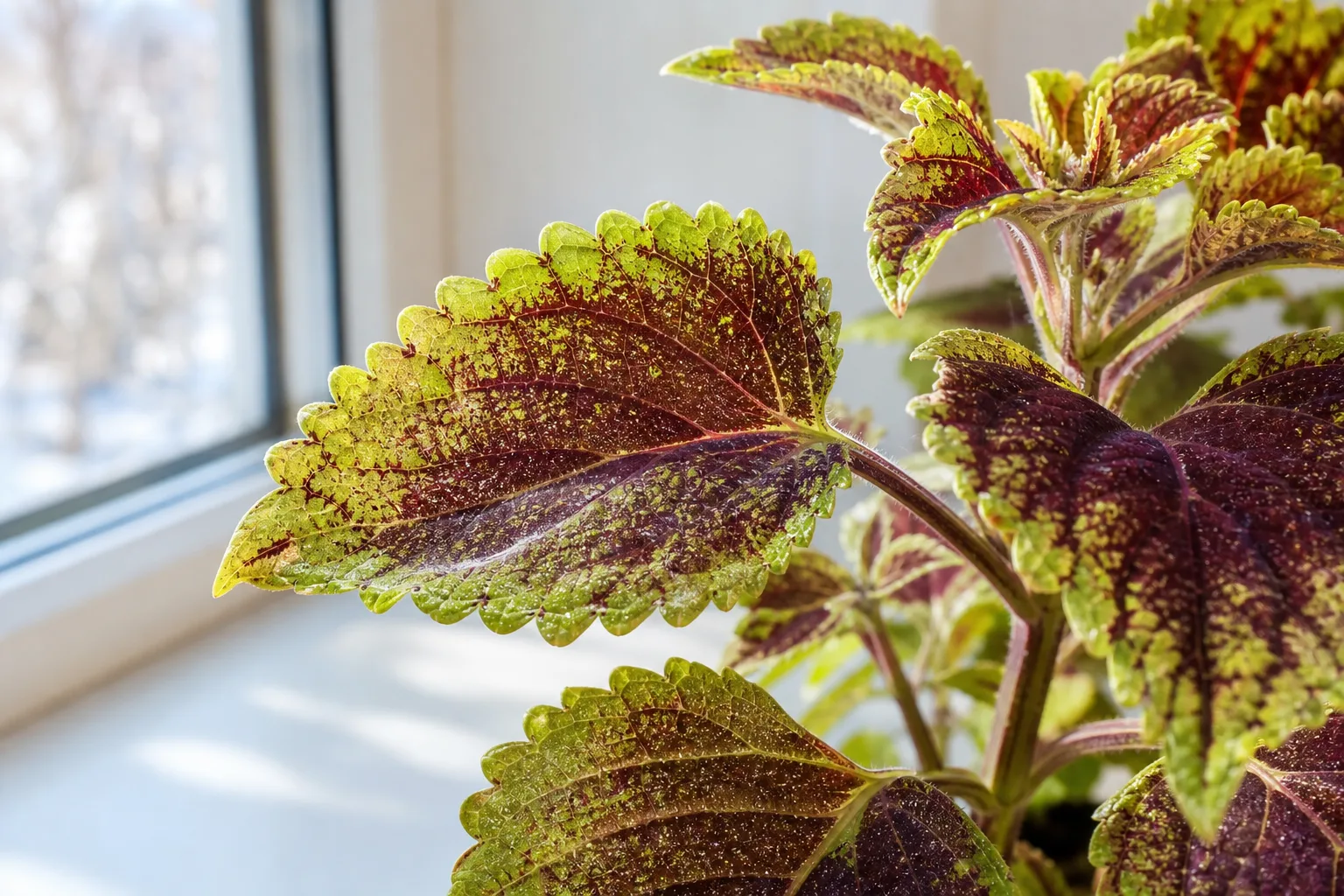
Spider mites on Coleus show as fine yellow-white stippling on multicolor leaves-often before the plant looks wilted-plus webbing at serrated leaf bases on square Lamiaceae stems. First step: isolate the pot and rinse leaf undersides with lukewarm water to knock down active mites before adding sprays.
Spider Mites on Coleus: Causes, Checks & Fixes
This guide covers spider mites on Coleus. See also the general Spider Mites guide, watering, and light pages for this plant.
Spider Mites on Coleus: Causes, Checks & Fixes
Quick answer
Spider mites on Coleus (Plectranthus scutellarioides) are tiny sap-sucking arachnids that thrive in the hot, dry microclimate around a bright south or west window-especially when winter heating drops indoor humidity. On multicolor cultivars, damage often starts as pale pinprick stippling on burgundy, chartreuse, or pink leaf zones before the whole plant looks stressed.
First step: move the pot away from healthy plants and rinse every leaf underside with lukewarm water. That single action isolates the outbreak, knocks down live mites, and confirms you are treating pests-not low humidity crisping or drought stress alone. Add horticultural oil or insecticidal soap only after you see stippling, webbing, or moving specks on a white paper tap test.
What spider mites look like on Coleus
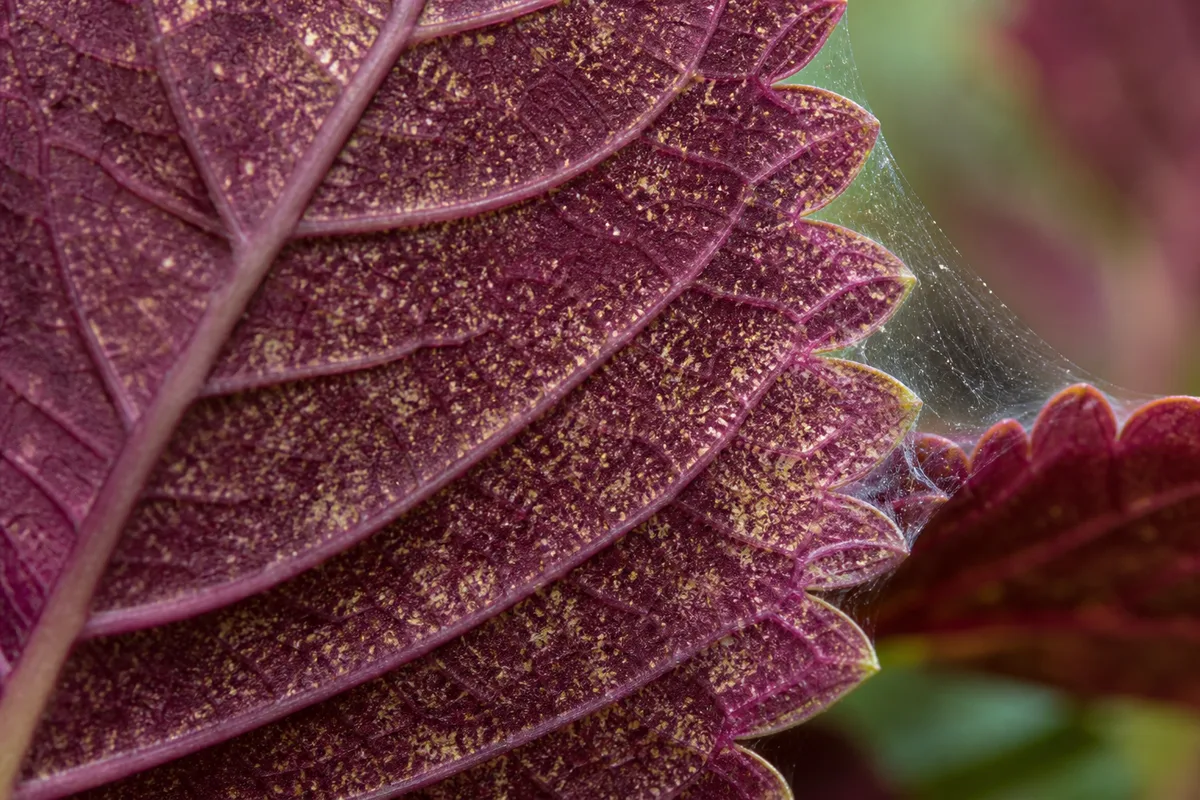
Fine pinprick stippling and delicate webbing along a burgundy Coleus leaf underside - confirm with a white paper tap test for moving specks.
On Coleus, mite damage is easy to miss early because the plant stays colorful while cells lose chlorophyll:
- Fine yellow or white pinpricks scattered across leaf blades-most visible on dark burgundy or deep green zones where contrast is sharp; on chartreuse sections, stippling reads as a dull, grainy texture rather than vivid dots.
- Bronzing or bleached patches as feeding intensifies, sometimes making variegated patterns look washed out before lower leaves crisp.
- Delicate webbing at the base of serrated leaf margins, where opposite leaves meet square Lamiaceae stems, and along tender new shoots you have not pinched recently.
- Dull gray-green cast on leaves that still feel firm-unlike the limp wilt from underwatering.
- Leaf drop on heavy infestations, often starting on lower shaded foliage while tips still push growth.
Spider mites are arachnids, not insects, and they feed on sap from leaf undersides with piercing mouthparts. Coleus carries opposite, serrated leaves on soft semi-succulent stems-classic mint-family architecture-so mites colonize the sheltered undersides along each tooth-like margin where casual top-down watering never reaches.
Why Coleus gets spider mites
Bright-window placement plus dry winter air. Coleus needs bright light to hold vivid color indoors, which often means a south or west sill. Glass intensifies heat; radiators and forced-air vents strip humidity. Spider mites prefer warm, dry environments with low humidity-exactly the microclimate around a colorful Coleus in January.
Fast growth does not prevent mites-it hides them. Coleus can push new tips while lower leaves stipple, so owners assume the plant is healthy until webbing appears at stem joints. Missouri Botanical Garden notes aphids, spider mites, and whiteflies as common indoor pests on Coleus.
Grouped displays spread crawlers. Mites walk from pot to pot on leaves that touch. A shelf of mixed foliage is high risk when one stressed Coleus anchors an outbreak.
Broad-spectrum insecticides can worsen mites. Sprays aimed at fungus gnats or aphids may kill predatory insects and trigger spider mite flare-ups on houseplants already stressed by dry air.
Low humidity alone does not cause mites-but invites them. Dry leaf edges without stippling or webbing point to low humidity or uneven watering, not a pest colony. When both crisp margins and stippling appear, treat pests while you fix humidity.
Lookalike symptoms on Coleus
| Pattern | Key signs | Likely cause |
|---|---|---|
| Pinprick yellow-white dots, fine webbing on undersides | Moving specks on paper tap; dull gray-green leaves in dry heat | Spider mites |
| Silvery scrape marks, tiny black specks (frass) | No webbing; damage follows leaf veins | Thrips |
| Crisp brown leaf edges, no stippling | No webbing; whole leaf margin dry | Low humidity |
| Dramatic wilt, light dry pot | Recovers after soak; no specks | Underwatering |
| Washed-out yellow-green, leggy stems | Correct moisture; no pests on undersides | Not enough light |
| White crust on leaf tops | Wipes off dry; no moving specks | Hard-water residue or spray mineral deposits |
| Soft green clusters on new tips | No stippling; sticky honeydew | Aphids |
| White cottony masses in leaf axils | Waxy texture at stem joints | Mealybugs |
If you see stippling plus webbing and moving specks on a paper test, spider mites are confirmed regardless of watering history.
How to confirm the cause
Work through this checklist in order:
- Isolate the plant on a clean surface away from other pots before handling-mites crawl to neighboring Coleus and shelf mates quickly.
- Scan leaf undersides along serrated margins and square stems with a magnifier or phone macro lens; look for webbing and pinprick damage.
- Paper-tap test-hold white paper under a suspect leaf and tap sharply. Slow-moving specks confirm spider mites; dust does not walk.
- Compare top vs. bottom-mite stippling concentrates on undersides first; mineral spray residue usually sits on upper surfaces.
- Check placement-is the pot on a sunny glass sill above a heat vent or radiator? That context supports mite diagnosis over thrips alone.
- Rule out lookalikes-no webbing and no moving specks after two taps? Revisit the table above before spraying.
First fix for Coleus
Isolate, then rinse undersides thoroughly with lukewarm water. That is the one action to take first-not oil, not Coleus repotting guide, not fertilizer.
Isolation and rinse protocol
- Move the Coleus to a sink, shower, or outdoor hose station away from other plants.
- Tip the pot so stems and foliage stay above the soil crown-Coleus has semi-succulent square stems that can rot if the crown stays soggy overnight.
- Use lukewarm water and gentle pressure to wash every leaf underside, especially where serrated margins meet the petiole.
- Let foliage dry completely the same day in bright indirect light per our light guide. Smooth serrated Coleus leaves tolerate this rinse well; the risk is crown saturation, not fuzzy-leaf spotting.
Treatment cadence after rinsing
Once mites are confirmed:
- Repeat rinses every 3–5 days to knock down adults and webbing between sprays.
- Apply horticultural oil or insecticidal soap labeled for mites or “mites” on the product label-soaps and oils kill on contact only and require excellent underside coverage.
- Retreat every 5–7 days for three full cycles (about three weeks). One application rarely clears a bushy Coleus because eggs hatch continuously indoors.
- Test a small leaf section first if the plant was recently moved into stronger light-oils and soaps can injure foliage when plants are water-stressed or temperatures exceed 90°F.
- Inspect neighboring pots that touched the infested Coleus; treat at first stippling rather than waiting for webbing.
Do not reach for general insecticides labeled only for “insects”-mites need miticides, oils, or soaps that list mite control. Insecticides that are not miticides often fail against spider mites.
Recovery timeline
Expect stippling to stop spreading within one to two weeks of consistent rinse-and-spray cycles. Full clearance usually takes three weekly treatment rounds because new eggs hatch indoors.
Signs recovery is working:
- Paper-tap tests show fewer or no moving specks
- Webbing stops appearing on new leaves and stem tips
- Clean new shoots emerge with firm color at stem tips within two to four weeks
- Lower damaged leaves may drop; that is normal shedding, not treatment failure
Signs the infestation is winning:
- Fresh webbing on new growth between scheduled treatments
- Increasing bronzing despite correct watering
- Mites appear on adjacent pots you did not treat
Coleus grows faster than finicky calathea in warm bright conditions. Once mites are gone, pinch stem tips after two pest-free weeks to restore bushy shape-see our pruning guide. Old stippled tissue will not re-green; judge success by new foliage only.
What not to do
- Spray before isolating and rinsing-crawlers spread while you debate products.
- Assume one treatment is enough-contact killers do not protect new Coleus shoots that emerge days later.
- Use insect-only pesticides-mites are arachnids; many insect sprays do not control them and may flare populations.
- Soak the crown and stems overnight after rinsing-semi-succulent Lamiaceae stems rot when the soil surface and crown stay wet in cool dim corners.
- Apply oil or soap in harsh midday sun on a windowsill Coleus-wet leaves in heat increase burn risk on brightly colored foliage.
- Mist leaves as your only humidity fix-brief misting does not sustain the ambient moisture mites dislike; use a humidifier or pebble tray and address low humidity alongside pest treatment.
- Fertilize during active infestation-tender new growth feeds mites; resume feeding only after two weeks with no new stippling.
- Ignore pet safety-the ASPCA lists Coleus as toxic to cats and dogs with essential oils as the toxic principle. Ventilate during spraying, keep pets away until foliage dries, and contact your veterinarian or ASPCA Animal Poison Control at (888) 426-4435 if a pet ingests treated leaves.
How to prevent spider mites next time
- Raise humidity near bright windows in winter-spider mites thrive in dry, warm conditions, and Coleus often sits in the driest zone of the room because it chases light.
- Avoid placing pots directly above heat vents or on radiators; redirect airflow or move the plant a foot back from glass if midday heat builds.
- Inspect undersides weekly during heating season-check plants every 3–5 days under drought-like indoor conditions, especially along serrated margins.
- Quarantine new Coleus for two weeks before shelf placement; stippling is easier to treat on one pot than on a whole collection.
- Keep soil moisture steady per our watering guide-water-stressed plants are more vulnerable to mite damage, though drought alone does not create mites.
- Prefer selective pest controls on other houseplants-broad-spectrum sprays can trigger mite outbreaks on nearby Coleus.
When to worry
Escalate quickly if:
- Webbing covers most stems and new leaves emerge already stippled after two treatment cycles
- Multiple plants in the same display show stippling-you likely need room-wide inspection, not single-pot rinsing
- Leaves collapse with soft stems and sour soil smell-that is root rot or crown rot overlapping pest stress, not mites alone
- Three full weekly cycles still produce moving specks on paper taps
- Predatory mite releases are an option for enclosed indoor collections, but only after confirming species and following label rates-most home growers succeed with rinse plus oil first
If more than half the foliage is webbed, bronzed, and dropping with mites on every new tip, discarding the plant in a sealed bag may protect the rest of your collection. Coleus roots easily from cuttings-take pest-free tip cuttings only after you have cleared a separate mother plant, not from an active infestation.
Conclusion
Spider mites on Coleus are a common indoor problem tied to the same bright, dry windowsills that keep painted nettle colorful. The tell is stippling on multicolor leaves plus webbing at serrated leaf bases-not generic crisp edges alone.
Isolate first, rinse every underside, then treat on a 5–7 day oil or soap cadence for three weeks while you raise ambient humidity. Coleus recovers faster than many foliage plants once mites are gone; pinch clean new growth and accept that old stippled leaves will not re-green.
Related Coleus guides: Overview · Low humidity · Aphids · Mealybugs · Watering · Light · Pruning
When to use this page vs other Coleus guides
- Coleus watering guide - Use for routine moisture checks before assuming spider mites is the main issue.
- Coleus problems hub - Browse all 16 common issues on this species.
- Low Humidity on Coleus - Different entry point when symptoms overlap with spider mites.
- Slow Growth on Coleus - Different entry point when symptoms overlap with spider mites.