Aphids on Coleus: Causes, Checks & Fixes
Quick answer
Aphids on Coleus gather on the softest new shoots and leaf axils, often leaving sticky honeydew. First step: move the pot away from other plants and rinse growing tips and leaf undersides with a strong stream of water before any spray.
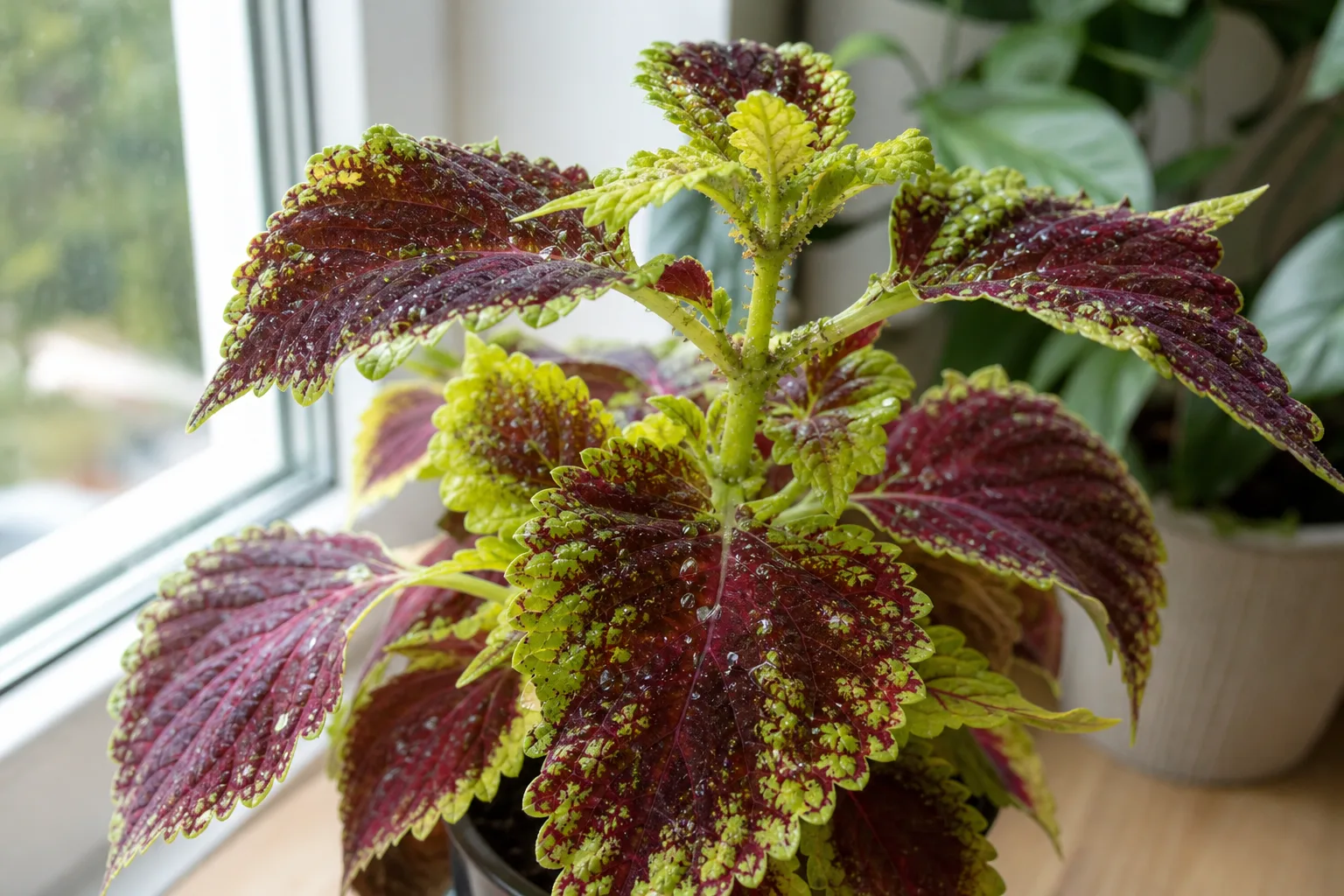
Aphids on Coleus: Causes, Checks & Fixes
This guide covers aphids on Coleus. See also the general Aphids guide, watering, and light pages for this plant.
Aphids on Coleus: Causes, Checks & Fixes
Quick answer
Aphids on Coleus (Plectranthus scutellarioides) show up where the plant is growing fastest-fresh pinched tips, opening leaf buds, and any flower spikes you left on. Colonies drain sap from tender tissue, leave sticky honeydew on colourful foliage, and can dull leaf colour if feeding continues through a full growth flush.
First step: isolate the pot and rinse growing tips and leaf undersides with a strong stream of water. Coleus handles a firm shower better than many delicate houseplants, and mechanical knock-down is the safest starting move. Only after you still see living aphids clinging should you follow with labeled insecticidal soap or another contact treatment.
What aphids look like on Coleus
On Coleus, aphids are easiest to spot on newest stem tips and leaf axils-the same tissue you pinch to keep the plant bushy. Lower mature leaves often look fine even when the top of the plant is infested.
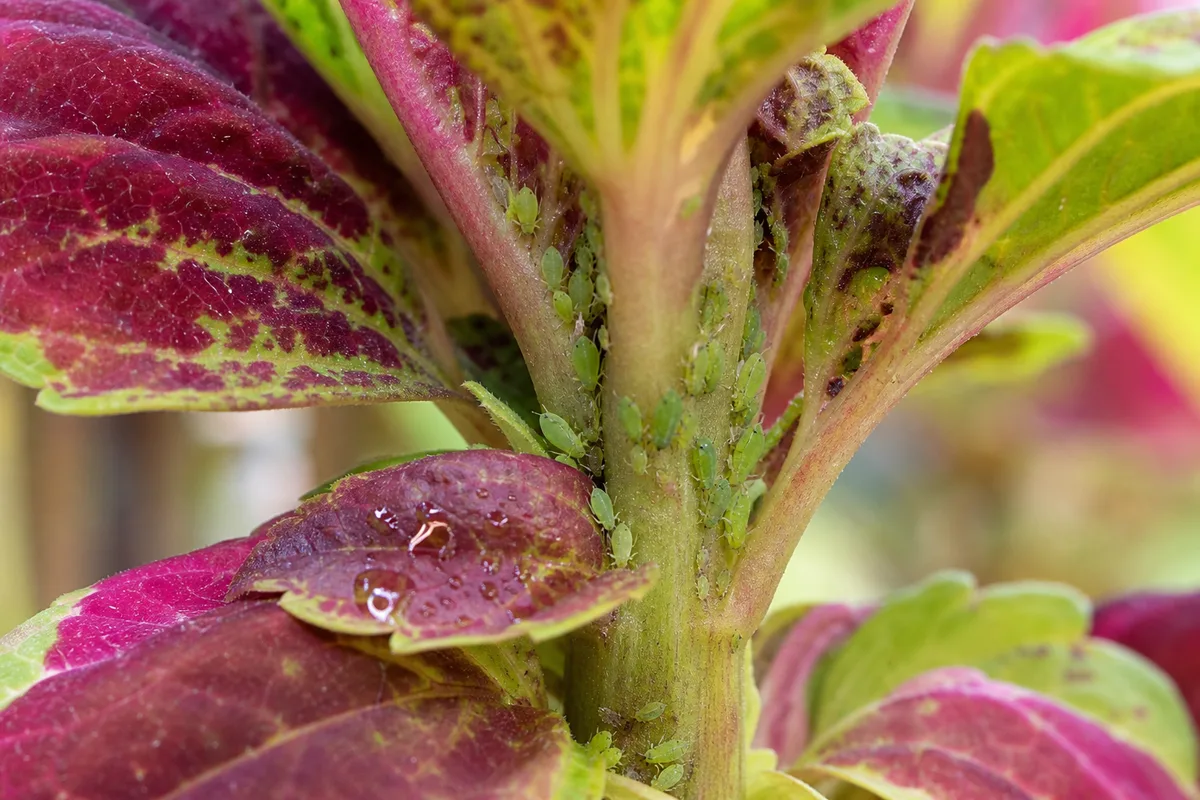
Tiny green aphids packed along Coleus stem tips and leaf axils, with glossy honeydew on colorful new leaves - compare with clean uninfested growth lower on the stem.
Typical signs include:
- Tiny pear-shaped insects about 1/16 to 1/8 inch long, usually green but sometimes black, brown, or pink (University of Minnesota Extension)
- Dense clusters packed along tender shoots, especially just below opening buds and on unpinched flower spikes
- Puckered or curled new leaves while older foliage may still show full colour
- Glossy, sticky honeydew on leaf surfaces and pot rims; black sooty mold may follow if honeydew persists
- Whitish cast skins shed by growing nymphs on undersides
- Ants marching on stems-they harvest honeydew and may protect aphid colonies from predators
Coleus belongs to Lamiaceae, the mint family. Illinois Extension lists aphids among common Coleus pests, alongside mealybugs and whitefly. The same soft-bodied sap feeders that hit kitchen herbs colonize Coleus tips with equal enthusiasm.
Winged adults may appear when colonies get crowded. If you see small flying insects leaving the pot, assume spread risk to nearby herbs, peppers, and other indoor plants on the same windowsill.
Why Coleus gets aphids
Coleus is not randomly unlucky-it produces exactly the tissue aphids prefer.
Constant soft new growth. Regular pinching keeps Coleus compact, but every pinch creates fresh tender shoots. Aphids feed on plant sap with piercing mouthparts and concentrate on the youngest, most nitrogen-rich tissue. A well-fed Coleus pushing colour in bright light is a buffet.
Warm, humid indoor conditions. Coleus grows fastest between 18°C and 32°C (65–90°F) with moderate to high humidity-the same window-sill environment where aphid populations can multiply quickly in summer temperatures. Indoor overwintering plants can harbour colonies year-round without the natural predators that control outdoor populations.
Introduction routes. Aphids hitchhike on new nursery plants, open windows in warm weather, and shared propagation trays. Stem cuttings rooted in water can carry hidden nymphs on nodes-one infested cutting can spread pests to every jar on the shelf.
Excess nitrogen. Heavy fertilizer during active growth produces lush, soft shoots. Over-fertilization encourages succulent growth that sap-sucking pests prefer. Coleus already grows fast on moderate feeding; pushing nitrogen during an infestation makes the problem worse.
Crowded displays. Colourful Coleus grouped on trays or mixed planters limit airflow and let colonies jump between pots before you notice honeydew on the first plant.
How to confirm the cause
Work through these checks in order:
- Tip inspection - Look at the topmost growing point and the two nodes below it. Aphids cluster here first on Coleus.
- Underside check - Flip the newest leaves with a hand lens. Pear-shaped bodies with visible legs and antennae confirm aphids-not dust or water spots.
- Flower spike check - If you left bloom stalks on, examine buds and the stem just below them. Aphids often gather on flower clusters before you notice them on foliage.
- Stickiness test - Rub a finger on a glossy upper leaf. Honeydew feels tacky and may carry a faint sweetness; normal Coleus leaves feel dry or slightly textured, not sticky.
- Ant trails - Ants on pot rims or stems strongly suggest aphids or other honeydew producers are present.
- Shake test - Gently tap an infested tip over white paper. Aphids drop as slow-moving specks. Whiteflies fly in a cloud-different pest, different treatment emphasis.
- Lookalike rule-out - Mealybugs show white cottony masses, not loose clusters. Spider mites leave stippling and fine webbing, not typically heavy honeydew. Scale insects attach as immobile bumps.
If you find pear-shaped insects on soft new tissue with honeydew, aphids are confirmed. Yellowing lower leaves alone, without insects on tips, points to watering or light stress-not this pest.
First fix for Coleus
Move the pot away from other plants and rinse growing tips and leaf undersides with a strong stream of water.
Hold the pot at an angle over a sink or take outdoor Coleus to the hose. Direct water upward into leaf axils and along stem tips where colonies hide. A forceful spray dislodges aphids on contact and washes fresh honeydew before it attracts ants or grows sooty mold. Let foliage dry in Coleus light guide the same day-Coleus wilts dramatically when thirsty but recovers quickly once the rinse is done.
Do not reach for insecticide on day one if you have not confirmed live insects. Do not fertilize a pest-hit plant hoping to push new growth-that produces more tender tissue aphids prefer. Do not repot unless soil pests are also confirmed; aphids on Coleus foliage rarely require a soil change.
Because Coleus is toxic to cats and dogs, keep rinsed or treated plants out of pet reach and wash hands after handling sap-heavy stems.
Step-by-step recovery
After the initial rinse:
- Repeat water sprays every two to three days until live aphids are gone on tip inspection. Coleus can take several firm rinses without lasting damage.
- Apply insecticidal soap if colonies persist after three to four rinses. Cover undersides and stem joints thoroughly; soap works only on contact with no residual effect, so repeat every four to seven days through at least two cycles.
- Pinch heavily infested tips if insects hide inside curled leaves soap cannot reach. Coleus branches readily from nodes below a clean cut.
- Remove flower spikes during active treatment. Blooms drain energy and provide extra feeding sites; most growers pinch them anyway to keep leaf colour strong.
- Manage ants if they protect colonies. Sticky barriers on pot rims or ant bait away from the plant can help natural predators reach aphids.
- Wash sooty mold off leaves with plain water once honeydew production stops. Severely coated leaves can be trimmed if colour is blocked.
- Hold off on propagation until the parent plant stays clean for two weeks. Do not start water-rooted cuttings from an infested Coleus.
Isolate treated Coleus from mixed windowsill displays until you see no new colonies for at least seven days.
Recovery timeline
Water knockdown shows results within two to three days when colonies are moderate. A full soap course may take one to two weeks with label-interval repeats. Coleus grows fast-expect clean new tips within one to two weeks once insects stay gone, even if older curled leaves never fully flatten.
Judge recovery by new growth quality, not old damage. Firm stems, normal colour on fresh leaves, and no fresh honeydew mean the plant is winning. Stalled tips or spreading stickiness after two treatment cycles means escalation is needed.
Lookalike symptoms to rule out
Mealybugs form white cottony patches in leaf axils and along stems, not loose green clusters. Alcohol on a swab removes them; water spray alone is less effective.
Spider mites cause fine stippling and webbing on undersides, especially in dry warm air. Mites thrive when Coleus soil dries too long-not the moist routine Coleus overview prefers.
Whiteflies fly in a cloud when stems are shaken. Their flat pale nymphs sit on undersides; management overlaps with aphids but yellow sticky traps help more for whiteflies.
Powdery mildew puts a dry white powder on leaf surfaces, not a tacky film. It spreads in patches without honeydew or insects.
Nutrient or water stress yellows lower leaves on Coleus but does not produce sticky residue or moving insects on tips.
Mistakes to avoid
Do not spray insecticidal soap on wilted Coleus or in direct hot sun-soaps can injure stressed foliage. Treat early morning or evening when leaves are turgid.
Do not ignore ants. Controlling aphids alone is harder while ants defend colonies.
Do not increase nitrogen feeding during an active infestation-that fuels soft aphid-friendly shoots.
Do not compost heavily infested clippings near garden beds. Aphids can survive on discarded tissue briefly.
Do not assume one rinse solved the problem. Aphids reproduce quickly and eggs hatch within days-follow-up checks are mandatory.
Do not use harsh dish soap instead of products labeled for plants. Homemade detergents burn Coleus leaves more easily than commercial insecticidal soap.
Coleus care cross-check
While treating aphids, keep baseline care steady-big swings in water, light, or pot size stress Coleus and slow recovery.
- Light - Bright indirect light supports compact growth. Weak light produces leggy soft shoots that are harder to inspect and easier for pests to hide in.
- Water - Keep soil consistently moist but not soggy. Coleus wilts dramatically when dry; chronic drought stress weakens the plant even if aphids are controlled.
- Pinching - Resume normal tip pinching once the plant is clean. Delaying pinching leaves fewer inspection points and lets flower spikes develop-both attract aphids.
- Fertilizer - Hold feeding until new growth looks clean for two weeks, then resume at half strength during active growth.
How to prevent aphids next time
Scout new growth weekly from spring through warm indoor months. Coleus pushes constant soft shoots during this window-the tissue aphids prefer.
Quarantine new Coleus and any stem cuttings for two weeks before placing them near existing pots or propagation jars.
Pinch flower spikes promptly. Blooms are optional on Coleus grown for foliage, and buds concentrate sap feeders.
Avoid excess nitrogen during peak growth. Moderate fertilizer supports healthy Coleus without overly succulent shoots.
Preserve beneficial insects on outdoor Coleus. Lady beetles, lacewings, and parasitic wasps control aphids when broad-spectrum sprays have not wiped them out.
Improve airflow around crowded colour displays on sheltered windowsills. Stagnant warm pockets let colonies build unnoticed.
Rinse outdoor Coleus after dry spells when garden aphid pressure rises on neighbouring plants.
When to worry
Treat as urgent when honeydew and sooty mold spread across most of the canopy within days, winged aphids appear on multiple pots, or ants swarm every stem in a mixed display. Aphids can vector viral diseases on some ornamentals; severely distorted mosaic-like new growth after heavy infestation may mean the plant will not fully recover.
Replace severely declining Coleus rather than fighting endless reinfestation on a stressed specimen. Starting fresh from clean seed or a quarantined cutting is often faster than repeated chemical cycles-and Coleus propagates easily once pests are gone.
Small clusters on one tip after a single missed scouting week are not urgent. Confirm insects, rinse first, and escalate only if they persist.
Conclusion
Aphids on Coleus concentrate on the same tender tips that make the plant beautiful-pinch points, new leaves, and flower buds. Inspect those sites first, rinse before you spray, and repeat until new growth comes in clean and colourful. That path stops honeydew problems before they coat your whole windowsill display and keeps treatment proportionate to a fast-recovering foliage plant.
When to use this page vs other Coleus guides
- Coleus watering guide - Use for routine moisture checks before assuming aphids is the main issue.
- Coleus problems hub - Browse all 16 common issues on this species.
- Mealybugs on Coleus - Different entry point when symptoms overlap with aphids.
- Spider Mites on Coleus - Different entry point when symptoms overlap with aphids.
- Yellow Leaves on Coleus - Different entry point when symptoms overlap with aphids.