Drooping Leaves on Calathea Orbifolia: Causes, Checks &
Quick answer
Before you water, check the time of day. Healthy Calathea Orbifolia uses nyctinasty-leaves change posture at dusk and stand open by mid-morning. All-day limp with dry, light soil means underwatering; limp with wet, heavy soil means root stress. First step: view the plant at 10 a.m., then lift the pot and probe the top inch of soil.
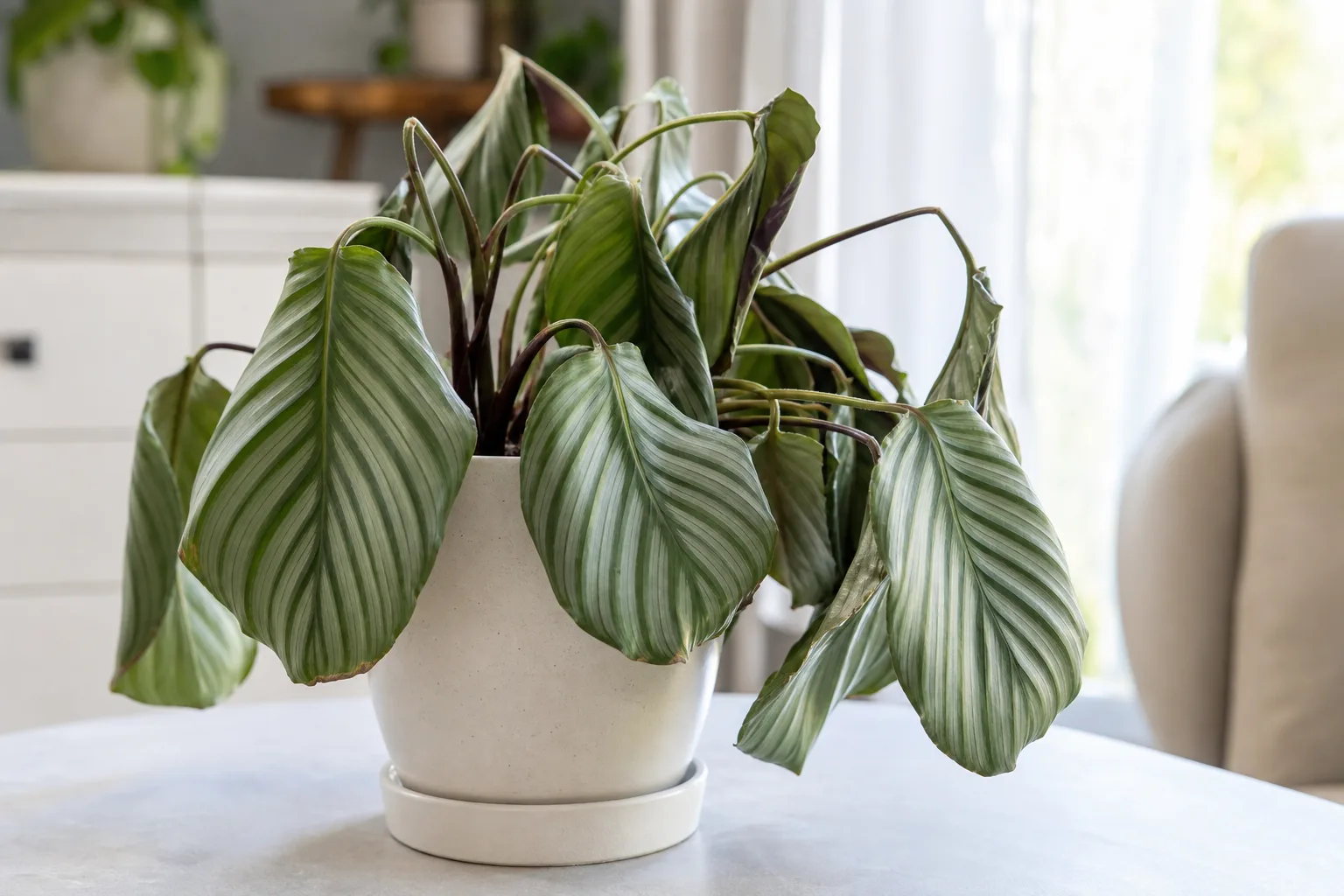
Drooping Leaves on Calathea Orbifolia: Causes, Checks & Fixes
This guide covers drooping leaves on Calathea Orbifolia. See also the general Drooping Leaves guide, watering, and light pages for this plant.
Drooping Leaves on Calathea Orbifolia: Causes, Checks & Fixes
Quick answer
Before you water, ask: what time is it? Calathea Orbifolia (Goeppertia orbifolia) is a Marantaceae prayer plant with nyctinasty-a daily rhythm where leaves fold upward at night and open horizontally by mid-morning when the plant is healthy. Large orbicular blades make that swing more visible than on narrow-leaf cultivars. If you only check the plant after work, you may be seeing normal posture change-not a watering emergency.
Stress droop stays limp through the afternoon and does not follow a clean daily cycle. On Orbifolia the top causes are underwatering (light dry pot), overwatering or root decline (heavy wet pot), low humidity below 50% RH on wide leaves, cold or AC drafts, and tap-water mineral stress weakening margins over time. When nyctinasty stops entirely, turgor is already failing-often before yellowing appears.
First step: view the plant at mid-morning, then lift the pot and probe the top inch of soil. Dry light soil with all-day limp leaves needs water per our watering guide. Wet heavy soil with limp leaves means stop watering-see overwatering before adding more.
Our Calathea Orbifolia overview explains nyctinasty in depth. This page separates normal movement from problems that need action-and from wilting, which covers acute collapse, not chronic hang.
Nyctinasty vs. stress droop - check this first
Nyctinasty is circadian leaf movement controlled by specialized pulvinus cells at the petiole base. As light fades, water pressure in those cells shifts and Orbifolia leaves move into a more upright, folded night posture; after sunrise they open and spread again. The RHS notes this daily rhythm across prayer plants-many owners panic at dusk because the large round blades change angle and look “tired.”
Healthy nyctinasty checklist:
- Leaf posture changes between evening and late morning, but blades are open and supported on firm petioles by 10 a.m. to noon
- The daily cycle continues even when you skip a watering by one day
- Soil moisture follows your normal rhythm (top inch beginning to dry every 5–7 days in warm months)
- No yellowing cascade, sour smell, or brown crispy margins spreading
Stress droop checklist:
- Leaves stay limp all day, not just during the night transition
- The prayer movement stops-pulvinus function needs adequate turgor; loss of nyctinasty is an early warning
- Paired with wrong soil moisture (bone dry for days or soggy for days)
- New spears stick, tear, or abort when humidity is too low
Photograph the same plant at noon and again after dusk before changing care. One pair of photos prevents weeks of harmful evening watering.
Drooping vs. wilting on Calathea Orbifolia
These words overlap in casual talk but point to different pages and urgency on Orbifolia.
| Drooping (this page) | Wilting (wilting guide) | |
|---|---|---|
| Timing | Chronic limp for days, or nyctinasty confusion | Sudden collapse, often within hours |
| Movement | May still show partial daily rhythm early on | Often total flattening; prayer cycle may stop |
| Soil pattern | Dry/light or wet/heavy for days | Often sharply dry before collapse, or wet with root failure |
| Urgency | Confirm cause; fix matched to soil fork | Act quickly-rehydrate dry plants or stop watering wet ones |
| Typical trigger | Low humidity, chronic under/overwatering, drafts | Missed watering, heat shock, delivery, repot shock |
Drooping is the right label when leaves hang loosely for days, humidity is borderline, or you checked the plant only at night and misread nyctinasty. Wilting is the right label when every blade flattened suddenly-for example after a hot move from the shop, a radiator blast, or a root ball that went fully dry. Route acute events to wilting; stay here for chronic hang and time-of-day diagnosis.
What drooping looks like on Calathea Orbifolia
Orbifolia holds large round leaves on long petioles. When turgor drops, entire blades hang like plates on loose stems rather than curling tightly like a thirsty fern.
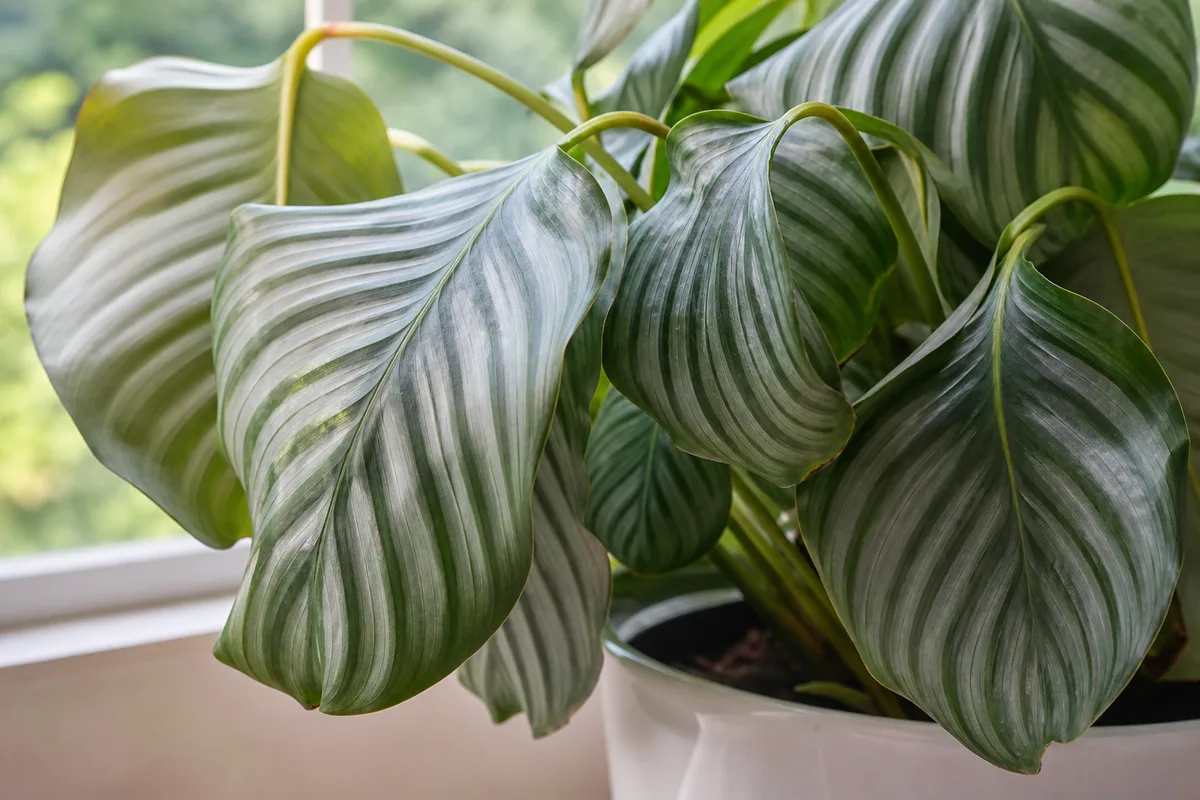
Drooping Leaves symptoms on Calathea Orbifolia - compare with healthy tissue on the same plant.
What it usually does not look like: crisp brown tips alone without hang (see brown tips); a single yellow lower leaf on an otherwise upright plant (often natural aging); insect webbing or sticky residue (pests-see spider mites or aphids).
Underwatering droop:
- Petioles bow; leaves feel thin with slightly crisp edges
- Pot is light; top 2 cm of mix is dry or pulling from pot walls
- Often follows a missed watering in warm, dry air
- Recovery within hours to one day after a thorough draining soak
Overwatering / root-stress droop:
- Leaves limp despite wet soil; pot stays heavy for days
- Lower leaves may yellow; soil may smell sour
- New growth stalls while existing blades hang
- Worsens if you water because leaves “look thirsty”
Low-humidity chronic droop:
- Leaves hang in bright rooms with 35–45% RH, especially near heating vents
- Soil moisture can be correct yet blades still soft
- Brown leaf edges may appear before severe hang
- Humidifier trial firms leaves within 24–48 hours when RH was the limiter
Draft or cold droop:
- Sudden limp after AC blast, winter window chill, or delivery from a warm shop
- Leaves may curl or darken at margins
- Soil moisture often normal; location change precedes symptoms
- NC State Extension recommends 65–75°F (18–24°C) with no cold drafts
Nyctinasty (normal):
- Posture changes at dusk; midday blades open and firm
- No progressive yellowing or edge burn
Why Calathea Orbifolia leaves droop
Nyctinasty - normal daily movement
Prayer plants evolved in understory light where pulvinus cells shift water pressure to orient leaves. Orbifolia’s broad blades exaggerate the daily show. Misreading dusk posture as thirst is the most common beginner mistake on calatheas-and the main reason this page leads with a time-of-day check.
Underwatering
Orbifolia needs consistently moist but not soggy soil. Large leaves transpire heavily; when the root zone dries too far, petioles lose tension fast. Orbifolia is dramatic-whole clumps flatten when dry-but recovers quickly after proper watering if roots are intact.
Overwatering and root decline
The same limp look appears when roots sit in anaerobic wet mix and cannot absorb water. Leaves droop while soil is wet-adding water worsens the problem. NC State warns overwatering can cause root rot on calatheas. Orbifolia’s dense peat-based mixes stay wet longer than growers expect.
Low humidity
NC State recommends high humidity of at least 60% for Calathea orbifolia. UF/IFAS interiorscape guidelines note calatheas maintain better appearance at 40–60% RH indoors-Orbifolia’s wide leaf surface often needs the upper half of that range when watering is already correct. Chronic daytime hang with acceptable soil moisture often traces to RH below 50%-see low humidity.
Heat, cold, and drafts
Hot dry air from radiators or AC outlets increases transpiration without increasing root uptake. UF/IFAS recommends keeping indoor calatheas between 65°F and 80°F. Cold windows below 60°F (15°C) stiffen roots and slow water movement, producing limp foliage even in moist soil.
Tap-water mineral stress
Fluoride in tap water browns tips and weakens leaf margins over time. Weakened tissue droops sooner under humidity or watering stress. Switch to filtered or rainwater if edges crisp despite good moisture.
Calathea Orbifolia repotting guide or hydrophobic soil
Recent repotting can disturb fine roots and cause temporary droop for one to two weeks if humidity drops during recovery. A root ball that went bone dry repeatedly may turn hydrophobic-water runs down the pot sides while the center stays dry, producing limp leaves with oddly light-feeling mix at the surface. Bottom-soak per our watering guide before assuming root rot.
Lookalike symptoms to rule out
Drooping overlaps with several Orbifolia problems-route by soil, timing, and movement:
- Wilting - acute sudden collapse; this page covers chronic or nyctinasty-confused limp
- Underwatering - dry light pot; droop resolves after soak
- Overwatering - wet heavy pot; droop persists or worsens after watering
- Root rot - soft crown, sour soil, yellow base leaves on wet mix
- Low humidity - edge crisping with chronic hang despite correct watering
- Leggy growth from dim light - long weak petioles; structural weakness, not nyctinasty alone
How to confirm the cause
Six-step inspection-complete in order:
- Time-of-day check - View at mid-morning. Open, firm leaves = likely healthy nyctinasty cycle; all-day limp = stress.
- Prayer movement check - Has the daily posture change stopped for several days? If yes, treat as stress even if soil looks acceptable.
- Soil moisture fork - Press finger into top inch. Dry and light pot → underwatering path. Damp heavy pot days after watering → overwatering/root path.
- Skewer depth test - Insert 3–4 inches near pot wall. Clinging damp mix with limp leaves suggests root uptake failure, not thirst.
- Humidity at canopy - Hygrometer 6 inches above soil. Below 50% with correct watering → humidity branch.
- Draft and water audit - AC vent, radiator, or cold window within 3 feet? Recent switch to tap water with new edge burn? Relocate or change water before repotting.
Document findings before changing water, humidity, or potting mix.
First fix for Calathea Orbifolia (by confirmed cause)
Apply one fix matched to confirmation-not all at once.
If soil is dry and pot is light (underwatering):
Water thoroughly until excess drains; empty saucer within 30 minutes. Use room-temperature filtered or rainwater when possible. Leaves often firm within hours. Full steps in watering guide.
If soil is wet and pot is heavy (overwatering/root stress):
Stop watering. Move to Calathea Orbifolia light guide with airflow; verify drainage. If yellowing spreads or soil smells sour, inspect roots per overwatering and root rot guides. Do not fertilize limp wet plants.
If soil is correct but RH is below 50% (low humidity):
Run a humidifier at canopy height targeting 60%+ RH. Grouping alone rarely suffices for Orbifolia’s large leaves. Misting is a temporary boost, not a substitute.
If nyctinasty only (normal):
No action. Avoid evening watering reflexes.
If draft or cold shock:
Move off the window or vent; maintain 65–80°F (18–27°C) per UF/IFAS indoor ranges. Recovery over several days if tissue is not frozen.
Recovery timeline
Underwatering: Visible firming often within 2–24 hours after a proper soak. Severely dry root balls may need bottom watering and two cycles over a week.
Low humidity: Humidifier correction shows 24–48 hours to firmer petioles; torn unfurling spears may scar permanently.
Overwatering/root stress: Weeks after drying soil and possible repot; judge by new spears and stopped yellowing, not instant re-erection of old leaves.
Nyctinasty: Immediate daily cycle-no recovery needed.
Signs the fix is working: Mid-morning blades open on firm petioles; prayer movement returns; new spears unfurl without tearing; pot weight and soil checks align with your watering rhythm.
Signs the problem is worsening: All-day limp on wet soil with spreading yellow; loss of nyctinasty for a week; sour smell; soft crown tissue.
Old limp blades may not fully re-stiffen; judge progress by new growth and midday posture.
What not to do
Do not water every time leaves look different in the evening-that trains overwatering on a prayer plant doing nyctinasty.
Do not water wet-soil droop because leaves feel soft-roots need oxygen, not more moisture.
Do not repot or fertilize while limp from unresolved root stress; make one care correction at a time.
Do not confuse Orbifolia with succulents-it cannot dry to dust between drinks.
Do not rely on misting alone for large-leaf transpiration droop; sustained RH matters.
Do not treat chronic droop like acute wilting without confirming soil-see wilting only when collapse was sudden.
Cause-routing table
| Mid-morning posture | Soil / pot | Humidity | Prayer cycle | Likely cause | First fix |
|---|---|---|---|---|---|
| Open and firm; evening change only | Normal | Any typical | Active | Nyctinasty | None |
| Limp all day | Dry, light | Any | May stop | Underwatering | Thorough soak |
| Limp all day | Wet, heavy days | Any | Often stopped | Overwatering / roots | Withhold water; inspect |
| Limp, soft edges | Moist, OK weight | Below 50% | Active or weak | Low humidity | Humidifier 60%+ |
| Sudden limp after move | Normal | Normal | May stop | Draft / cold | Relocate |
| Limp + brown tips | Moist | Any | Active | Tap water stress | Filtered water + humidity check |
How to prevent drooping leaves next time
Stable Orbifolia combines even moisture, 60%+ humidity, bright indirect light, and clean water.
- Check soil before every watering-top inch beginning to dry, not calendar days alone
- Run a humidifier in heating season; Orbifolia’s round leaves punish dry winter air
- Use distilled, filtered, or rainwater to prevent edge burn that weakens droop resistance
- Empty saucers after every watering; never let pots sit in runoff
- Learn nyctinasty timing so evening posture does not trigger panic watering
- Rotate slightly for even growth, but avoid blasting AC directly on foliage
Link chronic problems back to hub care: overview, watering, low humidity.
When to worry
Escalate if limp leaves persist on wet soil with yellowing lower leaves, soft crown tissue, or sour smell-treat as root rot urgency, not humidity.
Act quickly if all leaves flatten suddenly overnight with dry soil-that is acute wilting, not nyctinasty.
Loss of prayer movement entirely for more than a few days while soil stays wet suggests root failure already underway.
Mid-morning upright leaves with evening posture change alone are low urgency.
Conclusion
Calathea Orbifolia drooping starts with time of day: nyctinasty is normal prayer-plant movement that opens by mid-morning. All-day limp needs a soil moisture fork-dry light pot means water; wet heavy pot means stop and inspect roots. Large round leaves add humidity demand when watering is already correct. Confirm, apply one matched fix, and use sibling guides for wilting, underwatering, and low humidity when symptoms diverge.
When to use this page vs other Calathea Orbifolia guides
- Calathea Orbifolia watering guide - Use for routine moisture checks before assuming drooping leaves is the main issue.
- Calathea Orbifolia problems hub - Browse all 16 common issues on this species.
- Underwatering on Calathea Orbifolia - Different entry point when symptoms overlap with drooping leaves.
- Overwatering on Calathea Orbifolia - Different entry point when symptoms overlap with drooping leaves.
- Root Rot on Calathea Orbifolia - Different entry point when symptoms overlap with drooping leaves.