Underwatering on Calathea Orbifolia: Causes, Checks & Fixes
Quick answer
Underwatering on Calathea Orbifolia shows as a light pot, limp or inward-curling leaves, and dry mix several centimeters down. First step: bottom-water with filtered or rainwater until the surface moistens, then drain fully.
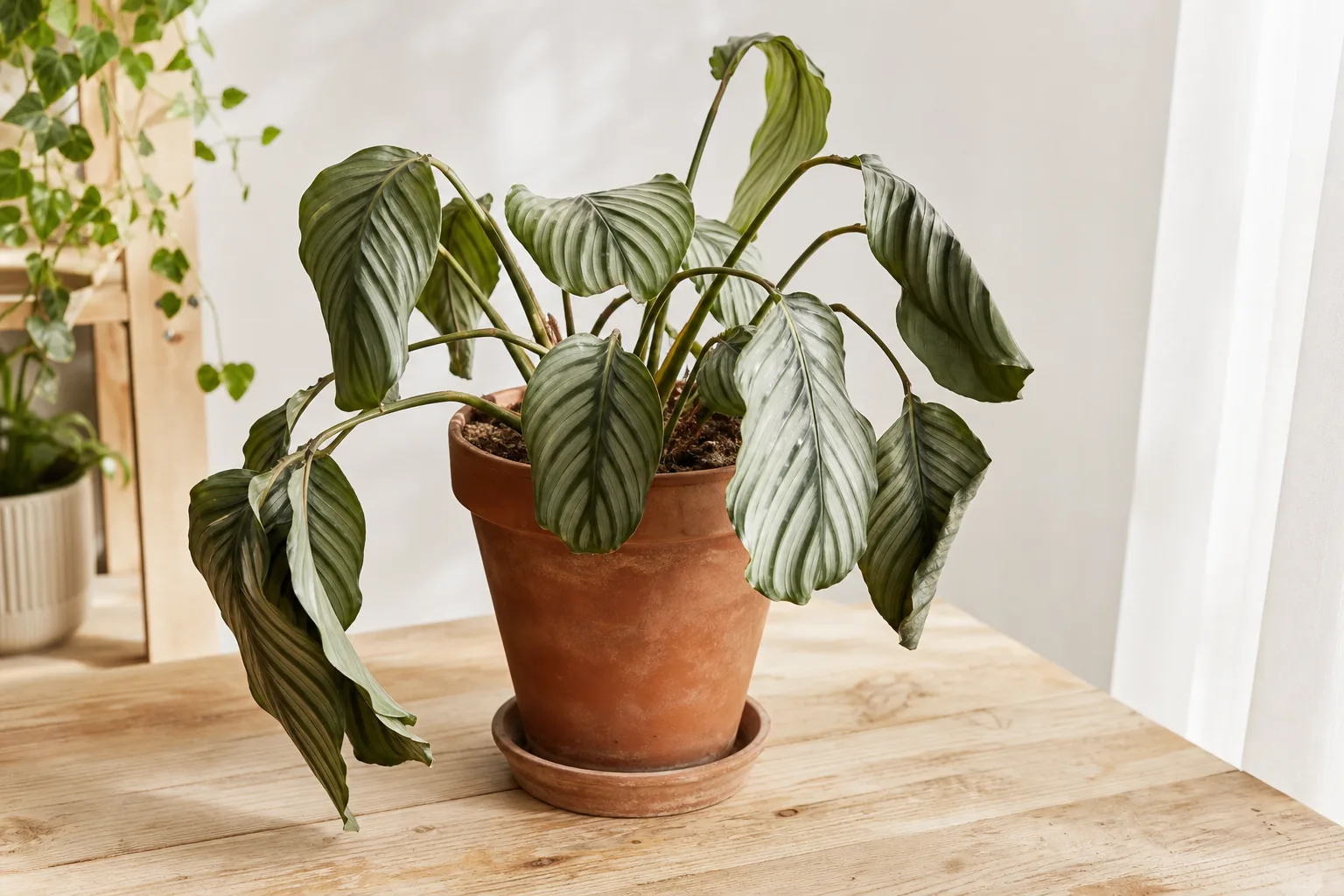
Underwatering on Calathea Orbifolia: Causes, Checks & Fixes
This guide covers underwatering on Calathea Orbifolia. See also the general Underwatering guide, watering, and light pages for this plant.
Underwatering on Calathea Orbifolia: Causes, Checks & Fixes
Quick answer
Underwatering on Calathea Orbifolia (Goeppertia orbifolia) happens when the root ball stays too dry for too long. The plant’s oversized round leaves lose water fast through transpiration, so drooping can look dramatic even when the problem is simply thirst-not rot, pests, or a mystery disease.
First step: bottom-water with room-temperature filtered or rainwater until the top of the mix feels evenly moist, then let the pot drain completely. Do not give repeated small sips from above if water is running through dry peat without soaking the center. One thorough rehydration tells you whether the plant can recover before you adjust anything else.
What underwatering looks like on Calathea Orbifolia
Orbifolia’s broad silver-banded leaves are the first alarm. When roots cannot supply enough water, blades lose turgor and hang limply from the petioles instead of standing at their usual angle. In moderate drought, leaves can curl from lack of water along the midrib-the plant is reducing leaf surface area to slow water loss.
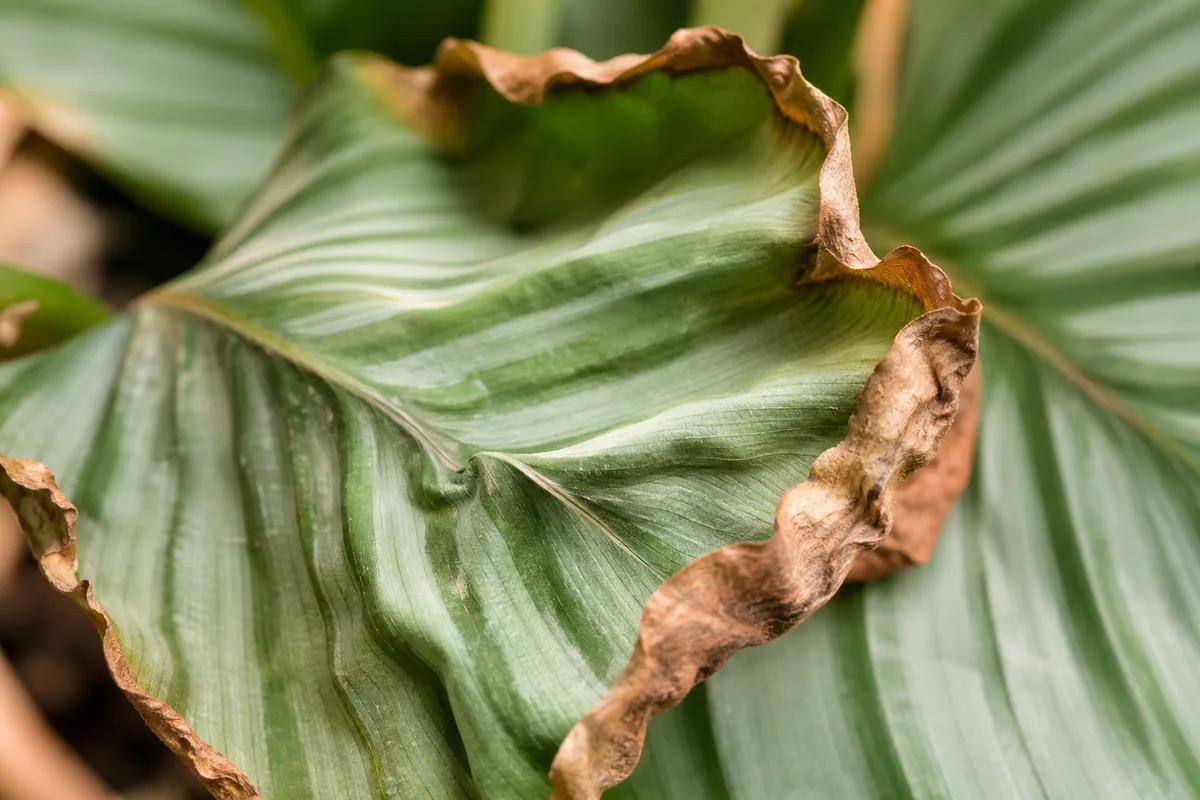
Inward-curling Orbifolia leaf with brown crispy margins and lost turgor - compare with firm, flat blades after a thorough soak.
Other signs specific to Calathea Orbifolia overview:
- Dry, crumbly soil that has shrunk and pulled away from the pot wall
- A very light pot when lifted-compare it to how it feels an hour after a good watering
- Brown, crispy margins on older leaves, sometimes with whole sections of a large blade turning papery
- Slow or stalled new leaves stuck half-unfurled because the plant lacks moisture to expand them
- Soil at the drainage hole as dry as the surface-Orbifolia in a tight root ball can look briefly damp on top while the core is empty
What underwatering usually does not look like: sour-smelling wet mix, dark constantly damp soil, yellow lower leaves on a heavy pot, or fungus gnats hovering over the surface. Those patterns fit overwatering on Calathea Orbifolia or root decline better than simple drought.
Why Calathea Orbifolia gets underwatered
Orbifolia evolved in Brazilian rainforest understory where the root zone stays consistently moist but not wet or soggy. Indoors, that translates to letting only the top 2 cm dry-not letting the entire pot go bone dry for weeks. Missing that window is the most common cause.
Fear of overwatering drives many dry spells. Calatheas have a reputation for rot, so owners skip drinks until leaves collapse. Ironically, severe underwatering also kills fine roots, which can leave a plant unable to absorb the next watering-symptoms then mimic rot even though the original trigger was drought.
Other Orbifolia-specific triggers:
- Large leaf surface area - Each blade can span 30 cm across. More leaf area means faster water use in Calathea Orbifolia light guide or near heating vents.
- Peat-heavy mix gone hydrophobic - When dry peat repels water, surface watering runs down the pot sides while the root ball stays dry inside.
- Calendar watering in the wrong season - Winter schedules applied through spring growth leave an actively growing plant chronically dry.
- Undersized or root-bound pots - A crowded root mass in a small container can dry in two to three days during warm weather.
- Low humidity without extra soil moisture - Orbifolia needs high humidity of at least 60%; dry air increases transpiration. The plant may need water sooner even when you recently watered.
- Tap water avoidance without a backup plan - Waiting for filtered water while the mix dries out fully still counts as underwatering.
How to confirm the cause
Work through these checks before soaking:
- Soil moisture at depth - Check soil moisture before watering by inserting a finger 2 cm deep, or probe through the drainage hole. Dusty dry throughout confirms drought. Cool, damp soil at depth means do not add more water yet.
- Pot weight - Lift the container. A light pot with limp leaves strongly suggests underwatering; a heavy pot with wilt points to saturated roots or rot.
- Leaf pattern - Inward curling with dry soil fits thirst. Crispy edges alone with moist soil may be low humidity or tap-water minerals instead.
- Recent watering history - When did you last give a full drink? Did water run through in seconds without the surface darkening?
- Root peek (only if still uncertain after rehydrating once) - Slide the plant out gently. Underwatered roots are usually firm and pale, sometimes with fine root tips dried brown. Mushy, dark, smelly roots mean rot, not drought.
- Environment - Hot sun through glass, a heat register, or a fan hitting the foliage accelerates drying and shortens the interval between drinks.
If the mix is dry and the pot is light, treat underwatering as confirmed and proceed to the first fix. If soil is wet and the plant stays limp for days after watering, switch to diagnosing overwatering or root rot on Calathea Orbifolia instead.
First fix for Calathea Orbifolia
Bottom-water the pot in filtered or rainwater until the top 2 cm of mix feels evenly moist, then drain fully.
Set the container in a basin or saucer filled with water to roughly halfway up the pot. Bottom-water in a tray for 20–45 minutes-longer if the mix was completely dry and water-repellent-until the surface darkens and feels soft to the touch. Remove the pot, let excess run out for at least 15 minutes, and empty any outer cache pot. Use room-temperature water; cold shocks these tropical roots.
Do not fertilize, repot, mist heavily, or prune large leaves on day one. One proper rehydration is the diagnostic test: Orbifolia often lifts noticeably within hours when thirst was the only problem.
Step-by-step recovery
After the first bottom soak:
- Move to stable conditions - Bright indirect light, no direct sun on stressed leaves, and temperatures between 18°C and 27°C (65–80°F). Drafts and cold window sills slow recovery.
- Raise humidity - Run a humidifier or place the plant near other grouped pots. Dry air alone will re-crisp edges even after the soil is wet.
- Resume the correct rhythm - Water when the top 2 cm begins to dry during active growth; stretch toward 7–10 days in cooler winter months when growth slows.
- Fix hydrophobic mix - If the next top watering runs through instantly, repeat bottom soaking until water uptake is even. Long term, refresh overly old peat or add perlite at the next planned repot.
- Trim only dead tissue - Snip fully brown crispy sections for appearance once leaves firm up. Do not cut green tissue that may still recover.
- Hold fertilizer - Wait until new leaves unfurl cleanly for two to three weeks before feeding at half strength.
If leaves perk after one soak but wilt again within two days on moist soil, roots may have died back during the dry spell-inspect before the next heavy drink.
Recovery timeline
Hours to one day: Wilted leaves may perk up within hours after a thorough bottom soak when roots are still healthy. This fast response is one of the clearest signs the problem was underwatering, not rot.
One to three weeks: New leaves should begin rolling up from the center with firm edges. Judge recovery by turgid new growth, not old brown margins-they will not turn green again.
Several weeks: Repeated dry cycles may have dropped older leaves entirely. As long as the crown produces new blades and the root ball feels anchored, the plant is recovering.
Worsening signs: Continued collapse despite moist soil, blackening stems at the soil line, or a sour smell from the pot mean the dry spell damaged roots or another problem is active-stop soaking and inspect.
Lookalike symptoms
- Low humidity - Crispy brown edges and slight curl with soil still moist at depth; fix humidity and water quality, not just volume.
- Tap water damage - Fluoride in tap water can cause leaf tips to brown on otherwise firm leaves in a well-watered pot; switch to filtered or rainwater.
- Overwatering / root rot - Limp leaves with heavy wet soil, yellow lower leaves, fungus gnats; withhold water and inspect roots.
- Heat or direct sun stress - Bleached or scorched patches with rapid wilting in afternoon sun; move the plant, then assess soil moisture.
- Cold shock - Limp foliage after exposure below 15°C (59°F); warm the plant gradually-do not soak cold roots repeatedly.
What not to do
Do not drench daily after one dry period-that swings care toward overwatering and risks rot in Orbifolia’s moisture-retentive mix. Avoid cold tap water on a stressed root system. Do not mist instead of watering-roots need soil moisture, not a damp leaf surface.
Skip fertilizer on dry roots-salts burn drought-stressed tissue. Do not repot immediately unless the mix is so hydrophobic it cannot be rewet; Calathea Orbifolia repotting guide a limp plant the same day adds unnecessary shock. Do not assume every droop needs water-check soil first when the pot still feels heavy.
How to prevent underwatering next time
Match watering to how fast your pot dries, not a generic calendar. During active growth, check every few days and water when the soil surface dries appropriately-typically every 5–7 days in warm bright rooms, less often in winter. Always use filtered or rainwater, and empty saucers after every drink so the plant never sits in stale runoff.
Group Orbifolia with a humidifier target of 60% or higher, keep large leaves away from heating vents, and refresh peat-heavy mix that stops absorbing water. When you travel, use a pebble tray or ask someone to bottom-water rather than leaving the root ball fully dry for two weeks.
When to worry
Escalate if the entire plant collapses with soil dry to the bottom, if leaves do not lift within 24 hours after a proper soak, or if stems soften at the base. Those signs may mean fine roots died during the drought and decay has started once water returned.
Chronic underwatering on a large-leaved Orbifolia also wastes months of growth-each damaged blade is visually prominent. Catching dry soil at the top-2-cm stage prevents the dramatic curl-and-crisp cycle that makes this species feel harder than it is.
Conclusion
Underwatering on Calathea Orbifolia is a moisture-timing problem, not a death sentence. Confirm it with a light pot and dry mix at depth, then bottom-water with filtered water until the root ball is evenly moist. Leaves often lift within hours when roots are intact. Prevent repeat episodes by watering when the top 2 cm dries, keeping humidity high, and never letting fear of overwatering push the plant into weeks of drought.
When to use this page vs other Calathea Orbifolia guides
- Calathea Orbifolia watering guide - Use for routine moisture checks before assuming underwatering is the main issue.
- Calathea Orbifolia problems hub - Browse all 16 common issues on this species.
- Wilting on Calathea Orbifolia - Different entry point when symptoms overlap with underwatering.
- Brown Tips on Calathea Orbifolia - Different entry point when symptoms overlap with underwatering.
- Yellow Leaves on Calathea Orbifolia - Different entry point when symptoms overlap with underwatering.
Related Calathea Orbifolia guides
- Calathea Orbifolia overview
- Calathea Orbifolia watering
- Calathea Orbifolia light
- Calathea Orbifolia soil
- Wilting on Calathea Orbifolia
- Brown Tips on Calathea Orbifolia
- Yellow Leaves on Calathea Orbifolia
- Overwatering on Calathea Orbifolia
- Drooping Leaves on Calathea Orbifolia
- Calathea Orbifolia problems