Best Soil for Calathea Orbifolia: Mix, Drainage & Repotting
Best Soil for Calathea Orbifolia: Mix, Drainage & Repotting
Best Soil for Calathea Orbifolia: Mix, Drainage & Repotting
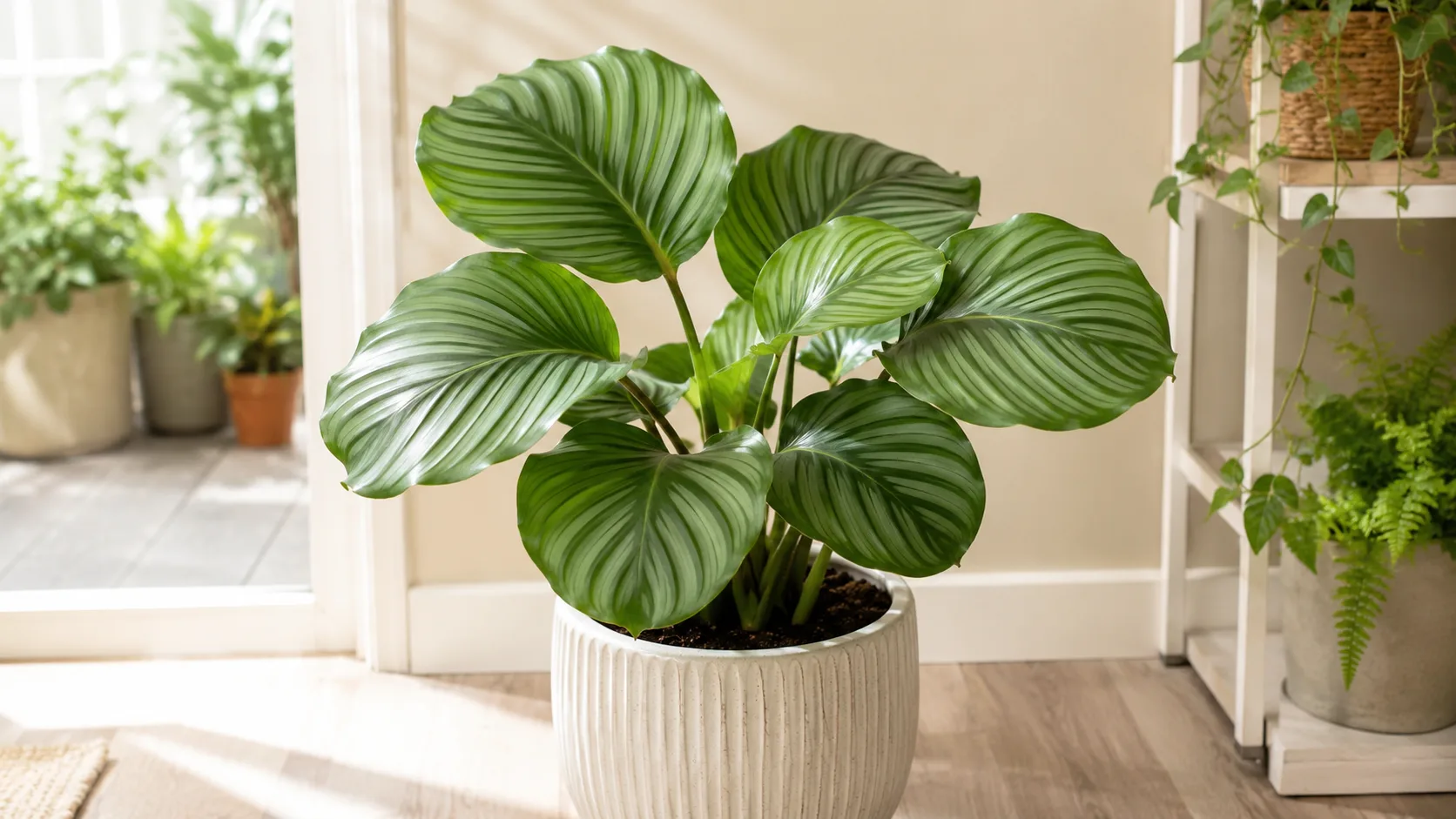
Calathea Orbifolia is the plant that makes you rethink everything you thought you knew about potting soil. Its leaves are enormous, its humidity demands are real, and its roots are finer and more sensitive than the chunky aroids that dominate most “tropical mix” advice online. Give it a dense bag of all-purpose potting soil and it may look fine for six months. Then the mix compacts, the lower roots sit in stagnant moisture, and the broad silver-green blades start showing brown edges that no humidifier seems to fix. The problem was never the leaves. It was the root zone.
Calathea Orbifolia - botanically Goeppertia orbifolia, still widely sold under its former name - is a prayer plant from the shaded, humid floor of South American rainforests, particularly the Atlantic Forest of eastern Brazil. According to the North Carolina Extension Gardener Plant Toolbox, it prefers loamy, acidic to neutral soil with good drainage and consistent moisture. That combination is the entire puzzle indoors: the mix must hold water long enough for fine roots to drink, drain fast enough that oxygen reaches every layer, and stay open enough that it does not turn into a brick after a year of watering. This guide gives you the recipes, the tests, the pot logic, and the Calathea Orbifolia repotting guide steps to build that system in a normal home.
Why Soil Matters More for Orbifolia Than Most Houseplants
Most houseplants tolerate a wide range of substrates as long as you adjust watering. Orbifolia is not most houseplants. Its large leaf surface area pushes a lot of water through transpiration, which means the roots need steady access to moisture. At the same time, Marantaceae roots evolved in leaf litter and loose organic topsoil where water moves through quickly and air follows behind it. Soggy anaerobic conditions - the kind that develop in compacted peat-heavy mix - cause root tissue to decline before you see obvious wilt. By the time yellowing or edge burn shows on those round, banded leaves, the damage below the soil line may already be weeks old.
Soil also acts as a buffer against the other stressors Orbifolia is known for. This species is sensitive to fluoride and chlorine in tap water, to dry air, and to sudden light changes. A healthy, airy root system recovers from minor mistakes. A root system suffocating in dense, degraded mix does not. The soil is not one variable among many. It is the foundation that determines whether your Calathea Orbifolia watering guide, humidity efforts, and Calathea Orbifolia light guide actually reach the plant. When growers say Orbifolia is “fussy,” they often mean the root environment was never set up for a forest-floor plant with dinner-plate leaves and fine roots.
There is a practical reason to prioritize soil before buying another gadget. Humidifiers, moisture meters, and fancy pots all help, but none of them fix a mix that holds water like a sponge and sheds air pockets after six months. Refreshing or rebuilding the substrate is the highest-leverage move you can make, and it costs less than replacing a mature Orbifolia that lost half its foliage to chronic root stress.
What Calathea Orbifolia Needs From Its Potting Mix
Think of the ideal Orbifolia mix as solving three jobs at once. First, it must retain moisture in the middle zone of the pot so roots never fully desiccate between waterings. Second, it must drain excess water within minutes so the bottom of the pot is not a swamp. Third, it must stay structurally open for 12 to 18 months so air can move through the root zone even after repeated watering and root growth.
Those three jobs pull in opposite directions, which is why “well-draining” alone is incomplete advice. Pure cactus mix drains beautifully and fails the moisture job. Standard indoor potting soil holds moisture well and fails the aeration job within a year. Orbifolia needs the middle path: a moisture-retentive but well-draining blend, which is the phrase you will see in serious prayer plant references and which matches NC State Extension’s note that the species wants good drainage with available moisture in the root zone.
The texture target is something you can feel with your hands. Grab a handful of properly mixed, slightly damp substrate and squeeze it. It should hold its shape loosely for a second, then crumble when you poke it with a finger. You should see distinct particles - bark chips, perlite grains, coir fibers - rather than a uniform brown paste. If the squeezed ball stays tight and slick, the mix is too fine. If water runs through it before you finish pouring, it is too coarse for Orbifolia unless you are prepared to water every two or three days.
The Anatomy of a Good Orbifolia Soil Mix
Every reliable Calathea Orbifolia mix is built from three categories of ingredients: a moisture-holding base, aeration and drainage additives, and a small amount of organic nutrition. The ratios change with your home’s dryness and your watering habits, but the categories do not.
Base Materials That Hold Light, Even Moisture
Peat moss and coco coir are the two standard base options. Peat is acidic, holds water evenly, and is widely used in prayer plant mixes. Coir is more sustainable, rewets more easily when it dries out, and sits closer to neutral pH. For Orbifolia, either works as the primary moisture reservoir. Coir is often the better choice in homes where the mix dries to the point of becoming hydrophobic, because peat that has dried hard can repel water while still looking dark on the surface - a setup that tricks you into thinking the plant is watered when the center of the root ball is still dry.
Use fine to medium-grade coir or peat, not chunky coco chips, as the base. The base should make up roughly 40 to 50 percent of the total mix by volume. That proportion gives roots a steady moisture supply without dominating the structure. Leaf mold or finished compost can substitute for part of the base in experienced hands, but keep compost below 15 percent of the total mix. Too much rich organic matter holds moisture and nutrients aggressively, which raises the risk of root burn and fungal issues in a plant that already prefers gentle feeding.
Aeration and Drainage Additives
This is the category that separates a prayer plant mix from generic potting soil. Perlite is the most common choice: lightweight, sterile, and effective at creating air pockets. Use coarse perlite (#3 or #4 grade) rather than fine dust, because coarse particles keep their structure longer. Pumice performs a similar role with slightly more weight, which can help top-heavy Orbifolia pots stay stable. Orchid bark or pine bark fines add larger channels that drain water quickly and mimic the chunky forest litter Orbifolia roots encounter in habitat. Bark also breaks down slowly, feeding soil biology as it decomposes.
Aim for 25 to 35 percent combined aeration material between perlite or pumice and bark. In a humid bathroom or a home that runs a humidifier daily, lean toward the higher end. In a dry apartment with forced-air heat, you might reduce bark slightly and rely more on perlite so the mix dries on a predictable schedule. Horticultural charcoal is optional but useful: a handful per gallon of mix helps reduce sour odors and may improve long-term root health in sealed indoor pots where organic matter breaks down anaerobically.
Organic Matter and Slow Nutrition
Worm castings are the safest slow-release nutrient source for Orbifolia. They provide trace nutrition and microbial life without the salt load of synthetic fertilizer mixed into the soil. Keep castings to about 10 percent of the total volume. More than that makes the mix nutritionally hot for roots that prefer gentle, steady conditions. If you do not have castings, skip them and plan to fertilize lightly after the plant has settled - not immediately after repotting.
Avoid pre-fertilized “moisture control” potting soils with wetting agents and heavy synthetic charge. Orbifolia roots are sensitive, and the salt index in many commercial blends is higher than Calathea Orbifolia overview tolerates comfortably. A plain base plus your own measured amendments gives you control that bagged mixes do not.
DIY Mix Recipes You Can Build at Home
You do not need a laboratory to mix good Orbifolia soil. A clean bucket, a measuring scoop, and five minutes of stirring are enough. Premoisten the finished mix slightly before potting so coir and peat integrate evenly and you are not chasing dry pockets after the plant is already in the pot.
The Standard Three-Part Mix (2:1:1)
This is the recipe most experienced prayer plant growers start with, and it works well for Orbifolia in average indoor conditions:
- 2 parts coco coir or peat moss
- 1 part perlite (coarse grade)
- 1 part orchid bark or pine bark fines
Mix the dry components thoroughly, then add water until the blend is evenly damp, not dripping. This ratio produces a mix that holds moisture for roughly five to seven days after a thorough watering in a 6- to 8-inch pot during active growth, assuming moderate indirect light and typical room humidity. It drains within a few seconds when you water deeply, which is the behavior you want.
If your home is dry and the mix is drying in three days or less, reduce perlite slightly and add a small amount of sphagnum moss - no more than 5 percent of the total - to slow dry-down. If water sits on the surface for more than ten seconds when you water, increase perlite by one part and repot at the next opportunity.
The Chunky Aroid-Lite Recipe
For growers in humid environments, or for anyone who tends to overwater, this chunkier blend adds more structure and drains faster while still holding moisture in the coir and bark:
- 40% coco coir or peat moss
- 25% perlite or pumice
- 20% orchid bark
- 10% worm castings
- 5% horticultural charcoal
This is the mix to use when you have already lost roots to rot and are rebuilding the plant, or when you are pairing soil with a plastic or glazed pot that retains moisture longer than terracotta. The bark and perlite keep channels open. The castings provide a gentle nutrient base for the first month without requiring immediate fertilizer. After mixing, run the drainage test described later in this guide. Properly built, this blend drains in three to eight seconds in a nursery pot when fully saturated.
Commercial Mixes Worth Using (and How to Amend Them)
Can you use regular potting soil for Calathea Orbifolia? Not without amendment. Standard all-purpose indoor mix is too fine and too moisture-retentive on its own. It can work as a starting ingredient - roughly 40 to 50 percent of the final blend - if you cut it with perlite and bark until the texture matches the squeeze test above. Take a bag of generic potting soil, combine it with equal parts perlite and orchid bark by volume, and you have a usable emergency mix.
African violet mix is another common shortcut. It is finer and wetter than Orbifolia prefers. If that is what you have on hand, amend it with at least 30 percent perlite and 20 percent bark before use. Cactus or succulent mix sits at the opposite extreme: it drains too fast and lacks the moisture buffer Orbifolia needs unless you are a very attentive waterer. Mixing cactus soil half-and-half with peat or coir produces a usable base, but the 2:1:1 recipe from scratch is more predictable.
Pre-blended aroid mixes from specialty sellers are often excellent for Orbifolia with little or no amendment, especially if they list bark, perlite, and coir separately on the label. Read the ingredient list. If the first ingredient is peat and there is no visible bark or perlite in the bag when you open it, treat it like standard potting soil and amend aggressively. The price of a boutique mix is only justified if the structure is genuinely chunky when you squeeze it.
pH, Minerals, and Water Quality in the Root Zone
Orbifolia is not a calcareous-soil plant. It evolved on acidic forest floors where minerals leach through quickly and organic matter dominates. Soil chemistry interacts with water chemistry in this species more visibly than in hardier houseplants.
Ideal pH Range for Calathea Orbifolia
The NC State Extension profile for Goeppertia orbifolia lists acidic to neutral soil, with a pH range of roughly 6.0 to 7.0 (acid below 6.0, neutral up to 8.0 on their scale). Peat-based mixes naturally sit near 5.5 to 6.5. Coco coir is closer to 6.5 to 7.0. For most indoor growers, either base lands close enough to the target that pH testing is optional. If you are mixing primarily with coir and your tap water is heavily alkaline, a small amount of dolomitic lime is usually unnecessary and can push pH the wrong direction - lime raises pH. The more common indoor issue is gradual acidification and salt buildup from fertilizer and tap water, not excessively alkaline mix.
If you want to test, inexpensive pH meter sticks or a slurry test with a home kit are sufficient. Mix one part soil to one part distilled water, stir, wait ten minutes, and read. Adjust only if results are consistently outside 5.5 to 7.5. Orbifolia will tell you about mineral problems before a meter will: crusty white deposits on the soil surface, dark leaf edge burn that appears shortly after feeding, and new leaves that emerge smaller or paler than the previous generation.
Salt Buildup and Why Orbifolia Shows It Early
Prayer plants are among the first to react to accumulated salts in the root zone. Synthetic fertilizer, hard tap water, and even some compost sources leave mineral residues that build up with each watering cycle unless excess salts flush out the drainage hole. Orbifolia’s large leaves transpire heavily, pulling water - and whatever is dissolved in it - up through the vascular system. Edge burn and tip crisping on otherwise healthy-looking foliage often trace back to salt stress or fluoride rather than humidity alone.
Flush the pot every four to six weeks during active growth by watering deeply two or three times in succession, letting the full volume drain each time. Use filtered, distilled, or rainwater if your tap water is hard or heavily chlorinated. This matters most in the first month after repotting, when fine root hairs are regrowing and are most vulnerable to chemical burn. If crust forms on the soil surface, scrape the top inch off and replace it with fresh mix rather than adding more fertilizer on top.
Drainage: How to Know Your Mix Is Working
Drainage is not a single yes-or-no property. It is the speed at which water moves through the pot, the amount of air that follows, and how long the mix holds moisture at root depth afterward. Orbifolia needs all three measurements to land in a narrow window.
The One-Minute Drainage Test
Before you pot a valuable Orbifolia, test your mix:
- Fill a small nursery pot with the premoistened blend.
- Water until water runs freely from the drainage hole.
- Time how long it takes for surface water to disappear and drainage to slow to a drip.
In a properly built Orbifolia mix, water should move through in three to eight seconds after the initial pour. If water pools on top for more than ten seconds, the mix is too dense - add perlite and bark before use. If water races through in under two seconds and the pot feels feather-light within a day, the mix is too coarse for this species unless you plan to water frequently.
Repeat the test with the actual pot you plan to use, because pot height and root mass change drainage behavior. A tall narrow pot drains differently from a wide shallow one even with the same mix.
Signs the Mix Is Too Dense or Too Fast-Draining
Too dense: Water sits on the surface. The top inch stays wet for days while you swear you did not water recently. Fungus gnats appear in large numbers. A chopstick pushed into the center of the pot comes out dark and clinging even when the top looks dry. Lower leaves yellow while new leaves are small. The pot feels heavy days after watering. When you slip the plant out, roots are dark, soft, or smell sour.
Too fast-draining: The pot feels light two days after a full watering. Leaf edges crisp even when humidity is reasonable. New leaves curl or fail to unfurl fully. Water runs down the gap between the root ball and pot wall instead of soaking in. Roots are white and healthy but sparse, and the plant wilts quickly in warm weather.
Neither extreme is fixed by watering alone. Dense mix needs structural amendment or a full repot. Fast-draining mix needs more coir or peat and less perlite. Orbifolia gives clearer feedback than many plants if you read the pot weight and the root color, not just the leaf edges.
Choosing the Right Pot for Your Soil System
Soil and pot are one system. The same mix behaves differently in plastic, glazed ceramic, and terracotta. Orbifolia is typically grown in plastic or glazed pots with drainage holes because the mix already balances moisture; terracotta pulls water through the walls and can dry the large leaf mass too quickly in low-humidity homes. Terracotta works if you tend to overwater or run high humidity, but it is not the default choice for this species.
Drainage holes are non-negotiable for long-term indoor care. A hole allows you to water thoroughly - which Orbifolia prefers - without a permanent reservoir at the bottom. The “gravel layer for drainage” idea does not work: water stops at the soil-gravel boundary and the root zone above stays wet longer, not shorter. Skip the rocks. Use good mix instead.
Pot size follows the same conservative logic as other fine-rooted tropicals. When repotting, move up one to two inches in diameter - from a 6-inch pot to a 7- or 8-inch, not a 10-inch. Oversized pots hold excess soil volume that roots cannot colonize quickly. Uncolonized wet soil is where rot starts. Orbifolia prefers being slightly snug. A root-bound plant in good mix is healthier than a small plant drowning in a large pot of fresh soil.
Match pot depth to the root ball, not the leaf spread. Orbifolia leaves can extend 12 to 18 inches outward while the root system remains relatively compact. A pot that is too shallow dries unevenly. A pot that is unnecessarily deep keeps the bottom layer wet long after the top has dried. The right pot disappears into the background. You stop thinking about it because the watering rhythm becomes predictable.
When and How to Repot Calathea Orbifolia
Repotting is the moment your soil work pays off or falls apart. Done well, Orbifolia pushes new round leaves within weeks. Done carelessly, it sulked for a month and loses half its foliage.
When to repot: Refresh the mix every one to two years, or sooner if water runs straight through, roots circle the pot exterior, or the soil smells sour. The best season is early spring through early summer, when new growth is starting and days are lengthening. Avoid repotting in winter unless you are performing an emergency rescue for root rot on Calathea Orbifolia. A stressed Orbifolia in cold, dim conditions cannot rebuild root tissue quickly.
When not to repot: Do not repot a plant that is actively wilting, covered in spider mites, or freshly shipped and dehydrated. Stabilize the plant first. Do not repot purely because of a single brown leaf edge. Confirm the root zone or soil structure is actually the problem.
How to repot, step by step:
Water the plant 24 hours before repotting so the root ball holds together and roots are flexible. Prepare fresh mix and a clean pot with a drainage hole. Add a small layer of mix at the bottom - enough to bring the root ball to its previous depth, not a deep reservoir.
Slide the plant out gently, supporting the base of the stems. Tease away the outer third of old soil with your fingers or a soft brush. Inspect roots: healthy roots are white to pale tan and firm. Trim dark, mushy roots with sterilized shears. If you are only refreshing mix and the plant fits comfortably, reuse the same pot. If upsizing, choose the next size up only.
Set the plant in the pot so the rhizome and stem bases sit at the same depth they were before - never bury crowns deeper to “stabilize” the plant. Backfill with fresh mix, tapping the pot gently to settle it without compacting. Leave half an inch to an inch of headspace below the rim for watering.
Water thoroughly until drainage runs clear, then discard saucer water. Place the plant in bright indirect light, not direct sun. Hold off on fertilizer for four to six weeks. The fresh mix and worm castings provide enough nutrition for initial recovery. Use filtered or rainwater for the first month if possible, because disturbed roots are more sensitive to fluoride and chlorine.
Expect some transplant stress: slight leaf curl, reduced prayer movement, or one older leaf yellowing. That is normal for one to two weeks. If multiple leaves collapse or the soil stays wet for ten days without drying at all, check for remaining rot and confirm the pot is not oversized.
Conclusion
The best soil for Calathea Orbifolia is not a single bag from the shelf. It is a balanced, chunky, moisture-retentive mix you can feel working in your hands: coir or peat for even moisture, perlite and bark for air and drainage, a small measure of worm castings for gentle nutrition. Test drainage before you pot, pair the mix with a pot that has real holes and a sensible diameter, and repot on a one- to two-year rhythm in spring when the plant can actively rebuild its roots.
Orbifolia will never be as forgiving as a pothos in standard potting soil, and that is not a failure of the grower. It is a rainforest understory plant with specific root expectations. Meet those expectations once, and the daily care becomes simpler: water when the top inch dries, flush salts periodically, and let the mix structure do the hard work of holding moisture and oxygen at the same time. Get the soil right, and those broad silver-green leaves finally have something solid beneath them.
When to use this page vs other Calathea Orbifolia guides
- Calathea Orbifolia overview - Start here for whole-plant context before deep-diving this topic.
- Calathea Orbifolia problems hub - Jump to symptom-specific fix guides when this care topic does not resolve the issue.
- Root Rot on Calathea Orbifolia - Escalate here when soil adjustments are not enough.
- Mold on Soil on Calathea Orbifolia - Escalate here when soil adjustments are not enough.
Related Calathea Orbifolia guides
- Calathea Orbifolia overview
- Calathea Orbifolia watering
- Calathea Orbifolia light
- Calathea Orbifolia propagation
- Calathea Orbifolia fertilizer
- Calathea Orbifolia repotting
- Root Rot on Calathea Orbifolia
- Mold on Soil on Calathea Orbifolia
- Calathea Orbifolia problems
Related tool
Try the Soil Mix Calculator with calathea-orbifolia pre-selected to estimate needs for your setup.