Mold on Soil on Calathea Orbifolia: Causes, Checks & Fixes
Quick answer
Fluffy white or gray mold on Calathea Orbifolia's soil is usually harmless surface fungus feeding on wet organic mix-not a leaf disease. First step: scrape off the top layer, then let the surface dry before you water again.
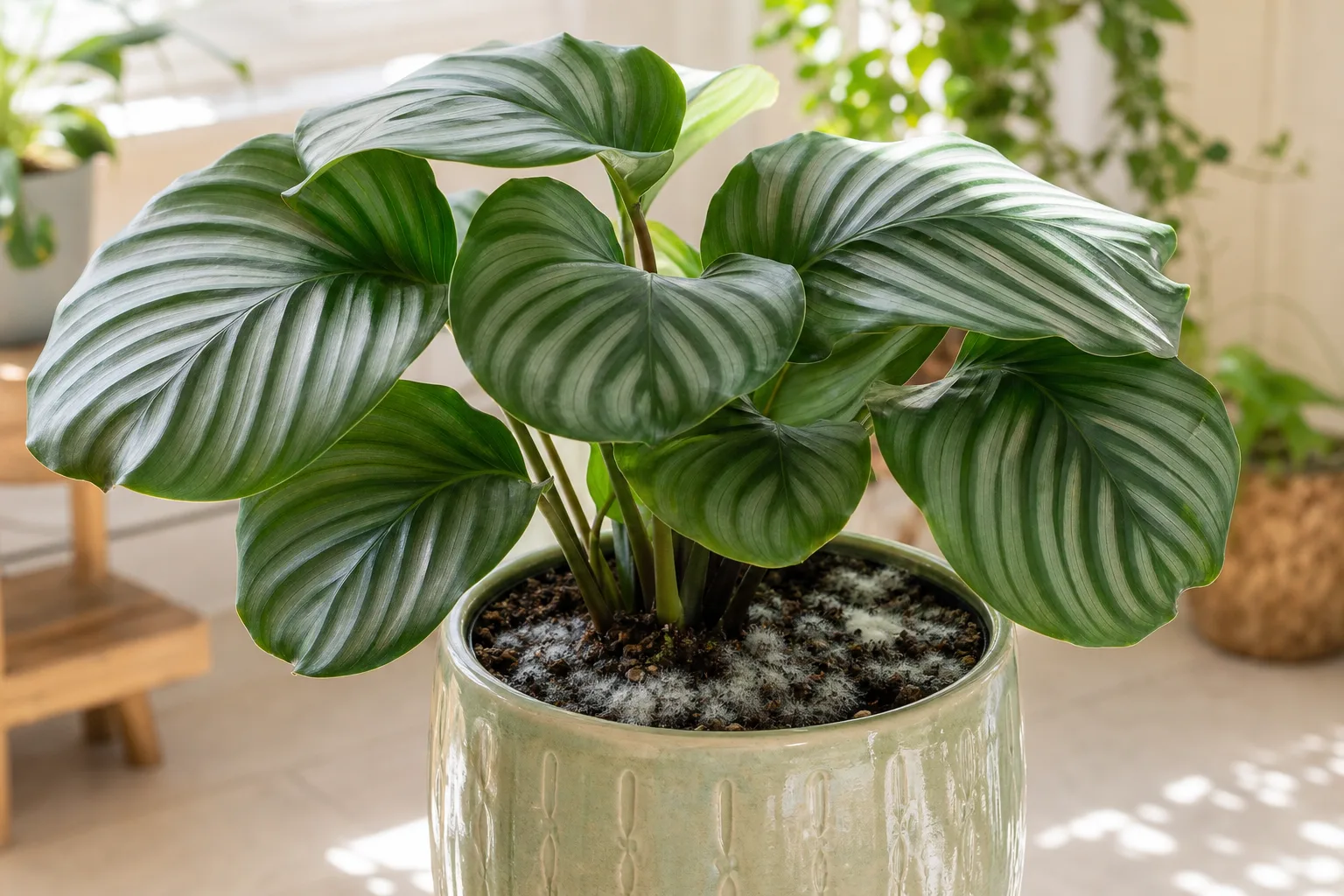
Mold on Soil on Calathea Orbifolia: Causes, Checks & Fixes
This guide covers mold on soil on Calathea Orbifolia. See also the general Mold on Soil guide, watering, and light pages for this plant.
Mold on Soil on Calathea Orbifolia: Causes, Checks & Fixes
Quick answer
White or gray fuzzy patches on the soil of Calathea Orbifolia (Goeppertia orbifolia) look alarming on a plant you already baby for humidity-but they are usually surface saprophytic fungi feeding on organic matter in a persistently damp top layer, not a mold infection of the leaves themselves.
First step: scrape off the top 1–2 cm of affected mix and discard it. Then pause watering until the surface dries to the depth Orbifolia normally tolerates before the next drink-the top 2 cm beginning to dry in your home. Mold should not be your first trigger for Calathea Orbifolia repotting guide, fungicide, or neem drenches unless wet soil is also damaging roots.
What mold on soil looks like on Calathea Orbifolia
On Orbifolia, mold almost always stays on the potting mix, not on the broad silver-green blades. Typical signs:
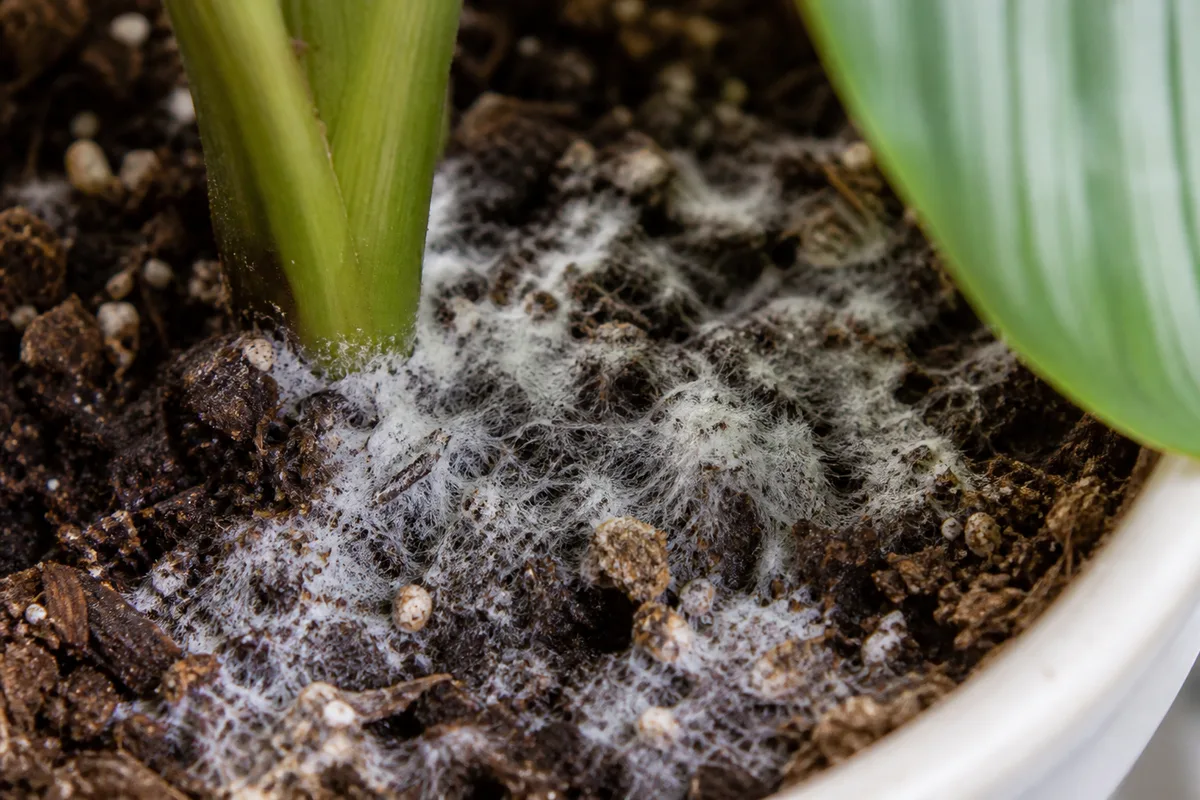
Surface saprophytic mold on wet organic mix - firm new rolled leaves at the center mean the plant is fine; scrape the top layer and let the surface dry before watering again.
- White, gray, or occasionally greenish fuzz across the soil surface, sometimes thickest near the stem base
- Surface that stays visibly damp for several days after you water, even when lower leaves still look fine
- Musty smell when you lift the pot or scrape the top layer
- Decaying leaf bits from spent Orbifolia foliage sitting on the mix
- Small black fungus gnats on Calathea Orbifolia hovering when you tap the pot-often in the same chronically wet pots
The plant may still hold its large leaves upright and show healthy new rolled growth at the center. That is different from root rot on Calathea Orbifolia or crown rot, where lower leaves yellow, stems soften at the soil line, and the whole plant wilts despite wet mix.
Lookalikes worth separating:
- Green algae on the surface - also loves constant moisture and low light; fix is the same drying-and-airflow correction, not a different disease protocol
- White crusty mineral deposits on the pot rim or soil - usually fertilizer salts, not living mold; leaching or repotting addresses salts, not scraping alone
- Powdery mildew on leaves - white coating on foliage, not the soil; that is a separate fungal leaf problem
Why Calathea Orbifolia gets mold on soil
Orbifolia sits in an awkward middle ground: it wants steady root-zone moisture and high humidity, but its pot surface still needs to dry between waterings. When the top layer never dries, fungi and algae colonize the organic peat, bark, and decaying debris that houseplant mixes contain.
Several Orbifolia-specific habits make surface mold more likely:
Watering before the surface is ready. Orbifolia is watered when the top 2 cm is beginning to dry-not when the whole pot is still cool and dark at the surface. Calendar watering, bottom-watering on a fixed schedule without checking the top layer, or “keeping it moist for humidity” can leave the surface wet for days.
High humidity without airflow. Orbifolia needs 60%+ relative humidity to keep wide leaves from crisping. Humidifiers, pebble trays, and bathroom placement help foliage-but if damp air sits stagnant around the pot, evaporation from the soil surface slows. Goeppertia orbifolia needs high humidity and consistent moisture without being soggy, yet still requires drainage and conditions that let the surface dry appropriately between drinks.
Moisture-retentive mix in slow-drying conditions. The recommended moisture-retentive but well-draining blend holds water longer than succulent mixes. That is appropriate for the roots, but in low indirect light or cool winter rooms the plant uses water slowly-so the same mix stays wet at the surface and invites fungi.
Large leaves shedding debris. Orbifolia’s broad blades die back at the edges over time. Spent sections that fall onto the soil become food for saprophytic fungi. Keeping the soil surface free of dead leaves and stems reduces pest and decay pressure.
Oversized pots and poor drainage. A pot much larger than the root ball keeps a wide ring of wet, underused mix at the surface. Saucers that hold standing water after bottom-watering also prolong surface dampness.
Surface mold is usually not pathogenic to living tissue-fungi on potting media grow on the surface under moist conditions and are generally not detrimental to plants. The real risk is what the wetness signals: fungus gnats, reduced oxygen at the root zone, and eventual root stress if saturation continues.
How to confirm the cause
Work through these checks before repotting or spraying:
- Where is the growth? Confined to soil only → likely saprophytic mold. On leaf surfaces or spent flowers → not this problem.
- Surface moisture - Stick a finger 2 cm down. If the top layer has stayed wet since your last watering, mold fits. If the surface is dry and mold is powdery and returning fast, look for a nearby humidifier misting the soil directly.
- Plant firmness - Press the stem base and inspect the newest center leaf roll. Firm tissue and normal new growth suggest cosmetic soil fungus. Mushy stems or collapsing new shoots point to rot.
- Smell - Musty surface odor is common with mold. A sour, swampy smell from deeper in the pot suggests anaerobic wet soil and possible root decline.
- Gnat test - Tap the pot edge. If small flies rise from the surface, wet organic soil is supporting both fungi and gnat larvae. Fungus gnats are more common in continuously wet soils.
- Light and season - Orbifolia in a dim corner during winter dries slowly. Mold after every watering in that setup is an environment problem, not bad luck.
- Root spot-check - If stems feel soft or lower leaves yellow despite your normal care, slide the plant partly out of the pot and inspect root tips. Firm pale roots with only surface mold mean you can fix culture. Brown mushy roots mean root rot management, not just scraping.
If the pot is light, the surface is dry, and mold appears only after you water heavily from the top, you may be overfilling the saucer or using cold tap water that sits on the surface-still a watering-surface issue, not a contagious leaf plague.
First fix for Calathea Orbifolia
Scrape off the top 1–2 cm of moldy soil and discard it.
Use a spoon or fork, avoid inhaling dust if you are sensitive to spores, and bag the removed mix rather than composting it indoors. If a fungal mat forms, remove and discard the upper layer of growing media along with the mat.
Then stop watering until the top 2 cm of mix is beginning to dry-the same checkpoint you use for normal Orbifolia care. Do not pour fungicide, cinnamon, or neem oil into the soil as a first response; those do not fix the wet surface that caused the mold and can stress roots.
This single step-remove the food source on the surface and break the wet cycle-is the correct opening move before fans, repotting, or gnat treatments.
Step-by-step recovery
After the first scrape and dry-down, work through these steps in order based on what you found:
- Let the surface dry - Wait until the top 2 cm feels dry to the touch before the next watering. In winter, that may take longer; resist “helping” a firm plant with extra water while mold is active.
- Clean the soil surface - Pick off fallen Orbifolia leaves, old leaf sheaths, and any moss or top-dressing that holds moisture against the mix.
- Improve airflow around the pot - Orbifolia needs humidity on the leaves, not stagnant air on the soil. Allow the surface to dry between waterings and ensure good air circulation between pots. A small fan on low across the room-not blasting the foliage-speeds surface drying.
- Adjust watering method - After the surface dries, bottom-water for 15–30 minutes so the plant drinks from below while the top inch stays drier. Empty the saucer when done. Bottom-watering keeps the soil surface dry and discourages fungus gnats.
- Brighten indirect light slightly - If the plant is in very low light, move it to brighter indirect exposure so the pot cycles moisture faster without direct sun on Orbifolia’s wide leaves.
- Treat co-occurring fungus gnats - If flies persist after the surface stays dry for a week, add yellow sticky traps for adults. Severe cases may need a Bacillus thuringiensis israelensis (BTI) drench per label directions-but drying the soil is still the main fix.
- Refresh chronic topsoil - If mold returns within days despite a dry surface, replace the top inch with fresh, dry potting mix matched to Orbifolia’s moisture-retentive but well-drained recipe. Full repot is only needed when the whole volume stays soggy, smells sour, or roots are declining.
- Hold fertilizer - Do not feed while correcting wet soil. Salts on a stressed root zone compound damage.
Recovery timeline
Cosmetic mold scraped away with a corrected dry surface usually does not reappear within one to two weeks if you stop watering too early and keep debris cleared.
Fungus gnats may take three to four weeks to fully taper because of overlapping generations-even after the soil surface stays dry.
Leaf recovery is indirect: existing brown edge damage on Orbifolia does not reverse. Success means no new yellowing, firm new center leaves, and no return of surface fuzz after normal watering resumes.
Worsening signs during the dry-down-spreading stem softness, sour smell, or yellow lower leaves while you hold water-mean inspect roots promptly. Surface mold alone should not collapse a healthy Orbifolia in days.
Mistakes to avoid
- Spraying fungicide on harmless surface mold before fixing moisture. The fungus is a symptom; wet organic soil is the cause.
- Watering on schedule while the surface is still damp because Orbifolia “likes humidity.” Humidity targets the air around leaves, not a constantly wet soil cap.
- Leaving spent Orbifolia leaves on the soil to break down. They feed the same fungi you are removing.
- Sealing the pot in a decorative cover that traps humidity at the soil line.
- Repotting immediately into a larger container hoping it will dry faster-it usually keeps more mix wet longer.
- Adding neem oil or other additives to irrigation water after mold appears. That can coat the soil surface and complicate drying without solving root-zone oxygen.
- Ignoring gnats as a separate nuisance. They share the same wet-soil habitat and can stress fine roots in heavy infestations.
Calathea Orbifolia care cross-check
Mold is a surface alarm that your Calathea Orbifolia watering guide, airflow, and debris habits are out of sync with how Orbifolia actually grows in your room-not a reason to abandon its humidity needs.
Cross-check these baseline care points while recovering:
- Water: Top 2 cm beginning to dry; filtered or rainwater; never leave standing water in the saucer
- Humidity: 60%+ at leaf level via humidifier or grouped plants, with air still moving in the room
- Light: Medium to bright indirect-enough to keep the plant using water at a healthy pace
- Soil: Moisture-retentive but well-draining; not straight heavy peat in a dim, cool spot
- Pot: Drainage holes open; size matched to roots, not dramatically oversized
Overwatering is among the most common indoor plant problems, and Orbifolia’s need for even moisture makes it easy to cross from “moist roots” into “wet surface, mold, and gnats.”
How to prevent mold on soil next time
Long-term prevention is cultural, not chemical:
- Check the top 2 cm before every watering-lift the pot; if the surface is still cool and dark, wait.
- Remove decaying foliage the same week it falls onto the soil.
- Bottom-water once the surface drying habit is established, or top-water slowly without flooding the leaves and soil cap.
- Run a humidifier for the foliage rather than keeping the soil surface wet “for humidity.”
- Space pots so air moves between them; avoid cramming Orbifolia against walls where leaves and soil both stay still.
- Refresh the top inch of mix seasonally if you use a very organic, peat-heavy blend that crusts or molds easily.
- Watch winter slowdown - less light and cooler rooms mean longer dry-down times; extend the interval between drinks rather than shrinking it.
When the surface dries appropriately, debris stays cleared, and airflow reaches the pot, chronic mold pressure usually disappears without turning Orbifolia care into a constant rescue project.
When to worry
Treat mold as urgent background noise-not an emergency-unless these escalation signs appear:
- Mold returns within three to five days after scraping while the surface never truly dries
- Sour or rotten smell from the pot, not just a light musty surface note
- Soft, dark tissue at the stem base or crown
- Yellowing and wilting spreading up from lower leaves while soil stays wet
- Large fungus gnat clouds with declining new growth
- Mushy brown roots on inspection
Those patterns mean shift focus to root health and overwatering correction, not repeated surface scraping alone. A firmly rooted Orbifolia with fluffy soil mold and no gnat surge is a moisture-and-hygiene fix, not a discard-the-plant moment.
When to use this page vs other Calathea Orbifolia guides
- Calathea Orbifolia watering guide - Use for routine moisture checks before assuming mold on soil is the main issue.
- Calathea Orbifolia problems hub - Browse all 16 common issues on this species.
- Fungus Gnats on Calathea Orbifolia - Different entry point when symptoms overlap with mold on soil.
- Overwatering on Calathea Orbifolia - Different entry point when symptoms overlap with mold on soil.
- Root Rot on Calathea Orbifolia - Different entry point when symptoms overlap with mold on soil.